
Buying a home in Vancouver is likely the largest investment you'll ever make. Yet most buyers spend more time choosing paint colours than investigating the plumbing system that will cost them thousands if it fails. Whether you're purchasing a 1950s character home in North Vancouver's Grand Boulevard or a modern townhouse in Lynn Valley, a thorough plumbing assessment can reveal hidden issues that standard home inspections miss.
This checklist guides you through everything you should check — before closing, on move-in day, and during your first week in the home.
Before You Buy: Pre-Purchase Plumbing Checks
Request Plumbing History
Ask the seller (through your realtor) for documentation of any plumbing work done during their ownership: permits pulled, repairs completed, appliances replaced, and any known issues. In BC, sellers have a legal obligation to disclose known material defects through the Property Disclosure Statement (PDS). Pay close attention to questions about water damage, flooding, and drainage problems.
Check the Home's Age and Pipe Materials
The age of a home tells you a lot about what's in the walls:
- Pre-1950s: Likely galvanized steel supply pipes and cast iron drain pipes. Both are nearing or past end-of-life. Budget for repiping.
- 1950s–1970s: Mix of galvanized and copper. May have lead solder on copper joints. Drain tiles may be original clay.
- 1970s–1990: Mostly copper supply with ABS drain pipes. Check for polybutylene (grey) supply pipes — a known defect material.
- Post-1990: Copper or PEX supply, ABS drains, PVC drain tiles. Generally in good condition unless poorly maintained.
Book a Sewer Camera Inspection
This is the single most valuable pre-purchase plumbing investment. A sewer camera inspection ($200–$450) reveals the condition of the main sewer line from the house to the municipal connection. It catches root intrusion, pipe bellying (sagging), cracks, separations, and blockages that are invisible from above ground. A failed sewer line replacement costs $5,000–$20,000+ — you want to know about this before you own the house.
Test Water Pressure
Bring a simple water pressure gauge ($10–$15 at any hardware store) to showings. Attach it to an outdoor hose bib. Ideal residential water pressure is 40–80 PSI. Low pressure (under 40 PSI) may indicate corroded galvanized pipes, a partially closed main valve, or municipal supply issues. High pressure (over 80 PSI) can damage fixtures, cause water hammer, and shorten water heater life.
Inspect the Water Heater
Look at the manufacturing date on the water heater's label. If it's over 8 years old (tank) or 15 years old (tankless), budget for replacement within 1–3 years. Check for corrosion, leaks, and proper seismic strapping. Note whether it's gas or electric — this affects your operating costs and replacement options.
Move-In Day Essentials
Locate All Shutoff Valves
Before the boxes are unpacked, find and tag:
- Main water shutoff — at the meter or where the line enters the house. Test it closes fully.
- Gas shutoff — at the gas meter. Keep a wrench nearby.
- Individual fixture shutoffs — under each sink, behind each toilet, at the water heater, at the washing machine.
- Sewer cleanout — typically a capped pipe outside the house or in the basement. You'll need this for future drain cleaning.
Run Every Fixture
Turn on every faucet, flush every toilet, run the dishwasher and washing machine. Watch for leaks under sinks, listen for unusual sounds, note water colour and pressure. This baseline test reveals immediate issues while you still have the seller's cooperation for warranty claims.
Check the Basement and Crawl Space
Before your belongings fill the basement, inspect for water stains, dampness, efflorescence (white mineral deposits), and mold — all indicators of drain tile or waterproofing issues. Take photos for future reference.
First-Week Inspections
Monitor Your Water Meter
Check the water meter before bed and again in the morning. If it moved overnight with no water usage, you have a hidden leak. This simple test can catch leaks that waste thousands of litres per month.
Test Water Quality
Especially in older homes, consider water quality testing during your first week. Lead from old solder, iron from galvanized pipes, and copper from corroding pipes can all affect your family's health. A basic lab test costs $100–$300 and provides peace of mind.
Check Drainage During Rain
The first time it rains after you move in (which, in Vancouver, usually isn't a long wait), walk the property perimeter. Watch for water pooling near the foundation, gutters overflowing, and downspouts discharging too close to the house. Check the basement for any moisture ingress.
Inspect Under-Sink Areas Thoroughly
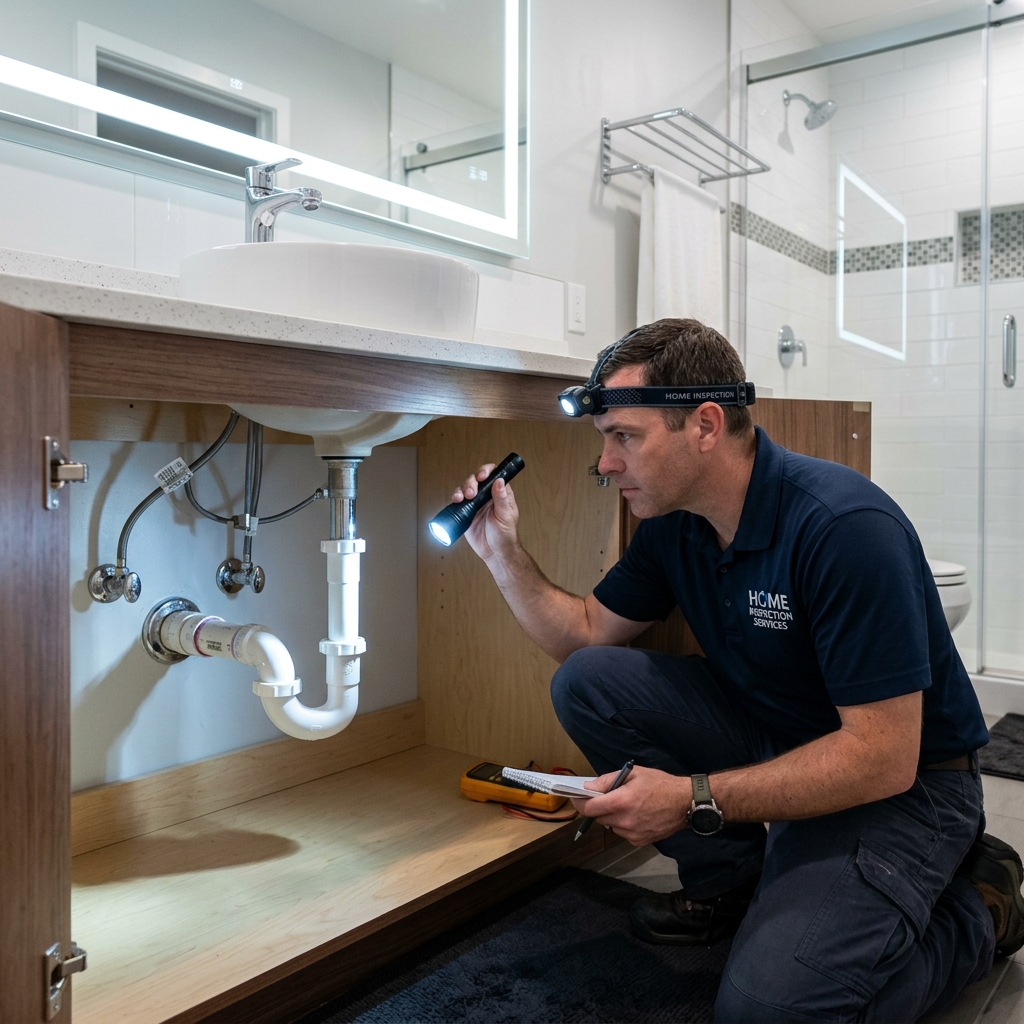
With cabinets empty during unpacking, use a flashlight to examine every pipe connection under every sink. Look for corrosion on shutoff valves, moisture around P-traps, staining on cabinet floors, and any signs of previous water damage or repairs.
Understanding Your Pipe Materials
Identifying the pipe materials in your new home tells you what to expect and plan for:
- Copper — Gold standard for supply lines. Lasts 50+ years. Look for green patina (surface oxidation, usually harmless) vs. green deposits at joints (potential pinhole leaks).
- PEX — Flexible plastic. Common in post-2000 homes and remodels. Very durable and freeze-resistant. No known issues.
- Galvanized Steel — Grey, threaded pipes. Common pre-1960. Corrodes from inside out, reducing flow and leaching iron. Plan for repiping within 5–10 years.
- Polybutylene (Poly-B) — Grey flexible plastic. Used 1978–1995. Known to fail without warning. Many insurers won't cover homes with Poly-B. Replacement is strongly recommended.
- ABS — Black plastic drain pipes. Standard since the 1970s. Generally reliable for 50+ years unless mechanically damaged.
- Cast Iron — Heavy, dark grey drain pipes. Common pre-1970s. Corrodes over decades. When they fail, they tend to fail catastrophically. If your home has cast iron drains, a camera inspection is essential.
Priority Plumbing Upgrades for Your New Home
Based on what your inspection reveals, here's how to prioritize upgrades:
- Replace polybutylene (Poly-B) pipes — Insurance and failure risk make this urgent
- Fix active leaks — Even small drips cause mold and structural damage over time
- Replace failing drain tiles — Foundation water damage is catastrophically expensive
- Replace aging water heater — Before it fails and floods your home
- Repipe galvanized steel sections — Improving water quality and pressure
- Install smart leak detection — Especially if you travel or the home sits empty sometimes
- Upgrade main shutoff valve — Replace corroded gate valve with a modern ball valve
Book a plumbing inspection with Lord Mechanical and we'll help you create a prioritized plan that fits your budget and timeline.