
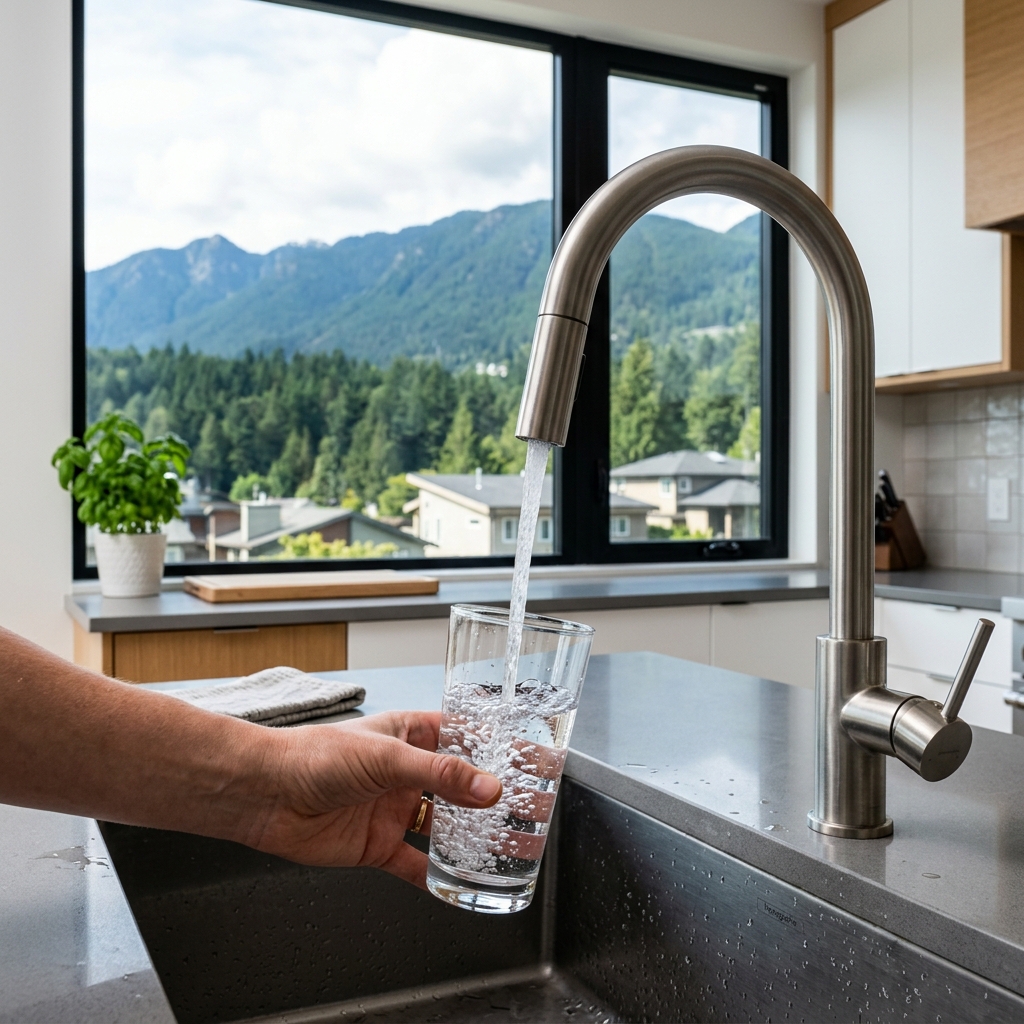
Vancouver homeowners are fortunate — our tap water comes from some of the most pristine mountain watersheds in the world. But here's what many people don't realize: the water that leaves Metro Vancouver's treatment plants may be different from what comes out of your kitchen tap. The pipes in your home can significantly affect water quality.
Whether you've noticed changes in taste, colour, or smell, or you simply want peace of mind about what your family is drinking, water quality testing is a smart investment. This guide covers everything you need to know about testing your water in the Vancouver area.
Vancouver's Water Source: Why It's Excellent (But Not Perfect)
Metro Vancouver's drinking water comes from three protected mountain reservoirs: Capilano, Seymour, and Coquitlam. These watersheds are closed to public access, reducing contamination risk dramatically. The water is naturally soft (low mineral content), slightly acidic, and treated with chlorine for disinfection, UV light, and ozone at the Seymour-Capilano Filtration Plant.
By Canadian standards, Vancouver's treated water quality is exceptional. Metro Vancouver publishes detailed annual water quality reports that consistently show compliance with all Health Canada guidelines. The chlorine levels (0.5–1.0 mg/L residual) are well within safe limits but can cause noticeable taste and odor for sensitive palates.
So if the source water is great, why test? Because the journey from the treatment plant to your glass involves kilometres of municipal water mains and your home's internal plumbing — and that's where problems can develop, especially in older homes common throughout North Vancouver and West Vancouver.
Common Contaminants Found in Home Water
Lead
The most concerning contaminant for Vancouver homes. Lead doesn't come from the source water — it comes from lead solder used on copper pipe joints in homes built before 1990 (when lead solder was banned in BC). Vancouver's naturally soft, slightly acidic water is particularly effective at dissolving lead from solder joints. First-draw water (water sitting in pipes overnight) can have significantly elevated lead levels.
Copper
Copper pipes are standard in Vancouver homes and are generally safe. However, homes with new copper pipes (less than 2 years old) or very old, corroding copper can have elevated copper levels. Blue-green staining in sinks and tubs is a telltale sign of high copper content.
Iron and Manganese
Homes with galvanized steel pipes (common in pre-1960s construction) often experience brown or orange discoloration from iron corrosion. While not a health hazard at typical levels, it stains fixtures, affects taste, and can damage appliances.
Chlorine and Chloramine
Metro Vancouver uses chlorine for disinfection. While safe at the levels used, chlorine affects taste and smell. Some people are more sensitive than others. Chlorine also interacts with organic matter in pipes to form disinfection byproducts (DBPs), though levels in Vancouver are well below guidelines.
Bacteria
Coliform bacteria and E. coli shouldn't be present in properly treated municipal water. If they appear in a home water test, it usually indicates a cross-connection, a compromised water line, or contamination at the point of collection. This requires immediate investigation.
When to Test Your Water
Consider testing your home's water quality in these situations:
- You've just moved into an older home — especially one built before 1990
- You have young children or are pregnant — children are more vulnerable to lead exposure
- Water tastes, smells, or looks different — metallic taste, rotten-egg smell, or discoloration
- Staining on fixtures — blue-green (copper), brown/orange (iron), or black (manganese)
- After plumbing work — pipe replacement, water main work, or after a boil water advisory
- Recurring plumbing issues — frequent corrosion, appliance failures, or scale buildup
Testing Options and Costs
DIY Home Test Kits ($20–$50)
Available at hardware stores, these kits use test strips or colour-change reagents to check for basic parameters: pH, chlorine, hardness, iron, and sometimes lead and bacteria. They provide a quick snapshot but lack the precision and reliability of lab testing. They're a good starting point if you want to screen for obvious issues.
Professional Lab Testing ($100–$600)
For accurate results, send water samples to an accredited lab. In BC, labs accredited by the Canadian Association for Laboratory Accreditation (CALA) provide the most reliable results. You collect samples in provided containers, follow specific instructions (first-draw vs. flushed samples matter), and mail them for analysis.
Testing Cost Guide
- DIY test kit (basic screening) $20 – $50
- Lab test — bacteria only $30 – $60
- Lab test — standard panel (metals, minerals, bacteria) $100 – $300
- Lab test — comprehensive (includes VOCs, pesticides) $300 – $600
Interpreting Your Results
Understanding your test results requires comparing them against Health Canada's Guidelines for Canadian Drinking Water Quality. Here are key thresholds:
- Lead: Health Canada MAC is 5 µg/L (micrograms per litre). Any detection above this warrants action. The goal is as close to zero as possible.
- Copper: Aesthetic objective is 1.0 mg/L; MAC is 2.0 mg/L. Levels above 1.0 can cause taste and staining.
- Iron: Aesthetic objective is 0.3 mg/L. Not a health risk but causes staining and taste issues.
- E. coli / Total coliforms: Must be 0 per 100 mL. Any detection requires immediate investigation.
- pH: Should be between 6.5 and 8.5. Vancouver water is naturally around 6.5–7.0 (slightly acidic).
If your results show elevated contaminants, don't panic — but do take action. The solution depends on what's causing the contamination, which is where a professional plumbing assessment becomes valuable.
Filtration Solutions for Vancouver Homes
Point-of-Use Carbon Filters
Under-sink or countertop activated carbon filters effectively remove chlorine taste/odour, some VOCs, and improve overall taste. They're affordable ($100–$400 installed) and easy to maintain. Best for general taste improvement when your water tests clean otherwise.
Reverse Osmosis Systems
For homes with elevated lead, copper, or other metals, reverse osmosis (RO) provides the most thorough filtration. These under-sink systems remove 95–99% of dissolved contaminants. Cost: $400–$1,200 installed. They do produce waste water and require filter changes every 6–12 months.
Whole-House Sediment Filters
If you have galvanized pipes causing rust particles, a whole-house sediment filter ($300–$800 installed) catches particles before they reach your fixtures. This protects appliances and reduces staining. It's often a bridge solution while planning a complete repipe.
UV Disinfection
For homes on well water or those wanting an extra layer of protection, UV disinfection systems kill bacteria and viruses without chemicals. Cost: $500–$1,500 installed. Not typically needed for Vancouver municipal water unless testing shows bacterial concerns.
How Your Plumbing Affects Water Quality
Your home's pipes are the last link in the water supply chain, and they can be the weakest. Here's what to know:
Galvanized steel pipes (pre-1960s): These corrode internally over decades, releasing iron and trapping lead from old solder or lead service connections. If your home has galvanized pipes, both repiping and water testing are strongly recommended.
Lead solder (pre-1990): Before 1990, lead-based solder was commonly used to join copper pipes. Vancouver's soft, acidic water can dissolve lead from these joints over time. Running the tap for 30–60 seconds before drinking flushes the highest-concentration water.
Copper pipes: Generally safe and long-lasting. New copper pipes may leach copper for the first 1–2 years. Very old copper with pinhole leaks or green patina corrosion may need replacement.
If testing reveals pipe-related contamination, the permanent solution is often partial or full repiping. Modern PEX or copper repiping eliminates the contamination source rather than filtering around it. Talk to our team about the most cost-effective approach for your situation.