
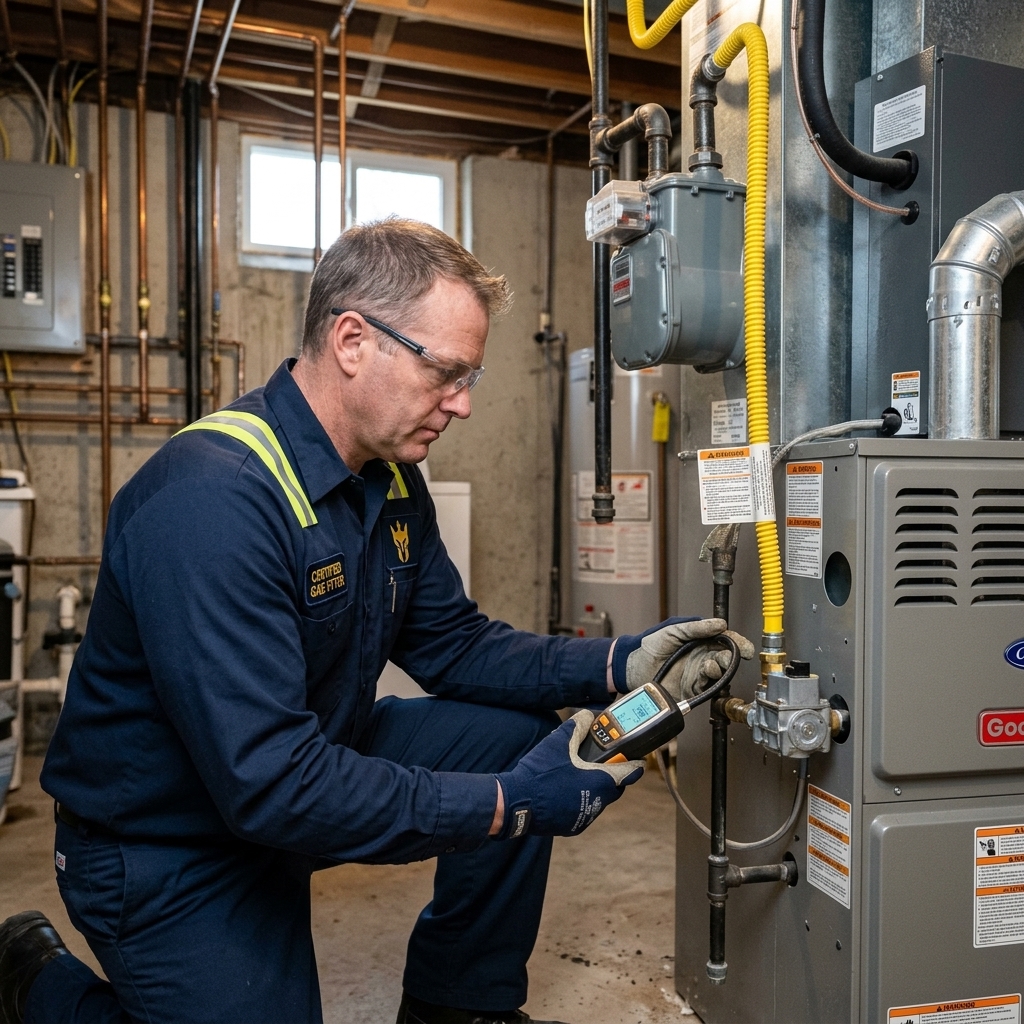
Natural gas powers furnaces, water heaters, stoves, dryers, and fireplaces in thousands of homes across the Lower Mainland. It's efficient, reliable, and — when properly installed and maintained — extremely safe. But gas demands respect. A leaking gas line can cause explosions, fires, and carbon monoxide poisoning. Understanding gas safety isn't optional — it's essential for every homeowner.
Gas Safety Basics Every Homeowner Must Know
âš ï¸ If You Smell Gas — Act Immediately
- Do NOT use any electrical switches, phones, or create sparks
- Do NOT try to find the leak
- Leave the building immediately — take everyone with you
- Leave the door open as you exit (for ventilation)
- Call 911 and FortisBC (1-800-663-9911) from outside, away from the building
- Do not re-enter until emergency responders say it's safe
Natural gas in its pure form is odourless. FortisBC adds a chemical called mercaptan that gives it the distinctive "rotten egg" smell specifically so you can detect leaks. If you smell this odour — even faintly — treat it seriously.
Detecting Gas Leaks
Signs of a Gas Leak
- Rotten egg/sulphur smell — the most common sign of a natural gas leak
- Hissing or blowing sound near a gas line, appliance, or meter
- Dead vegetation in a line or patch above a buried gas pipe
- Bubbles in standing water near a gas line
- Dust or dirt blowing from a hole in the ground
- Higher than normal gas bills — could indicate a slow leak in the system
Gas Leak Detectors
Combustible gas detectors ($30–$100) provide an extra layer of safety, especially near the furnace, water heater, and gas meter. Some smart home systems include gas detection with automatic alerts. While useful, they should supplement — not replace — your own awareness of the rotten-egg smell.
Understanding Your Home's Gas System
Your gas system consists of several components:
- Gas meter and regulator: Owned and maintained by FortisBC. The regulator reduces high-pressure supply gas to usable household pressure (typically 7" water column / about 0.25 PSI)
- Main gas line: The black iron or CSST pipe that runs from the meter into your home and branches to each appliance
- Branch lines: Individual pipes from the main line to each gas appliance
- Flexible connectors: CSA-approved flexible connections at each appliance
- Gas shutoff valves: Each appliance should have an individual shutoff valve, plus a main shutoff at the meter
Know where your main gas shutoff valve is and how to turn it off. It's typically located at or near the gas meter. You'll need a 12" adjustable wrench — keep one permanently attached to or stored near the meter. In an earthquake scenario, quick gas shutoff can prevent fire.
Gas Line Installation and Modifications
When You Need Gas Line Work
- Adding a gas stove, range, or cooktop (switching from electric)
- Installing a gas fireplace insert
- Adding an outdoor gas BBQ connection
- Installing a gas dryer
- Extending gas lines during a kitchen or bathroom renovation
- Replacing or upgrading gas appliances that require different line sizes
Cost Guide
- Single appliance gas line (short run)$300 – $800
- Long gas line run (meter to far side of house)$800 – $2,000
- Outdoor BBQ gas connection$400 – $1,000
- Gas line repair$200 – $600
- Gas line pressure test and inspection$100 – $250
Licensing and Permits
In BC, all gas work must be performed by a licensed gas fitter (Class B for residential). All installations require a gas permit from Technical Safety BC and must pass inspection before being put into service. Lord Mechanical holds the required gas fitting credentials and handles all permit applications and inspections. Never attempt DIY gas line work — it's illegal, dangerous, and voids your insurance.
Gas Line Maintenance
Homeowner Checklist (Annually)
- Check all flexible gas connectors for signs of corrosion, kinks, or damage
- Ensure all appliance shutoff valves operate freely
- Clear the area around the gas meter — no obstructions, vegetation, or storage
- Verify all gas appliance vents are clear and unobstructed
- Test carbon monoxide detectors (replace batteries annually, units every 5–7 years)
- Have furnace and water heater professionally serviced (annual heating maintenance)
Professional Inspection (Every 2–3 Years)
A licensed gas fitter should perform a comprehensive inspection every 2–3 years, including pressure testing the system, checking all connections with a combustible gas detector, verifying proper venting and combustion air supply, and confirming all safety devices (thermocouples, limit switches) function correctly.
Carbon Monoxide: The Silent Danger
Carbon monoxide (CO) is produced when gas burns incompletely — due to inadequate ventilation, blocked flues, or malfunctioning appliances. Unlike natural gas, CO is completely odourless. BC Building Code requires CO detectors in all homes with gas appliances.
- Install CO detectors outside each sleeping area and on every floor. Combination smoke/CO detectors are convenient.
- Never block vents or air intakes for gas appliances — they need oxygen to burn cleanly
- Annual furnace maintenance includes heat exchanger inspection, which catches cracks that can leak CO
- Symptoms of CO exposure: headache, dizziness, nausea, confusion. If your CO detector sounds, evacuate immediately and call 911