
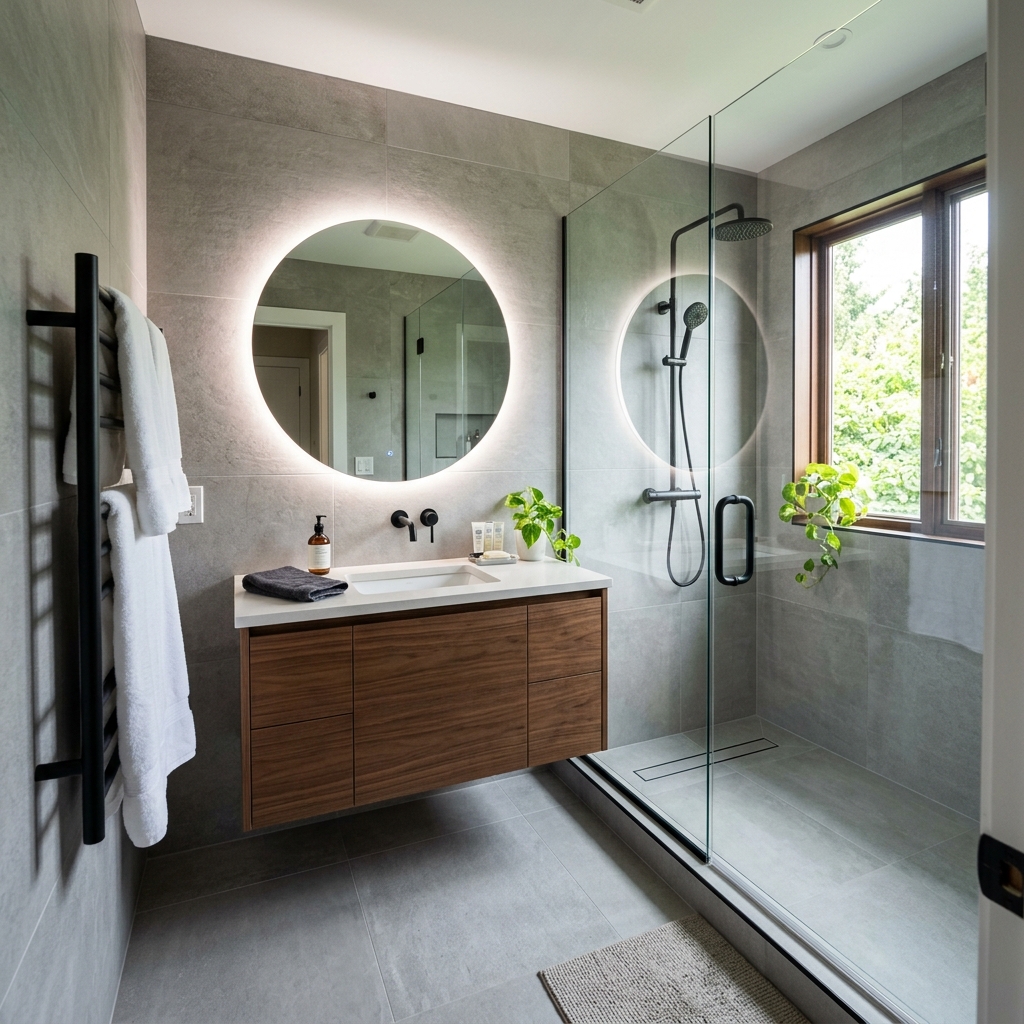
A bathroom renovation is the second most common home improvement project after kitchens — and the one where plumbing decisions have the greatest impact on both budget and daily experience. From the luxury of a rain showerhead to the practicality of a bidet seat, every fixture choice involves plumbing considerations that are best addressed during planning, not mid-demolition.
Whether you're updating a tired powder room or building a master ensuite from scratch, here's your complete guide to bathroom renovation plumbing in Vancouver.
Planning Your Bathroom Plumbing Renovation
The "Wet Wall" Principle
Most bathrooms are designed with fixtures clustered on one or two "wet walls" — walls that contain the supply and drain pipes. Moving fixtures away from existing wet walls significantly increases plumbing costs because new pipe runs must be created through floors, walls, or ceilings.
Budget-saving rule: Keep at least the toilet and shower/tub on their existing walls. Moving the vanity is usually cheaper since its 1.5" drain is easier to relocate than a 3" toilet drain or 2" shower drain.
Assess Existing Plumbing Condition
Before finalizing your renovation plan, have your plumber assess the existing plumbing in the bathroom. In older North Shore homes, you may discover:
- Galvanized supply pipes that should be replaced with copper or PEX
- Cast iron drain pipes showing corrosion
- Insufficient venting that causes slow drainage
- Lead solder on copper joints (pre-1990 homes)
- Undersized supply lines limiting water pressure to upper-floor bathrooms
Addressing these issues during the renovation is dramatically cheaper than opening walls again later.
Fixture Relocation Costs
Understanding the relative cost of moving each fixture helps you make smart layout decisions:
- Vanity/sink (same wall)$500 – $1,500
- Vanity/sink (different wall)$1,500 – $3,000
- Shower/tub (same location, new fixtures)$1,000 – $2,500
- Shower/tub (different location)$3,000 – $6,000
- Toilet (same location)$300 – $600
- Toilet (different location)$1,500 – $4,000
These are plumbing-only costs and don't include the fixtures themselves, tile, or finish work. The lesson: keeping fixtures in place saves thousands, while moving the toilet costs the most.
Showers, Tubs, and Waterproofing
Walk-In Shower Conversions
Converting a tub to a walk-in shower is one of the most popular bathroom renovations. The plumbing considerations include:
- Drain relocation: Tub drains are at one end; shower drains are typically centered or linear — requiring a new drain location
- Shower valve: Modern thermostatic mixing valves with pressure-balancing prevent scalding and provide a consistent temperature
- Multiple shower heads: Rain head, hand shower, and body jets each require supply lines roughed in at the correct height
- Linear drains: These popular modern drains require more precise floor slope planning and larger-capacity drain connections
Freestanding Tub Installation
Freestanding tubs require floor-mounted or wall-mounted filler valves. The drain must be accessible from below for future maintenance. Discuss the specific tub model with your plumber before purchase — each has different rough-in requirements.
Waterproofing
BC Building Code requires waterproof membranes in all shower and tub surrounds. Options include sheet membranes (Kerdi, NobleSeal), liquid-applied membranes, and PVC liner systems. In Vancouver's wet climate, we recommend waterproofing beyond code minimums — extending membranes up full wall height in shower areas and adding moisture barriers on all wet-wall surfaces.
Proper shower pan construction and waterproofing prevents the mold and rot that costs thousands to remediate when it's done wrong. This is one area where experienced tradespeople make all the difference.
Toilet Options and Upgrades
Modern toilets offer significant upgrades over older models:
- Dual-flush: 3/6 litre flush options save 30%+ water versus older single-flush models
- Comfort height: 2-3 inches taller than standard, easier for adults and accessibility
- Wall-hung: Dramatic visual upgrade but requires a concealed carrier frame (Geberit or similar) built into the wall — plan this during framing
- Bidet seats: Bidet seat installation requires a nearby electrical outlet (GFCI protected) — plan this during the electrical rough-in
If you're replacing a toilet in the same location, the rough-in measurement (distance from wall to center of drain) is critical. Standard is 12 inches, but older homes may have 10" or 14" rough-ins. Measure before purchasing.
Vanity Plumbing Considerations
Single vs. Double Vanity
Upgrading from a single to double vanity requires a second set of supply lines (hot and cold) and a second drain connection. If the existing plumbing only supports one sink, expect $800–$2,000 for the additional plumbing work depending on proximity to existing pipes.
Vessel Sinks
Vessel (above-counter) sinks require wall-mounted or tall faucets and a different drain height than standard undermount or drop-in sinks. Discuss your sink choice with the plumber during rough-in planning.
Floating Vanities
Wall-mounted (floating) vanities expose the plumbing beneath. This means supply valves and P-traps need to be chrome or brushed nickel finish for aesthetics, or the plumbing can be routed through the wall for a clean look. Either approach affects the rough-in plan.
While-You're-At-It Upgrades
Since the walls are open, consider these cost-effective additions:
- Heated floor rough-in — even if you install the heating system later, running the thermostat wire and ensuring proper subfloor now costs almost nothing extra
- Hot water recirculation line — delivers instant hot water to the bathroom, eliminating the wait and water waste
- Pressure-balanced or thermostatic shower valve — prevents scalding when someone flushes a toilet
- GFCI outlets near water — BC Electrical Code requires these, and renovation is the time to add them
- Replace all supply valves — swap old gate valves for quarter-turn ball valves at every fixture