
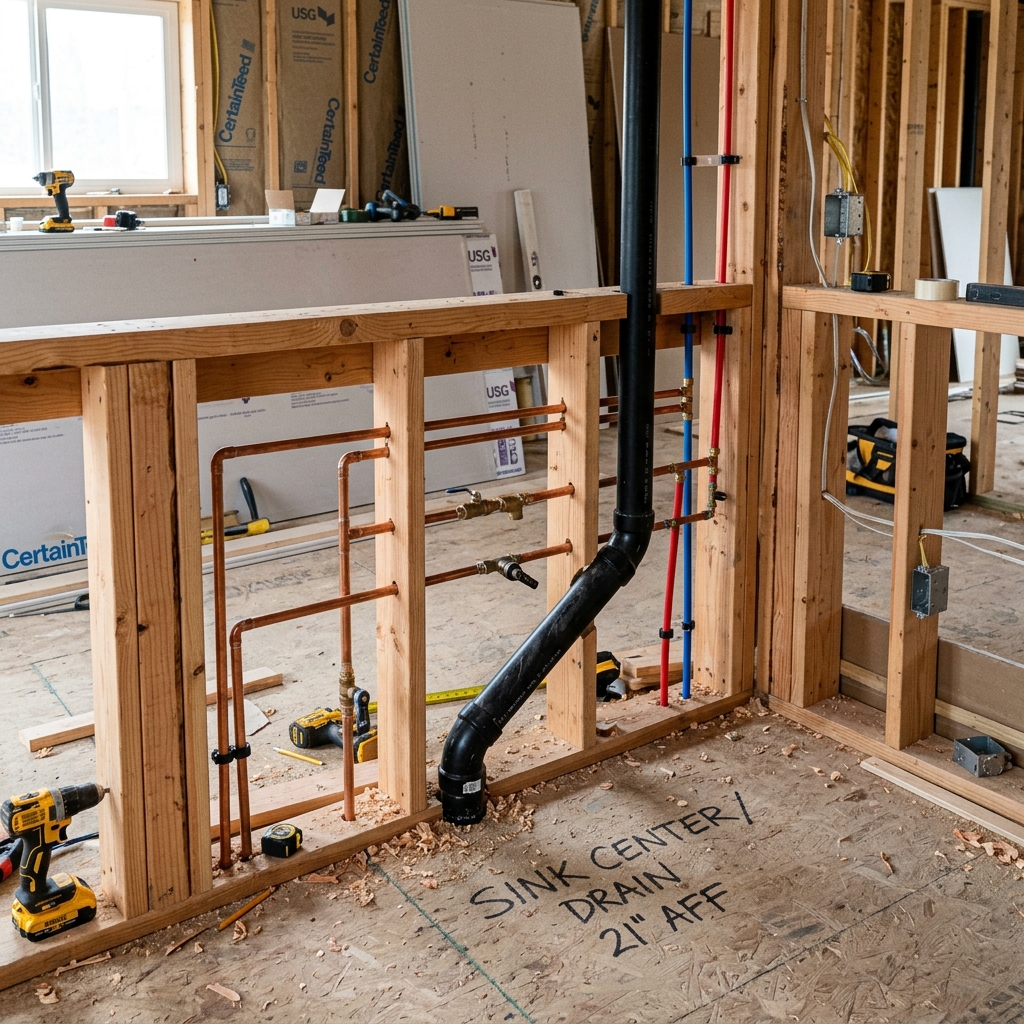
A kitchen renovation is one of the most exciting — and expensive — projects a homeowner can undertake. But here's what many Vancouver homeowners discover too late: the plumbing decisions you make at the planning stage have the biggest impact on your budget, timeline, and final result. Moving a sink 6 feet can add $3,000 to your project. Forgetting to add a gas line for that gorgeous new range means tearing into finished walls later.
This guide covers everything you need to plan with your plumber before the demolition crew arrives.
Planning Your Kitchen Plumbing: Start Here
Involve Your Plumber Before Finalizing the Design
The biggest mistake in kitchen renovation plumbing is treating the plumber as an afterthought. Many homeowners finalize their kitchen design with a designer, order cabinets, and then call a plumber — only to discover that the design requires expensive plumbing modifications that could have been avoided with a slightly different layout.
Have your plumber assess the existing plumbing during the design phase. They'll identify:
- Where supply and drain lines currently run
- What can be moved easily vs. what requires major work
- Structural elements that may complicate pipe routing
- Opportunities to upgrade old pipes while walls are open
Assess Your Existing Plumbing
Before renovation planning, understand what's in your walls. Older North Vancouver homes may have galvanized steel supply pipes, cast iron drain lines, or outdated venting. A renovation is the perfect (and most cost-effective) time to update these systems while the walls are already open.
Layout Changes and Their Plumbing Impact
Keeping the Sink in Place
The most budget-friendly option. If your sink stays in the same location, plumbing costs are minimal — typically just connecting new fixtures to existing supply and drain lines. Cost: $500–$1,500 for fixture installation and connection updates.
Moving the Sink Along the Same Wall
Moving the sink a few feet along the same wall is relatively straightforward. Supply lines extend easily, and the drain can often be rerouted within the wall cavity. Cost: $1,500–$3,000 depending on distance.
Moving the Sink to a Different Wall
This is where costs climb. Supply lines need to run through the floor or ceiling to reach the new location. The drain line must be rerouted while maintaining proper slope (1/4 inch per foot for 1.5" pipe). If the new location is far from the main stack, a new vent connection may be required. Cost: $3,000–$6,000.
Adding a Kitchen Island Sink
An island sink is the most plumbing-intensive option. Supply lines must run through the floor, and the drain must connect to the main system with adequate venting. Traditional venting through the roof isn't possible from an island, so an air admittance valve (AAV) or loop vent is required — both need to meet BC Building Code requirements. Cost: $3,000–$6,000 for the plumbing alone.
Choosing Kitchen Fixtures
Kitchen Faucets
Modern kitchen faucets range from $150 to $1,500+. Beyond aesthetics, consider practical features: pull-down sprayers, touchless operation, pot fillers, and instant hot water dispensers. Discuss faucet choice with your plumber early — some require additional supply connections or specific sink/counter preparations.
Sinks
Undermount vs. drop-in affects countertop requirements. Single-basin vs. double-basin affects drain configuration. Farmhouse (apron-front) sinks require specific cabinet modifications. Discuss your sink choice with your plumber so the rough-in is correct the first time.
Dishwasher
If you're adding a dishwasher where one didn't exist before, you'll need: hot water supply line, drain connection (typically through the garbage disposal or directly into the sink drain with an air gap), and a dedicated 20-amp electrical circuit. The air gap or high loop drain connection is code-required in BC to prevent backflow.
Garbage Disposal
Adding or upgrading a disposal requires proper electrical and plumbing connections. If upgrading to a higher-horsepower model, verify the drain pipe sizing is adequate. The disposal connection also serves as the dishwasher drain point in most configurations.
Pot Filler
A wall-mounted pot filler above the stove requires a cold water supply line run through the wall — plan this during the rough-in phase, not after tile is installed. Cost: $300–$800 for the plumbing (fixture is separate).
Gas Line Considerations
If you're installing or upgrading a gas range, cooktop, or oven, gas line work must be planned early:
- New gas line installation: $400–$1,200 depending on distance from the gas meter and complexity of the run
- Upgrading gas line size: Higher-BTU appliances (professional-style ranges) may require larger gas pipe — verify before purchasing
- Flexible connections: All gas appliances should use CSA-approved flexible connectors for earthquake safety
- Permits required: All gas line work in North Vancouver requires permits and inspection by a licensed gas fitter
Don't make the common mistake of ordering a gas range without confirming that a gas line exists (or can be installed) at the range location. Switching from electric to gas requires running a new gas line — this is much easier to do during renovation than after.
While the Walls Are Open: Don't Miss These Opportunities
A kitchen renovation is the most cost-effective time to address underlying plumbing issues. Since walls are already open, the labour cost of these upgrades is minimal compared to doing them as standalone projects later:
- Replace galvanized pipes with copper or PEX — if any section passes through the kitchen, do it now
- Add shutoff valves — modern quarter-turn ball valves at every fixture
- Install water hammer arrestors — prevents banging pipes when valves close quickly
- Run a prep line for future appliances — ice maker, pot filler, or second dishwasher
- Install a water filtration system rough-in — even if you don't install the filter now
Permits and Inspections
In the District and City of North Vancouver, plumbing permits are required for:
- Any new plumbing fixture installation
- Relocating existing fixtures
- New or modified drain/waste/vent piping
- Gas line installation or modification
- Water heater replacement (in some municipalities)
Your licensed plumber should handle permit applications and schedule required inspections. The rough-in inspection must happen before walls are closed — coordinate this with your general contractor's schedule. Skipping permits can void your insurance, create issues when selling, and result in unsafe installations.