Poly-B Plumbing in BC: What Homeowners Need to Know
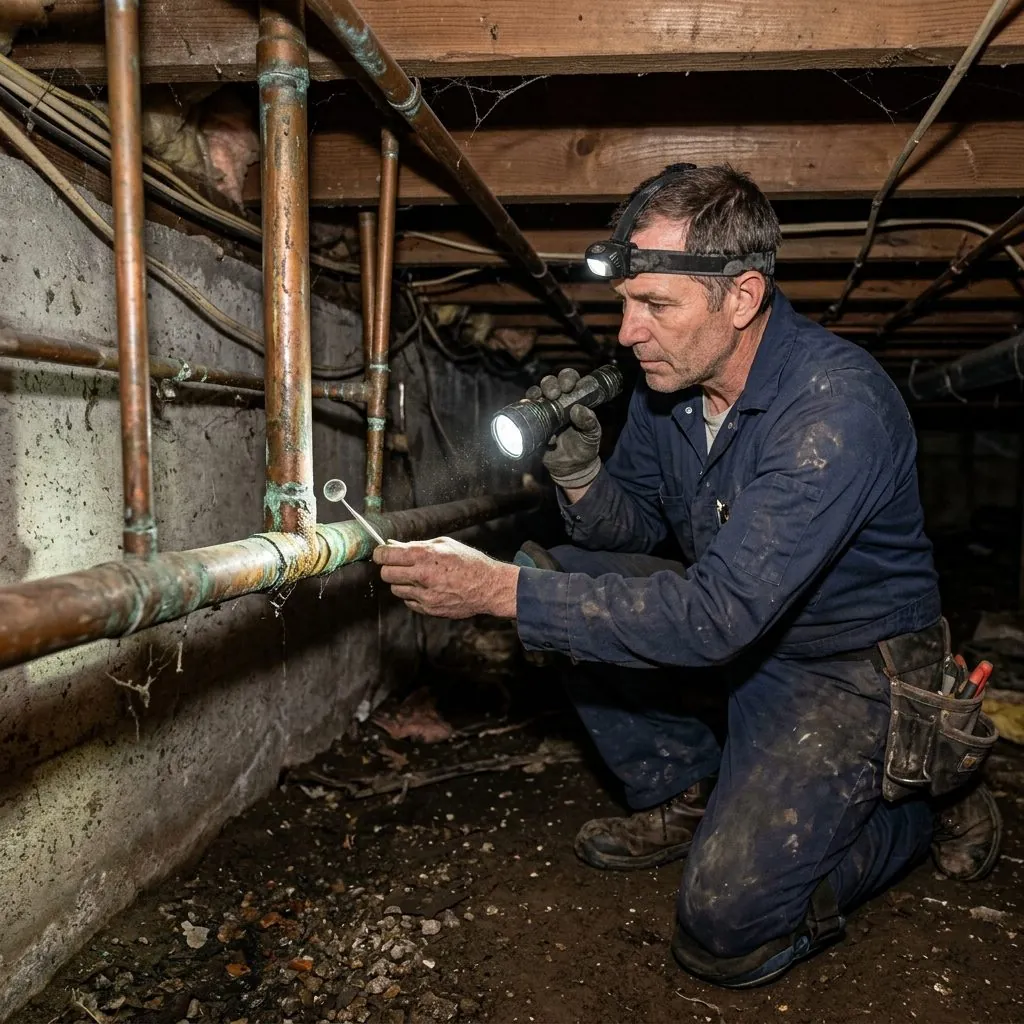
Table of Contents
Poly-B (polybutylene) is a grey plastic water-supply pipe that was used in many BC homes from the late 1970s until the mid-1990s. It was taken off the list of approved materials in Canadian plumbing codes, and many insurers now add surcharges or water-damage limits, or require it to be replaced. If your North Shore home was built or re-plumbed in that period, check for Poly-B before it fails or before your insurance renews.
What is Poly-B pipe?
Poly-B is short for polybutylene. It is a flexible plastic pipe used for hot and cold water supply lines. It was popular because it was cheaper and faster to install than copper.
An estimated 700,000 Canadian homes were plumbed with it. On the North Shore we see it most often in:
- Houses and townhouses built from about 1978 to 1996 in Lynn Valley, Blueridge, Westlynn, Lower Lonsdale and the British Properties
- Older homes where part of the plumbing was redone during a 1980s or 1990s renovation
- Condo buildings and strata townhouse complexes from the same years
Poly-B is used only for water supply. Your drains (the larger black ABS or cast iron pipes) are a different material and are not Poly-B.
Why Poly-B fails
Poly-B does not usually leak along a straight run of pipe. Failures tend to start at the fittings and where the pipe is under stress:
- Fittings and crimp rings. Early plastic fittings crack with age. Metal fittings with copper crimp rings can loosen or corrode.
- Chlorine in municipal water. Over decades, disinfectants in treated water make the pipe brittle from the inside. The damage is invisible until the pipe splits.
- Heat. Lines near the hot water tank or boiler age fastest.
- High water pressure. Many North Shore homes sit on hillsides with very high street pressure. If your pressure reducing valve (PRV) is worn, that extra pressure stresses every fitting in the house. See our guide to high water pressure and PRVs.
The real risk is not a slow drip. It is a fitting that lets go while you are at work or away, and runs at full pressure until someone finds it.
How to identify Poly-B in your home
Check where pipes are exposed: the mechanical or laundry room, under sinks, beside the hot water tank or boiler, and in an unfinished crawlspace.
- Colour. Poly-B is usually grey. Some was black, white or blue, so colour alone does not prove anything.
- Flexibility. It bends gently. Rigid grey pipe is more likely CPVC or PVC.
- Markings. Look for "PB2110" or "CSA B137.8" printed along the pipe. This is the most reliable sign.
- Fittings. Grey or white plastic insert fittings, or brass fittings held on with copper crimp rings.
- Size. Usually ½ inch to 1 inch diameter.
Do not confuse it with PEX, the modern replacement. PEX is usually red, blue or white and is stamped "PEX".
If the pipe enters the house through the foundation from the street, check that too. Some North Shore homes also have Poly-B as the underground water service line. That needs a different repair, often trenchless water line replacement.
Not sure? We can confirm it on site and tell you how much of the house is affected.
Poly-B and home insurance in BC
This is usually why homeowners call us. Insurers handle Poly-B differently, and policies change at renewal. What we hear from customers and brokers:
- Surcharges. Some insurers keep covering the home but add a premium.
- Water damage limits. Some reduce or exclude water damage coverage while Poly-B is still in place.
- Replacement deadlines. Some require proof of replacement within a set period, often 30 to 90 days, before they will renew.
- Buying or selling. Buyers' insurers often ask about Poly-B. It can come up late in a sale and hold up the closing.
Replacement itself is usually treated as maintenance, not a covered loss. A policy will generally not pay to replace pipe that has not leaked.
What to do: Ask your broker exactly what your policy says about Poly-B and what proof they need. We provide a written invoice that lists the work and the new material. Insurers usually ask for this as proof of replacement.
Should you replace Poly-B?
In most cases, yes. The question is when. Replace it soon if:
- Your insurer has asked for it, or you are buying or selling
- You have had a leak at a Poly-B fitting
- You see fittings with white residue, discoloured crimp rings or drips
- Your water pressure is high or your PRV is old
- You are already opening walls or ceilings for a renovation
If none of these apply, you can plan the work. Get an inspection, budget for it, and schedule it before your next insurance renewal.
What Poly-B replacement involves
We replace the old supply lines with PEX (or copper where it makes sense) and change the main shut-off and fittings at the same time.
- Inspection and scope. We trace the Poly-B runs, check the water service and PRV, and give you a written scope and price before any work starts.
- Permit. Whole-home repipes need a plumbing permit. We handle the permit for you.
- Planning the routes. We plan new pipe routes to keep openings small. Unfinished basements and crawlspaces make the job much easier.
- Repipe. New lines go to every fixture, the hot water tank or boiler, and the hose bibs. Water is shut off only while connections are made, and we restore it at the end of each day where possible.
- Testing and inspection. The system is pressure-tested and inspected.
How long does it take? It depends on the size of the house and how easy the pipes are to reach. We schedule it to be done as fast as possible, and you get a clear timeline before we start.
Drywall: Repipes need some small openings in walls or ceilings. Patching and painting are the homeowner's responsibility, but we can refer a drywall contractor we trust (billed separately).
How much does Poly-B replacement cost?
Approximate ranges for the North Shore and Metro Vancouver in 2026:
| Home type | Approximate range |
|---|---|
| Condo or small townhouse | $5,000 – $12,000 |
| Average detached house (2–3 bathrooms) | $10,000 – $20,000 |
| Large or multi-level house, finished basement | $18,000 – $30,000+ |
| Underground Poly-B water service line | Priced separately; see our water line guide |
Want an exact price for your home?
These are ranges. We give you a free on-site estimate and a fixed written price before any work starts.
What moves the price:
- Number of bathrooms and fixtures
- How many ceilings and walls are finished
- Access from a crawlspace or unfinished basement
- Whether the PRV, main shut-off or hot water tank connections also need work
- Strata rules for condos and townhouses
These are ranges, not quotes. Every home is different, so we give you a fixed written price after the inspection.
Poly-B in condos and townhouses
In a strata building, the pipes in your walls may be common property or your responsibility, depending on the bylaws. Many strata councils on the North Shore are planning building-wide replacement. Check with your strata manager before booking work, and ask whether the strata has an engineering report or a set plan.
Frequently asked questions
Get a Poly-B inspection
Lord Mechanical is a licensed plumbing and heating company based at 250 E 2nd St, North Vancouver. Our customers give us 4.9 stars from 134 Google reviews. We will confirm whether you have Poly-B, explain what your insurer is likely to ask for, and give you a written, fixed price.
Poly-B Replacement service · Plumber in North Vancouver