
Poly-B Pipe Replacement in North & West Vancouver
We replace grey polybutylene water lines with modern PEX, fix Poly-B leaks, and give you the paperwork your insurer asks for.
The Grey Pipe Hiding in Thousands of North Shore Homes
Polybutylene, or Poly-B, is a grey plastic water supply pipe that was widely installed in BC homes from the late 1970s to the mid-1990s. It was cheap and quick to install. It also turned out to be unreliable.
On the North Shore we find it most often in houses and townhomes built or renovated in the 1980s and early 1990s: neighbourhoods such as Lynn Valley, Blueridge, Seymour and parts of West Vancouver like Gleneagles. Renovations from that era can also leave a section of Poly-B in an otherwise copper house.
How to spot it: flexible grey pipe, roughly the thickness of a finger, often stamped PB2110. Check where the water line comes into the house, around the hot water tank, and under sinks. Fittings may be grey plastic or copper crimp rings; the plastic fittings are the weakest point.
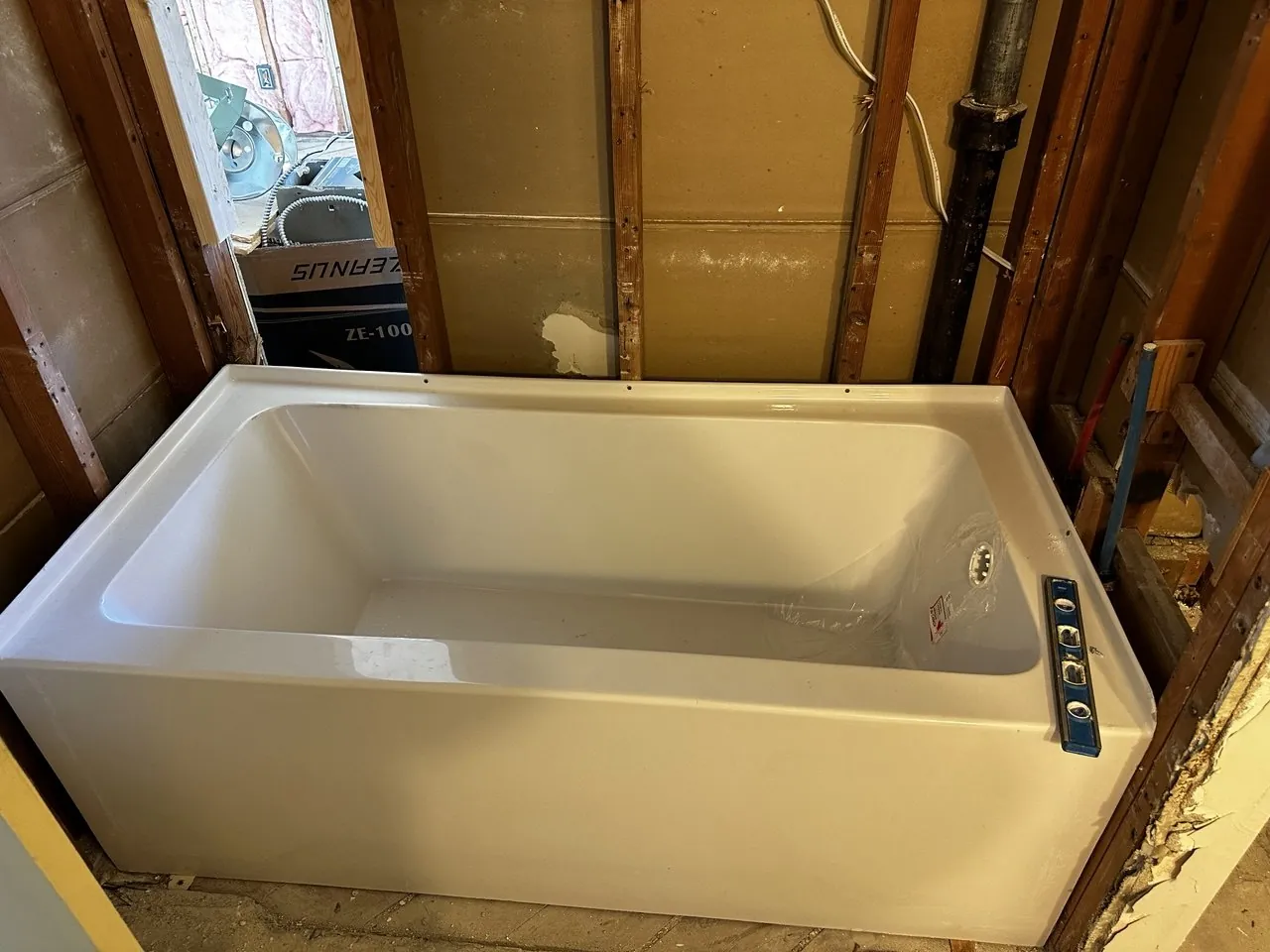
From our Mill St, North Vancouver project: the existing Poly-B lines were removed and replaced with PEX during a bathroom renovation.
Why Poly-B Fails
It breaks down from the inside
Chlorine in municipal water slowly attacks polybutylene. The pipe can look fine on the outside while it becomes brittle inside, so there is often no warning before it splits.
Weak fittings
Plastic fittings crack and crimp joints loosen with age. Many of the Poly-B leaks we repair start at a fitting near the hot water tank or under a sink.
High water pressure
Hillside homes on the North Shore can see very high street pressure. Without a working pressure reducing valve, aging Poly-B is under constant stress.
What Poly-B Means for Your Insurance
Because Poly-B leaks can cause major water damage, many home insurers ask whether a house has it. Depending on the company, the answer can mean a higher premium, limited water-damage coverage, or a requirement to replace the piping before the policy renews. It also comes up when buying or selling: home inspectors flag it, and buyers' insurers may ask about it.
Every insurer is different, so ask your broker what they need. Once the repipe is done, we can provide documentation describing the work so you can update your policy.
Before you call your insurer
- Take photos of the grey pipe and any stamp you can read.
- Note where it runs: whole house, or only one area such as a basement suite or a renovated bathroom.
- Ask whether the insurer needs the whole system replaced, or only visible sections.
- Ask what proof of replacement they accept.
Our Poly-B to PEX Repipe Process
PEX is a flexible, durable plastic supply pipe that is widely used in new homes today. It needs fewer joints than rigid pipe and can often be run through existing wall cavities, which keeps drywall openings to a minimum.
Inspection & written quote
We trace where the Poly-B runs, count fixtures, check the main shut-off and pressure reducing valve, and give you a written, itemized quote.
Plan the access
We map the route for the new lines through basements, crawlspaces and existing cavities, and agree on where small openings will be made.
Install PEX & new valves
New PEX supply lines to every fixture, with new shut-off valves. We recommend replacing a worn main shut-off or PRV at the same time.
Pressure test & paperwork
The new system is pressure-tested, the old Poly-B is disconnected, permits are closed where required, and you get documentation for your insurer.
Timeline: depends on the size of the home and number of fixtures; we plan every job to finish as quickly as possible. Permits: we take care of the permit work required. Drywall: patching the openings is the homeowner's responsibility; we can refer a drywall contractor we trust, billed separately.
What Affects the Cost of a Repipe
Every house is different, so we quote after seeing it. These are the things that make the biggest difference.
Size & fixtures
The number of bathrooms, kitchens, laundry and outdoor taps sets how much new pipe and how many connections are needed.
Access
Open basements and crawlspaces make for a faster job than finished ceilings and walls on every floor.
Whole home or one section
Some homes have Poly-B only in a suite or a renovated area. A single leak can also be repaired on its own as a stop-gap.
Want a rough idea first? Our guide Trenchless water line & Poly-B leak repair lists typical price ranges. For your home, book a free quote or call (604) 670-3737.
Poly-B Replacement FAQ
Poly-B is a flexible grey plastic pipe, usually about the thickness of a finger, often stamped PB2110. Look where the water line enters the house, at the hot water tank, and under sinks. Some Poly-B systems have grey or copper crimp fittings; plastic fittings are the most failure-prone. Not sure? Send us a photo or book an inspection.
Polybutylene degrades from the inside when exposed to chlorinated municipal water, and its fittings can crack. It often fails without warning, which can flood a home. That risk is why many insurers ask about it.
It depends on your insurer. Some BC insurers charge more, limit water-damage coverage or require Poly-B to be replaced before renewing. Ask your broker. After a repipe we can provide documentation of the work for your insurer.
The cost depends on the size of the home, the number of fixtures and how easy it is to reach the existing lines. We give you a free written quote after inspecting the house. For rough price ranges, see our trenchless water line & Poly-B repair guide.
It depends on the size of the home and the number of fixtures. We plan every repipe to finish as quickly as possible, shut the water off only while lines are being connected, and restore water at the end of each work day wherever possible.
Yes, for the piping inside your unit. Strata buildings usually require approval before plumbing work, so check with your strata council or property manager first. We can provide a quote and work plan for that approval.
Repiping work can require a plumbing permit from your municipality. We take care of the permit work required for the job, so you do not have to deal with the city or district yourself.
Patching and painting the small wall and ceiling openings is the homeowner's responsibility. If you prefer, we can refer a drywall contractor we work with, billed separately.
Often Done at the Same Time
Water Line Replacement
Old underground water service failing too? One-day trenchless replacement from the street to the house.
Learn MorePRV & Shut-Off Valves
Protect the new pipes with a working pressure reducing valve and a modern main shut-off.
Learn MoreHot Water Tanks
Repiping is a good moment to replace an aging water heater: one shutdown instead of two.
Learn MoreReady to Get Rid of Poly-B?
Book an inspection and written quote, or send us a photo of your pipes and we'll tell you what you're looking at.