Indoor Air Quality: How Air Filtration Protects Your Family
Table of Contents
Canadians spend approximately 90% of their time indoors, yet indoor air can be 2-5 times more polluted than outdoor air according to Health Canada. For Vancouver-area homeowners, the annual wildfire smoke seasons have made indoor air quality a critical health concern. The good news: modern HVAC-integrated filtration systems can transform your home into a clean-air sanctuary—if you choose the right technology.
Why Indoor Air Quality Matters More Than Ever
British Columbia's wildfire seasons have intensified dramatically. The summers of 2023 and 2024 saw Air Quality Health Index (AQHI) readings reach "very high risk" levels in North Vancouver and across the Lower Mainland for weeks at a time. Fine particulate matter (PM2.5) from wildfire smoke penetrates deep into the lungs and can trigger asthma attacks, aggravate heart disease, and cause long-term respiratory damage.
But wildfire smoke isn't the only concern. Modern homes, built increasingly airtight for energy efficiency, can trap pollutants generated from everyday activities:
- Cooking: Gas stoves produce nitrogen dioxide (NO2) and particulate matter. Even electric cooking generates grease particles and volatile organic compounds (VOCs).
- Cleaning products: Spray cleaners, air fresheners, and scented candles release VOCs and formaldehyde into your home.
- Building materials: Off-gassing from new furniture, carpets, paint, and laminate flooring can continue for months or years.
- Pets: Pet dander is a leading allergen and can circulate through ductwork for months after cleaning.
- Mould: Vancouver's wet climate makes mould a persistent problem, especially in older homes with inadequate ventilation.
Common Indoor Air Pollutants in BC Homes
Understanding what's in your air helps you choose the right filtration approach:
Particulate Matter (PM2.5 and PM10)
Fine particles smaller than 2.5 microns are the most dangerous because they bypass your nose and throat defenses and penetrate deep into lung tissue. Sources include wildfire smoke, cooking, candles, and dust. Mechanical filtration (MERV 13+ or HEPA) is the most effective removal method.
Volatile Organic Compounds (VOCs)
Gases emitted from paints, adhesives, cleaning products, and building materials. Long-term exposure is linked to headaches, fatigue, and respiratory issues. Activated carbon filters are most effective against VOCs—standard particulate filters cannot capture gases.
Biological Contaminants
Mould spores, bacteria, viruses, pet dander, and dust mites. These are particularly problematic in Vancouver's humid climate. UV-C germicidal lights and HEPA filtration are the most effective controls.
Carbon Monoxide (CO) and Radon
CO comes from gas-burning appliances (furnaces, water heaters, stoves). Radon is a naturally occurring radioactive gas that seeps from the ground into basements. Neither is removed by air filters—CO requires properly maintained combustion appliances and CO detectors, while radon requires specialized mitigation systems.
Understanding MERV Ratings
MERV (Minimum Efficiency Reporting Value) rates a filter's ability to capture particles. Higher is better, but there's a critical trade-off with airflow:
- MERV 1-4: Basic protection. Captures large dust and debris. The cheapest fiberglass filters fall here—essentially just protecting the equipment, not your health.
- MERV 8: Good for general residential use. Captures dust, pollen, and mould spores. Most builders install MERV 8 filters as standard.
- MERV 11: Better allergen control. Captures finer dust, pet dander, and some smoke particles. A meaningful upgrade for allergy sufferers.
- MERV 13: Our recommended minimum. Captures 85%+ of particles down to 1 micron, including most bacteria and wildfire smoke particles. This is the "sweet spot" for most residential HVAC systems.
- MERV 16: Hospital-grade filtration. Excellent performance but may restrict airflow in residential HVAC systems not designed for high-static-pressure filters.
- HEPA (MERV 17-20): The gold standard. Captures 99.97% of particles at 0.3 microns. Too restrictive for standard furnace/heat pump blowers—requires a bypass installation or dedicated HEPA unit.
Important: Never install a filter with a higher MERV rating than your HVAC system is designed to handle. An overly restrictive filter reduces airflow, causes the system to overheat, and can crack heat exchangers. A qualified HVAC technician can determine the highest safe MERV rating for your specific system.
Types of Air Filtration Systems
Standard Pleated Filters (MERV 8-13)
The most straightforward upgrade. Replace your basic 1" filter with a MERV 13 pleated filter—or better yet, upgrade to a 4-5" media filter cabinet. Thicker filters have more surface area, last longer (3-6 months vs 1-3 months), and capture more particles without restricting airflow.
Whole-Home HEPA Bypass Systems
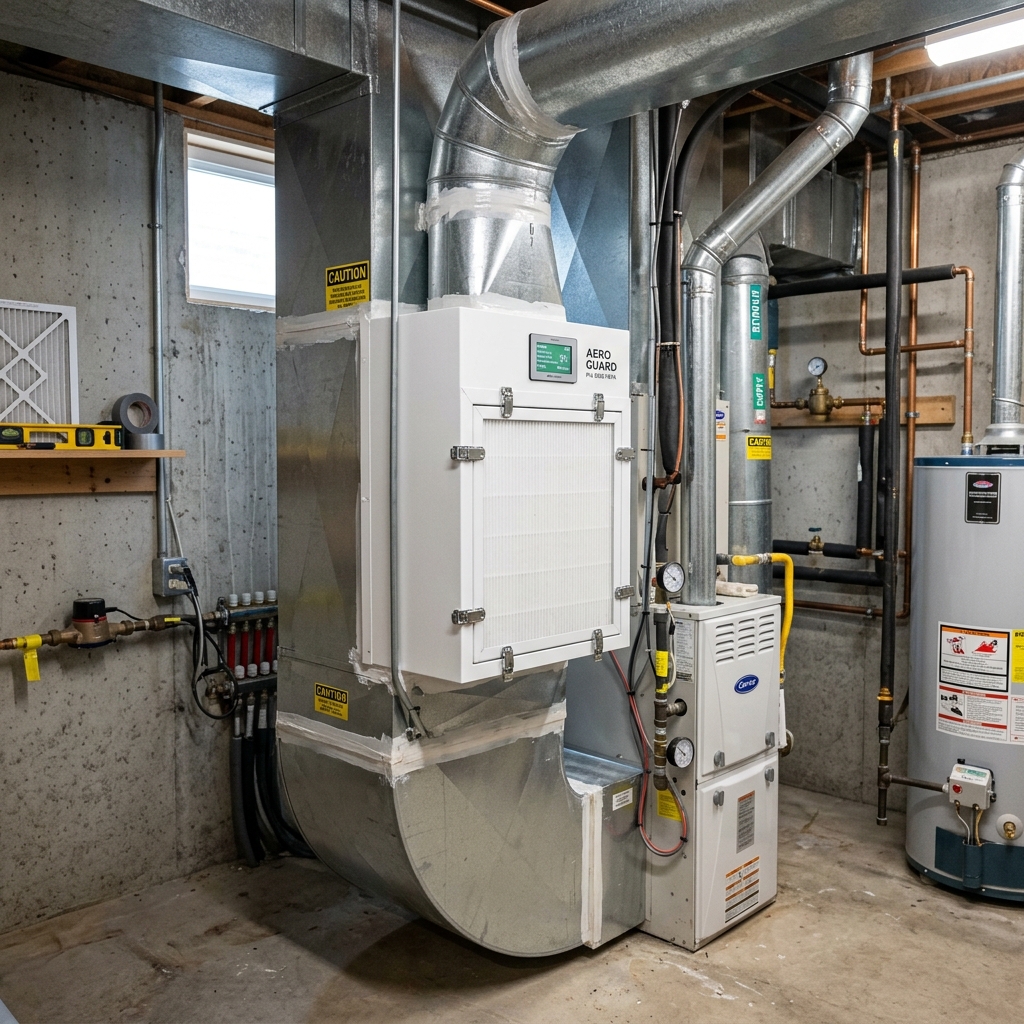
A dedicated HEPA filter unit installed in parallel with your main ductwork. It draws a portion of the return air through a true HEPA filter and returns the cleaned air to the supply duct. This provides hospital-grade filtration without restricting airflow to your furnace or heat pump.
Electronic Air Cleaners
These use electrostatic charging to attract and capture particles onto collector plates. They're effective, don't restrict airflow, and have washable collector plates (no ongoing filter costs). However, some models produce trace amounts of ozone, which is itself a lung irritant. Look for ozone-free certified models.
UV-C Germicidal Lights
Ultraviolet-C lamps installed inside your ductwork or air handler neutralize bacteria, viruses, and mould spores by destroying their DNA. They're particularly effective in preventing mould growth on the evaporator coil—a common problem in Vancouver's humid climate. UV lights complement mechanical filtration but don't replace it, as they don't capture particulate matter.
Activated Carbon Filters
Carbon filters adsorb gaseous pollutants (VOCs, odours, and some chemicals) that pass right through mechanical filters. They're often combined with HEPA or high-MERV filtration for comprehensive coverage. Essential for homes with gas stoves, new renovations, or occupants sensitive to chemical odours.
Protecting Your Home During Wildfire Season
When BC's Air Quality Health Index climbs to "high risk" levels, here's what we recommend for North Shore homeowners:
- Close all windows and doors. Seal any gaps around windows and doors with temporary weather stripping if needed.
- Run your HVAC fan continuously. Set the fan to "ON" instead of "AUTO" so air is constantly being filtered, even when the system isn't heating or cooling.
- Use MERV 13+ filters. If you haven't already upgraded, now is the time. Keep spare filters on hand during smoke season.
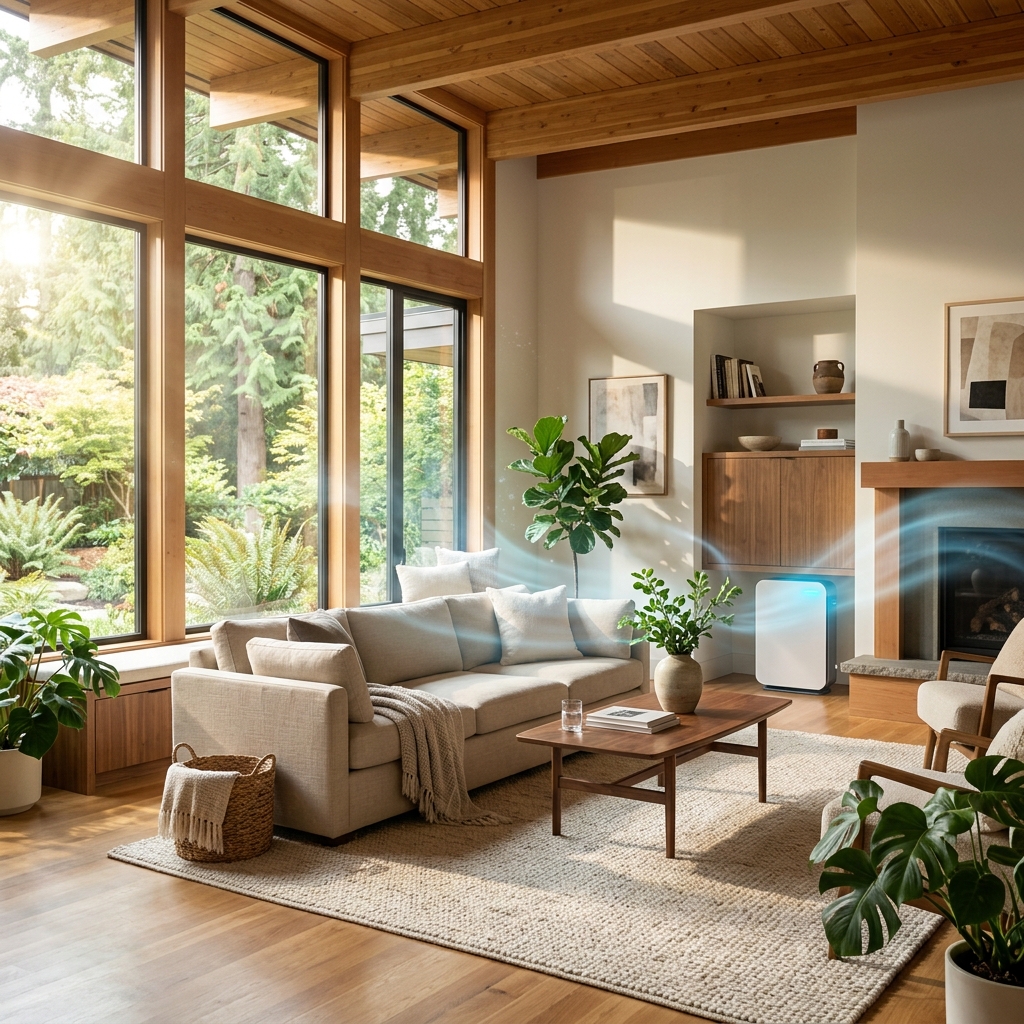
- Add a standalone HEPA purifier in bedrooms. You spend 8 hours sleeping—clean bedroom air has an outsized impact on your health.
- Avoid generating indoor pollutants. Don't burn candles, avoid frying foods, and skip the scented cleaners during smoke events.
- Check your fresh air intake. If your HVAC system has a fresh air intake, close or filter it during smoke events to prevent drawing in polluted outdoor air.
For long-term protection, a whole-home HEPA bypass system combined with a heat pump or AC system provides the best defence. You can keep your house sealed and cool while filtering 99.97% of smoke particles from recirculated air.
Ventilation: Fresh Air Without the Pollution
Tight homes need mechanical ventilation to bring in fresh air and exhaust stale air. The challenge is doing this without bringing in outdoor pollution. Solutions include:
Heat Recovery Ventilator (HRV)
An HRV exchanges stale indoor air for fresh outdoor air while recovering 70-80% of the heat energy. This is standard in new BC construction and increasingly retrofitted into older homes. During smoke season, HRVs can be equipped with MERV 13+ filters on the outdoor air intake to filter incoming air.
Energy Recovery Ventilator (ERV)
Similar to an HRV but also transfers moisture between air streams, helping maintain indoor humidity levels. ERVs are preferred in very dry climates but can be beneficial in Vancouver homes during the dry summer months.
Costs & Installation
- MERV 13 filter upgrade: $20-$40 per filter (replace every 3-6 months)
- 4-5" media filter cabinet: $300-$600 installed
- Whole-home HEPA bypass system: $1,500-$3,500 installed
- UV-C germicidal light: $500-$1,200 installed
- Electronic air cleaner: $1,000-$2,500 installed
- HRV/ERV system: $3,000-$6,000 installed
- Standalone HEPA room purifier: $200-$800 per unit
Many homeowners add filtration upgrades during a furnace or heat pump replacement, which saves on installation costs since the ductwork is already being accessed. Contact Lord Mechanical for a personalized recommendation based on your home and health priorities.
Frequently Asked Questions