Is a Ductless Mini-Split Right for Your Vancouver Home?
Table of Contents
Ductless mini-split heat pumps have exploded in popularity across Vancouver, and for good reason. They're efficient, quiet, and can be installed in homes that lack traditional ductwork—which describes a huge portion of the housing stock on the North Shore, from 1970s Lynn Valley ranchers to heritage homes in West Vancouver. But a mini-split isn't the right solution for every home. Here's how to know if it's right for yours.
What Is a Ductless Mini-Split?
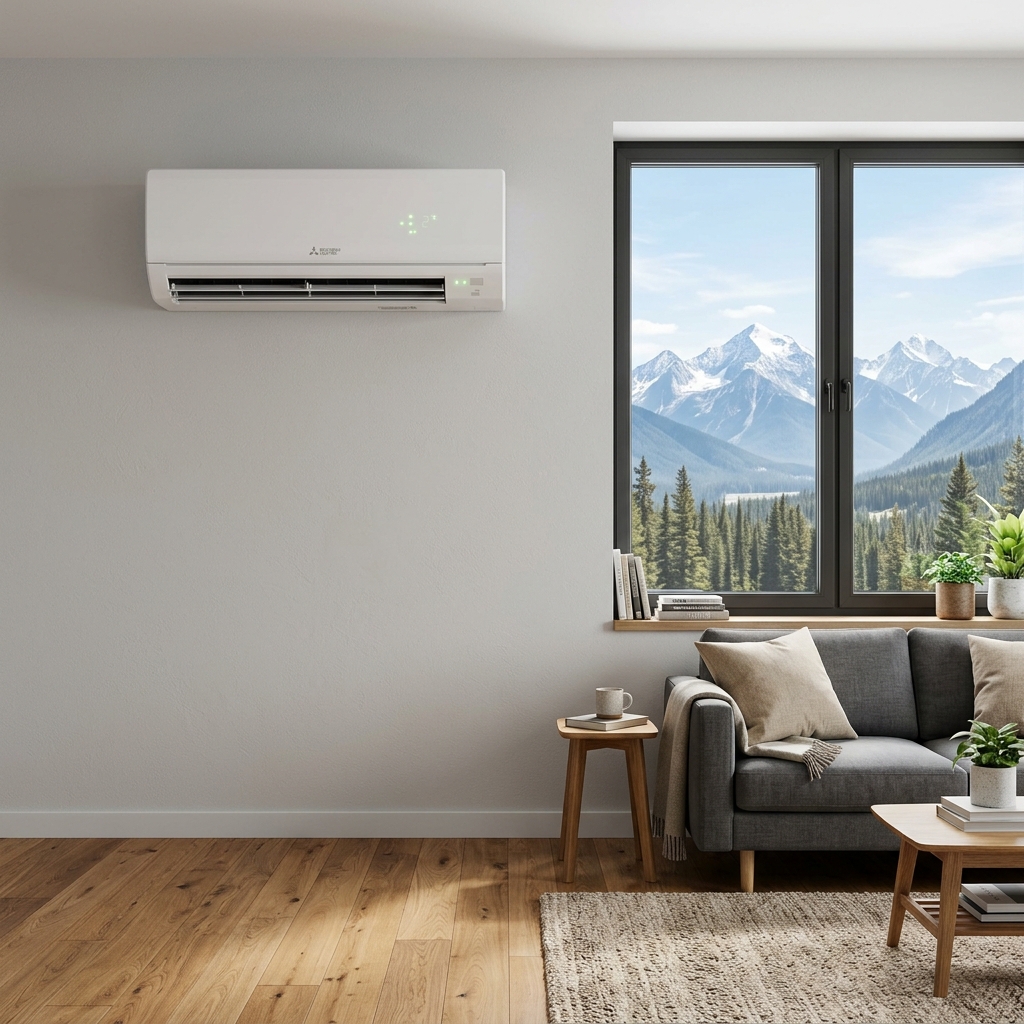
A ductless mini-split is a heat pump system consisting of two main components: a compact outdoor compressor unit and one or more indoor air-handling units mounted on walls (or ceilings). The indoor and outdoor units are connected by small refrigerant lines, an electrical cable, and a condensate drain—all running through a 3-inch hole in the wall. No ductwork required.
In heating mode, the system extracts heat from outdoor air and delivers it inside. In cooling mode, it reverses the process to provide air conditioning. Modern inverter-driven mini-splits adjust their output continuously to match the exact heating or cooling demand, maintaining remarkably stable temperatures with minimal energy waste.
How Does It Work?
The technology is the same as any heat pump, just delivered differently:
- The outdoor unit contains a compressor and a heat exchanger that absorbs heat from (or rejects heat to) the outdoor air.
- Refrigerant carries the absorbed heat through insulated copper lines to the indoor unit(s).
- The indoor unit contains a heat exchanger and a quiet fan that distributes warmed (or cooled) air directly into the room.
- An inverter-driven compressor modulates speed from 10% to 100%, avoiding the energy-wasting on/off cycling of conventional systems.
- A wireless remote or smart thermostat controls each indoor unit independently, enabling room-by-room temperature control.
Ideal Homes for Ductless Systems
Mini-splits are the clear winner for these common Vancouver home types:
Homes Without Ductwork
Many older Vancouver homes rely on baseboard heaters, radiant heat, or older boiler systems with no ductwork. Installing traditional ducts in a finished home costs $8,000-$15,000 and involves opening walls and ceilings. A ductless mini-split provides heating and cooling without the demolition, mess, and expense of duct installation.
Home Additions & Renovations
Adding a bedroom over the garage? Converting an attic to a home office? Finishing a basement suite? Rather than extending existing ductwork (which may already be undersized), a single-zone mini-split provides dedicated heating and cooling for the new space. This is the most common mini-split installation we perform in North Vancouver.
Heritage and Character Homes
West Vancouver and the North Shore have many heritage homes where homeowners want modern comfort without compromising original architectural details. The slim indoor units and minimal wall penetration of ductless systems make them the go-to solution for heritage renovations.
Multi-Level Homes with Hot Upper Floors
Many Vancouver homes have a common complaint: the upper floor is unbearably hot in summer while the main floor stays comfortable. A single mini-split head on the upper floor can solve this problem for $3,500-$5,500—far less than whole-home AC.
Rental Suites & Laneway Homes
Vancouver's laneway homes and basement suites need independent heating and cooling. A single-zone mini-split provides both, with its own thermostat for tenant control, at a fraction of the cost of extending the main home's HVAC system.
Advantages of Ductless Mini-Splits
- No ductwork needed: Installation takes 1-2 days with minimal disruption. Just a 3-inch hole in the wall.
- Zone control: Each indoor unit has its own thermostat. Heat the living room to 21°C and the bedroom to 18°C simultaneously.
- No duct losses: Ductwork typically wastes 15-25% of heating energy. Mini-splits deliver 100% of their output directly to the room.
- Whisper quiet: Indoor units operate at 19-32 dB—literally quieter than a library.
- Heating AND cooling: One system does both. No need for separate heating and cooling equipment.
- High efficiency: SEER ratings of 20-33 and HSPFs of 10-14 make mini-splits among the most efficient heating and cooling systems available.
- Smart controls: WiFi-enabled models let you control temperature from your phone, set schedules, and integrate with smart home systems.
- Compact design: The outdoor unit is smaller than a central heat pump compressor. Indoor units are slim and unobtrusive.
Potential Drawbacks
We believe in honest advice. Here are the real downsides to consider:
- Aesthetics: Wall-mounted indoor units are visible. Some homeowners don't love the look. Ceiling-cassette and slim-duct models exist for a more discreet installation, but they cost more.
- Per-zone cost adds up: While a single zone is affordable, a 4-5 zone multi-split system can cost $14,000-$18,000—comparable to or more than a ducted heat pump that serves the whole house.
- No central filtration: Unlike ducted systems, mini-splits can't integrate whole-home HEPA filtration or UV purification. Each indoor unit has its own washable filter, which captures dust but not fine particles.
- Multi-zone complexity: More indoor units mean more components that could eventually need service or replacement. A 5-head system has 5 fans, 5 control boards, and 5 sets of filters to maintain.
- Open floor plans: Mini-splits work best in defined rooms with doors. In open-concept layouts, a single head may struggle to distribute air evenly across a large combined space.
Costs & Rebates in Vancouver
Installation Costs
- Single-zone system: $3,500 – $5,500 installed
- Two-zone system: $7,000 – $10,000 installed
- Three-zone system: $10,000 – $14,000 installed
- Four+ zone system: $14,000 – $18,000 installed
Available Rebates
Ductless mini-split heat pumps qualify for substantial government incentives:
- CleanBC: Up to $3,000 (standard) or $6,000 (income-qualified enhanced)
- Canada Greener Homes Grant: Up to $5,000
- BC Hydro: Up to $2,000
- Municipal programs: $500-$1,000 (varies by municipality)
Read our complete 2026 BC heat pump rebate guide for stacking strategies that maximize your savings. A $5,000 single-zone installation could net down to $0-$1,500 out of pocket with combined rebates.
Top Brands We Recommend
- Mitsubishi Electric (Hyper-Heating): The industry leader. Highest cold-weather performance (rated to -25°C), quietest operation, and most reliable track record. Our most-installed brand.
- Daikin (Aurora Series): Excellent efficiency ratings, sleek design, and strong cold-climate performance. Great value for multi-zone installations.
- Fujitsu (Halcyon): Reliable mid-range option with very good cold-weather performance and competitive pricing.
- LG (Art Cool): Innovative design-focused indoor units that look more like art than HVAC equipment. Good for homeowners who prioritize aesthetics.
Ductless vs Ducted: Which to Choose?
Choose ductless mini-splits if:
- Your home has no existing ductwork
- You're heating/cooling an addition, suite, or single problem area
- You want room-by-room temperature control
- You need a less invasive installation
Choose a ducted heat pump if:
- Your home already has ductwork in good condition
- You want whole-home heating/cooling from one system
- You prefer hidden equipment (no wall units)
- You want integrated air filtration through ductwork
Not sure which is right for your home? Book a free consultation with Lord Mechanical. We'll assess your home and recommend the most cost-effective solution.
Frequently Asked Questions