Heat Pump vs Furnace: Which Is Right for Your Home?
Table of Contents
It's the biggest home comfort decision you'll make this decade: should you replace your aging heating system with a high-efficiency gas furnace, or make the leap to a heat pump? Both have advantages, and the right choice depends on your home, budget, and priorities. Here's a comprehensive, no-nonsense comparison from a team that installs both systems daily across the North Shore and Greater Vancouver.
How Each System Works
Gas Furnace
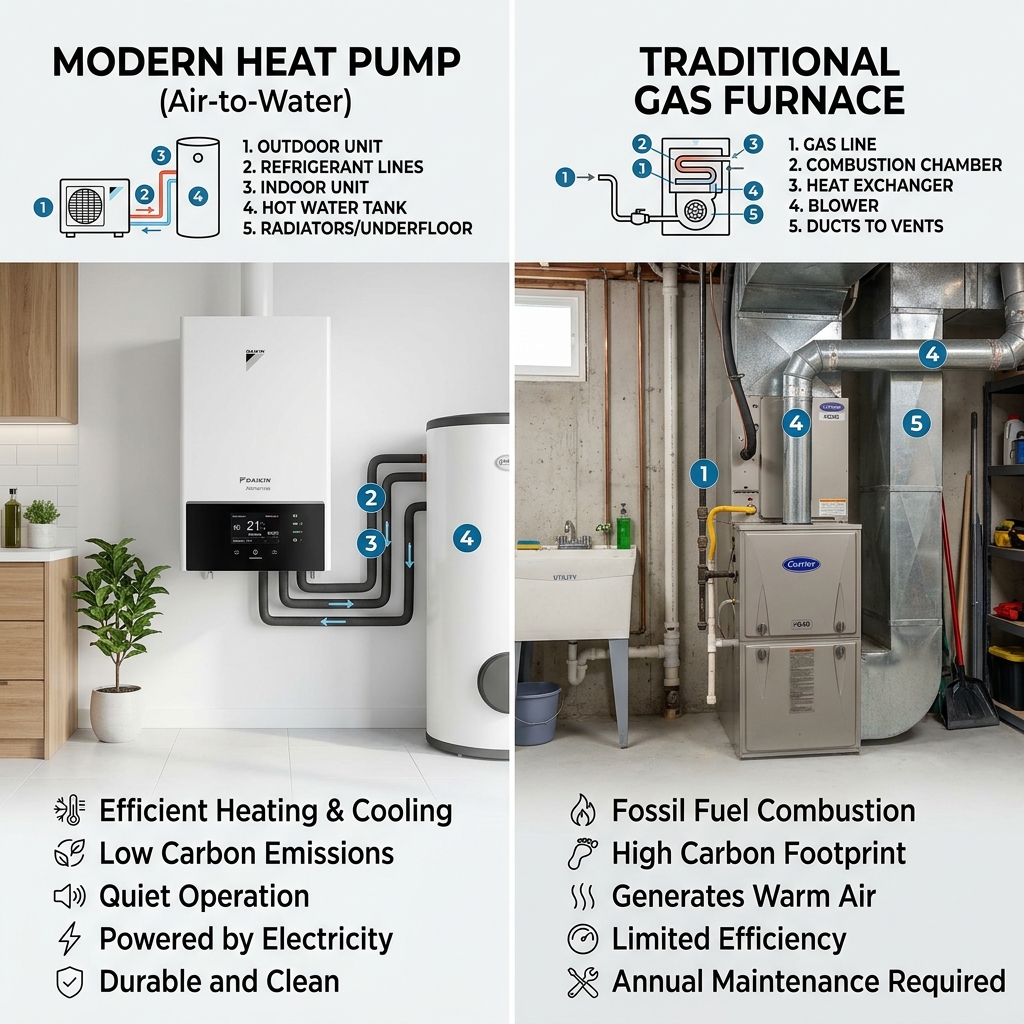
A gas furnace burns natural gas inside a combustion chamber. The heat generated warms a metal heat exchanger, and a blower fan pushes air over the exchanger and through your home's ductwork. Combustion gases are vented outside through a flue pipe. Modern high-efficiency condensing furnaces capture additional heat from exhaust gases, achieving up to 98% AFUE (Annual Fuel Utilization Efficiency).
Heat Pump
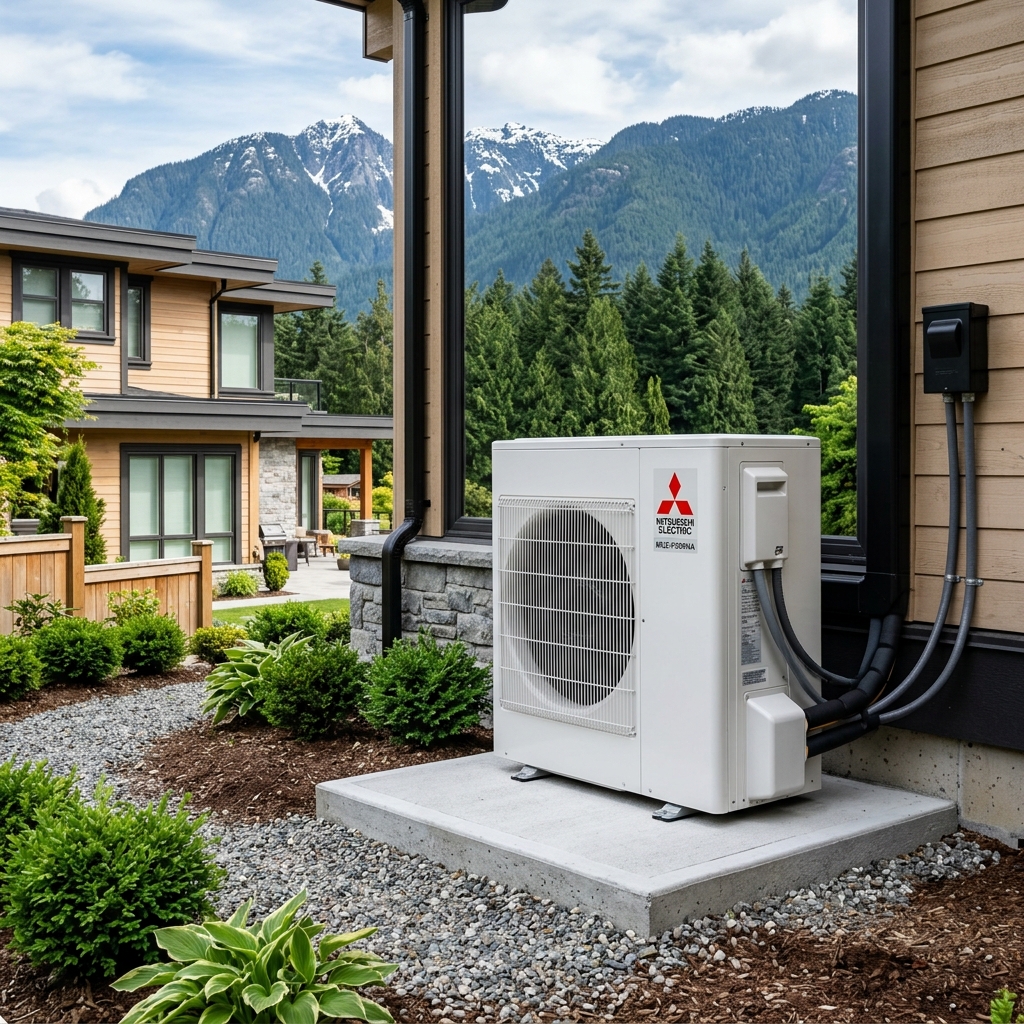
A heat pump doesn't generate heat—it moves it. Using a refrigerant cycle (the same technology as your refrigerator, but in reverse), it extracts heat energy from outdoor air and transfers it inside. In summer, the process reverses to provide air conditioning. Modern cold-climate heat pumps work efficiently even when it's -25°C outside, though their efficiency peaks in Vancouver's mild 0-10°C winter range.
Efficiency Comparison
This is where heat pumps have a dramatic advantage. Because they move heat rather than create it, heat pumps deliver significantly more energy than they consume:
- Gas furnace: 92-98% AFUE (meaning 92-98 cents of every dollar of gas goes toward heating)
- Heat pump: 250-400% effective efficiency (COP of 2.5-4.0, meaning you get $2.50-$4.00 of heat per dollar of electricity)
In practical terms, a heat pump in Vancouver's climate operates at roughly 300% efficiency on average throughout the heating season. A 98% efficient furnace is impressive for combustion technology, but it simply can't compete with a system that multiplies energy input by three or four times.
Cost Comparison: Upfront & Operating
Installation Costs
- Gas furnace replacement: $4,500 – $8,000 (installed)
- Ducted heat pump: $10,000 – $18,000 (installed, before rebates)
- Ductless mini-split: $4,000 – $8,000 per zone (installed, before rebates)
Yes, heat pumps cost more upfront. However, with available BC heat pump rebates of up to $16,000, the net cost of a heat pump is often comparable to—or even less than—a high-end gas furnace installation.
Annual Operating Costs
For a typical 2,000 sq ft Vancouver home:
- Gas furnace: $1,200 – $1,800/year (natural gas + electricity for blower)
- Heat pump: $600 – $1,100/year (electricity only)
BC's electricity rates are among the lowest in North America (approximately 10-12 cents/kWh), while natural gas prices have risen 30% over the past five years. This gap is expected to widen as carbon pricing increases and gas infrastructure ages.
Comfort & Air Quality
Gas Furnace Comfort
Furnaces produce very hot air (55-65°C at the registers) in short, intense bursts. This creates rapid temperature swings—the house heats quickly, then gradually cools until the next cycle. Some homeowners find this "blast of hot air" comfortable; others notice cold spots between cycles. Furnaces also dry out indoor air more aggressively because of the high-temperature heat.
Heat Pump Comfort
Heat pumps deliver moderate-temperature air (35-45°C) continuously. Variable-speed inverter models run at low capacity most of the time, maintaining remarkably consistent temperatures throughout the home. The result is fewer drafts, fewer cold spots, and more stable humidity levels. Plus, heat pumps provide air conditioning in summer—something a furnace simply cannot do.
Which Works Better in Vancouver's Climate?
Vancouver's climate is arguably the best in Canada for heat pumps. Here's why:
- Mild winters: Average winter lows of 0-3°C mean heat pumps operate at peak efficiency (COP 3.5-4.0) almost all season.
- Rare extreme cold: Temperatures below -10°C are exceptionally rare on the North Shore, so heat pumps never have to work at reduced capacity.
- Warming summers: With heat domes becoming more frequent, the built-in cooling function of a heat pump is increasingly valuable.
- Wet climate: Vancouver's humidity means heat pumps have more ambient heat energy to extract from outdoor air, improving performance.
In contrast, gas furnaces offer no cooling capability. If you install a furnace, you'll eventually need a separate air conditioning system—doubling your equipment and cost.
Lifespan & Maintenance
- Gas furnace lifespan: 15-25 years with annual maintenance
- Heat pump lifespan: 15-20 years with annual maintenance
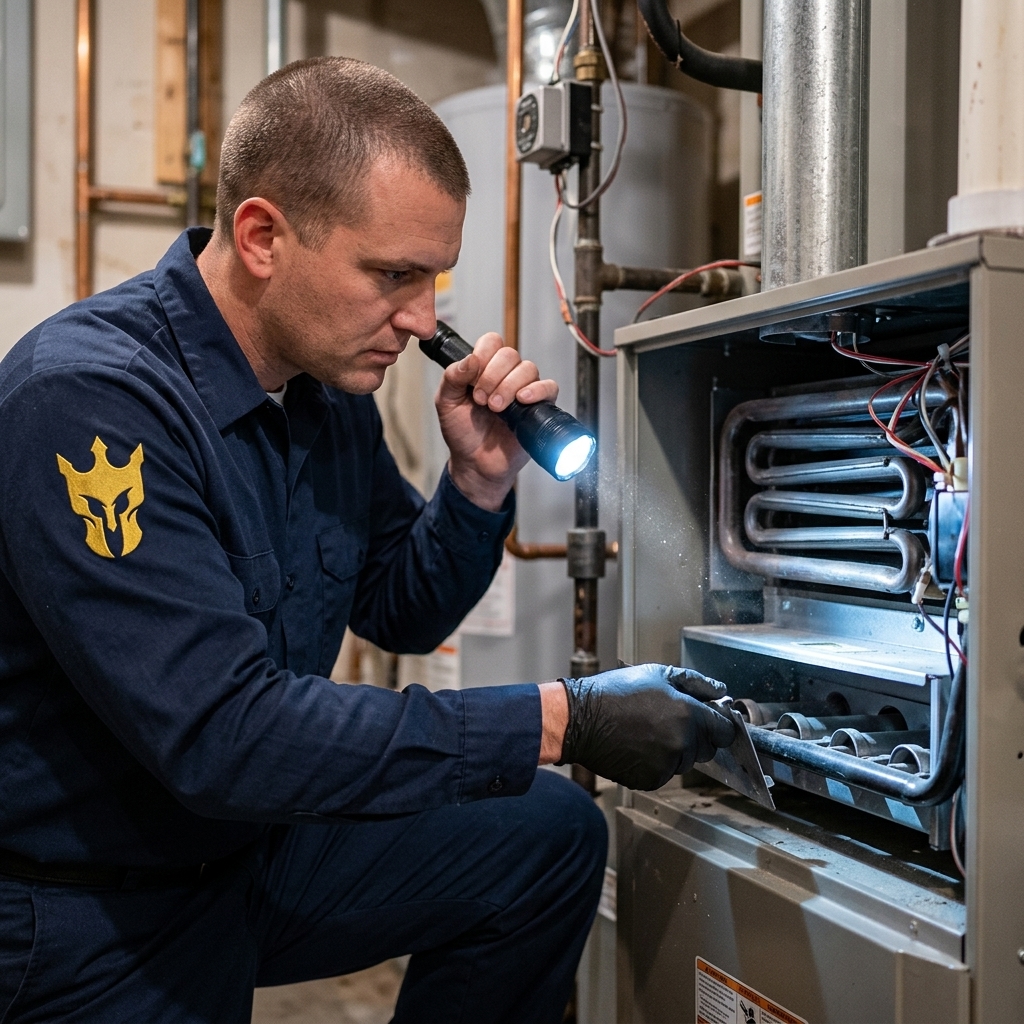
Both systems require annual professional servicing to maintain efficiency and warranty coverage. Gas furnaces require additional safety inspections because of carbon monoxide risks and gas line integrity. Heat pumps have no combustion-related safety concerns, though outdoor units need periodic cleaning and refrigerant checks.
Available Rebates & Incentives
This is where the decision tilts heavily in favor of heat pumps:
- Gas furnace rebates: Minimal. Most government programs are phasing out support for fossil fuel heating. FortisBC may offer small efficiency rebates for high-efficiency furnaces.
- Heat pump rebates: Up to $16,000 in combined federal, provincial, utility, and municipal incentives. Read our complete 2026 BC heat pump rebate guide for details.
BC's building code is also trending toward mandatory heat pumps in new construction. Choosing a heat pump now positions your home for future regulations and improves resale value.
Which Should You Choose?
Choose a heat pump if:
- You want both heating and cooling in one system
- You're looking to lower your monthly energy bills
- You want to take advantage of generous government rebates
- You're environmentally conscious and want to reduce your carbon footprint
- Your home has existing ductwork (or you're open to a ductless system)
A gas furnace might still make sense if:
- Your existing furnace is relatively new and you just need a repair
- Your home's electrical panel can't support a heat pump without expensive upgrades
- You're planning to sell soon and want the lowest upfront cost
At Lord Mechanical, we install both systems and will always recommend what's genuinely best for your situation—not what earns us the biggest sale. Book a consultation and we'll assess your home, energy usage, and budget to help you make the right call.
Frequently Asked Questions