Boiler vs Furnace: Understanding the Difference for BC Homes
Table of Contents
If you're building a new home on the North Shore, renovating an older property, or replacing a failing heating system, you've likely encountered the boiler vs furnace debate. These two fundamentally different technologies each have passionate advocates—and for good reason. Both can keep your home comfortable, but they do it in very different ways, with different trade-offs in cost, comfort, and maintenance.
At Lord Mechanical, we install and service both boilers and furnaces every day. This guide gives you an honest, balanced comparison based on what we see in the field—not what manufacturers want you to hear.
The Basics: How Each System Heats Your Home
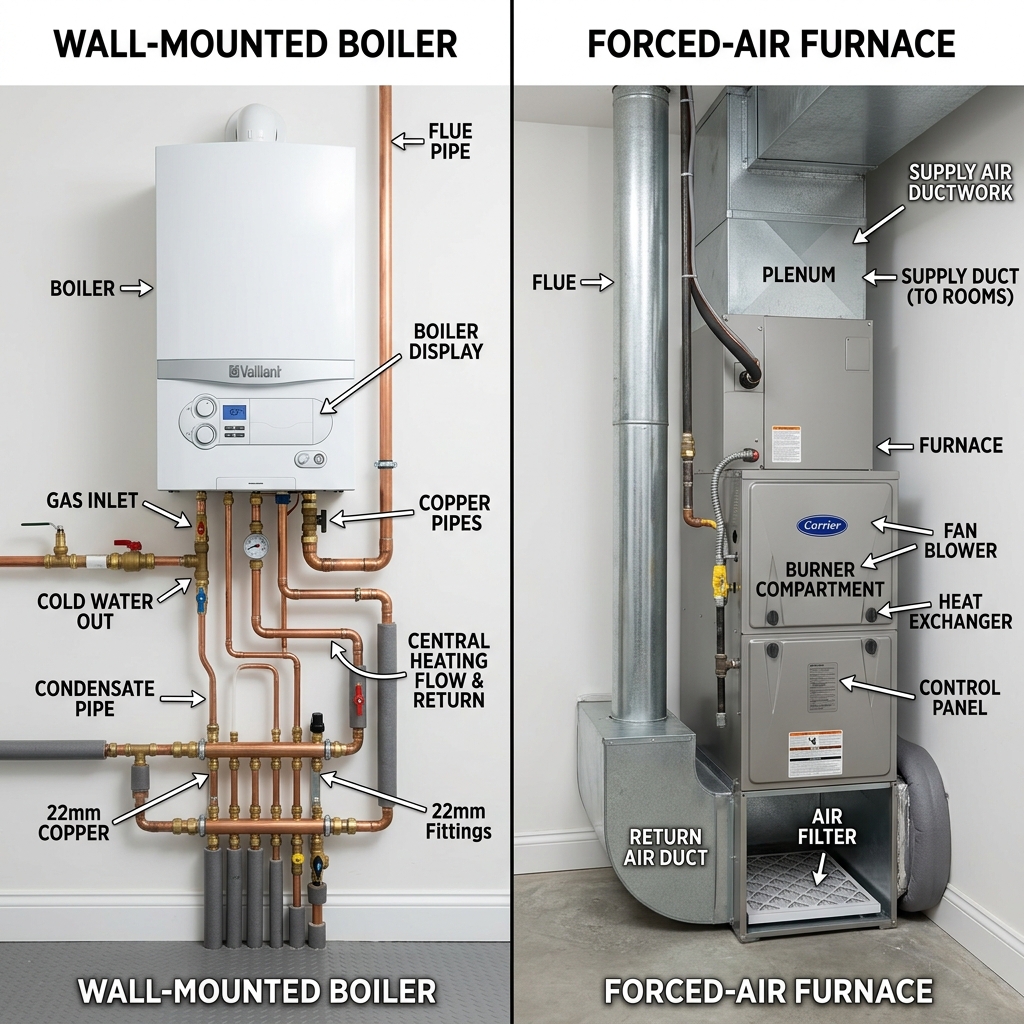
Furnaces: Forced Air Heating
A furnace heats air directly. Natural gas (or propane, or electricity) heats a metal heat exchanger. A powerful blower fan pushes room air over the hot exchanger, warming it to 55-65°C, and distributes it through a network of supply ducts to every room. Return ducts bring cooled air back to the furnace to be reheated. The cycle repeats until your thermostat is satisfied.
Furnaces are the most common heating system in Greater Vancouver. If your home has floor or ceiling registers and air vents, you likely have a forced air system powered by a furnace (or, increasingly, a heat pump).
Boilers: Hydronic (Water-Based) Heating
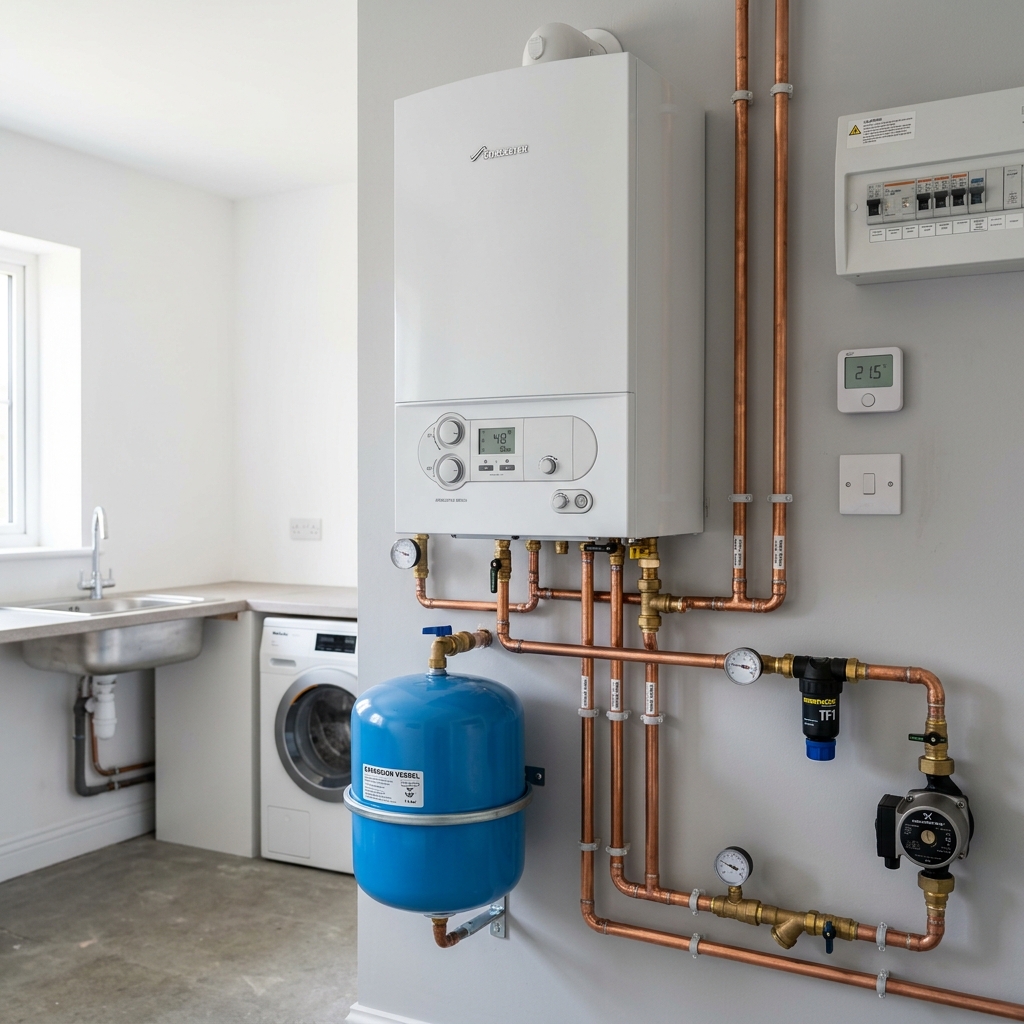
A boiler heats water instead of air. The heated water (typically 60-80°C) is circulated through a network of pipes to radiators, baseboard heaters, or radiant floor tubing installed beneath your floors. The hot surfaces radiate warmth into the room. Cooled water returns to the boiler to be reheated. Modern condensing boilers extract extra heat from flue gases, achieving efficiencies of 95-98%.
Boilers are common in older Vancouver homes (especially heritage homes in Shaughnessy, Kitsilano, and the North Shore), European-style builds, and high-end custom homes with radiant floor heating.
Comfort Comparison
Why Boiler Fans Love Their System
Radiant heat from boilers feels fundamentally different from forced air. Here's why boiler owners tend to be fiercely loyal:
- No drafts: Without blowing air, there are no drafts, no noise from registers, and no dust circulation.
- Even heat distribution: Radiant floor heating warms from the ground up, creating a natural convection pattern that feels incredibly comfortable. Your feet are warm, your head is cool—the ideal human comfort profile.
- Consistent temperature: Thermal mass in the floors and water means fewer temperature swings compared to the on/off cycling of a furnace.
- Better humidity: Boilers don't dry out indoor air the way furnaces do, maintaining a naturally comfortable humidity level throughout winter.
- Silent operation: No blower fan means virtually silent heating. You hear nothing—just warmth.
Why Furnace Fans Love Their System
- Fast response time: Furnaces heat a room noticeably faster than radiant systems. If you've been away and the house is cold, a furnace brings it up to temperature in 20-30 minutes versus 1-2 hours for radiant floors.
- Air filtration: Because furnaces move air, they can incorporate air filtration systems, UV purifiers, and humidifiers directly into the ductwork.
- Cooling capability: The same ductwork used for heating can deliver air conditioning in summer—something boiler systems cannot do without a separate cooling system.
- Zone flexibility: Modern furnaces with smart dampers can control airflow to different zones, adjusting temperature room by room.
Efficiency & Energy Costs
On paper, the numbers are close:
- High-efficiency furnace: 96-98% AFUE
- High-efficiency condensing boiler: 95-98% AFUE
However, real-world efficiency differs significantly. Furnaces lose an estimated 10-30% of their heat through ductwork—especially in homes with ducts running through unconditioned spaces like crawlspaces, attics, or garages. A 96% efficient furnace with 20% duct losses effectively delivers only about 77% of its energy as useful heat.
Boiler systems have minimal distribution losses because insulated pipes lose far less heat than sheet metal ducts. A 95% efficient boiler with well-insulated piping effectively delivers 90-93% of its energy as usable heat. This makes boilers the practical efficiency winner in many older homes.
Installation Costs in BC
Here's what you can expect to pay in the Vancouver area:
- Mid-efficiency furnace (replacement): $3,500 – $5,500
- High-efficiency furnace (replacement): $5,000 – $8,000
- Standard boiler (replacement): $6,000 – $10,000
- High-efficiency condensing boiler: $8,000 – $15,000
- Radiant floor heating (new installation): $15,000 – $30,000+ (includes boiler)
The cost premium for boiler systems is significant—typically 30-50% more than a comparable furnace installation. The biggest expense with boilers is the distribution system: installing radiant floor tubing or replacing old cast iron radiators is labour-intensive. If you're replacing an existing boiler with a new one, the cost is more comparable to a furnace swap since the piping infrastructure already exists.
Maintenance Requirements
Furnace Maintenance
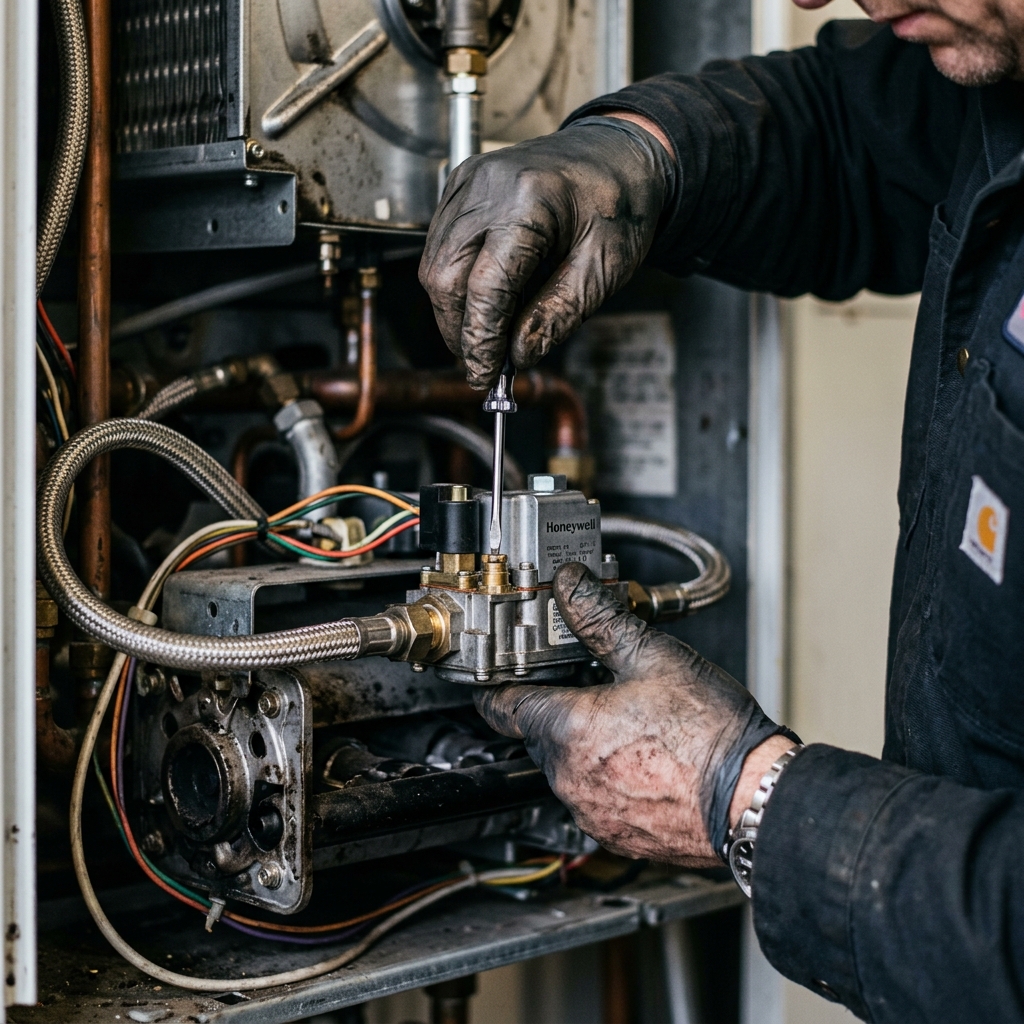
Furnaces require annual professional servicing that includes filter changes, burner cleaning, combustion analysis, and heat exchanger inspection. Between visits, homeowners should change filters monthly during the heating season. Blower motors, capacitors, and ignitors are the most common wear-and-repair items.
Boiler Maintenance
Boilers also require annual professional servicing, including water pressure checks, expansion tank inspection, circulating pump testing, and combustion analysis. Additionally, hydronic systems occasionally need bleeding (removing trapped air from radiators) and water chemistry testing. Corrosion is a concern if the system water isn't properly treated.
Both systems have comparable annual maintenance costs ($150-$300), though boiler repairs tend to be more expensive when they occur due to the complexity of the hydronic system.
Lifespan & Reliability
- Furnace lifespan: 15-25 years
- Boiler lifespan: 20-30 years
- Radiant floor tubing: 40-50+ years (outlasts the boiler itself)
Boilers generally outlive furnaces because they have fewer moving parts. A furnace's blower motor and air handler endure constant stress, while a boiler's main moving component is a small circulating pump (which is inexpensive to replace). The radiant floor tubing itself is made of cross-linked polyethylene (PEX) and typically lasts the lifetime of the building.
Which Is Better for BC Homes?
Choose a boiler/radiant system if:
- You're building a custom home and want premium comfort
- You have allergies or respiratory issues and want draft-free, dust-free heating
- Your home already has a boiler system and you're replacing the unit
- You value silence and even heat distribution above all else
- You don't mind a separate system for air conditioning
Choose a furnace if:
- Your home already has ductwork
- You want heating and air conditioning through the same system
- Budget is a primary concern
- You want integrated air filtration and humidity control
- Fast heat recovery is important (vacation homes, rental properties)
The Third Option: Heat Pumps
Many homeowners comparing boilers and furnaces overlook the increasingly popular third option: heat pumps. Air-source heat pumps can provide heating and cooling at 300-400% efficiency—far surpassing both boilers and furnaces. They can be ducted (replacing a furnace) or ductless (supplementing a boiler system).
With up to $16,000 in BC rebates, heat pumps are often the most cost-effective choice when all factors are considered. If you're comparing options, our Heat Pump vs Furnace guide provides a detailed side-by-side analysis.
"We've seen a major shift in the market over the past three years. About 60% of our heating installations are now heat pumps, up from 20% in 2022. The rebates are driving the change, but homeowners are staying because of the comfort and energy savings." — Lord Mechanical Team
Frequently Asked Questions