
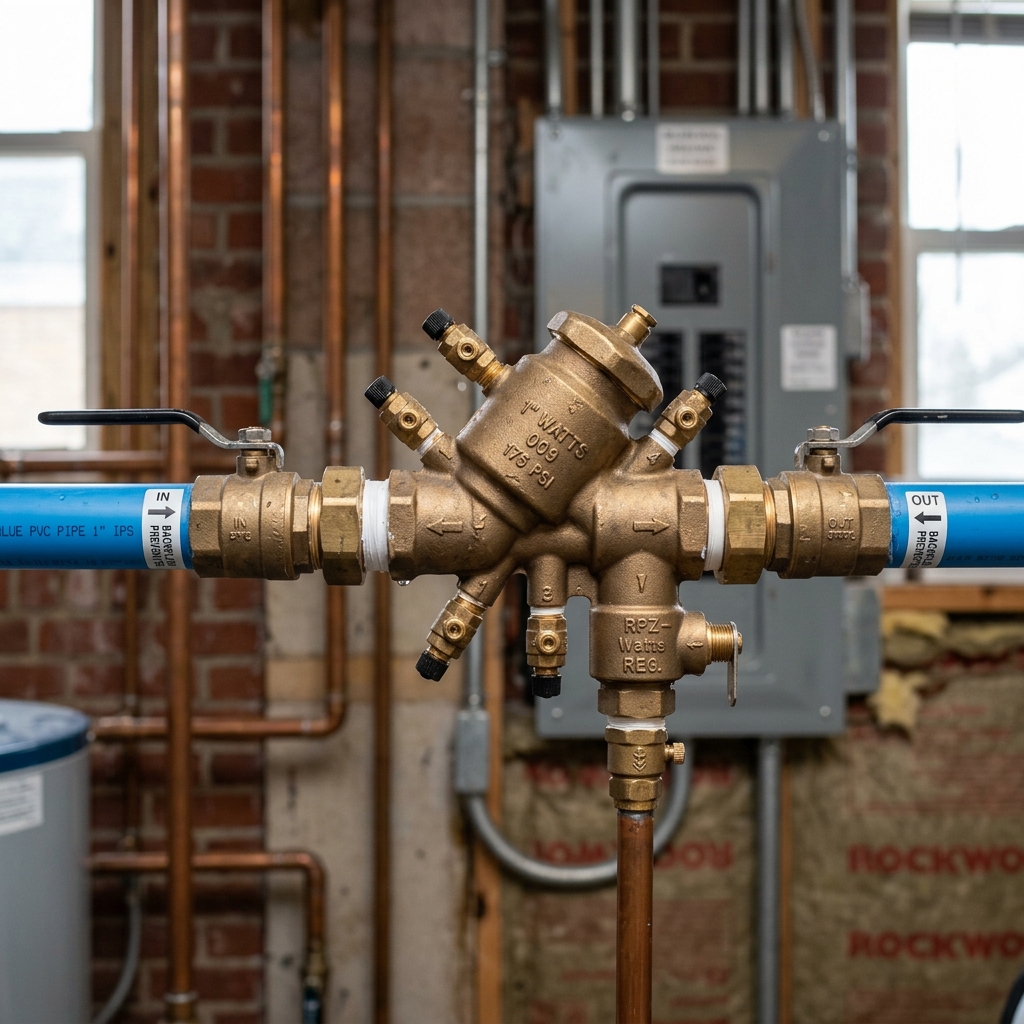
Every time you turn on a faucet, you trust that clean, safe water comes out. Backflow prevention devices are the unsung heroes that make this trust possible. Without them, a pressure drop in the water system could pull contaminated water — fertilizers from your sprinklers, chemicals from a boiler, or even sewage — back into the drinking water supply. It sounds unlikely, but it happens, and the consequences range from unpleasant to genuinely dangerous.
What Is Backflow?
Backflow is the unintended reversal of water flow in a plumbing system. Normally, water flows one way: from the municipal supply, through the meter, into your home's pipes, and out through fixtures. But under certain conditions, this flow can reverse, pulling water from your home's plumbing system back toward the municipal supply — or pulling contaminated water into your drinking water lines.
There are two types of backflow:
- Backpressure: Occurs when downstream pressure exceeds supply pressure. This can happen with booster pumps, thermal expansion in boilers, or elevated piping systems.
- Backsiphonage: Occurs when supply pressure drops below atmospheric pressure, creating a vacuum that pulls water backward. This happens during water main breaks, fire hydrant use, or pump failures.
What Causes Backflow in Vancouver Homes?
Several common scenarios create backflow risk:
- Irrigation systems: A garden hose or sprinkler connected to the potable water supply creates a cross-connection. If water pressure drops while the system is running, pesticides, fertilizers, and bacteria from the soil can be siphoned back into the water supply.
- Boiler systems: Hydronic heating systems use chemicals (glycol, corrosion inhibitors) that must never enter the potable water supply. Backflow prevention isolates the boiler fill connection.
- Garden hoses: A hose left submerged in a pool, sitting in a puddle of chemicals, or connected to a fertilizer sprayer creates a direct cross-connection.
- Fire sprinkler systems: Stagnant water in fire suppression pipes can contain bacteria and biofilm that must be prevented from entering the drinking water system.
- Water main breaks: When the city repairs a water main, the pressure drop in the surrounding area can create backsiphonage conditions throughout the neighbourhood.
North Vancouver's hilly terrain adds a unique risk factor — elevation changes create natural pressure differentials that increase backflow potential, especially during low-pressure events.
Types of Backflow Prevention Devices
-
Hose Bib Vacuum Breaker (HVB)
Screws onto outdoor faucets. Prevents backsiphonage only. Simplest device. $5–$20. Required on all hose bibs by code. -
Atmospheric Vacuum Breaker (AVB)
Simple, inexpensive. Prevents backsiphonage only. Used on irrigation zones. $15–$50 per zone. Not suitable for continuous pressure. -
Pressure Vacuum Breaker (PVB)
More robust than AVB. Common for residential irrigation systems. $100–$300 installed. Must be installed 12" above highest sprinkler head. Annual testing required. -
Double Check Valve Assembly (DCVA)
Two independent check valves in series. Protects against both backpressure and backsiphonage. Used for low-to-moderate hazard cross-connections (irrigation, fire sprinkler systems). $200–$600 installed. Annual testing required. -
Reduced Pressure Zone (RPZ) Device
The highest level of protection. Two check valves plus a relief valve that dumps water if both check valves fail. Required for high-hazard cross-connections (boilers with chemicals, medical facilities). $400–$1,500 installed. Annual testing required. Must drain to approved location.
BC and Municipal Requirements
Backflow prevention is regulated at multiple levels in British Columbia:
BC Plumbing Code
The BC Building Code requires backflow prevention at every cross-connection between potable and non-potable water systems. This is a province-wide requirement, not optional.
Metro Vancouver Cross Connection Control Program
Metro Vancouver's program requires all member municipalities to implement cross-connection control. This means identifying properties with cross-connections, requiring appropriate backflow prevention devices, and mandating annual testing.
Municipal Bylaws
The City and District of North Vancouver, West Vancouver, Burnaby, and other municipalities each have specific bylaws implementing cross-connection control. Non-compliance can result in fines, mandatory installation orders, and even water disconnection.
If you receive a letter from your municipality about cross-connection control, don't ignore it. Lord Mechanical can help you determine what device you need and install it in compliance with all regulations.
Annual Testing Requirements
Once installed, testable backflow prevention devices (PVB, DCVA, RPZ) must be tested annually by a certified Cross Connection Control tester. The test verifies:
- Check valves seal properly and don't leak
- Relief valve (on RPZ devices) opens at the correct differential pressure
- No physical damage, corrosion, or obstruction
- Device is properly installed and accessible
Test results are submitted to your municipality. Failed devices must be repaired or replaced within a specified timeframe — usually 30 days. Lord Mechanical provides backflow testing and repairs, and we handle the documentation and municipal reporting.
Installation and Testing Costs
- Hose bib vacuum breaker$15 – $30 each
- Pressure vacuum breaker (installed)$200 – $500
- Double check valve assembly (installed)$300 – $800
- Reduced pressure zone device (installed)$500 – $1,500
- Annual testing and certification$100 – $250
While backflow prevention has a cost, it protects your family's health, keeps you in compliance with municipal bylaws, and avoids fines. More importantly, it prevents the genuinely dangerous scenario of contaminated water entering your drinking supply.