

Fact: water damage can lead to mould growth in as little as 24–48 hours, so every minute counts.
We created this short, practical guide so Vancouver homeowners and businesses can act fast when a serious leak appears.
Our goal is simple: help you prioritise safety, stop the flow, contain damage, document losses, then call for licensed help.
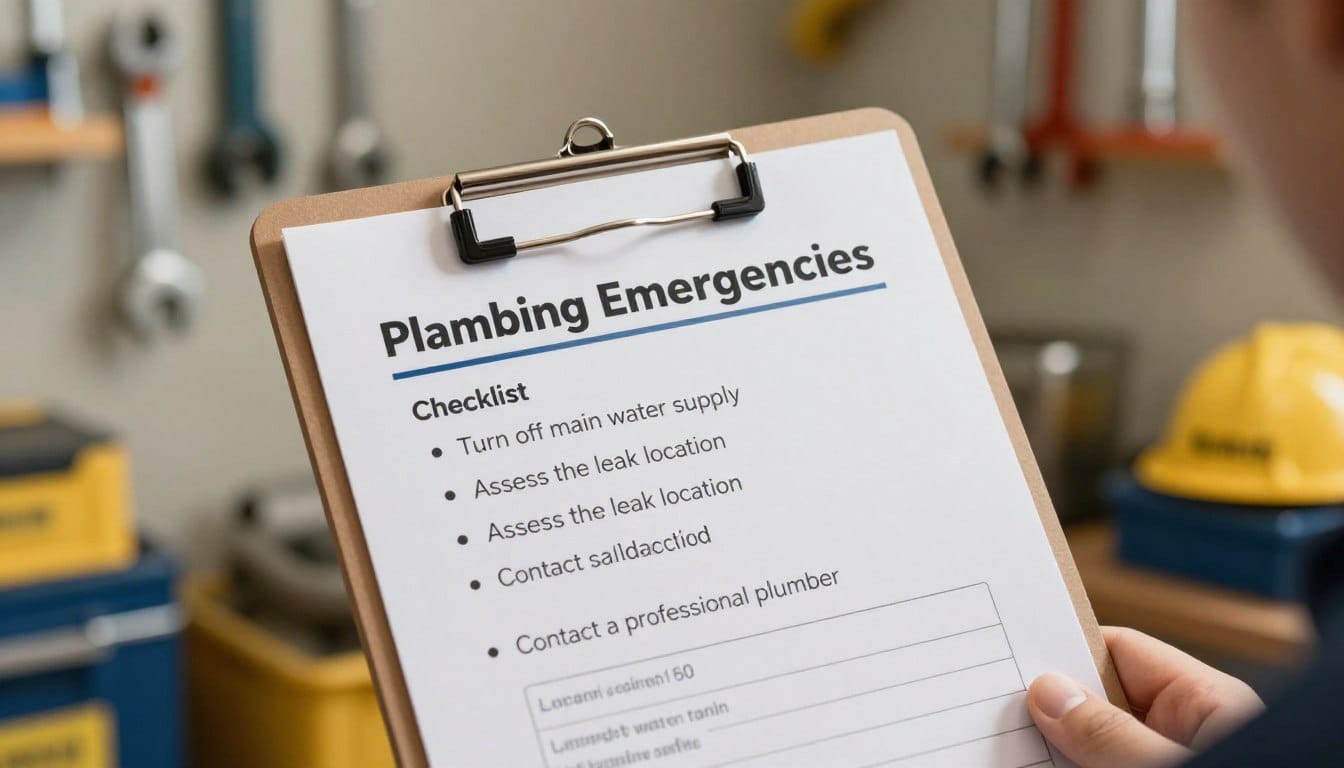
Keep a printed copy on the fridge and in a home binder so anyone house-sitting can follow the same steps calmly.
Save this number: call 604 670 3737 for urgent local support from Lord Mechanical LTD, most active in North Vancouver and West Vancouver.
Key Takeaways
- Act fast: mould can form within 24–48 hours after water exposure.
- Follow a simple priority order: safety, stop water, contain, document, call pros.
- Store a printed copy on the fridge and in a binder for quick access.
- Small leaks can become large repairs, especially in older systems.
- For urgent local assistance, save and call 604 670 3737.
What counts as a plumbing emergency in a Canadian home
When water starts where it shouldn’t, quick decisions protect your home and health. We define a true emergency by immediate risk: threat to safety, rapid spread of water, or loss of essential services.
Common urgent events:
- Burst supply lines or visible, uncontrolled leaks near electrical panels.
- Sewage backup or active backflow that risks contamination.
- Sudden loss of running water in freezing weather that can lead to burst pipes.
- A strong rotten‑egg smell suggesting possible gas — treat as urgent.
Signs you need emergency help right away
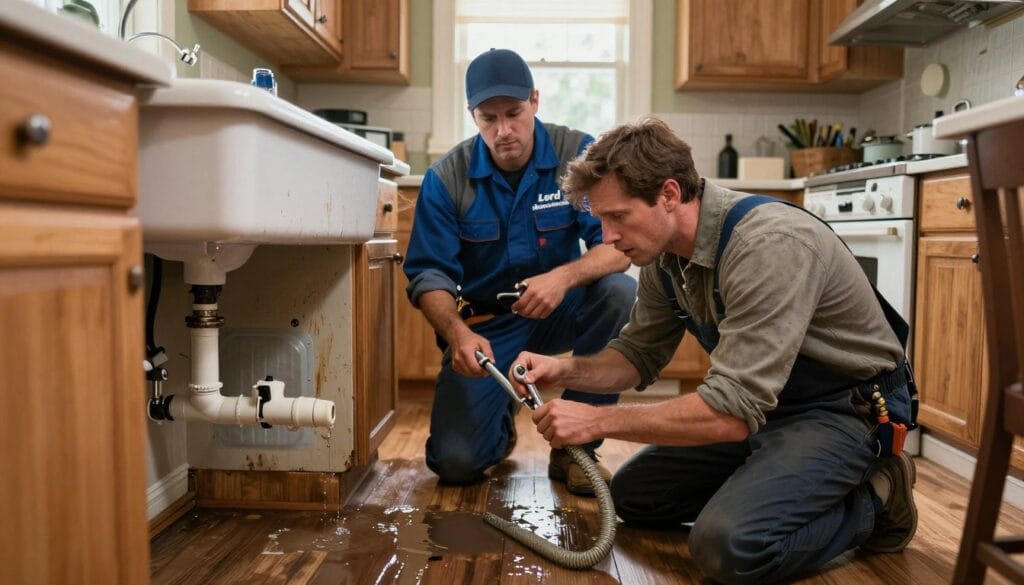
Call emergency plumbing if you see uncontrolled flow, rapid pressure loss, active flooding, sewage odour, or no water to essential fixtures. These issues can cause major damage in minutes.
“The faster you describe the problem, the sooner we bring the right parts and plan the repair.”
Decision rule: if safety is at risk, water will spread quickly, or essential function is gone, treat it as a plumbing emergency and call us at 604 670 3737 for prompt service from Lord Mechanical LTD in North and West Vancouver.
Immediate safety steps before you touch any valves
Before you reach for any valves, take a calm, safety-first pause to assess the scene. This step reduces the risk of electrocution and contamination. We guide you through a quick, practical check so you act safely.
Pause and assess
Quick checklist:
- Where is the water? Note if it is under appliances or tracking toward an electrical area.
- How fast is it moving? Slow seepage vs rapid flow changes your response.
- Is electricity involved? If yes, stop and plan power shutdown or call for help.
Power and “near water” hazards
If water is near outlets or appliances, shut power off at the breaker for that area only if you can do so dry and safely.
Do not approach the electrical panel if standing water is around it. Step back and call emergency services support.
Protect people and pets first
Keep children and pets out of flooded or contaminated areas. Treat sewage‑tainted water as hazardous and avoid contact.
“If you are unsure, step back and call for professional help; our services aim to restore safety and function quickly.”
Stop the flow fast using shut-off valves and the main water supply
Knowing how to stop the flow quickly can prevent major water damage and save you time and money. Locate your main water shut-off before a problem starts so you can act without delay.
Finding the main shut-off in common layouts
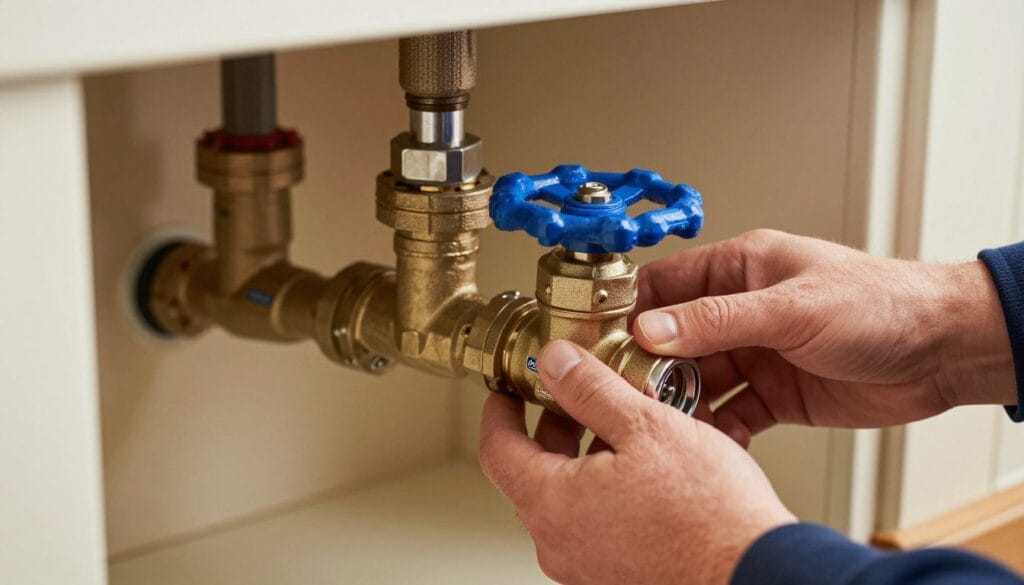
The main shut main is often in the basement, crawlspace, garage or utility room near the water meter where the line enters the home. In apartments it may be in a service closet or meter room. We recommend mapping this location now and adding it to your home binder.
Using fixture valves
Isolate a single fixture when possible. Toilet valves sit behind the bowl near the floor. Sink and dishwasher feeds are under the sink. Laundry valves are behind the washer. The water heater has a cold inlet shut-off at the top.
How to relieve pressure and what to do if a valve is stuck
Turn clockwise to close; lever-style valves rotate 90 degrees to perpendicular. After you shut water or the main, open a nearby faucet to relieve pressure and reduce drips.
If a valve is seized, don’t force it. Move to the main shut-off and call us for safe replacement. Write all valve locations and brief instructions in your household binder so anyone can shut water off fast.
“Map the shut-off now — you’ll thank us later.”
Need help? Call Lord Mechanical LTD at 6046703737 for North and West Vancouver support.
Contain flooding and limit damage to your home
A focused, calm response in the first hour makes the biggest difference to your home.
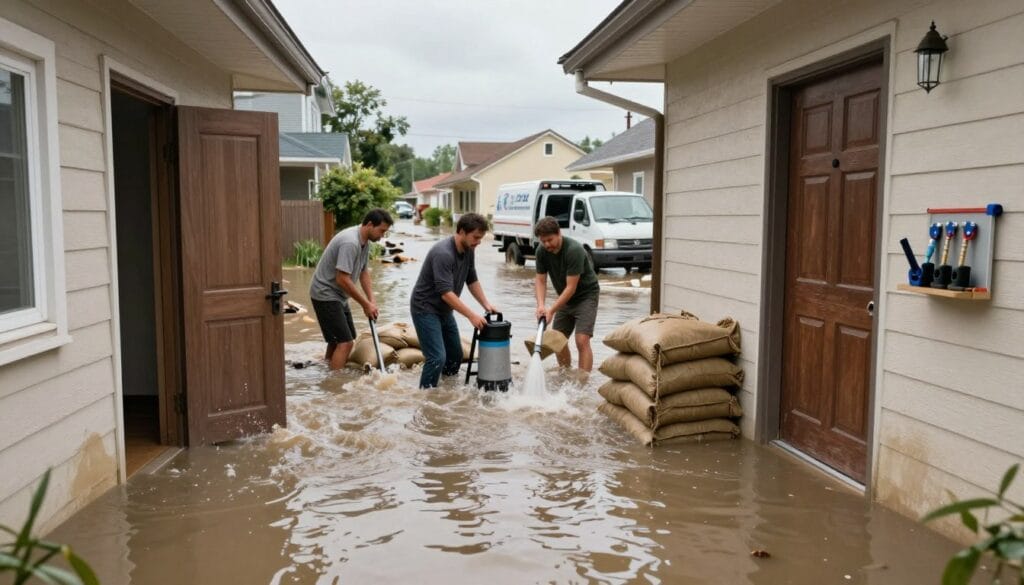
Quick containment tools and actions
Once you shut the flow, start damage control immediately. Catch drips with buckets and place towels along baseboards to block spread.
Use a wet/dry vacuum or mop to remove pooled water from hard floors. Move rugs, cushions and valuables to a dry area.
Protect floors, drywall and basement areas
Lift furniture off wet floors and place blocks under legs. Remove wet rugs and dry or discard them to stop wicking into subfloors.
In the basement, elevate boxes and electronics. Keep water away from the sump and finished drywall where possible.
Drying, ventilation and next steps
Open windows and use fans only where outlets are dry and safe. Rapid drying reduces mould risk; mould can start within 24–48 hours after exposure to water damage.
Plan for repairs once the area is stable. The longer moisture sits in the building system, the more invasive repairs become.
| Item | Use | Where |
|---|---|---|
| Towels/rags | Block edges, soak small drips | Floor edges, baseboards |
| Buckets | Catch active drips or ceiling bulges | Under leaks, beneath ceiling bulge |
| Wet/dry vacuum | Remove pooled water on hard surfaces | Finished floors, garage, basement |
| Fans & ventilation | Speed drying when power is safe | Open rooms, not wet electrical areas |
“Release a ceiling bulge into a bucket to prevent sudden collapse.”
Need help fast? Call Lord Mechanical LTD at 6046703737 for North and West Vancouver support.
Document the situation for repairs and insurance
Start by capturing clear evidence — it speeds claims and guides repair work. Good records make it easier for us to diagnose causes and for your insurer to approve repairs. We recommend a few quick actions before you fully clean or move items.

Photos and video to capture the source, affected areas, and belongings
Before you disturb anything, take wide shots of the room, mid-range photos of wet walls or floors, and close-ups of the leak source. Show water lines on walls, ceiling stains, failed fittings, appliance hoses, or the area under a sink.
Creating a simple list of damaged items and saving receipts
Make a short list with item name, approximate age, estimated value, and whether it is salvageable. Keep the list in one note or photo album so you can share with your insurer and with our team during repairs.
- Save receipts for rentals or purchases (fans, dehumidifiers, disposal fees).
- Record quick video narration pointing at the damage — a timestamped record helps later.
- Even if it seems “just a leak,” document now to avoid disputes if hidden damage appears after drying.
“Clear photos and receipts speed decisions and reduce delays with claims.”
Need help preparing records or scheduling repairs? Call Lord Mechanical LTD at 604 670 3737 for North and West Vancouver support with insurance-ready documentation.
Plumbing emergencies checklist for common high-risk scenarios
Match the situation you see to a short set of steps that stop water and protect people first.
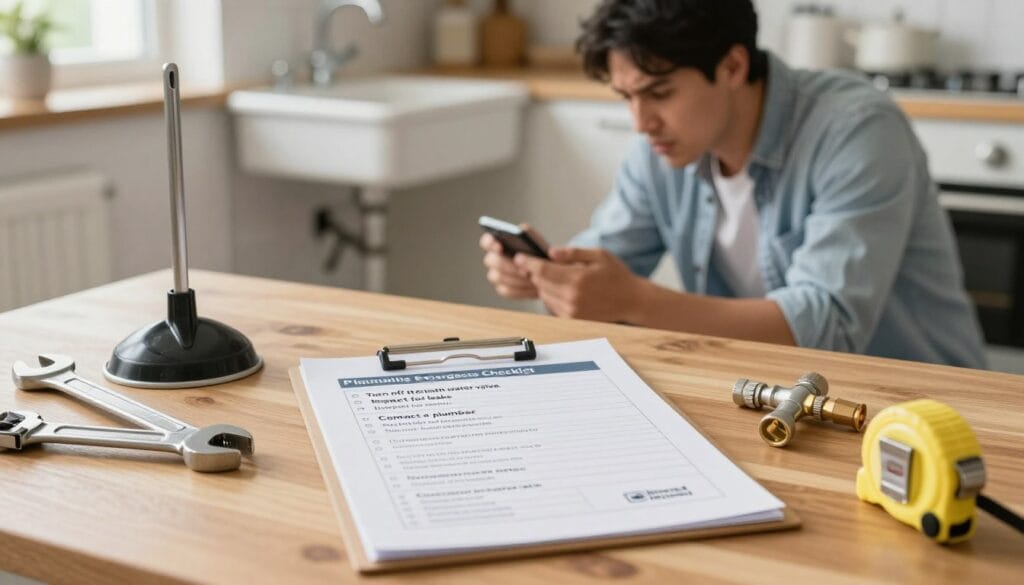
Burst pipe / sudden high‑flow leak
Action: shut the main water off immediately.
Open a nearby tap to relieve pressure, contain flow with buckets and towels, then call for professional help.
Overflowing toilet
Close the toilet shut‑off valve. Remove the tank lid and press the flapper to stop refilling. Do not flush again.
Clogged drain or sink backup
Try a plunger or hand snake first. Avoid chemical drain cleaners — they can harm pipes and create safety hazards for technicians.
Water heater leak
Shut the cold inlet. For electric tanks, switch off the breaker. For gas, close the gas valve. Contain pooling water and call us.
Sewer backup & frozen pipes
Stop using all fixtures and keep people and pets away from contaminated water. If a pipe is frozen, shut water, open taps slightly and apply gentle heat — never use an open flame.
| Scenario | First steps | Why it matters |
|---|---|---|
| Burst pipe | Shut main, open tap, contain | Prevents gallons released in minutes |
| Clogged drain | Plunger/snake, avoid chemicals | Limits backups and pipe damage |
| Water heater leak | Close cold inlet, power/gas off | Reduces fire/electrical risk |
“We recommend calling 604 670 3737 for fast support from Lord Mechanical LTD in North and West Vancouver.”
Emergency plumbing toolkit and home “binder” prep
A prepared kit and a clear binder make urgent responses faster and less stressful. We recommend a compact set of tools and a simple home record so anyone can act if you’re away.
Core kit essentials
- Adjustable wrench — for supply nuts and quick shut-offs.
- Pipe wrench — for tougher fittings.
- Plungers (cup and flange) — toilets and sinks.
- Plumber’s tape — temporary sealing on threaded fittings.
- Screwdrivers, bucket, towels/rags — contain and access small fixes.
Binder contents and storage
What to record: main water location, each fixture shut-off valve, appliance valve notes (washer, dishwasher, water heater), and the kit location.
Key contacts: local plumber, building manager (if condo), insurer. Add Lord Mechanical LTD and call 6046703737 for North and West Vancouver support.
| Item | Purpose | Where to store | Notes |
|---|---|---|---|
| Adjustable wrench | Tighten/loosen supply nuts | Under utility sink or labelled box | Essential for isolating fixtures |
| Plungers | Clear toilet and sink backups | Near water heater or laundry area | Keep one cup and one flange type |
| Plumber’s tape & rags | Temporary seal and contain leaks | In kit box inside binder cabinet | Use tape on threaded joints only |
| Buckets & screwdrivers | Catch water and access panels | Easy-reach shelf (not behind storage) | Label location in binder |
“A ready kit and clear page of shut-off locations reduce decision time and damage.”
Annual routine: review the binder and walk the house with everyone who may need to act. A simple emergency plumbing checklist in the binder helps reduce scrambling when minutes matter.
Preventive maintenance to reduce future plumbing emergencies
A yearly service routine helps us spot small faults before they become expensive failures. Regular maintenance protects your home and business systems and lowers the chance of disruptive failures.
Annual inspection priorities:
- Scan for visible leaks and corrosion at fittings and joints.
- Check pipe supports, shutoff function, and test water pressure to protect fixtures and appliances.
- Inspect the basement mechanical room, under‑sink cabinets, and laundry hookups—older supply connections are high risk.
Winterizing steps: drain outdoor hoses, shut exterior faucets, insulate exposed pipes, and keep indoor heat steady to reduce freezing risk.
Water‑heater care: look for rust, pooling, unusual noises and schedule an annual tank flush to remove sediment and extend service life.
Smart protection: install leak detectors and alerts near supply lines and appliances. These devices notify you early, especially useful if you travel or manage a business property.
“Set recurring reminders and record each service date and note in your home binder so maintenance actually happens.”
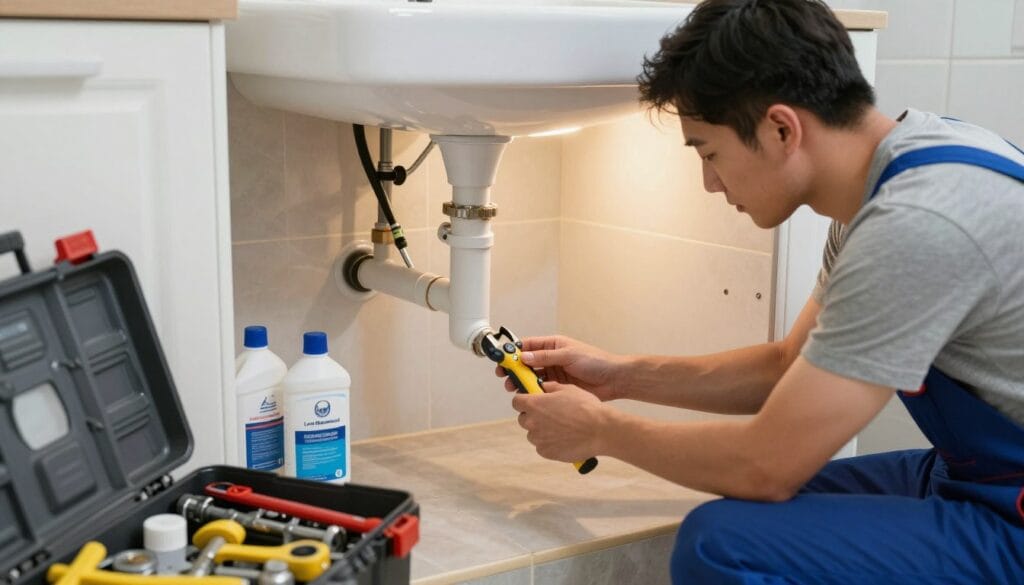
Need a pro? Call Lord Mechanical LTD at 6046703737 for annual service and rapid response across North and West Vancouver.
When to call a professional plumber in Canada
If shutting valves doesn’t stop the flow, bring in a qualified professional to diagnose and repair the root cause.
Call‑now thresholds
Call a plumber immediately for visible flooding, persistent leaks you cannot stop, sewage backup, suspected mainline failure, or when multiple fixtures are affected.
Why multi‑fixture problems matter
When more than one sink, toilet or shower shows signs, the fault often lies in a shared drain or supply system.
That points to a larger issue that needs diagnostics and safe repairs rather than piecemeal fixes.
What to tell us to speed response
Share these details so we arrive prepared:
- Where the water is coming from and which fixtures are affected.
- Whether the main water was shut off and any valves you operated.
- If power or gas were turned off and which areas are unsafe.
- Send photos or short video if it is safe to do so — it helps us bring the right parts and tools.
| Situation | Call‑now signal | Why we respond |
|---|---|---|
| Visible flooding | Active surface water in rooms | Rapid damage, mould risk |
| Persistent leak | Leak continues after shut‑off | Requires replacement or repair |
| Multiple fixtures | More than one drain or outlet | System fault needs diagnosis |
“We stabilise the situation first, then plan lasting repairs.”
Local support: We’re Lord Mechanical LTD, most active in North Vancouver and West Vancouver. For fast, professional plumbing services and expert emergency plumbing help, Call for immediate help at 604 670 3737.
Conclusion
Prepared homes recover faster from sudden water incidents than those that improvise. Our priority is clear: safety first, then shut main or fixture valves to stop the flow, contain and dry to limit damage, document for insurance, and arrange professional repairs.
A checklist works only if it’s ready before you need it. Know your main water location, test shut valves periodically, and keep a simple toolkit and an updated home binder so anyone can act calmly.
Quick containment reduces water damage and mould risk in floors, drywall and basements. Re‑scan this checklist now and save our contact so the next incident is handled in minutes, not hours.
When an emergency strikes in North or West Vancouver, call Lord Mechanical LTD at 6046703737 — we’ll guide you and restore your system safely.