

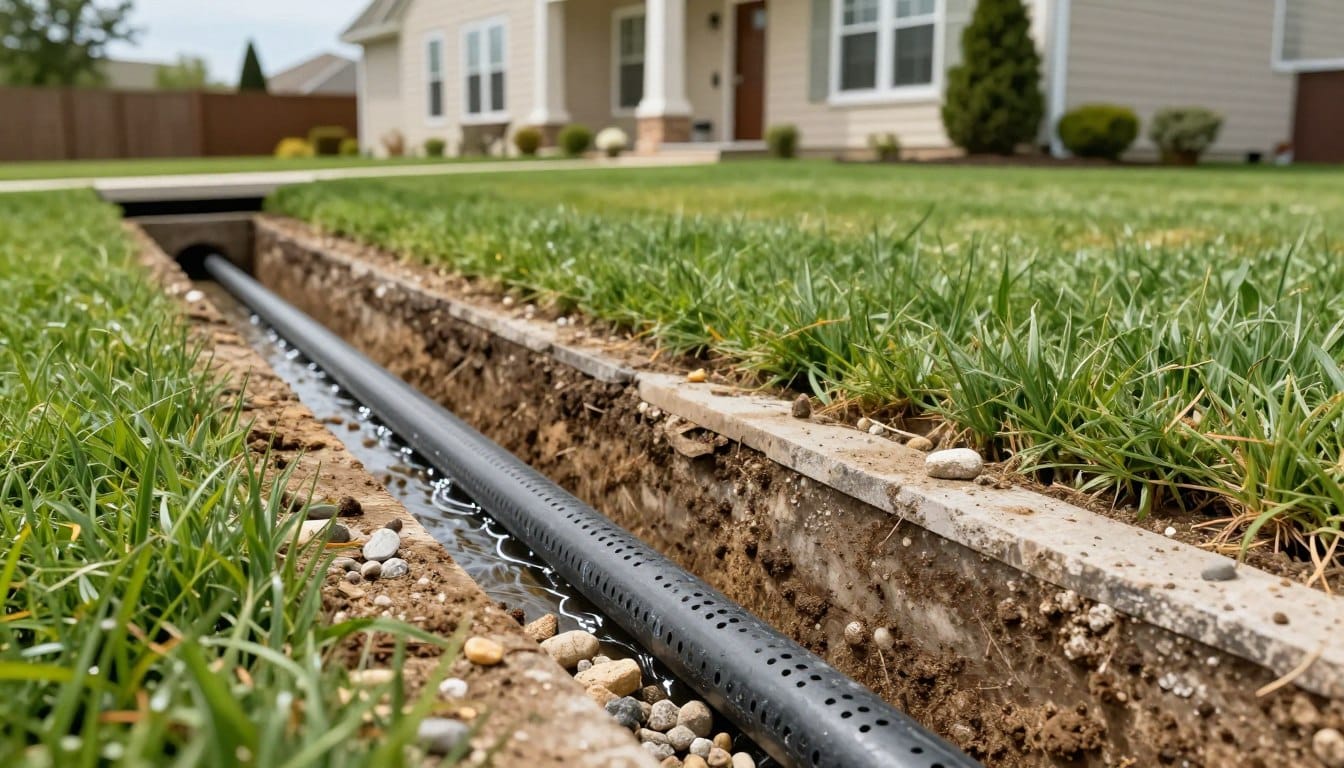
Surprising fact: a properly built perforated-pipe-in-gravel trench can protect a home and last more than 20 years with minimal upkeep.
We’ll explain what a french drain is and why Vancouver-area properties often need this passive drainage solution.
The system collects and redirects excess groundwater away from problem spots. It helps prevent flooding, eases moisture near foundations, and reduces soggy lawns so you can use your yard again.
We’ll outline common use cases — standing water on lawns and hardscapes, moisture threats close to your home — and set realistic expectations for wet seasons when poor grading can overwhelm any system.
Finally, we’ll show when a DIY approach makes sense and when to call specialists in North Vancouver and West Vancouver, and why discharge rules matter for neighbours.
Key Takeaways
- We define what a french drain installation does and how it moves water away from your property.
- This low‑maintenance system can protect foundations and reduce yard sogginess for decades.
- It solves standing water and moisture near homes but won’t fix major grading issues alone.
- Some projects are DIY; deeper work near foundations needs professional crews in North and West Vancouver.
- Follow local discharge rules — never divert water onto a neighbour’s property.
- Call Lord Mechanical LTD at 6046703737 for a site‑specific plan or quote.
What a French Drain Is and How It Works
At its core, the design uses washed gravel, a perforated pipe, and filter fabric to move water by gravity.
Core components
- A perforated pipe sits in a gravel bed inside a narrow trench.
- Landscape fabric or filter fabric wraps the stone to keep soil out.
- The gravel creates void space so water can flow freely toward the pipe.
How flow works
Surface and subsurface water migrate into the gravel, drop toward the bottom, and enter the pipe through small holes. Placing the holes facing down improves collection at the lowest point and reduces bypassing.
Discharge options and rules
Common discharge paths include daylight outlets on a safe slope, approved municipal storm connections, or a permitted dry well or rain garden. Remember: a passive system relies on slope, not pumps, and the final discharge point must be legal and practical for your lot.
| Component | Purpose | Practical tip |
|---|---|---|
| Gravel | Creates voids for water to move | Use washed gravel for better flow |
| Perforated pipe | Collects and routes water | Run holes facing the bottom of trench |
| Filter / landscape fabric | Keeps soil out of stone and pipe | Overlap fabric to prevent wash‑through |
Need help? Call Lord Mechanical LTD at 6046703737 for a site check in North Vancouver or West Vancouver.
Key Benefits of Installing French Drains on Your Property
A well‑placed trench and perforated pipe turn soggy spots into usable outdoor space after heavy rain.
Reducing pooling water on lawns, patios, walkways, and driveways
We stop common pain points such as pooling on the lawn, slick patios, and washouts at driveway edges. By intercepting surface flow early, the system prevents small puddles from growing into larger issues.
Protecting your home foundation, basement, and crawl space from moisture
Redirecting water away from the foundation lowers soil saturation near the house. That reduces recurring seepage, damp walls, and the long‑term risk of mould and structural damage.
Low‑maintenance, passive drainage that can last for decades when done right
Passive systems have few moving parts. With correct gravel, filter fabric, slope, and outlet, a properly built french drain can perform for 20+ years with minimal upkeep.
- Turns chronically wet areas into usable yard and landscaping space.
- Reduces the chance of interior moisture problems before you renovate basements.
- Limits emergency fixes — fewer pumps, fewer surprise expenses.
| Benefit | What it fixes | Homeowner outcome |
|---|---|---|
| Surface pooling reduction | Puddles on lawn, slick walkways | Safer access and usable outdoor space |
| Foundation moisture control | Saturated soil, seepage risk | Drier basement and lower repair costs |
| Long‑term, passive solution | Ongoing water problems | Low maintenance and increased property value |
Ready to solve persistent water problems? Call Lord Mechanical LTD at 6046703737 for an assessment in North Vancouver or West Vancouver.
When a French Drain Is the Right Solution
We recommend this approach when persistent wet spots reduce the use of your outdoor space. Classic fit scenarios include yard areas and garden beds that stay soaked long after rain.
Intercepting flow uphill works well. Placing the trench slightly above the problem spot lets the system catch moving water before it pools. That simple change often stops recurring soggy patches.
Runoff from higher grade or a nearby slope can funnel toward your home. Landscaping and hardscaping sometimes push water inward. Identifying the true flow path helps locate the best spot for a trench and outlet.
Watch for foundation warning signs: damp foundation walls, repeated seepage at the same corner, or musty odours in the basement. These symptoms often mean groundwater is pressing on the soil around the foundation.
Success hinges on a continuous downhill path to a legal discharge location. In Vancouver’s tight lots and heavy rain events, correct slope and routing matter. If you cannot create a safe outlet or proper slope, we’ll discuss alternatives later in this guide.
Need a site check in North or West Vancouver? Call Lord Mechanical LTD at 6046703737 for advice and a local quote.
When You Shouldn’t Install a French Drain System
Before you dig, check for key limits that will stop water from moving away as intended.
Not enough slope or proper grade
Without a steady slope, water can pool inside the trench and make the problem worse. A trench needs continuous fall to an outlet. If your lot is flat, a trench may hold water instead of moving it.
No legal or practical discharge point
Every solution needs a safe place for water to go. Never divert flow onto a neighbour’s yard or where municipal rules forbid it. Improper routing can cause property damage and fines.
When the project is too long or complex
Runs longer than about 50 feet increase the chance of belly spots and maintenance headaches. Large projects often require heavy equipment and engineered plans.
“If constraints exist—slope, outlet, or site length—consider grading, catch basins, or engineered solutions instead.”
Quick decision table
| Condition | Risk | Recommended action |
|---|---|---|
| Poor slope/flat lot | Water pools in trench | Consider grading or a pumped system |
| No lawful discharge point | Neighbour disputes, fines, damage | Obtain permit or choose on‑site retention |
| Length >50 ft or complex site | Belly spots, compaction, safety risk | Hire professionals for design and work |
DIY reality check: small yard fixes can be a homeowner project, but bigger work risks damage and safety issues. Call Lord Mechanical LTD at 6046703737 for an assessment in North or West Vancouver before you invest time or money.
Planning French Drain Installation on a Canadian Property
A live rain test reveals real flow lines — and that’s where effective trenching begins. We start by watching your property during heavy rain to locate where water originates and where it actually runs, not just where it pools.
Next, we map the path using stakes and string. Run the string between stakes and check fall with a level. Aim for about 1 inch drop per 8 feet (~1–2% slope). Consistent grade matters more than perfection.
Before any digging, verify municipal bylaws and stormwater rules for your location. Some lots need permits to connect to public systems or to discharge near public infrastructure.
Finally, protect utilities. Use the local utility locate service to mark gas, electrical, water, and telecom lines before you work. Good planning saves rework and preserves landscaping.
| Step | What to check | Practical tip |
|---|---|---|
| Observe | Real water flow lines | Watch during a heavy rain event |
| Map | Path and outlet location | Use stakes, string and a level |
| Verify | Bylaws and discharge rules | Contact municipal office before work |
| Protect | Underground utilities | Request utility locate before digging |
Need help planning on the North or West Vancouver Coast? Call Lord Mechanical LTD at 6046703737 for a site visit and a local plan.
Tools and Materials for Installing a French Drain
Choosing the right tools and materials sets the foundation for a long‑lasting yard drainage system.
Core materials. For most yard projects we use 4‑inch pipe — commonly a rigid PVC or flexible perforated pipe — plus washed coarse gravel and filter or landscape fabric. These materials control flow and limit sediment entry.
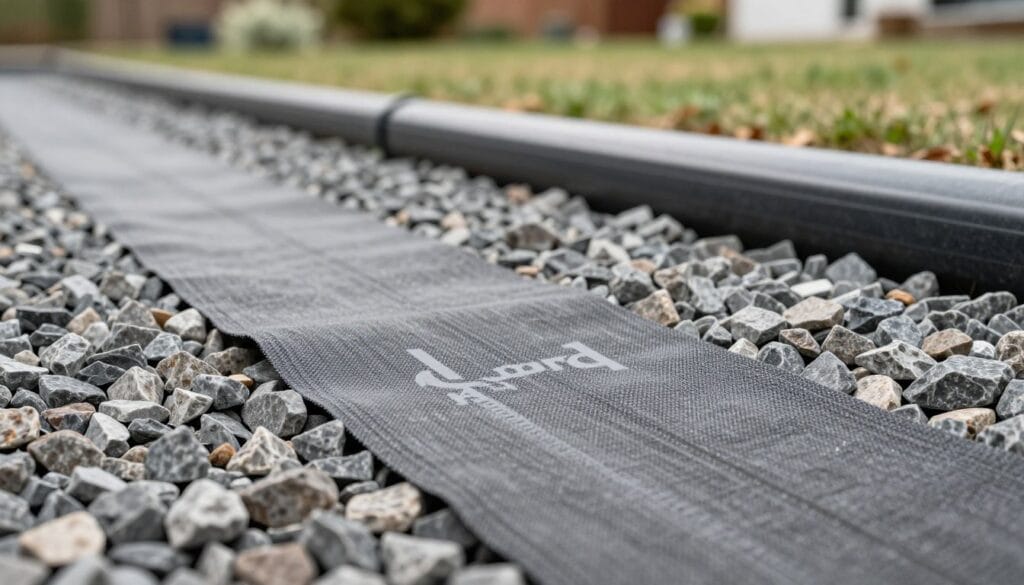
Rigid PVC vs flexible perforated pipe
Rigid PVC holds shape and is easier to snake or pressure‑wash if a clog appears. Flexible perforated pipe follows contours and is faster to lay in tight spots. Choose PVC where long‑term cleanability matters.
Gravel size and why it matters
Use washed gravel around 3/4‑inch. Coarse stone creates voids that promote flow and resists compaction. Avoid unwashed gravel — fines will migrate to the bottom and cause sediment build‑up.
Fabric and filtration
Landscape fabric and filter fabric keep soil from entering the stone. Overlap and wrap the fabric fully; partial coverage invites clogging and shortens the system’s life.
Optional upgrades
- Inlet grate or catch basin at low points for debris control.
- Clean‑outs (often via a 45° fitting) for easier maintenance.
- End caps and connectors to seal and join runs reliably.
| Material | Purpose | Tip |
|---|---|---|
| 4‑inch pipe | Collects and routes water | Prefer PVC for snaking access |
| 3/4‑inch gravel | Creates voids for flow | Always use washed stone |
| Fabric | Keeps soil out | Wrap and overlap fully |
Local note: Vancouver yards get heavy organic debris and root pressure. Prioritizing clog prevention and access saves time and calls to Lord Mechanical LTD at 6046703737 for help in North and West Vancouver.
How to Install a French Drain Step by Step
Start smart. Begin by marking the trench route with stakes and string, then confirm a steady slope using a level so water moves the right way.
Digging and sizing the trench
Dig a trench at least 12 inches wide. For many yard projects we aim for a depth of 18–24 inches depending on soil and goals.
Prepare the base and fabric
Line the bottom and sides with filter fabric and leave enough overlap to wrap the stone later. This fabric keeps soil out of the gravel and pipe.
Gravel, pipe placement, and wrapping
Place a gravel base to create a stable pipe bedding and consistent grade. Lay the perforated pipe with the holes facing down to collect water at the bottom.
Cover the pipe with gravel until it’s fully supported, then fold the fabric over the top to limit sediment intrusion.
Backfill and finish
Backfill over the wrapped gravel to restore the surface and allow for settling. Light compaction and a final grade check help avoid low spots.
Testing and what we watch for
Test the system by running water at the inlet and confirming steady discharge at the outlet. Look for belly spots, crushed pipe zones, or fabric gaps that cause early clogging.
- Practical tip: keep the run short and slope continuous to avoid pooling in the trench.
- What we watch: broken fabric overlap, flattened pipe, or inconsistent fall along the run.
Need help on a tricky lot? Call Lord Mechanical LTD at 6046703737 for a site visit in North or West Vancouver.
French Drain Installation Around a Home Foundation
Protecting a home’s foundation means balancing effective water control with structural safety.
Depth and setback considerations
Excavation depth must avoid undermining footings. We place the pipe run near footing level but keep a safe setback so soils that support the foundation remain intact.
Rule of thumb: aim for consistent fall (about 1/4 inch per foot) and avoid over‑digging close to the footing. Incorrect depth can lead to long‑term structural damage.
Connecting to existing systems and outlets
Where possible, we tie the collection pipe into an existing sump pump or a lawful daylight outlet. A clear discharge point keeps water moving away from the foundation and reduces pressure on the soil.
When interior perimeter systems are the right solution
If seepage continues despite exterior work, an interior perimeter system with a sump often performs better in finished basements. These retrofits require concrete cutting and professional waterproofing judgement.
DIY boundary: exterior trenching near a foundation has higher stakes. For recurring seepage or visible dampness in North or West Vancouver, call Lord Mechanical LTD at 6046703737 for a site assessment before you dig.
Maintenance and Troubleshooting for Long-Term Drainage Performance
Simple inspections twice a year catch most problems before they block flow or damage the run.
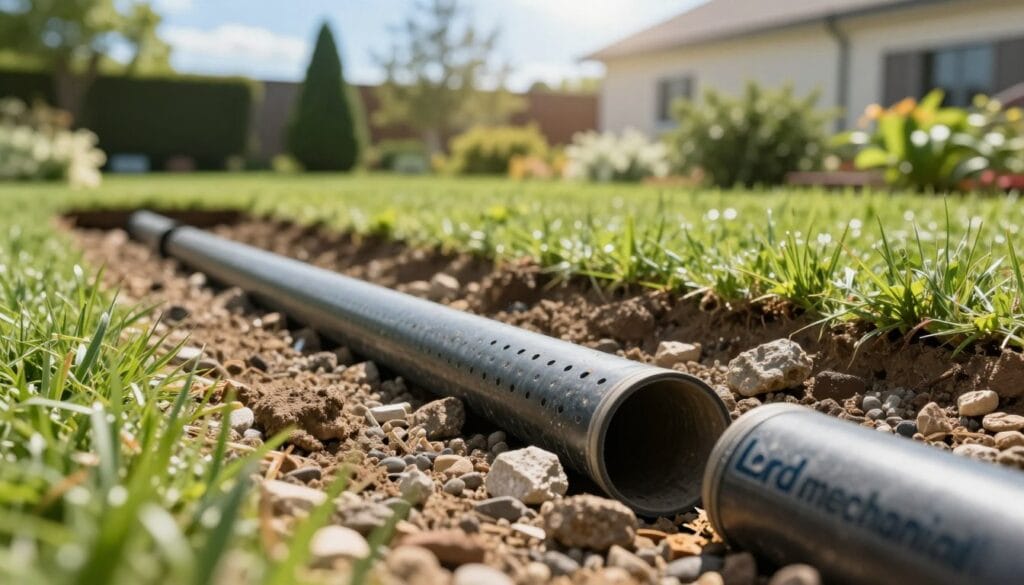
Seasonal inspection checklist
- Check outlets and any grates for leaves, sediment, or debris.
- Look for new surface pooling near the run — it signals reduced flow.
- Test performance by running water at the inlet and watching discharge at the outlet.
Clearing clogs safely
Start by flushing with a garden hose. Aim steady flow into the pipe and watch the outlet for steady discharge.
If that fails, use a plumbing snake carefully. Avoid sharp tools that can puncture PVC. For rigid pipe, a pressure‑wash from the outlet can remove compacted sediment.
Preventing future problems
Keep debris out: fit inlet grates and clear leaves each season.
Limit root intrusion: plan plantings away from the run and use root barriers if needed.
Avoid compaction: do not drive heavy equipment over the top; crushed pipe reduces voids and slows water flow.
| Issue | Quick check | Action |
|---|---|---|
| Blocked outlet | Visible pooling near outlet | Clear grate, flush hose, inspect pipe |
| Recurring clogs | Repeating pooling after rain | Inspect fabric, consider clean‑out or professional cleaning |
| Shifted or collapsed pipe | Soft spots or sudden loss of flow | Call a pro for excavation and repair |
“Small seasonal checks protect the system’s ability to move water for decades.”
Call Lord Mechanical LTD at 6046703737 for help in North or West Vancouver if water backs toward the home, clogs repeat, or the pipe appears damaged. Regular care keeps drains working and extends the life of the pipe, stone, and fabric.
Cost, Time, and DIY vs Professional Installation in Canada
A clear budget and realistic timeline stop surprises when solving persistent yard water problems.
What drives price and schedule? The main factors are run length, trench depth, soil type, and how much restoration is needed after work.
DIY can work for short, shallow runs. Expect under $1,500 if you supply labour and rent tools. Professionals charge widely — typical ranges run from $10 to $100 per linear foot, and complex jobs can exceed $10,000.
When to hire a professional
Call us if slope or grade is uncertain, if the run nears a foundation, or if the project needs machinery or utility coordination. Incorrect slope or poor discharge planning causes rework and property damage.
| Factor | DIY range | Contractor range |
|---|---|---|
| Length of trench | Short (under 20 ft) | $10–$100/ft |
| Depth | Shallow (12–18 in) | Deeper work raises costs |
| Soil & restoration | Simple turf repair | Hardscape or complex backfill extra |
| Materials (pipe, gravel) | Materials + rental | Materials, disposal, labour |
Prepare for quotes: take photos of the problem area, note approximate length and depth, show outlet options and access limits. We’ll ask for these when we assess your property.
“Cheap fixes that ignore slope often cost more in repairs.”
For North or West Vancouver site visits and a local quote, call Lord Mechanical LTD at 6046703737.
Conclusion
Success depends on three simple elements: steady slope, solid trench build, and a lawful discharge location. When those align, a strong, gravity‑fed french drain moves water through gravel and pipe away from problem spots.
Expect less standing water, more usable yard, and reduced moisture risk by your foundation when the work is done right.
Quick checklist: identify the true problem area, confirm grade, choose durable pipe and washed gravel, and wrap stone with filter fabric to limit sediment.
Key cautions: never route flow onto a neighbour’s property, have a plan for where water ends up, and treat excavation beside a home with care.
Action plan: watch your yard in heavy rain, map the flow, verify slope, then decide DIY or call a pro. For a site‑specific french drain plan in North or West Vancouver, call Lord Mechanical LTD at 6046703737.