

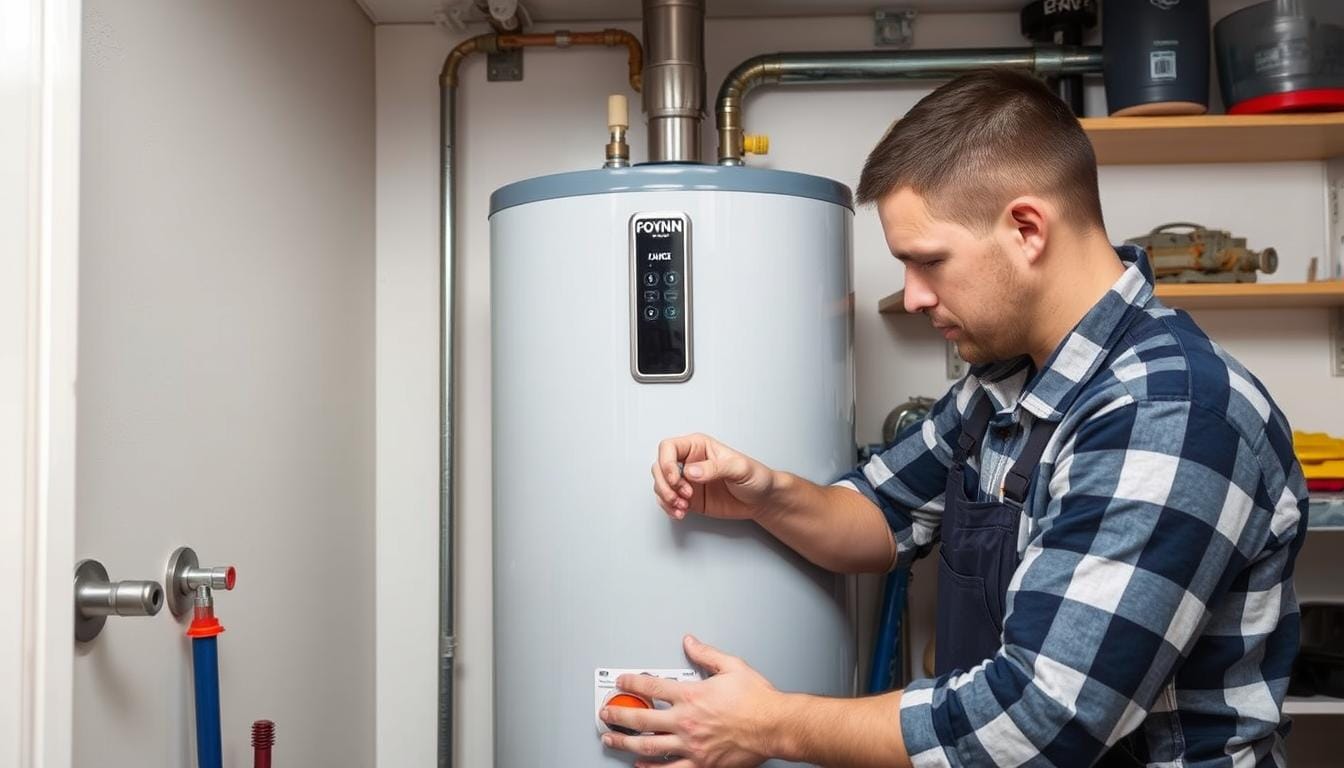
Curious how a few easy steps can keep hot water flowing and cut your bills?
We explain what your unit does and why routine care matters for showers, dishwashing, and laundry in Vancouver homes and businesses. Our approach is practical and clear, so you can follow steps safely or call for help.
Inside the tank you’ll find the heating element or burner, thermostat, anode rod and the critical TPR valve. We outline quick checks you can do in about 1–2 hours, with modest material costs like insulation or a replacement anode rod.
We focus on safety: cut power or set gas to pilot, shut the cold supply and let the tank cool before any work. Regular care trims standby losses and can lower energy costs when you set temperature wisely and add insulation.
Follow along for simple tests and tasks, or call Lord Mechanical LTD in North or West Vancouver at 604-670-3737 for professional service.
Key Takeaways
- Basic upkeep is easy and typically takes 1–2 hours.
- Core parts: tank, element or burner, thermostat, anode rod, TPR valve.
- Insulation and lower temperature reduce operating costs.
- Always cut power or set gas to pilot and let the tank cool first.
- Hard minerals in Vancouver can shorten equipment life; check regularly.
- Contact Lord Mechanical LTD at 604-670-3737 for expert service.
Why water heater maintenance matters in Vancouver homes
In Metro Vancouver, mineral-rich supply can quietly shorten appliance life if not checked.
Hard minerals like calcium and magnesium form scale and settle as sediment in a tank. This reduces usable volume and causes rumbling or popping during heating cycles.
Common signs include cloudy output, slow recovery and strange noises. Left unchecked, the burner or elements work harder and energy use rises.
What this means for efficiency and safety
Regular flushing—annual or semi‑annual—removes deposits and can add years to equipment life. Tanks often last 8–12 years; with good care some reach 10–15 years.
- Lower thermostat by 10°F → up to 5% energy savings.
- Add insulation → 25–45% less standby heat loss; up to 9% lower water‑heating costs.
- Periodically test TPR valves and vents to reduce safety risks.
| Issue | Symptom | Action |
|---|---|---|
| Sediment | Rumbling, reduced volume | Flush tank yearly |
| Scale (tankless) | Lower flow, error codes | Descale heat exchanger |
| Safety | Leaking or poor venting | Inspect TPR and vents |
We recommend scheduling checks before peak cold months. Call Lord Mechanical LTD at 604-670-3737 for service in North and West Vancouver.
Essential safety prep before any heater maintenance
Before you open a valve or remove a panel, take a few safety steps to protect yourself and the system.
Power and fuel: switch breaker off or set gas to pilot/off
We always cut power at the breaker for electric units or set the gas control to pilot/off for gas models. This prevents shocks and uncontrolled ignition while we work.
Shut off cold supply and allow the tank to cool
Close the cold inlet to isolate the tank and let it cool for several hours. Opening a hot valve too soon can cause scalding.
Before draining, open a hot tap to relieve system pressure. That small step reduces sudden spurts when a drain or test valve is opened.
PPE, ventilation for gas units, and flood-prevention know‑how
We wear thick gloves and safety goggles on every job. Even cooled lines can release hot bursts or debris.
- Verify good ventilation on gas models to avoid fume buildup.
- Position a bucket and hose before operating any valve to control flow and protect floors.
- Locate the main shutoff and test it so you can stop leaks in seconds.
- Double-check the tank is fully refilled and air-purged before restoring power or gas to prevent damage.
“Slow, steady prep prevents most leaks, burns and avoidable damage.”
If you need help with this step, call Lord Mechanical LTD at 604-670-3737 for service in North and West Vancouver.
Tools and materials you’ll need for successful upkeep
A compact kit of quality tools and PPE turns a tricky job into a quick, repeatable task.
We assemble a basic kit so jobs finish cleanly and safely. At minimum bring a sturdy garden hose, a large bucket, adjustable and pipe wrenches, and a flathead screwdriver.
Always include Teflon tape for threaded fittings and a 1-1/16-inch socket to remove most anode rods. Keep breaker bars nearby if the rod is seized.
- Safety gear: durable gloves and impact-rated goggles — protection is non-negotiable.
- Parts: replacement anode rod (~$22–$50), insulation blanket (~$42) and foam pipe sleeves.
- Prep: verify hose connections, clear drainage paths, and have rags and a small pan for residual water.
We also check the model data plate before buying parts so sockets, wrenches and replacement items match your unit. Call Lord Mechanical LTD in North and West Vancouver at 604-670-3737 if you prefer us to bring the full kit and finish the job safely.
Water heater maintenance: a step‑by‑step guide
This step‑by‑step guide shows how to test key components, clear deposits, and set safe temperatures for reliable daily use.
Test the safety valve
We place a bucket under the discharge and lift the lever. Water should flow and stop when we release it.
If the flow never stops or nothing comes out, replace the valve right away. A stuck valve is a pressure risk.
Inspect the anode rod
Remove the rod with a 1‑1/16‑inch socket. If it’s under 1/2‑inch thick or coated with scale, install a new anode.
Wrap threads with Teflon tape and tighten to the manufacturer torque to prevent leaks.
Flush the tank and set temperature
Cut power or set gas to pilot, shut the cold inlet and open a hot tap. Attach a hose, drain the tank and pulse cold until clear.
Set the thermostat to 120°F (~49°C) to reduce scald risk and save energy—about 5% per 10°F.
Insulate and final checks
Insulate hot pipes and add a jacket where safe. Avoid covering the top or flue on gas units.
- Quick checklist: power off, hot tap open, TPR test, anode check, flush, set temp, inspect for leaks.
- Record the date and steps completed for your service history.
“Yearly TPR tests, anode inspections and flushing keep the system efficient and extend service life.”
Need help? Call Lord Mechanical LTD in North or West Vancouver at 604-670-3737.
Tank vs. tankless water heater care in Canada
Tank systems and tankless models need different checks to stay efficient through Canadian winters.
Storage tanks: checks and flushing
For tanks we recommend semi‑annual visual checks and at least one full flush each year.
Inspect the anode, test the TPR, and drain until clear to control sediment. Typical lifespans run about 8–12 years with regular service.
On‑demand models: vinegar flush and screens
For tankless units isolate service valves, use a submersible pump and two hoses to circulate ~15 L of food‑grade white vinegar for 45–60 minutes, then rinse.
Also clean inlet screens to protect the heat exchanger from grit and scale.
Gas versus electric considerations
Gas units need secure venting, correct condensate routing and clean combustion air filters.
Electric models rely on upper/lower elements and thermostats; slow recovery often points to failed elements.
| Type | Key Task | When | Notes |
|---|---|---|---|
| Tank | Flush & inspect anode | Semi‑annual / annual | Controls sediment, keeps output steady |
| Tankless | Vinegar circulation & screen clean | Annual or yearly descaling | Protects narrow heat passages |
| Gas / Electric | Venting, filters, element checks | Annual | Safety and recovery performance |
Plan descaling before peak cold months. Call Lord Mechanical LTD in North and West Vancouver at 604‑670‑3737 for service or questions.
Troubleshooting hot water issues and minor fixes
When taps behave oddly or burners sound off, a quick diagnosis can often pinpoint an easy fix. We walk you through common signs and simple checks you can do safely.
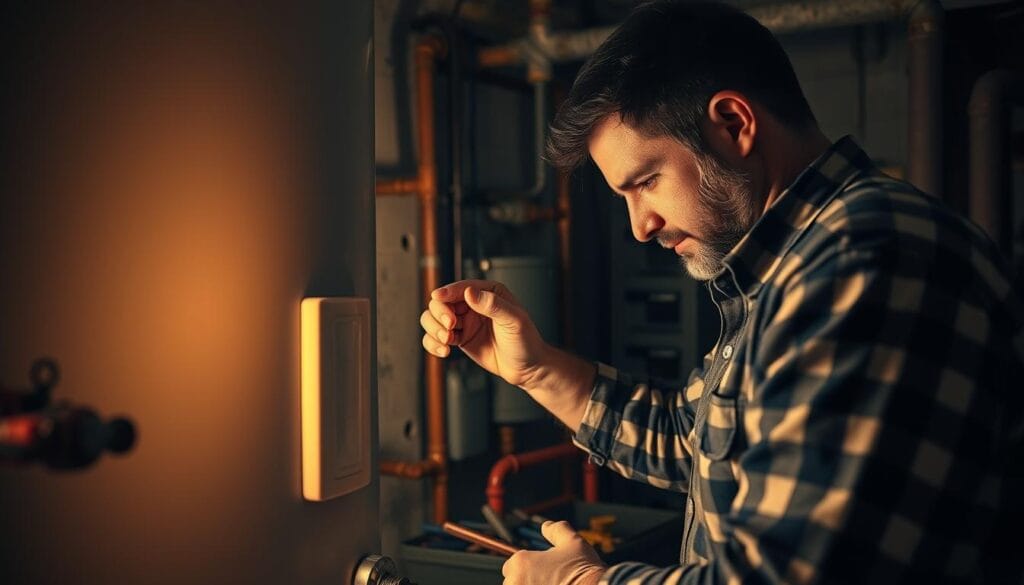
Noises, odours, rusty flow and pressure changes
Popping or rumbling: these are classic signs of sediment in the tank. A thorough flush usually restores quiet operation and capacity.
Sulphur or rotten-egg odour: flush the system first. If the smell remains, disinfecting and inspecting the anode rod often resolves the problem.
Brown or rusty output: internal corrosion or a worn anode suggests an expedited replacement plan. We inspect the rod and advise next steps.
Low or fluctuating pressure: check aerators, inlet screens (especially on tankless units), and partially closed valves. Cleaning or freeing screens often restores flow.
- Test thermostat settings and electric elements when you get inconsistent hot water.
- Inspect fittings, the drain union and TPR discharge for small leaks before they worsen.
- Clean air filters and dust near gas burners to improve combustion quality.
“Log dates and symptoms — a short history helps us spot recurring issues fast.”
If problems persist after these steps, call Lord Mechanical LTD at 6046703737 for diagnostics and safe repair in North and West Vancouver.
DIY tasks versus professional water heater service
Deciding which tasks you can safely handle versus when to call a pro saves time and prevents costly mistakes.
Safe DIY jobs we recommend include testing the TPR valve, flushing the tank to clear sediment, setting temperature, and adding pipe and jacket insulation.
These steps cut energy use and spot visible leaks early. If a task feels tight, rusty or unclear, step back and phone a technician.
- Pro-level work: replacing elements or a seized anode, diagnosing gas ignition or vent issues, and fixing internal corrosion.
- Warranty note: some manufacturers require periodic professional checks to keep coverage valid.
- Safety checks: combustion tests, CO checks and draft verification on gas units should be done by qualified techs.
“If repair costs near replacement, we will quote both options so you can choose with confidence.”
| Task | DIY? | When to call us |
|---|---|---|
| TPR test | Yes | No flow or stuck lever |
| Anode replacement | Maybe | Rod seized or heavy corrosion |
| Combustion check | No | Annual or soot/odour present |
We handle multi‑task visits to save you repeat drain‑downs. Call Lord Mechanical LTD at 604-670-3737 for clear estimates and scheduled reminders to cover your water heater needs in North and West Vancouver.
When maintenance isn’t enough: repair, replacement, and lifespan
When repairs no longer restore reliable hot supply, we perform a clear repair vs replacement analysis you can trust.
We evaluate age and condition: units past 10–15 years or outside the typical 8–12 years range trigger a full assessment. Visible rust, recurring leaks or cracks usually mean the tank is near end of life.
Cost guides help decisions. If a repair costs more than half the price of a new unit, replacement often gives better efficiency and reliability.
- Check the anode rod and overall corrosion; a spent rod shortens remaining service life.
- Assess capacity and recovery against current demand for growing households or businesses.
- Installed price targets: storage tanks roughly $2,000–$5,000; tankless systems about $5,500–$7,500.
We also cover timeline, disposal, permits and venting rules in Vancouver to limit downtime. After installation, we schedule follow-up service so your new unit starts with a solid care plan.
“Replacing at the right time saves money and avoids unexpected outages.”
Call Lord Mechanical LTD at 6046703737 for a straightforward assessment in North and West Vancouver.
Vancouver service, pricing expectations, and booking help now
We set realistic local price ranges so you can make decisions with confidence.
Traditional storage units typically install for about $2,000–$5,000 in Vancouver, depending on size and venting.
Tankless projects usually start near $5,500–$7,500 because of special venting, gas line sizing and commissioning needs.
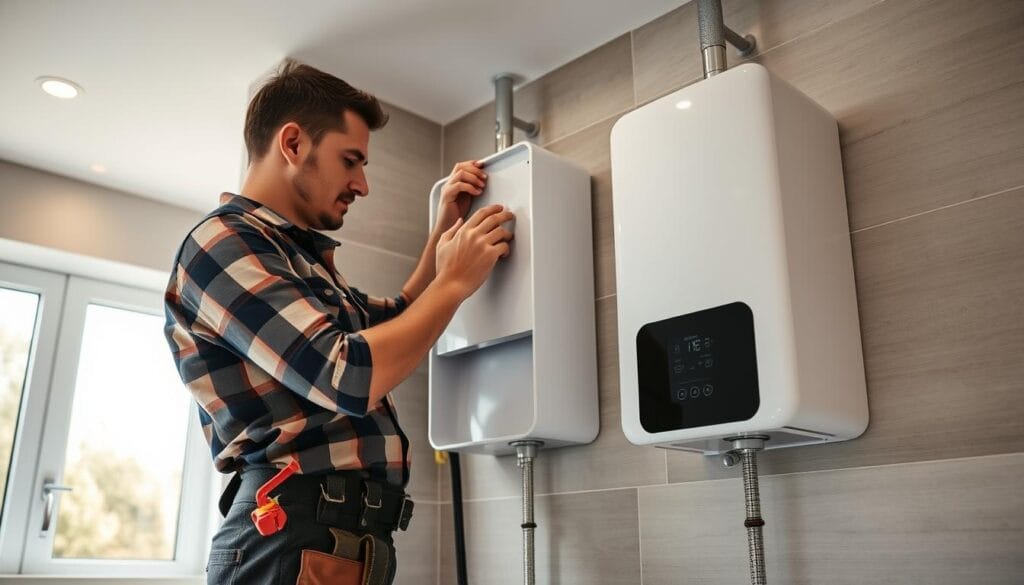
Professional installation matters for gas work. Correct vent routing and combustion tuning protect your home and system.
Even electric installs often benefit from pro handling to save time and avoid leaks.
- We provide transparent quotes that include permits, disposal and any code upgrades.
- Fast diagnostics for no hot water, leaks or pressure drops—aiming to fix issues on the first visit.
- Tailored plans and seasonal reminders to plan ahead and lower total ownership cost.
- We coordinate off‑hours service for property managers and business owners.
“Clear pricing, tidy sites and dependable follow-up keep your system reliable.”
We service North and West Vancouver daily. Call Lord Mechanical LTD at 604-670-3737 and we’ll make sure your hot water heater is back in service quickly.
Conclusion
A short, regular checklist keeps your system safe, efficient and ready when demand rises.
Test the TPR valve, inspect and replace the anode as needed, flush the tank, and set temperature to about 120°F (49°C). These steps improve safety, steady hot water delivery and lower energy use.
Always confirm the tank is fully refilled and purge air at a hot tap before restoring power or relighting a gas appliance. Add pipe and jacket insulation to reduce losses and help extend life.
Keep a service log and schedule to cut emergency calls. Call Lord Mechanical LTD at 604-670-3737 for reliable local service in North and West Vancouver. We’re ready to help with routine care, upgrades or replacements.