

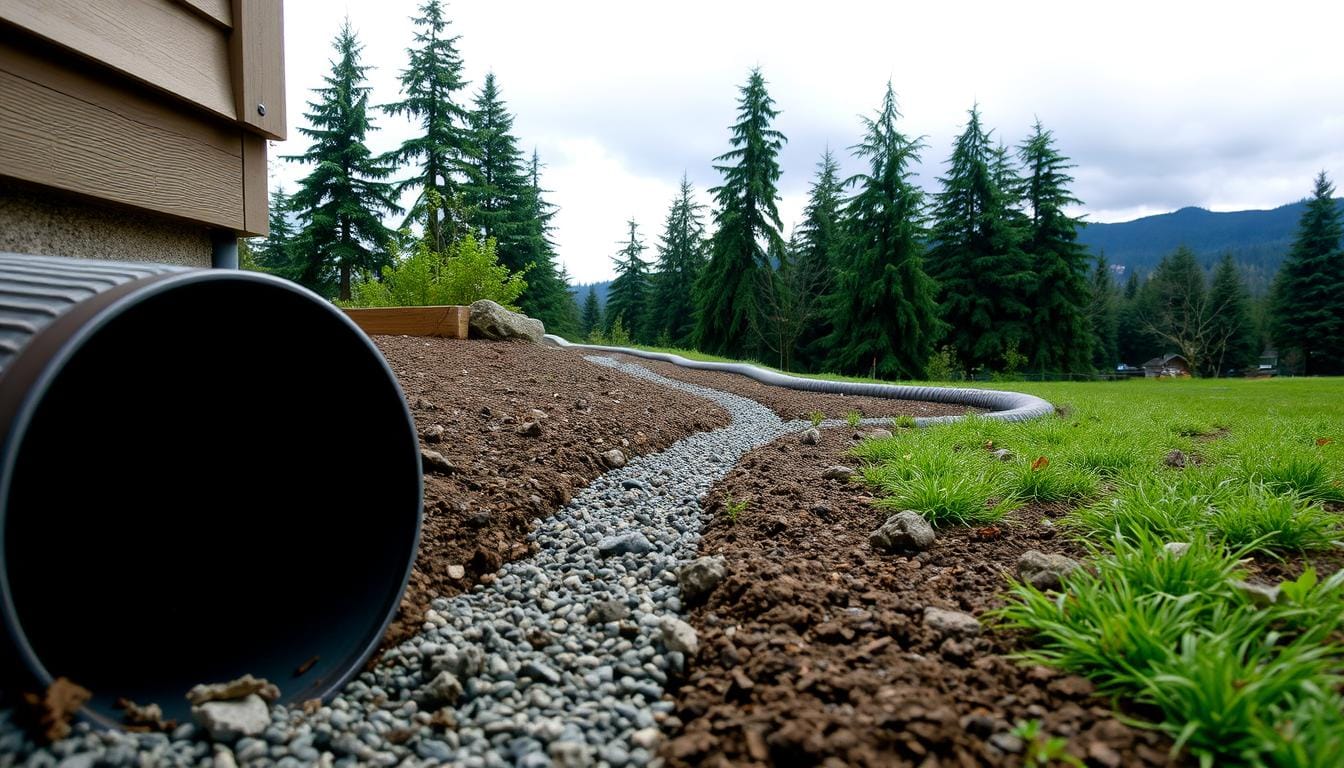
Could a hidden line of pipe be the difference between a dry basement and a costly repair?
We explain how a well‑designed perimeter drain moves excess water away from your foundation to protect walls and slabs from water damage. In Vancouver’s rainy climate, that small change can cut leaks and mould risk for homes and commercial sites.
Modern systems use perforated pipe, gravel and proper grading to channel water a safe distance from the structure. Older weeping tiles can clog, collapse or fail, so upgrading to plastic pipe often improves lifespan and reliability.
We guide you through what to look for, when to maintain the system and when to consider replacement. For local help in North Vancouver and West Vancouver, call Lord Mechanical LTD at 604-670-3737 to discuss timelines, budget and next steps.
Key Takeaways
- A functioning perimeter drain reduces the risk of basement leaks and water damage.
- Modern perforated pipe with gravel and correct grading channels water effectively.
- Older tiles may fail and often need upgrading to more reliable materials.
- Regular inspection and maintenance keep the system performing through heavy rains.
- We serve North Vancouver and West Vancouver—call 604-670-3737 for expert advice.
Why perimeter drainage matters now in Vancouver’s wet climate
Seasonal downpours and spring melt make this the right time to check how water leaves your lot. A short inspection can show if soil is saturated next to your home and if runoff is pushing toward the foundation.
When backfilled soil soaks, hydrostatic pressure rises and forces moisture through cracks in basement and crawl space walls. Puddles near the house, musty odours, or white mineral stains mean the system may be under stress and could lead to water damage.
- Look for pooling near footings and signs of seepage on walls.
- Check downspouts and slope so runoff moves away, not toward, the foundation.
- Confirm your perimeter drain and drainage system are working properly before heavy storms.
“Addressing run-off now costs far less than repairing interior finishes after a flood.”
We advise Vancouver homeowners to schedule an annual check. For North and West Vancouver service, call Lord Mechanical LTD at 6046703737.
What is a perimeter drain system and how it works
A perimeter drain system is a loop of perforated PVC placed at footing level to collect groundwater and carry it away from your foundation.
We trace the change from old weeping tiles and clay sections to modern french drain designs. Today’s pipes use a mesh sock to block soil while letting water enter freely.
The assembly is simple: perforated pipes sit on a compacted base, wrapped in a permeable sock, then surrounded by graded gravel and backfilled with soil. The trench slopes to a discharge point so water flows downhill.
As groundwater rises in saturated soil, it enters the tiny holes, moves along the slope and exits at the designated point. Without a proper outlet, systems can struggle during heavy rain or snowmelt.
- Why old parts fail: clay or concrete tiles may collapse or clog with roots and fine dirt.
- Risk to sewers: tying the loop into a sewer can cause backups during surges; daylight or storm outlet is safer.
- Watch for signs: stains on basement walls or dampness in the crawl space often point to a blocked or failing system.
Need help? For inspections and repairs in North and West Vancouver, call Lord Mechanical LTD at 6046703737.
Perimeter drainage solutions
Combining slope, roof management and below‑grade piping keeps water away from your home foundation. We focus on practical steps you can take to move runoff and groundwater away foundation and reduce interior damage.
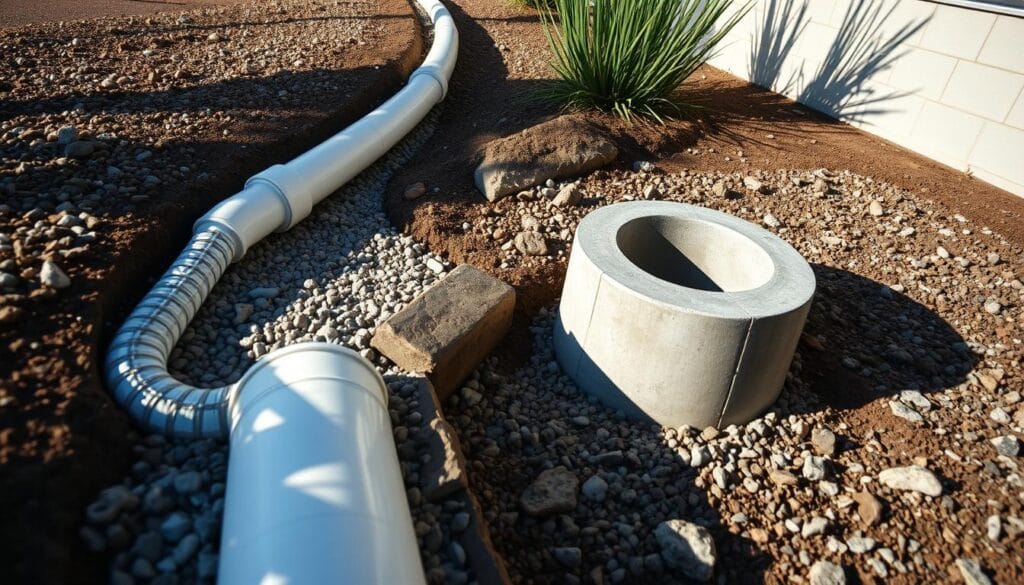
Directing water away from the foundation: drains, grading, downspouts
Target an on‑lot slope of 6–15 cm over 3 m. This small grade keeps surface water flowing away rather than pooling next to walls.
Use gutters, elbows and extensions to discharge roof water well beyond planting beds. Add splash blocks or flexible extensions at low spots.
Subsurface options like a perimeter drain or a french drain use perforated pipes and gravel to intercept groundwater before it reaches walls.
Integrating waterproofing to reduce water damage and mould
We recommend combining an exterior waterproofing membrane with a functioning drain system. The membrane blocks lateral entry while pipes carry water to a lawful outlet.
Daylighting or routing to storm systems prevents re‑entry of water to neighbouring lots. Where sewer ties are risky, daylight or storm discharge is safer.
| Measure | What it does | Typical benefit |
|---|---|---|
| Re‑grading (6–15 cm/3 m) | Shifts surface runoff away | Reduces pooling near foundation |
| Gutters & downspout extensions | Directs roof water away foundation | Prevents soil saturation next to walls |
| Perimeter drain / french drain | Collects groundwater with pipes and gravel | Stops seepage and lowers hydrostatic pressure |
| Exterior waterproofing membrane | Blocks water penetration at wall face | Reduces mould risk in finished spaces |
Simple upgrades—leaf guards, splash blocks, re‑grading low areas—often fix localized problems quickly. After heavy storms we advise a quick check of drains, extensions and sumps to verify water is moving as intended.
“Small adjustments to slope and outlets often prevent the largest repairs.”
Need help in North or West Vancouver? Call Lord Mechanical LTD at 6046703737 for inspection, retrofits and professional installation.
How to spot problems before water damage occurs
Noticing minor stains or puddles now can save you from major basement damage later.
Watch your basement walls for faint water stains, white mineral streaks or peeling paint. A musty smell after rain is another early clue.
Look around the edge of your home for pooling water, settled soil or a negative slope that sends runoff toward the foundation.
Common causes to check
- Clogging from dirt, debris and roots that restrict flow in perimeter drains.
- Cracked or collapsed tiles made from clay concrete that let soil enter and block sections.
- Downspouts discharging at the footing, or hard surfaces that channel water to the basement edge.
We recommend a seasonal inspection. Photograph pooling and stains after storms—patterns over time reveal the source faster.
“Early checks and simple grading changes often prevent the largest repairs.”
For professional help in North and West Vancouver, call Lord Mechanical LTD at 6046703737. We assist homeowners with fast diagnosis and practical fixes.
Maintain your perimeter drain: a practical, seasonal plan
A brief fall inspection saves you time and money when winter weather arrives. Annual professional checks are critical to confirm your system is working properly before heavy rain and freeze‑thaw cycles.
Inspection timeline
We recommend one full inspection in the fall and a quick check in spring. Fall checks let technicians spot clogs, test sump action, and flush the loop before storms.
Clean‑out port and cleaning
Install a surface clean‑out if your system lacks one. A clean‑out makes targeted cleaning and flushing fast, avoids digging, and helps keep dirt and debris from settling in the loop.
Keep water away at the surface
Keep gutters clean and extend downspouts several feet from the home. Re‑grade settled soil so it slopes away and does not channel water back to the foundation point.
DIY versus professional maintenance
Basic tasks—leaf clearing, checking extenders, and visual inspection—are DIY. Call us if you see recurring pooling, slow discharge at the outlet, or damp spots indoors.
| Task | Frequency | Benefit |
|---|---|---|
| Professional inspection | Annually (fall) | Detects clogs, preserves system life |
| Clean‑out flush | As needed after heavy storms | Removes fines and organic matter |
| Gutter & downspout check | Spring & fall | Prevents surface water overload |
| Grade and low spot repair | After major settling or storms | Restores positive slope away from home |
“Small, scheduled maintenance extends life and prevents the largest repairs.”
We help North and West Vancouver homeowners maintain their perimeter drain systems. Call Lord Mechanical LTD at 6046703737 for inspections, cleaning and professional advice.
Repairs and replacements when your drain system fails
When a loop of pipe stops moving water, prompt repairs save your basement from costly harm.
We begin with non‑invasive flushing and targeted cleaning through access points. Many plugged runs respond to a high‑flow flush that clears dirt, roots and organic debris.

Diagnostics before digging
Camera inspections locate roots, collapsed sections or grit that flushing misses. That helps us limit excavation and focus on exact failure points.
When replacement is the right call
Legacy clay or concrete weeping tiles and ridged pipes often trap fines and roots. If cleaning gives only short‑term relief, complete replacement with modern PVC and mesh socks is the reliable long‑term fix.
Never risk sewer backups
Many older systems tie directly into the sewer. We recommend safe disconnection and daylight or storm outlet to prevent backups during heavy rain.
- Partial vs full replacement depends on damage, access, budget and foundation risk.
- Staged work keeps your property usable while crews restore flow and protect the foundation.
- Post‑repair checks include flow tests at the outlet and spot checks after rain, plus a regular maintenance plan.
“Timely cleaning can avoid replacement, but older clay runs often need modern pipes to stop repeat failures.”
Call Lord Mechanical LTD at 6046703737 for inspections, cleaning and professional repairs in North and West Vancouver.
Vancouver-specific drainage considerations
We focus on local factors that change how water moves across lots in North and West Vancouver. Heavy rain and close‑lot construction mean grading and clear outlets matter more here than in drier regions.
Recommended slopes and discharge best practices
- Aim for a fall of 6–15 cm over 3 m of soil away from the structure to limit saturation near the foundation.
- Ensure the trench and pipes slope to a clear discharge point. Systems without a lawful outlet can fail during heavy rain or snowmelt.
- Choose daylighting or a storm outlet over tying into the sewer when possible to avoid neighbourhood backups.
Builders establish initial grades, but patios, landscaping and settling can change flow paths over time. Once construction is complete, ongoing care becomes the owner’s responsibility.
Poor grading that sends water to a neighbour may create liability. Manage runoff with swales, downspout extensions and controlled outlets to reduce disputes.
Older homes and risk points
Legacy weeping tiles, tiled runs and makeshift tie‑ins often need modernization to modern pipes or a french drain. Also plan root‑resistant layouts and periodic checks where tree lines intersect the system.
“Document slopes and outlet elevations so future maintenance and upgrades match local best practices.”
Need help? Call Lord Mechanical LTD at 6046703737 for local advice, inspections and work in North and West Vancouver.
Work with local pros to protect your home foundation
We recommend scheduling a professional inspection before the wettest months. A licensed plumbing team finds issues that a visual check often misses.
A professional can dig small access points to reach the pipe, perform targeted cleaning, and run a camera through the run to locate blockages or collapsed sections.
What a professional inspection includes
Our crew inspects clean‑outs and access points, scopes the perimeter drainage system with a camera, and performs flow testing at the discharge.
We also evaluate grading, gutters and downspout connections so roof runoff and subsurface systems work together to protect your foundation.
Deliverables and timing
- Video findings: camera footage showing any blockages or pipe damage.
- Recommendations: phased plan for cleaning, maintenance, or targeted repairs.
- Minimally invasive work: access points dug where needed to limit landscaping disruption.
Annual inspections before winter save time and reduce the risk of water damage when heavy rain arrives. Older ridged pipes may require replacement if they cannot be cleaned effectively.
“Disconnecting hostile tie‑ins to sewers can prevent backups during peak flows.”
| Service | What we do | Benefit |
|---|---|---|
| Camera inspection | Locate roots, silt, collapse | Targets repairs, avoids full dig |
| Cleaning & flow test | Flush through clean‑outs and check discharge | Restores flow and verifies outlet |
| Replacement planning | Assess pipe condition and phased work | Long‑term protection for your home |
We serve North Vancouver and West Vancouver as Lord Mechanical LTD. Call 604-670-3737 for perimeter drain cleaning, inspection, repair, and installation tailored to your property and budget.
Conclusion
A coordinated approach of grading, modern pipes and a routed perimeter drain system keeps water moving off your lot and protects finished spaces.
Keep an eye on basement walls and low spots. Early action on pooling or musty smells prevents costly water damage to your home foundation and crawl space.
Upgrade triggers include aging clay tiles, recurring clogs, or tie‑ins to the sewer. A french drain and perforated PVC with a mesh sock usually restores reliable flow.
To maintain performance, schedule seasonal checks, clean gutters, and document inspections so you can maintain perimeter best practices year‑round.
Call Lord Mechanical LTD at 604-670-3737 for local advice, inspections and quotes in North Vancouver and West Vancouver. With a plan and simple upkeep, your perimeter drains and drain system will perform reliably through peak storms.