

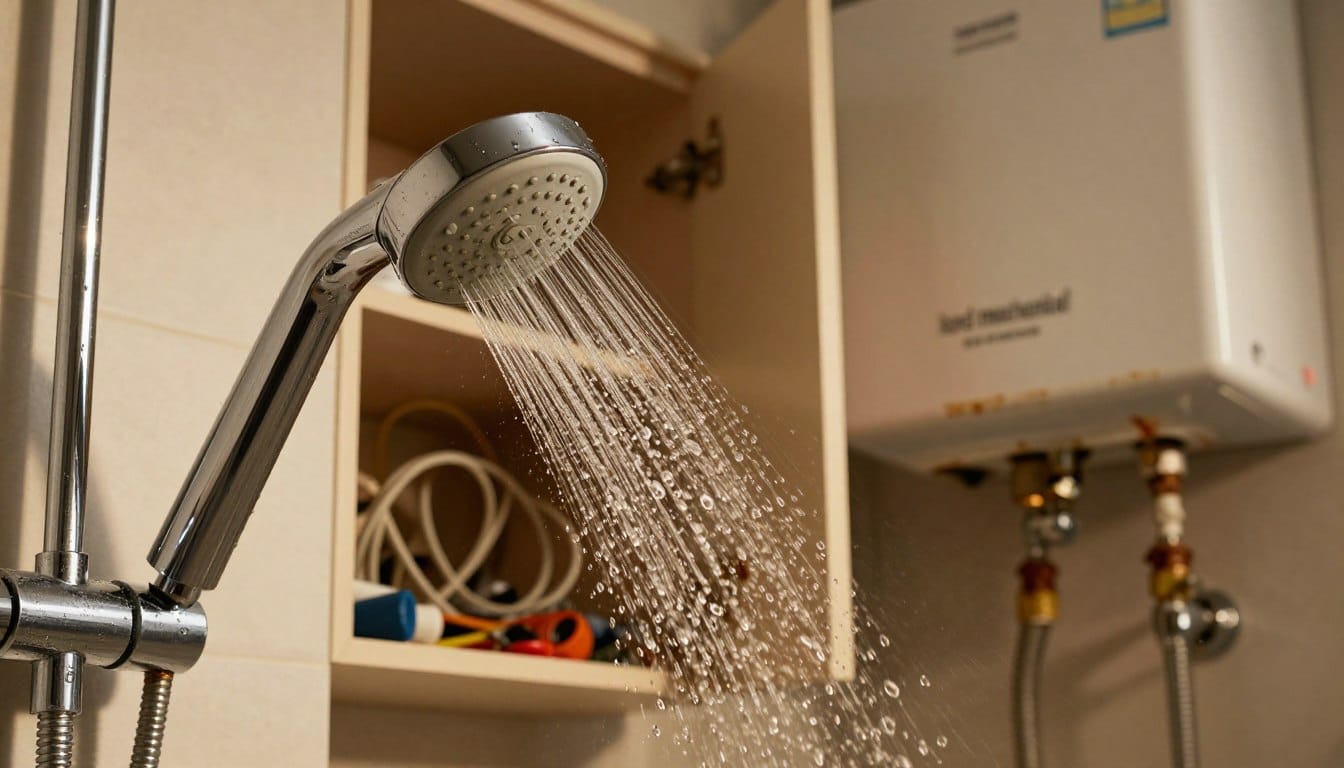
Nearly 40% of homeowners report sudden temperature swings in the shower when another tap runs. That simple stat shows how common this issue is and why it matters to your daily routine.
We see the pattern often: a shower starts warm, chills, then warms again. This “cold sandwich” effect usually happens when another fixture draws supply and cuts into what reaches your tap.
In this section we’ll define what inconsistent hot water looks like in a real home. We’ll explain why the water heater, mixing valves and simultaneous demand interact predictably, not mysteriously.
We’ll also set clear expectations on what you can safely check and when to call a licensed plumber—especially for gas, venting or tank work. If you need a fast diagnosis in North Vancouver or West Vancouver, call Lord Mechanical LTD at 604 670 3737.
Key Takeaways
- Temperature swings often mean another fixture is drawing supply.
- Many problems come from demand, valves, or worn shower parts.
- Simple checks can rule out minor issues; leave gas and venting to pros.
- Proper sizing and maintenance of your water heater prevents repeats.
- If you suspect venting or carbon monoxide, stop and call a pro immediately.
What “running out of hot water” really looks like in Canadian homes
Small shifts in demand around the house can suddenly change what comes from your showerhead.
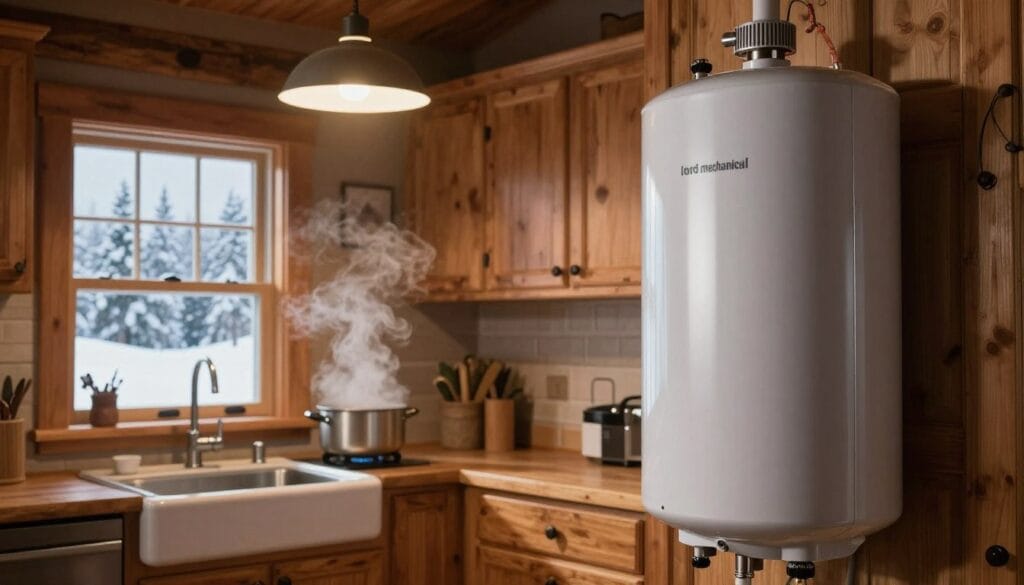
In many Vancouver and North Shore homes, a morning shower cools when the dishwasher or laundry starts. Long cycles from a dishwasher or washer create steady draw on the hot water supply, exposing a marginal tank or sediment limits.
Quick signs it’s supply versus mixing
- Steady flow but colder temperature: likely a mixing or valve issue affecting temperature control.
- Reduced flow with swings: suggests a pressure or fixture restriction interfering with delivery.
- Complete loss until heater recovers: points to capacity limits in the storage or tankless system.
When you notice it most
Peak times — shower time, laundry runs, or dishwashing — reveal the problem because multiple fixtures draw from the same water supply. Multi-bath homes shift demand quickly, so a nearby tap can change temperatures at your shower.
If the pattern follows “who used what, and when,” we recommend simple checks before touching the heater. For fast diagnosis in North Vancouver or West Vancouver, call Lord Mechanical LTD at 604 670 3737.
Fast checks before you touch the water heater
A few simple tests at home will tell you if the issue is the heater or something else. Start small: safe, low-risk checks often solve the problem without opening the unit.
One-fixture test: Run only the shower or a single tap while the rest of the home is off. If temperature or flow stabilizes, another fixture is drawing supply.
Checklist for simultaneous demand
- Stop the dishwasher, washing machine and other showers during the test.
- Look for outdoor hose bibs or a recirculation pump cycling at the same time.
- Note if stability returns when those devices are off.
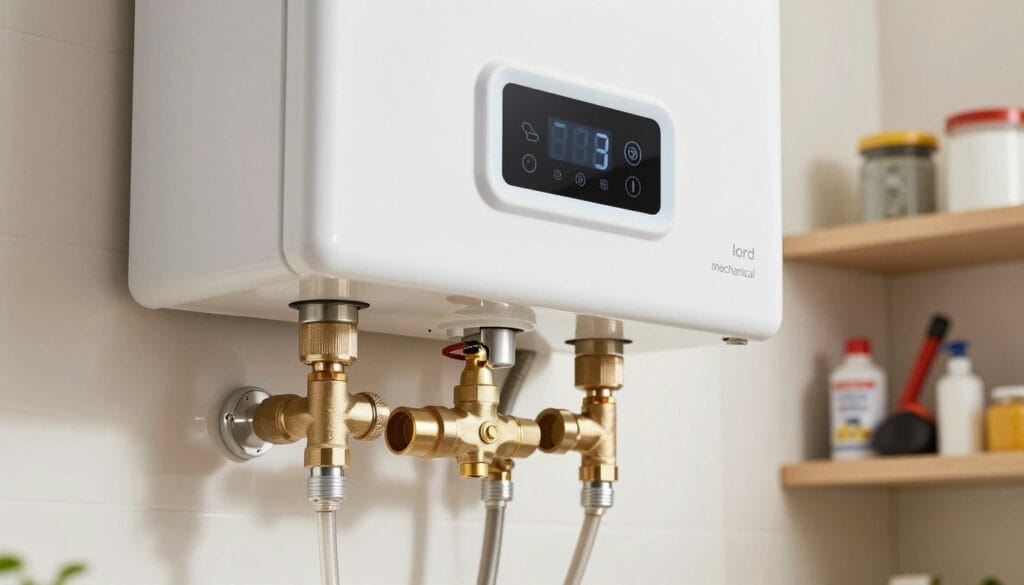
Crossed line check: After a remodel, a swapped connection can make cold and hot lines mix. Test sinks near the work area: unusual mixing or reversed handles signals a crossed hookup.
Pressure checks: Compare multiple fixtures. If pressure dips only when another faucet opens, the problem may be supply or a partially closed valve. Sudden, system-wide pressure loss can indicate a developing leak or municipal supply issue — stop and call a plumber.
If troubleshooting points toward gas, venting, or internal heater parts, do not proceed. Call Lord Mechanical LTD for a licensed inspection in North Vancouver and West Vancouver at 604 670 3737.
Inconsistent hot water in the shower: valves, cartridges, and scald protection
Most showers rely on a small valve cartridge to keep your temperatures steady when the rest of the home runs. Pressure-balanced valves and thermostatic mixing valves (TMVs) do that work by adjusting flow or sensing temperature so the shower stays safe and comfortable.
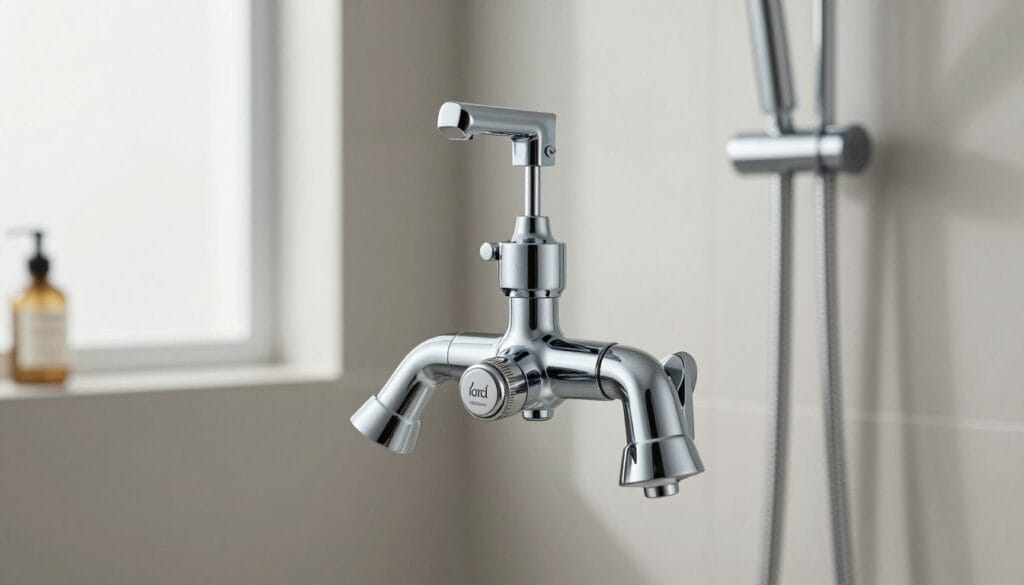
How pressure-balanced and thermostatic systems stabilize temperature
Pressure-balanced valves react to pressure drops by shifting the mix of hot and cold. TMVs monitor actual temperature and adjust flow to hold the set point.
What a worn cartridge does
A failing cartridge shows up as sudden swings, twitchy handle response, or changing temperatures even when no other tap is on. Old seals and mineral wear reduce control and cause repeat problems.
Older homes and matching parts
Homes with older valve bodies often need full valve upgrades. When replacing a cartridge, identify the manufacturer and model — close-but-not-exact parts often fail again.
- Quick service steps: shut off supply, remove handle and retaining clip, swap cartridge (hot side left), reinstall scald guard and test.
- Safety note: If you’re unsure, call a licensed plumber to avoid leaks behind finished walls. For North and West Vancouver, call Lord Mechanical LTD at 604 670 3737.
- When to look beyond the shower: If every fixture shows swings, the issue may be heater capacity or system pressure.
Tank-style water heater problems that drain your hot water supply
We often see tank heaters lose real capacity even while the burner still runs. That slow decline shows as lukewarm showers and faster depletion during peak use.
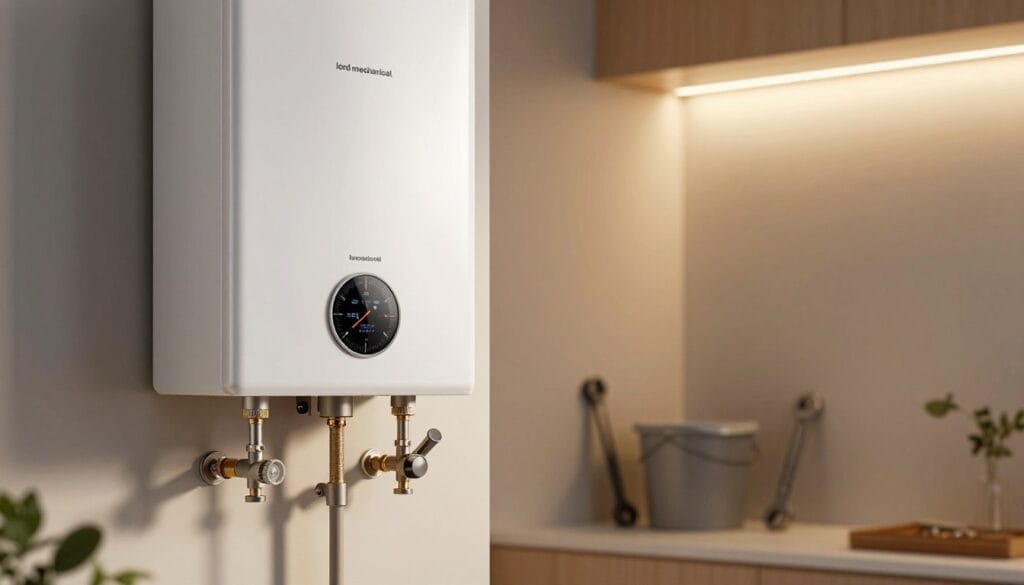
Sediment and reduced capacity
Hard minerals settle in the bottom of a tank and form sediment. Over months and years this layer cuts heat transfer and shrinks usable volume.
Result: the heater burns energy but the usable hot water runs out sooner. Regular flushing can restore capacity and extend the unit’s life.
Dip tube failure and mixing
The dip tube sends incoming cold water to the bottom of the tank. If it cracks or corrodes, cold mixes at the top and the home gets lukewarm output.
Signs include steady flow with low temperature and abrupt changes when another tap opens. Replacing a dip tube is often cheaper than a full replacement, but it requires draining the tank and safe handling of the unit.
Size, age and thermostat problems
A tank that is too small for your household will show predictable drops at peak times. Multiple bathrooms, laundry and dishwashers will expose sizing limits.
Once a unit reaches about ten years, performance and efficiency decline. Faulty thermostats or incorrect settings can also create “never quite hot” water. Resetting or replacing the thermostat may be a simple solution.
- Quick checklist: flush the tank, watch for dip tube symptoms, compare capacity to household demand, and consider replacement after ~10 years.
If you need a professional inspection in North Vancouver or West Vancouver, call Lord Mechanical LTD at 604 670 3737.
Tankless and on-demand heaters: why temperature can swing from hot to cold
On-demand heaters respond instantly — and that immediacy is why you sometimes feel sudden temperature shifts. These units do not store volume, so performance depends on flow, heating capacity and steady gas and air supply.
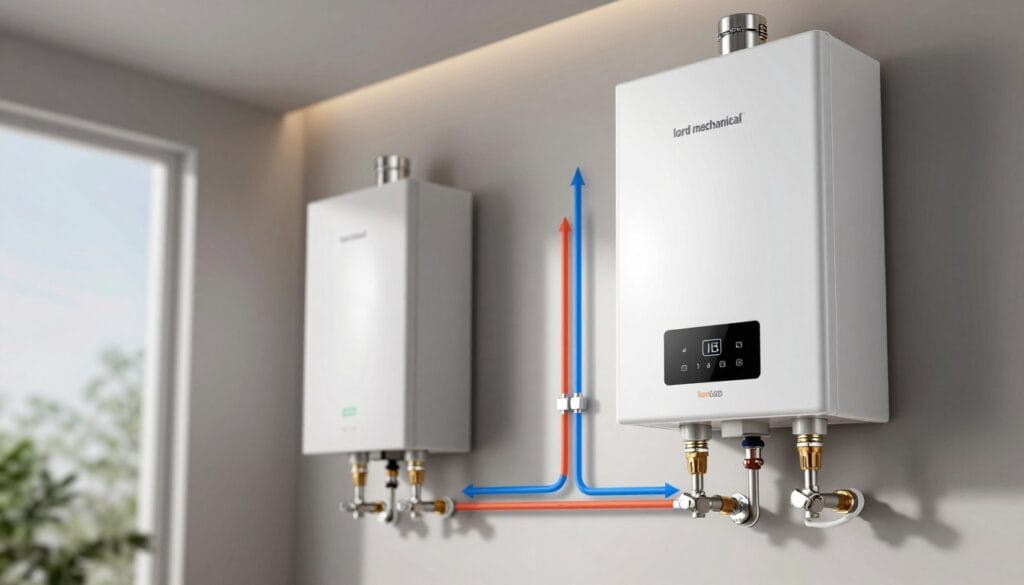
Flow-rate limits and model differences
A typical shower uses about 2.5 gallons per minute (gpm). Many on-demand units produce between 2 and 10 gpm depending on model and incoming temperature.
If you run multiple fixtures, total demand can exceed the unit’s rated output and temperatures will drop. Match appliance use to your unit’s rated flow to avoid problems.
The “cold water sandwich” and back-to-back use
The cold water sandwich is simple: hot → cold → hot. It happens when a short, high-flow draw interrupts the heater’s steady output.
Spacing showers or avoiding simultaneous high-flow devices reduces these swings.
Scale in the heat exchanger and descaling
Mineral deposits cut heat transfer. That lowers output and causes temperature swings over time.
We recommend descaling every 12–18 months. Descaling kits commonly cost about $140–$200 — a small investment compared with premature repairs.
Gas supply, burner faults and vent safety
Undersized gas lines, competing appliances or burner faults reduce heating power and create lukewarm or unstable output. Check gas supply if your unit underperforms.
Blocked vents (nests, debris) can force a unit to shut down and create carbon monoxide risks. Modern units include spill switches that stop operation on backdrafts; random shutdowns call for prompt professional inspection.
If you suspect gas, venting or shutdowns, stop and call Lord Mechanical LTD for a licensed inspection in North Vancouver or West Vancouver at 604 670 3737.
Plumbing and fixture issues beyond the heater
Delivery failures in the plumbing can mimic a heater fault. We often find the tank is producing heat, but the supply never reaches a fixture the right way.
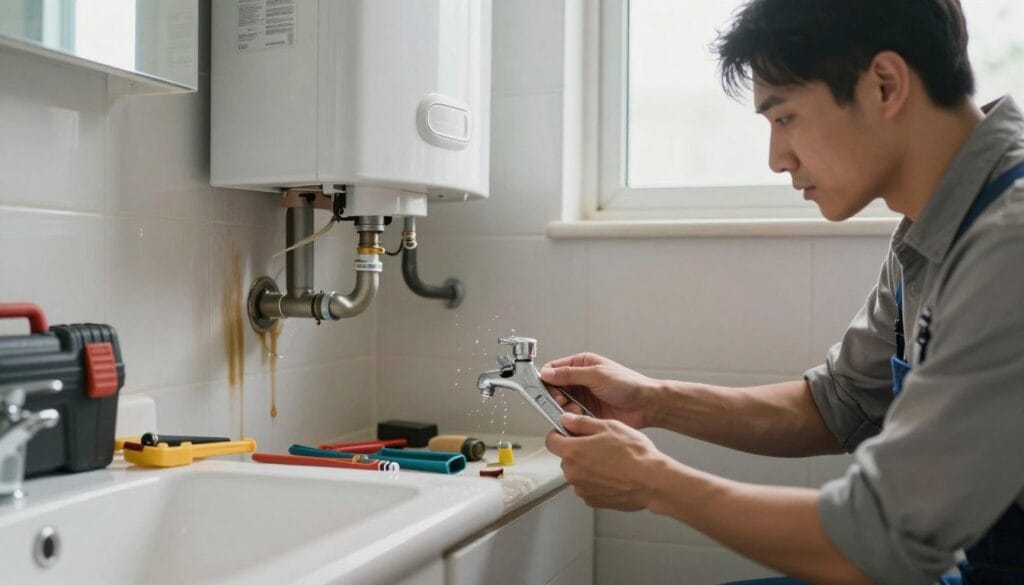
Cold weather, ground movement, and corrosion create cracked or detached runs. Those breaks change flow and pressure and make showers or taps take ages to reach normal temperatures.
Common distribution problems to check
- Pipe damage: cracks, corrosion or loose joints after storms reduce flow to one room or the whole home.
- Pressure faults: a failing pressure-balancing part in a faucet, dishwasher or washing connection can backfeed and skew temperatures.
- High-demand appliances: dishwasher and washing cycles draw supply predictably and can lower available hot water supply during runs.
Work the issue by isolating fixtures: test one tap, then one bathroom, then run an appliance. If the pattern follows a single fixture, the repair is local. If the whole home shows low pressure or leaks, stop and call us.
For licensed help in North or West Vancouver, call Lord Mechanical LTD at 604 670 3737.
How to prevent inconsistent water temperatures over time
We recommend a simple, repeatable plan so small issues never become big outages. Routine checks and timely maintenance save money and keep temperatures steady through peak use.
Maintenance habits that protect performance
- Flush and drain a tank-style water heater annually to remove sediment and restore usable capacity.
- For tankless units, arrange descaling every 12–18 months to protect the heat exchanger and keep temperatures consistent.
- Inspect valves, fittings and the burner or electrical connections each year; replace worn seals before they fail.
Planning upgrades and right-sizing
Match the system to your household: count bathrooms, note simultaneous demand and compare that to the unit’s rated output.
A larger tank, a higher-output tankless unit, or a staged pair of units can be the best long-term solution for families that need reliable home hot water.
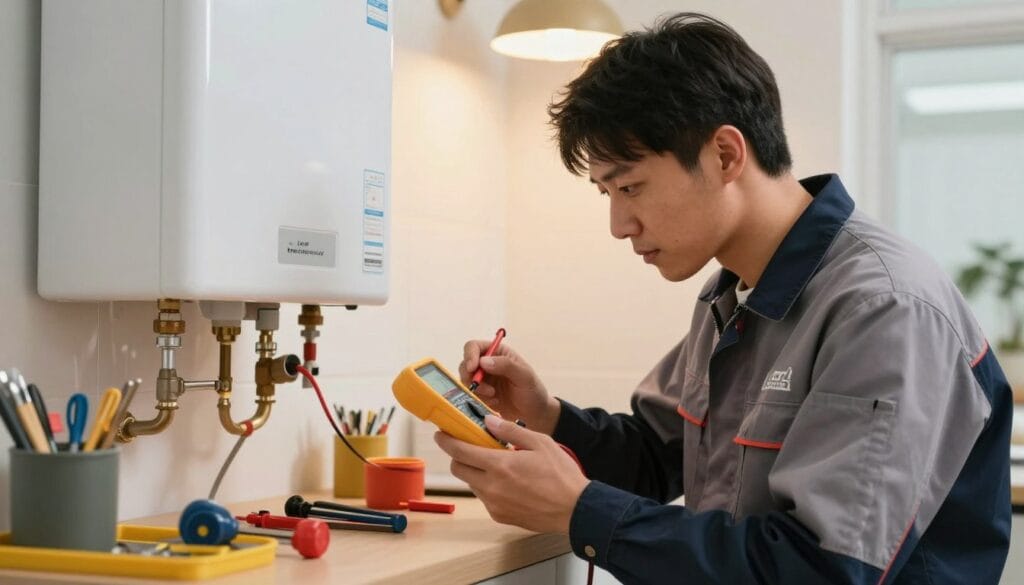
- Space showers, laundry and dishwashing to avoid the cold-water sandwich effect.
- Small behaviour changes often prevent temperature swings with no cost.
If routine maintenance or simple upgrades won’t restore reliable temperatures, call Lord Mechanical LTD for a licensed inspection in North Vancouver and West Vancouver at 604 670 3737.
Conclusion
Conclusion
The fastest way to narrow a problem is to separate demand from delivery and test each link in the chain.
Confirm whether the issue is demand-related, fixture mixing-related, heater or water heater capacity, or a broader plumbing distribution fault.
High-probability fixes: reduce simultaneous demand, replace worn cartridges or valves, flush a tank, descale a tankless heater, and verify proper sizing.
If gas, venting or carbon monoxide risk exists—or if you’re unsure—call a licensed plumber now. A pro inspection gives accurate diagnosis, correct parts, safe checks and a lasting solution for your home system.
For professional troubleshooting and repair in North Vancouver and West Vancouver, call Lord Mechanical LTD at 604 670 3737.