

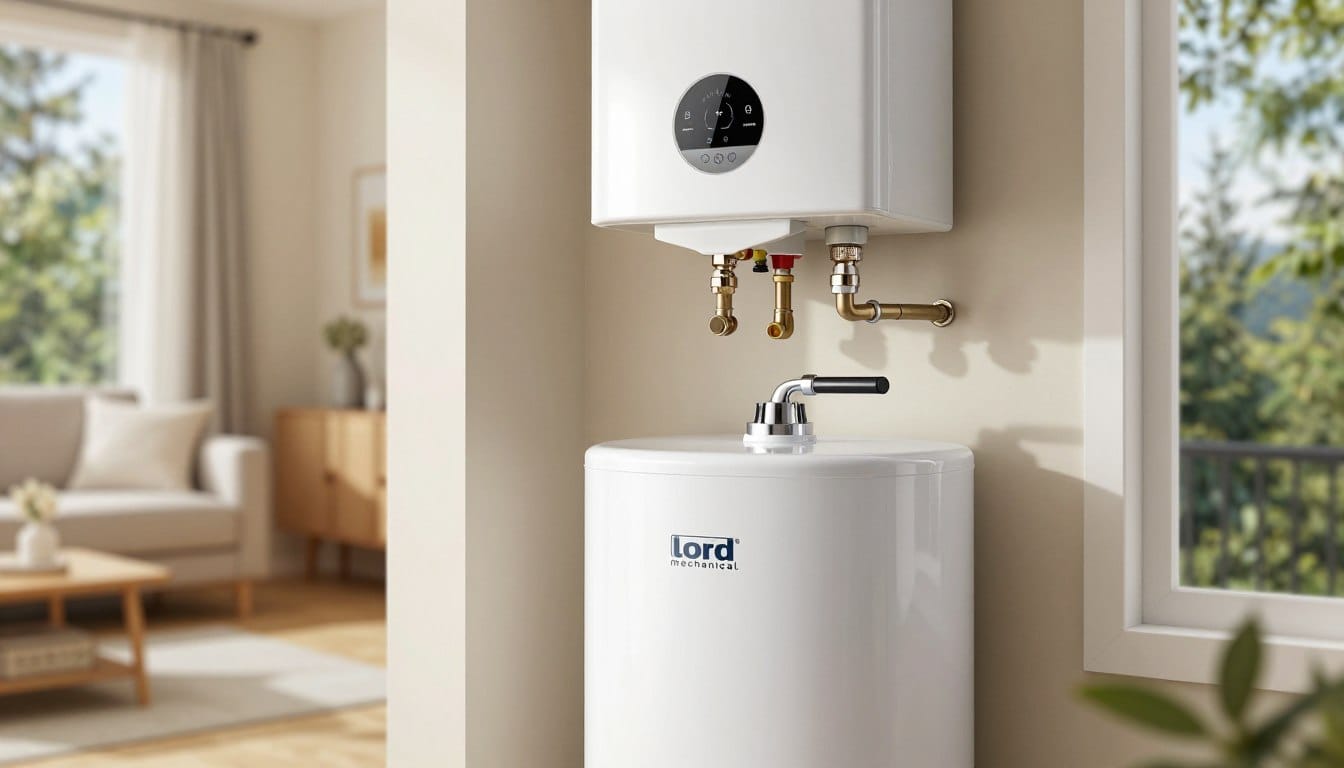
Surprising fact: an average household uses enough hot water each week to fill a small swimming pool — and that demand shapes how your home runs day to day.
We explain why a reliable hot water tank matters for comfort, hygiene and routine. Dependable supply depends on quality installation and ongoing care. Providers in north vancouver focus on installation, repair and replacement to cut disruption.
We will show how a water tank works, how heating cycles and recovery rate affect supply, and which local factors change performance. We define key terms like water heater versus hot water tank, storage versus tankless, and recovery rate so you can decide with confidence.
Common concerns we will address include not enough hot water, rising energy bills, strange noises and leak risk — and when you need urgent service. If you need help now, call us at 604 670 3737. Lord Mechanical LTD serves north vancouver and West Vancouver with clear, practical options.
Key Takeaways
- Reliable supply depends on proper installation and regular maintenance.
- We explain how storage systems, heating cycles and recovery rate work.
- Local usage patterns and water quality affect lifespan and upkeep.
- Common signs of trouble: low supply, higher bills, noises, leaks.
- Call Lord Mechanical LTD at 604 670 3737 for a free estimate and next steps.
How a Hot Water Tank Heats and Stores Water in North Vancouver Homes
Understanding how a storage system moves and heats supply helps explain why you sometimes run short during peak use.
Storage-tank basics: cold supply enters at the bottom, the thermostat calls for heat, and the burner or element warms the stored volume. Modern units store between 20 and 80 gallons and hold ready supply for taps and appliances.
The heating cycle is simple: a thermostat senses temperature, the burner or electric element engages, and recovery restores setpoint. Recovery speed and first-hour rating determine how long you can run multiple fixtures.
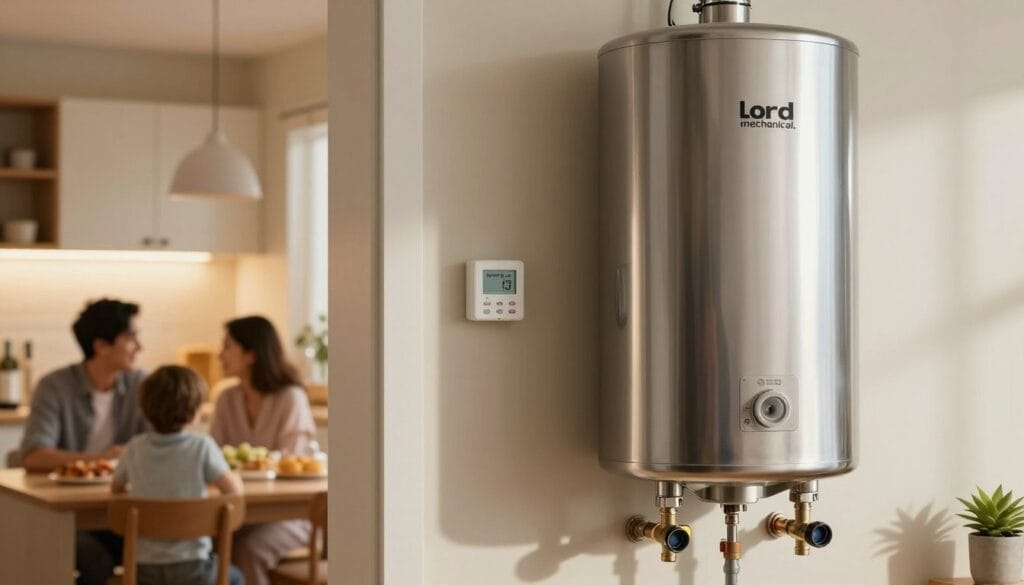
Temperature maintenance: insulation reduces standby loss, but setting and usage affect how quickly stored warmth drops. Standby losses, sediment and thermostat settings all play roles.
Gas vs electric: gas heaters usually recover faster; electric units are simpler to service. Both modern designs improve efficiency, yet local supply quality and busy morning routines can increase maintenance needs.
- Watch for temperature swings, rumbling or discoloured flow — call our technicians before a full outage.
- If you need repair or assessment, contact us at 604 670 3737.
Choosing a hot water tank north vancouver Homeowners Can Rely On
Choosing the right system starts with matching capacity to real household demand. We help you size units by looking at simultaneous use: showers, laundry and dishwashers drive peak need.
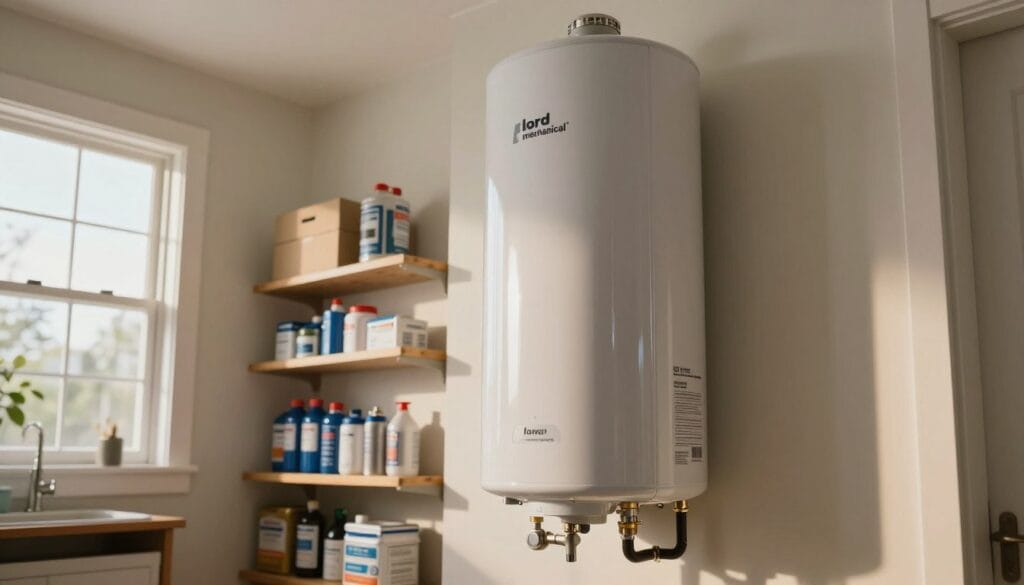
Capacity planning: most homes use storage between 20 and 80 gallons. We base recommendations on first‑hour demand and typical morning routines so you avoid shortfalls.
Conventional vs tankless: storage units hold ready supply; tankless heaters heat on demand. Storage suits high simultaneous use. Tankless fits smaller households or continuous low draw.
Efficiency and life: modern designs boost efficiency and cut utility bills. Typical life expectancy is about 10–15 years, depending on maintenance, water quality and usage.
- Signs you need replacement: age, inconsistent supply, slow recovery, corrosion or moisture at the base.
- Repair vs replacement: repair when faults are isolated; replace when repeated failures, major corrosion or age impacts cost‑effectiveness.
Questions to ask us? Call 604 670 3737 and we’ll recommend a heater that fits your home and budget.
Hot Water Tank Service, Repair, Installation, and Replacement in North Vancouver
We prioritise speed and clarity to restore reliable supply and protect your home.
Our approach: we diagnose the fault fast, explain what failed, and complete repairs to minimise disruption. Common scenarios include no hot water, low output, noisy storage units, pilot or ignition faults for gas models, and failed elements or thermostats on electric heaters.
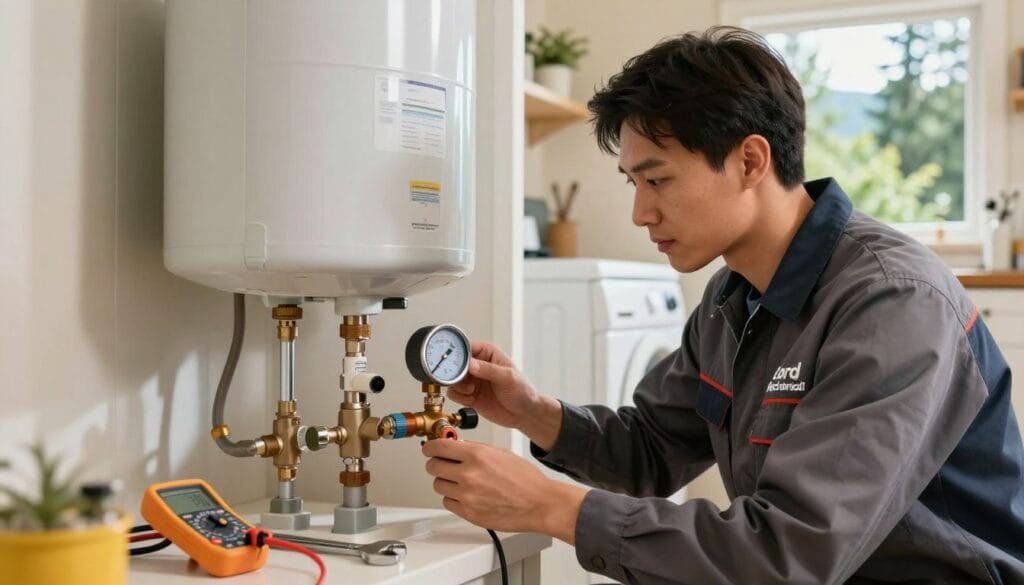
Professional installation
Correct sizing, safe connections and verified performance are non-negotiable. Our installations focus on long‑term efficiency and code‑compliant work from day one.
Same‑day replacement planning
We treat same‑day replacement as risk management. In one local case a failed unit flooded a basement; the crew replaced the unit the same day and helped the homeowner connect with a restoration team within a week.
What to expect from licensed technicians
- Clear diagnosis and transparent repair vs replacement options
- Safety checks, estimated remaining life and costed recommendations
- Licensed, bonded technicians who document work and warranty parts
“Fast diagnosis stopped a small leak from becoming a major loss.”
When to call now: visible leaking, pooling, breaker trips, gas smell, or sudden loss of hot water. Call Lord Mechanical LTD at 604 670 3737 for fast scheduling and a free estimate.
Conclusion
A clear grasp of how your system stores and delivers hot water helps you avoid surprises and extra cost.
, Remember capacity matters: most homes need a unit between 20 and 80 gallons. A well‑matched hot water tank or water tank reduces peak demand and keeps routines smooth.
Modern designs boost efficiency and can cut bills. Expect typical service life near 10–15 years. Watch for noise, slow recovery or moisture at the base—these signs mean act sooner rather than later.
For troubleshooting, repair, installation or planning for new tanks, call Lord Mechanical LTD at 604 670 3737. We serve North Vancouver and West Vancouver and deliver dependable solutions and clear advice.