

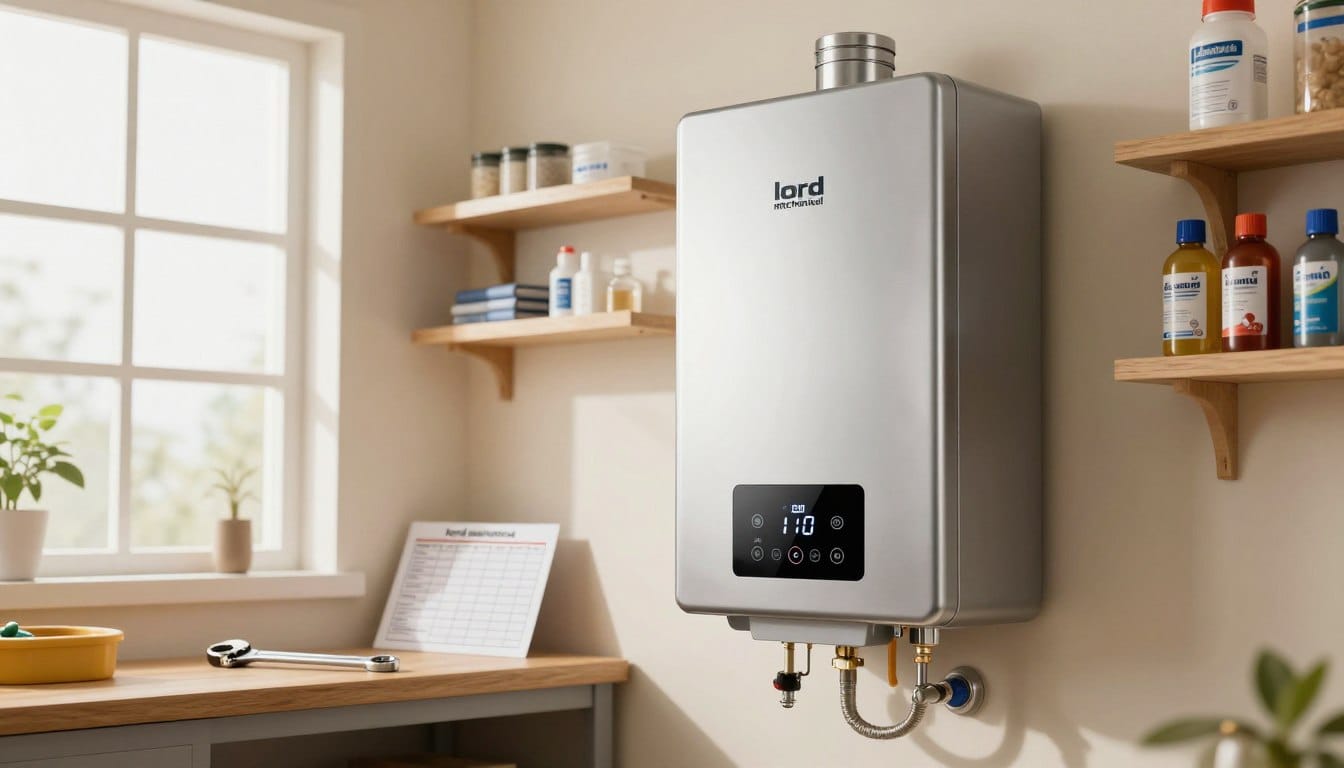
Surprising fact: nearly half of storage systems fail before their expected 8–12 year lifespan because simple upkeep is skipped.
We write this short guide to help Vancouver homeowners and small businesses keep their water heater running longer. Regular checks cut repair bills and reduce surprises.
In this piece we’ll explain what routine care really includes for North Vancouver and West Vancouver properties. We’ll show what you can safely do yourself and when to call a licensed plumber or gasfitter.
Expect clear steps: identify your unit, prep safely, gather tools, follow the checklist, then address hard water and energy tips. We tie actions to real outcomes — steadier hot supply, fewer repairs, safer pressure, and longer service life.
If a repair looks beyond your skill, call Lord Mechanical LTD for service in North Vancouver and West Vancouver at 604 670 3737.
Key Takeaways
- Routine checks extend equipment life and prevent unexpected failures.
- Know limits: some work needs a licensed plumber or gasfitter.
- Sediment, scale and small leaks are common threats to longevity.
- Follow an ordered checklist to reduce risk and save energy.
- Local conditions—cold basements and hard water—shape the right approach.
- Call Lord Mechanical LTD at 604 670 3737 for annual service or troubleshooting.
Know your water heater before you start: type, age, and expected lifespan
Knowing the system type and its age is the smartest first step for any upkeep. We help Vancouver homeowners and small business owners identify what they have and what it needs next.
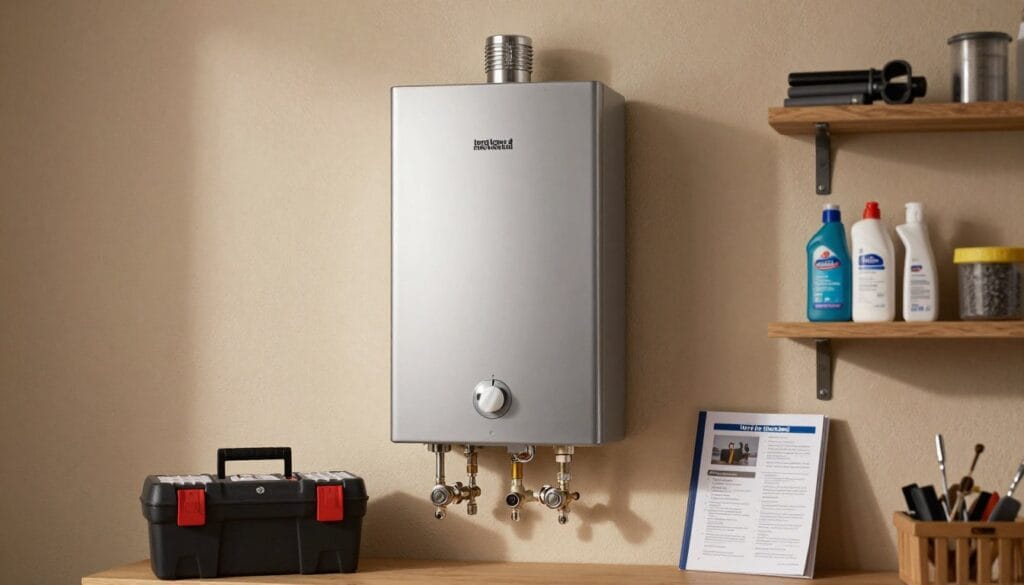
Storage vs on-demand systems
Storage units keep a reserve and often show sediment buildup at the bottom. That reduces capacity and can shorten service life to about 8–12 years in Canadian homes.
Tankless systems heat on demand and can last around 20 years. They need descaling based on performance rather than a fixed annual drain.
Gas versus electric
Gas models require burner and vent checks. Electric units need element inspections and breaker safety checks. We explain the differences so you can decide what to inspect yourself.
“Identify the model and find the serial number—this tells you the unit’s age and helps plan replacement.”
Finding the label and planning
Look for the manufacturer label and serial number to estimate years of service. If labels are missing or you can’t identify the unit, call Lord Mechanical LTD at 604 670 3737 for a site visit and expert advice.
Safety prep for water heater maintenance in Canadian homes
Before you touch any controls, plan a safe shutdown that protects everyone in the home. We’ll guide you through a clear sequence so you avoid burns, leaks or accidental gas flow.
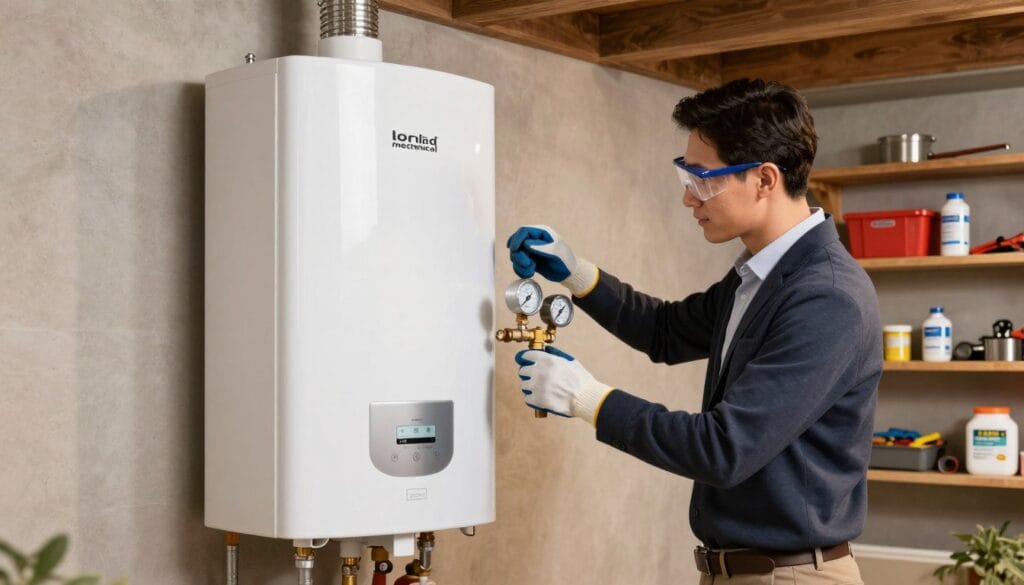
Shut off power or gas and let hot water cool
If your unit is electric, turn off the breaker at the panel. For gas units, set the control to pilot or shut the gas valve off if you know how.
After power or gas is off, wait so the hot water cools before you open any drain points or valves. This reduces scald risk and makes the job safer for you.
Close the cold water supply, relieve pressure, and secure the area
Close the cold water supply valve before you start any drain. Confirm the valve stops flow by opening a nearby hot tap—flow should drop.
Open a hot tap to relieve pressure. Position hoses carefully to avoid whipping or spills and protect floors with a bucket or towels.
- Keep children and pets away while you work.
- If you smell gas, see active leaks, or can’t find the correct shutoff, stop and call a licensed pro.
- When in doubt, contact Lord Mechanical LTD for North Shore service at 604 670 3737.
Tools and materials to keep on hand for routine maintenance
Gathering the right tools before you start saves time and stops small jobs turning into big headaches.
We recommend a small kit that covers most tasks for a typical Vancouver property. Keep these items handy so you can flush, inspect, or tighten fittings without extra trips.
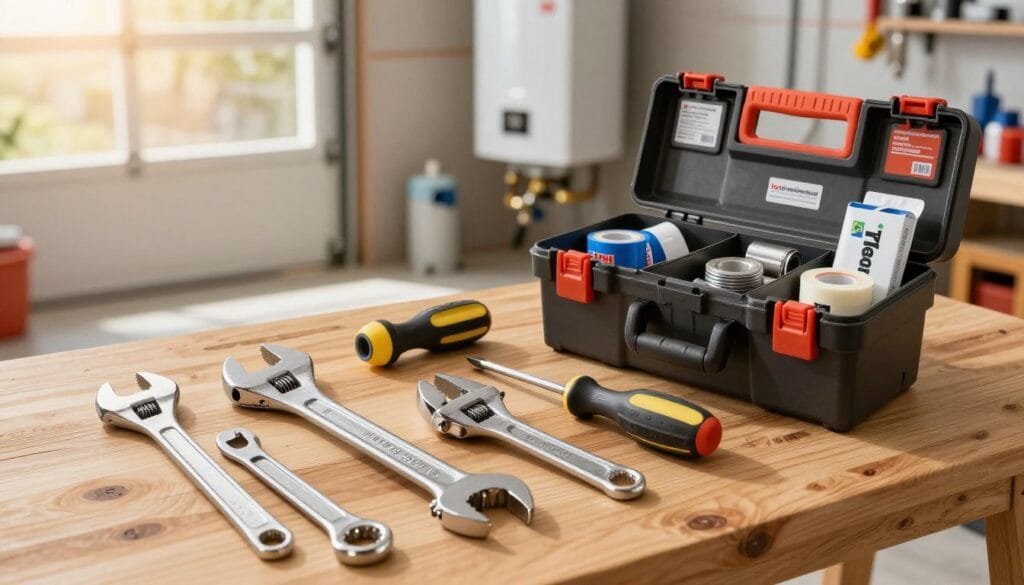
Essential kit
- Garden hose (good-quality, kink-resistant) and a bucket for controlled draining.
- Screwdriver set, adjustable wrench, and pipe wrench for fittings and valves.
- Teflon tape for threaded joints to reduce slow drips.
- Replacement anode rod (check compatibility) and a rag or small tool tray.
- Safety gear: heat-resistant gloves and protective goggles.
Optional efficiency upgrades
An insulation blanket and foam pipe insulation reduce standby heat loss in cold basements. Avoid covering combustion vents or controls on fuel-burning units.
“If you’d rather we bring the tools and handle the service, call Lord Mechanical LTD at 604 670 3737.”
| Item | Why it matters | When to hire a pro |
|---|---|---|
| Garden hose & bucket | Safe draining and clear discharge to floor drain | If drains back up or you lack a safe outlet |
| Wrenches & screwdriver | Tighten fittings, access panels, adjust valves | Gas fittings or corroded pipes |
| Insulation blanket | Reduces heat loss, saves energy | Fuel-burning unit coverings need pro review |
| Gloves & goggles | Protect from splashes and debris | Always required; no substitute |
hot water tank maintenance checklist for long-lasting performance
This step-by-step list helps you protect performance and spot problems before they escalate. Read each point and stop if you meet any warning signs. Call Lord Mechanical LTD at 6046703737 for North Vancouver or West Vancouver service.
Clean air intake and filter on gas units
Locate the intake and remove debris or lint. A dirty filter chokes the burner and reduces efficiency. Clean with a soft brush and replace if damaged.
Flush the tank to clear sediment
Shut off cold supply and the heating source. Open a nearby tap to relieve pressure. Attach a hose to the drain valve and direct flow to a safe drain.
What clear water looks like and slow drain signs
Keep flushing until water runs clear with no grit. If draining is slow or stops, sediment may block the drain valve. Do not force a stuck valve—call us.
Inspect anode rod and test the T&P valve
Check the anode rod every 2–3 years and replace if heavily corroded. Lift the temperature and pressure relief lever; it should release then reseat without leaking.
Thermostat, leak scan and quick finish
Set the thermostat to about 49°C (120°F) for safety and efficiency. Scan fittings, the tank body and visible pipes for corrosion or leaks. Wipe the exterior and confirm the drain valve cap is secure.
| Check | Action | When to call a pro |
|---|---|---|
| Air intake/filter | Clean or replace filter | Damaged filter or gas odour |
| Flush & drain | Drain until clear; repeat annually | Slow drain or blocked spout |
| Anode rod | Inspect every 2–3 years; replace if corroded | Severe corrosion or stuck rod |
| T&P valve | Lift lever to test, check for leaks | No release or continuous leak |
Stop point: If you find active leaks, stuck valves, or smell gas, stop work and call 6046703737 for professional service.
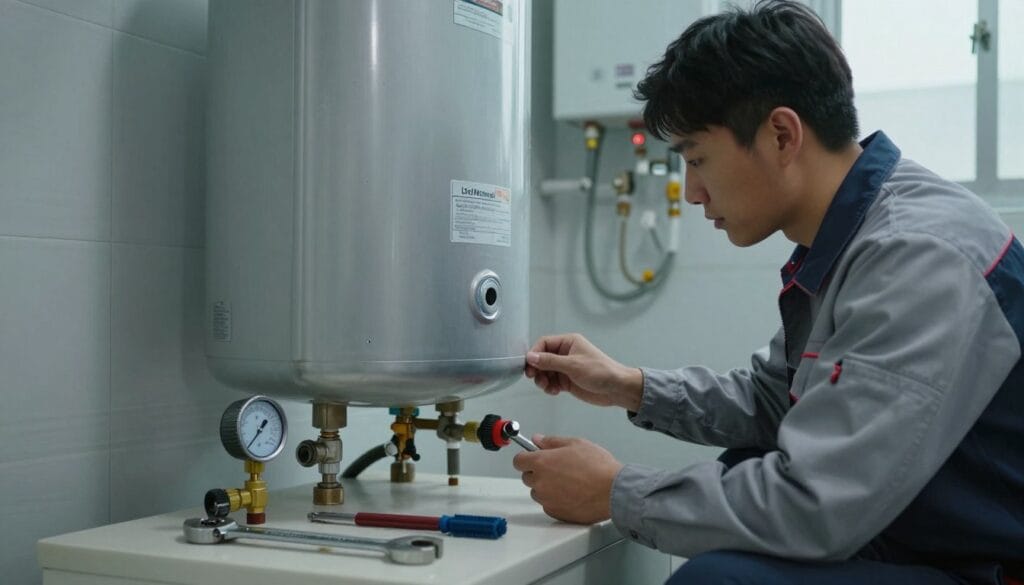
Tankless water heater maintenance: descaling with vinegar when performance drops
If flow and temperature begin to wobble, a vinegar flush can restore normal performance. Tankless systems need descaling rather than a full drain because minerals coat heat exchangers and reduce heat transfer and flow.
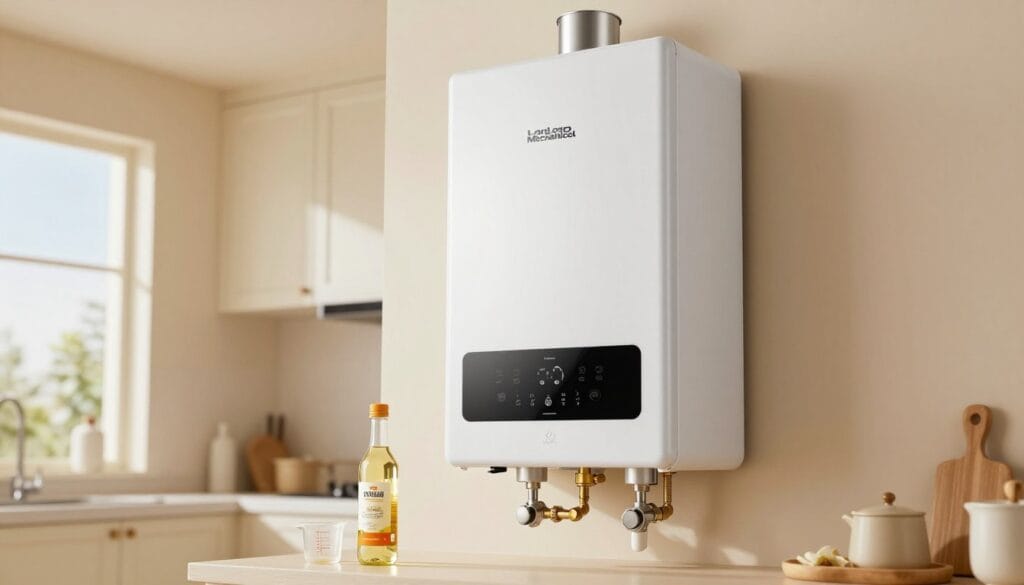
What you need
Gather two hoses, a submersible pump, a large bucket (≥19 litres) and about 15 litres of food-grade white vinegar. Have adjustable wrenches and safety gloves handy.
Valve shutoff sequence and safe connections
Close the cold supply isolation valve first, then the hot outlet. For gas-fired units, set the gas control to pilot or shut the valve if you’re confident doing so.
Connect one hose to the cold service port and the other to the hot service port. Put both hose ends in the bucket and place the pump in the vinegar mix to create a closed loop.
Safe circulation flush and restart
Circulate the vinegar for 45–60 minutes while monitoring for leaks and unusual noises. After flushing, run clean water through the loop until the discharge clears, then restore the valves and gas or power.
Signs a tankless flush is needed
- Reduced supply of hot water and lower flow rates.
- Pressure changes or noticeable temperature swings during use.
- Longer run times to reach set temperature or reduced performance under load.
If you don’t have isolation valves, are unsure about gas shutoff, or problems persist after a flush, call Lord Mechanical LTD at 604 670 3737 for professional descaling in North and West Vancouver.
Prevent sediment and scale: hard-water strategies that extend lifespan
Hard minerals in local supply can silently turn into sediment that robs your unit of efficiency.
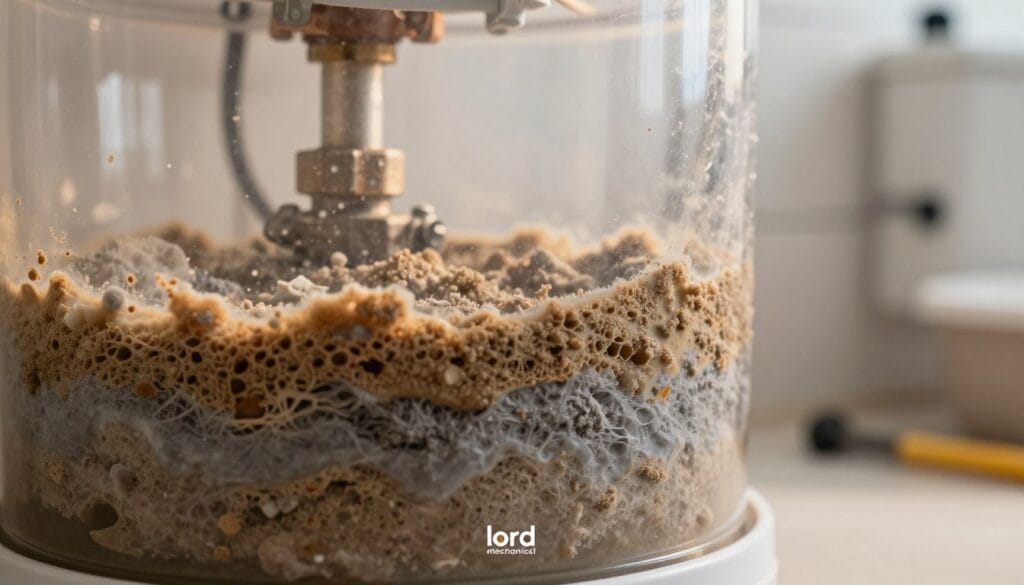
How minerals cause rumbling and lower capacity
Calcium, magnesium and iron settle at the bottom and form gritty deposits. These pockets trap heat and cause the rumbling or popping you hear.
That sediment reduces usable capacity and forces heating elements and burners to work harder. Over time, this shortens service life and raises running costs.
When a softener helps — and why flushing still matters
A water softener cuts mineral load and slows scale. It improves reliability in Vancouver homes and reduces the speed of buildup.
But it does not replace regular flushing. Even with softening, some solids and iron settle. Flushing remains essential, especially in harder local supply zones.
| Issue | Preventive step | Recommended frequency |
|---|---|---|
| Rumbling / noises | Flush until discharge runs clear | Every 6–12 months in hard areas |
| Reduced capacity | Install softener + scheduled flush | Softener yearly service; flush 6–12 months |
| Scale buildup | Professional descaling or element check | When recurring after DIY flushes |
Early action improves performance and reduces sudden failures during peak demand. If drains clog, scale recurs, or you see persistent issues, call Lord Mechanical LTD at 604 670 3737 for North and West Vancouver service.
Energy-saving adjustments that also reduce wear on heating elements and burners
Modest thermostat tweaks and better insulation give big gains in cost savings and equipment life.
Why lower setpoints help: Setting the thermostat to about 49°C (120°F) cuts scald risk and lets heating elements and burners run less often. Lowering the temperature by roughly 5–10°C can reduce cycling and decrease element stress.
Insulating the unit and the first 1–2 metres of pipes reduces standby heat loss. An insulation blanket can cut loss by 25–45% and trim water-heating costs by around 9%.
In winter, colder rooms increase heat loss; keep setpoints steady but prioritise insulation. In summer, you can safely lower the thermostat a few degrees to save energy without losing comfort. For gas units, make sure vents and flues are clear before adding wrap near hot surfaces.
When to call us: Ask Lord Mechanical LTD to install insulation safely around controls or to inspect vents and burners. Call 6046703737 for efficiency upgrades or an inspection in North and West Vancouver.
| Measure | Benefit | Typical savings / effect | When to call a pro |
|---|---|---|---|
| Lower thermostat to 49°C (120°F) | Fewer cycles; less element/burner stress | Reduced operating costs; safer temps | If thermostat is stuck or unreadable |
| Insulate tank and pipes | Less standby heat loss | 25–45% less heat loss; ~9% lower costs | Near vents or controls on gas units |
| Seasonal vent check | Safe combustion and steady performance | Prevents drafting issues in winter | If you smell gas or see soot |
Warning signs your hot water tank needs repair or professional help
A few clear symptoms tell you when to act and when to call a pro for repair. Watch for changes in performance, sounds, smells or leaks. Some signs need monitoring; others require immediate shutdown.
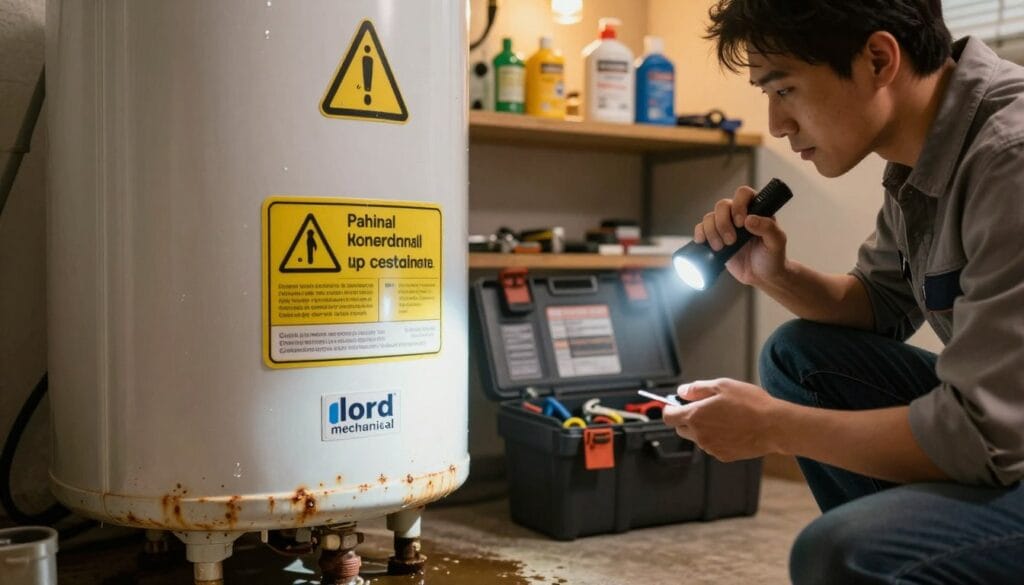
Monitor and maintain
- Inconsistent temperature or fast run-out: May indicate sediment, a failing thermostat, or worn components reducing capacity.
- Strange tastes or odours: Metallic or rotten smells point to internal corrosion or bacterial growth. Don’t ignore changes in water quality.
- Rumbling or popping from the bottom: Sediment buildup traps heat and gets louder as the heater strains.
- Discoloured or rusty discharge: Anode corrosion or pipe corrosion affecting water quality and lifespan.
- Low pressure: Mineral deposits or scale in pipes and valves can restrict flow.
Shut down and call a professional immediately
- Active leaks or pooling: Turn off power/gas, close the cold water supply valve, and call Lord Mechanical LTD at 604 670 3737 — do not delay.
- Pilot light problems on gas units: Repeated outages, a weak pilot, or smell of gas suggest thermocouple or gas line issues. Shut off gas and call a licensed technician right away.
- Stuck drain or valve failures: If you cannot drain or the valve leaks, stop and call for service to avoid damage.
Clear action: For urgent leaks or any gas-related concerns in North or West Vancouver, call 604 670 3737 immediately.
When to call a professional for water heater maintenance and repairs in Canada
Knowing when to stop and phone an expert saves time, money and prevents dangerous mistakes. We define the jobs that should be handled only by licensed technicians and describe what a full inspection will cover.
Jobs best left to licensed pros
- Gas connections and burner work: combustion safety, venting and gas-tight fittings require a certified technician.
- Valve replacement: T&P and relief valve swaps affect pressure safety and must meet code.
- Heating element and electrical repairs: element replacement or wiring faults need an electrician or licensed plumber.
What a thorough inspection includes
Top-to-bottom checks cover safety controls, venting/airflow for gas units, drain valve condition and visible leaks.
Technicians will test pressure devices, inspect elements and burners, evaluate performance and report slow draining from sediment that needs pro attention.
“A proper service visit gives clear findings, practical priorities and a plan—repair items vs replacement.”
| Task | Why it matters | Expected outcome |
|---|---|---|
| Gas line & burner check | Prevents leaks, ensures safe combustion | Safe operation; code compliance |
| Valve & pressure test | Protects against overpressure and leaks | Reliable safety devices |
| Elements & electrical | Restores heat delivery and efficiency | Improved performance; reduced failures |
Book service with Lord Mechanical LTD for North Vancouver and West Vancouver. Call 604 670 3737 for professional inspection, repairs or troubleshooting.
Conclusion
A few steady habits will keep your water heater reliable and lower repair costs over the years.
Start with a safe shutdown, close the cold water supply, open the drain valve and flush sediment. Check the anode and test the safety valve each year as part of basic maintenance.
Set the thermostat to about 49°C (120°F) and add pipe or unit insulation to reduce cycling and extend service life. Tank-style units often run 8–12 years while tankless models can reach around 20 years with proper care.
Watch for noise, discolouration, odd odours, pressure changes or pooling. If you see leaks or stuck valves, stop and call for help to limit damage.
For annual service, repairs or any troubleshooting in North Vancouver and West Vancouver, call Lord Mechanical LTD at 604 670 3737.