

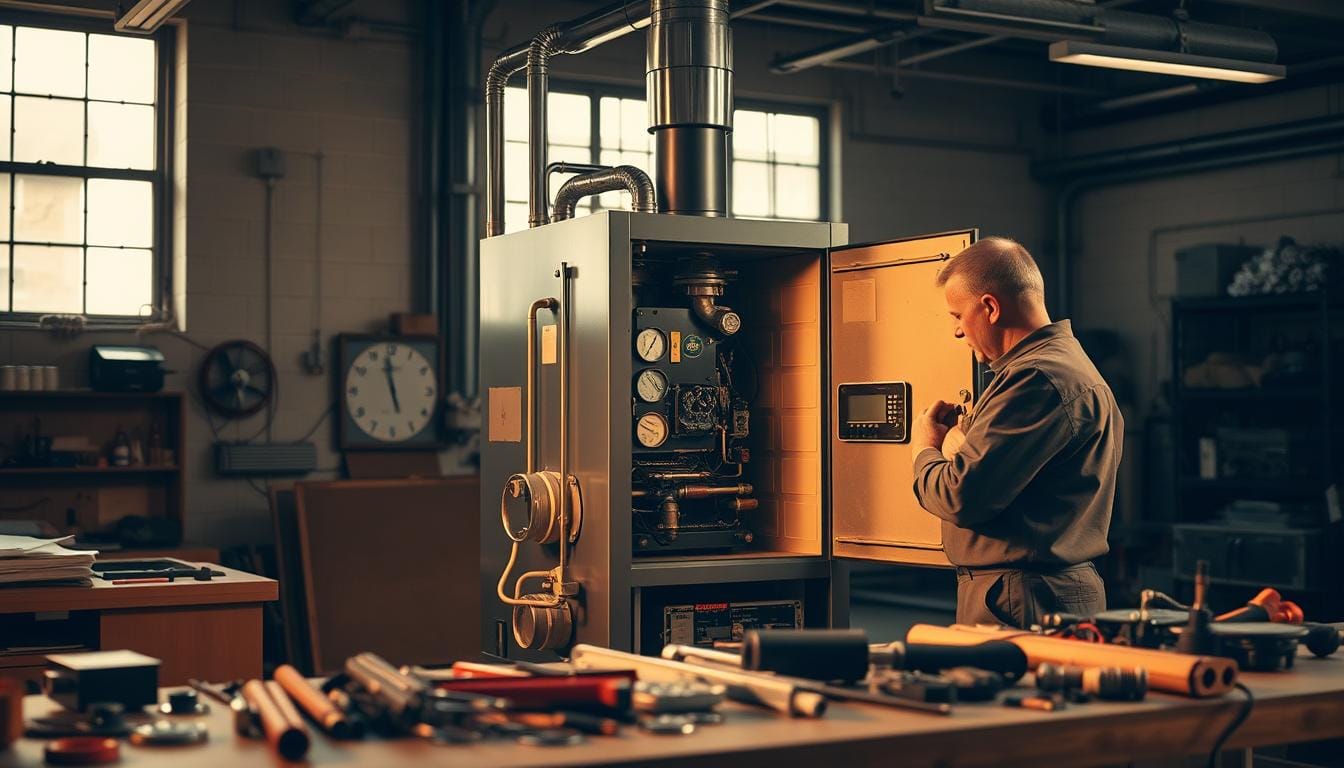
Have you ever wondered why your heating stops on the coldest Vancouver morning—and what you can calmly check before calling for help?
We are Lord Mechanical LTD. We guide North Vancouver and West Vancouver homeowners and businesses with clear, data-backed steps you can follow now.
Start with quick DIY checks: confirm thermostat is in Heat and set above room temperature, fit fresh batteries, replace a clogged filter, ensure the unit power switch is on and the circuit breaker hasn’t tripped.
Open all vents, secure the front panel door and keep the outdoor intake and exhaust free of snow and debris. Replace filters at least twice a year, or every three months in dusty homes.
If issues persist after these steps, contact a licensed hvac technician for diagnostics. Do not turn off power unless instructed, since that can clear diagnostic codes we need to find the cause.
Key Takeaways
- We walk you through safe, pro-first checks so you can diagnose calmly and save time and money.
- Simple items—thermostat mode, fresh batteries and a clean filter—fix many no-heat calls.
- Securing front panels and clearing outdoor vents is a safety-first habit that prevents ignition failures.
- Preserve error codes; they speed diagnosis and avoid unnecessary parts costs.
- We service North Vancouver and West Vancouver—call Lord Mechanical at 6046703737 for fast, local service.
Stay Warm in Canada: How This How‑To Guide Helps You Fix Furnace Problems Today
Cold mornings demand quick answers — this guide shows what to check first and why.
We lead you step by step in plain language so you can diagnose your heating system safely at home or at your business.
Start at the thermostat: set it to Heat, raise the temperature above room level and check the batteries. On smart models, confirm connectivity and that the settings match your schedule.
Replace filters every three months, or at least at the start and end of the heating season. A fresh filter keeps the air moving and prevents short cycling.
Confirm the power switch and breaker are on. Inspect indoor registers and outdoor intake and exhaust vents for snow, leaves or clutter. If the front panel isn’t secure, the safety switch will stop the unit from running.
- Fast plan: thermostat mode, temperature and batteries — often the quickest fix in a Canadian home.
- Five-minute HVAC checks: fresh filter, open vents, secure front panel to restore airflow and ignition.
- We cover modern condensing systems and older units with a pilot light, and explain when to call a pro.
If you need help, call us at 6046703737 for local HVAC support across North and West Vancouver.
Quick-start checks before you assume a major issue
Before assuming a major fault, run through these fast, safe steps. We focus on simple actions you can do now to restore heat and collect useful information for a technician if needed.
Thermostat basics
Set the thermostat to Heat and raise the temperature by 2–3°C. Replace the batteries if the display is dim or unresponsive. Make sure the schedule or smart settings aren’t pausing calls for heat.
Airflow and filter
Turn off the unit and inspect the filter. Hold it to light—replace if light doesn’t pass through. A clogged air filter chokes air flow and causes many no-heat calls.
Power, switch and breaker
Confirm the local power switch is on and the electrical breaker hasn’t tripped. If tripped, flip the breaker fully off, then on to reset power.
- Open supply vents and clear return grilles.
- Reseat the front panel until the safety switch clicks.
- If issues persist or breakers trip repeatedly, call us at 6046703737.
| Check | Quick action | Why it matters |
|---|---|---|
| Thermostat | Set to Heat; replace batteries | Restores control and prevents false idle |
| Filter | Replace if dark to light test fails | Improves airflow and ignition |
| Power & Breaker | Check switch; reset breaker | Returns electrical supply safely |
Furnace troubleshooting & repair for mid‑ and high‑efficiency systems
When modern mid‑ and high‑efficiency systems act up, reading the control board tells the real story.
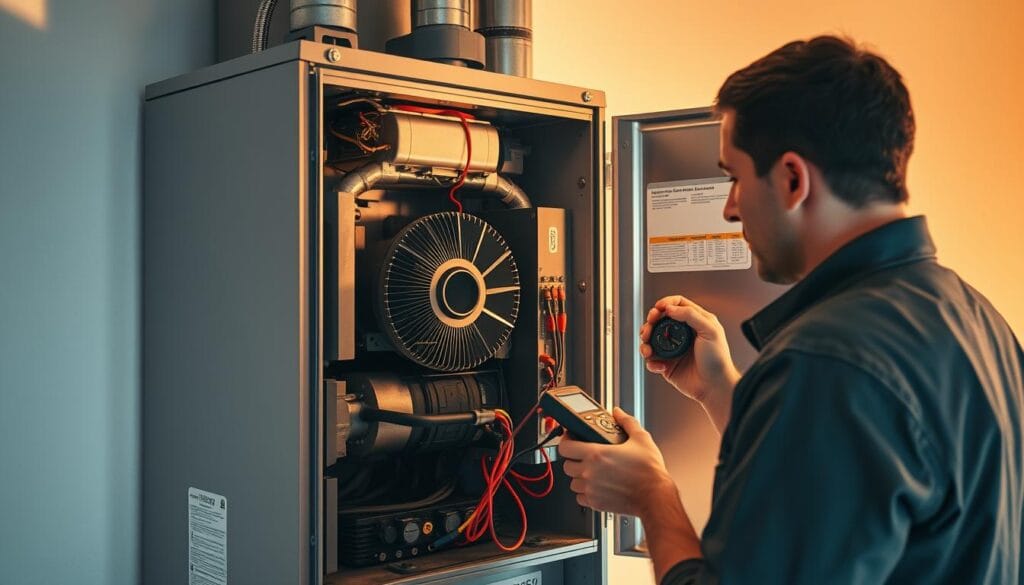
Start by recording the status LED pattern on the control board. Carrier, Lennox, Trane, Goodman and York each use flash counts to flag issues. Write the code down before you reset anything.
Common fault patterns and clear next steps
- Inducer runs but no flame: a “pressure switch failed to close” often means blocked intake/exhaust or a condensate trap problem. Check vents and drains for water or debris.
- Igniter glows but no flame: this usually points to a stuck gas valve or ignition control. This is a pro‑level gas test and should be handled by a licensed technician.
- Burners light then cut out: gently clean the flame sensor and inspect the burner assembly for rust or soot.
- Blower runs continuously: check the filter, returns and for a tripped limit switch or a plugged heat exchanger.
| Symptom | Likely cause | Safe next steps |
|---|---|---|
| Inducer runs, no ignition | Pressure switch / vent blockage | Clear intake/exhaust; check condensate trap |
| Igniter glows, no flame | Gas valve or control failure | Stop DIY; call licensed technician |
| Burners light then cut out | Dirty flame sensor or burner | Clean sensor; inspect burners for debris |
Record the exact sequence—inducer, igniter, burners—and share it with us for faster diagnosis.
Need expert help in North or West Vancouver? Call Lord Mechanical LTD at 6046703737.
Troubleshooting low‑efficiency and older gas furnaces with pilot lights
A steady pilot and clear power paths are the fastest clues to what’s wrong with an older gas heating system.
Pilot light won’t stay lit: thermocouple and gas supply checks
Confirm the pilot flame is steady and blue. A weak or yellow flame can signal combustion or gas supply problems that need a technician.
If the pilot won’t stay lit, suspect a worn thermocouple or a supply issue. These parts are safety devices and usually require professional testing and replacement.
Burners don’t light with pilot on: thermostat or fan limit control issues
If the pilot is lit but the main burner does not start, check the thermostat first. Make sure it is calling for heat and set above room temperature.
Also verify the fan limit control and that the front panel is secured. An open access panel trips a safety switch and prevents ignition. Note any clicking or repeated ignition attempts — these details help us diagnose valve or control faults.
No power symptoms on older units: switches, covers, and fuses
Inspect the manual gas valve to ensure it is on. If you smell gas, shut the unit off, ventilate, evacuate and call emergency services.
Check fuses and the local power switch, but avoid invasive electrical work. Older wiring can be brittle and is best handled by a licensed hvac technician.
- Quick checks: steady blue pilot light, gas valve on, thermostat calling for heat.
- When to call us: weak pilot flame, failing thermocouple, suspected gas leaks or electrical faults.
For safe, local service in North and West Vancouver, call Lord Mechanical LTD at 6046703737.
Essential safety steps for Canadians working on furnaces
A calm, methodical approach keeps your household safe during the heating season.
If you smell gas, act immediately: shut off the appliance, open windows to ventilate, evacuate everyone, and call your utility or the fire department from a safe location outside the home.
If you detect a leak: shut off, ventilate, evacuate, call
Do not use phones or light switches inside. From outside, contact emergency services or your gas company. We stress quick, clear action to reduce risk.
Carbon monoxide vigilance
Test CO alarms monthly during the heating season. Replace batteries and devices per the manufacturer. A working alarm protects the whole home and gives early warning of hidden problems.
- Keep clear air paths: maintain free intake and exhaust areas and remove combustibles near the unit.
- Use correct parts: fit only model‑specific replacements to preserve safety certifications.
- Watch for signs: corrosion or odd clicking may indicate a cracked heat exchanger—stop use and call a licensed technician.
- Make sure the front panel is latched so the safety switch operates. Never bypass safeties or ignore repeated trips.
We follow strict HVAC safety protocols on every call. For trusted local service in North and West Vancouver, call Lord Mechanical LTD at 6046703737.
Detailed DIY steps: From filter changes to flame sensor cleaning
Use these concise, safe steps to replace filters, clean sensors and clear blocked vents. We provide tool‑ready instructions so you can act with confidence and preserve diagnostic info for a pro.
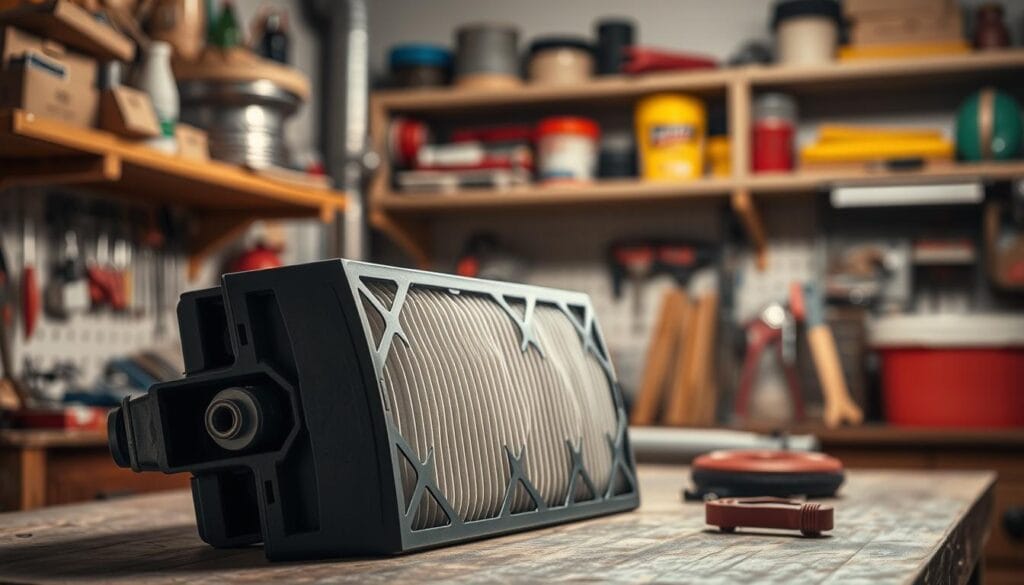
Change the filter correctly
Turn off the unit at the local power switch. Locate the air filter (often on the right side), slide out the old filter, and install the new one with arrows aligned to airflow.
Choose the correct size and MERV rating. Higher MERV captures more particles but can reduce airflow—match the manufacturer’s guidance. Set calendar reminders to check the filter every 1–3 months.
Clean a dirty flame sensor
Remove the access panel and find the small metal rod near the burner. Detach the sensor and gently polish it with a non‑abrasive pad until shiny.
A clean sensor helps the control board detect flame after light‑off. Reinstall the sensor and verify the wiring is secure.
Clear intake and exhaust vents
Inspect outdoor intake and exhaust vents for snow, leaves, lint or nests. Clear debris so the system can draw fresh air and exhaust safely.
Restricted vents can cause ignition lockouts or pressure switch faults. Keep the area around the vents and the unit free of obstructions.
Reset power safely
Record any status lights or codes before cycling power. Avoid repeated resets—they erase diagnostic history.
If you must reset, use the service switch and note behaviour changes. Vacuum accessible blower blades and cabinet dust carefully; avoid disturbing wiring.
- Pilot-equipped units: follow the manufacturer’s lighting steps exactly; if it won’t stay lit, call a pro.
- If you’re unsure at any point, stop and call us at 6046703737 for safe, local HVAC support in North and West Vancouver.
Preventive maintenance to avoid no‑heat calls in the Canadian winter
A regular maintenance rhythm keeps your heating reliable through wet Vancouver winters. We help you build simple, repeatable tasks that reduce service calls and protect equipment.
Replace filters on a schedule
Replace the filter every 1–3 months, and at minimum at the start and end of the heating season. A dirty filter restricts air flow and can force shutdowns.
Keep the blower and blower motor clean
Vacuum dust from blower and fan blades to keep efficiency high and noise low. Inspect belts and bearings for wear and replace if cracked or glazed.
Manage condensate and ducts
Flush condensate traps and clear drain lines on high‑efficiency units to prevent water backups that stop inducer motors or pressure switches.
Inspect ductwork for leaks or kinks; sealed ducts move more warm air and cut energy use. Set the fan to Auto if you notice cold air between cycles.
- Keep intake/exhaust clear and the area free of debris.
- Log maintenance dates, noises or odours to spot trends early.
- Schedule an annual hvac tune‑up to test airflow, ignition, gas lines, lubrication and controls.
For preventive maintenance that keeps your system ready for winter, call Lord Mechanical LTD at 6046703737.
Repair vs replace: Costs, timing, and when to call a pro in Canada
A clear comparison of costs, expected life and safety signs helps you decide whether to fix or upgrade your heating system.
Expect diagnostic and labour rates between $75–$150 per hour. Small fixes like thermostats, flame sensors or igniters typically run $80–$300.
Mid‑range work — limit switches, burner service or a gas valve — usually costs $115–$470. Larger items such as a blower motor or circuit board are commonly $125–$650.
Major components such as a motor assembly or heat exchanger can reach $1,200–$2,400. Given typical life spans of 13–20 years (most ~15), replacement is often smarter for older units with frequent issues.
When to choose replacement
- Repeated failures or safety concerns like corrosion or delayed ignition.
- Out of warranty and costly parts exceed 50% of replacement cost.
- Poor efficiency, uneven heat or odd noises persist.
Choosing a Canadian HVAC partner
Pick companies with licensing, manufacturer training, insurance and clear, itemized quotes. We provide upfront estimates and discuss timelines and parts availability before we start.
For an honest assessment and local service in North and West Vancouver, call us at 6046703737.
Conclusion
Keep these final steps in mind to protect comfort and safety through the season.
Start simple: set the thermostat to Heat, raise the set point, fit fresh batteries and check the air filter. Confirm the local switch and circuit breaker supply power, open vents and secure the front panel.
Record any error lights or codes before you reset power. Those details help us diagnose the issue faster when you call.
If you smell gas, your CO alarm sounds, you see repeated lockouts or pilot light and burners act oddly, stop and call a licensed technician immediately.
Maintain your system with filter changes every 1–3 months and annual service to avoid repeat calls. For local, expert help in North and West Vancouver, call Lord Mechanical at 6046703737. Share symptoms, noises or codes so we can resolve the problem quickly and safely.