

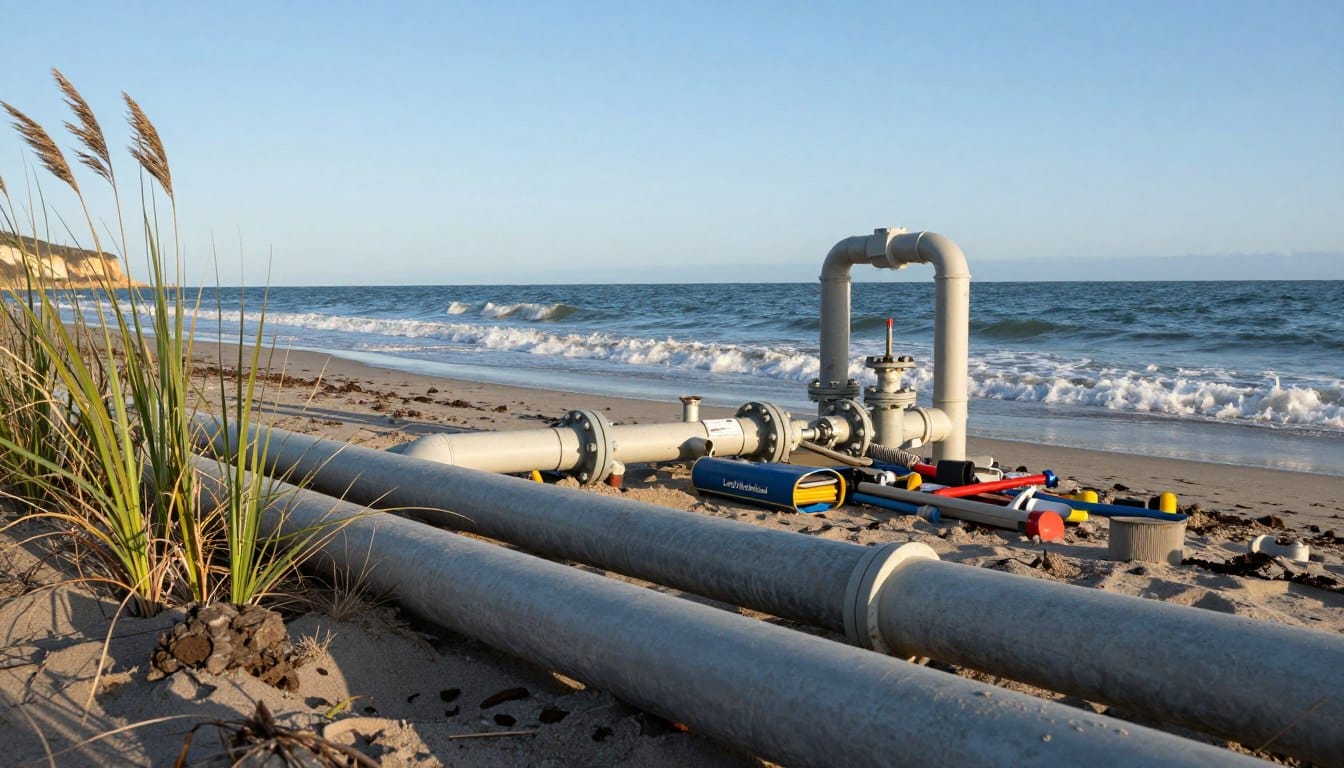
Fact: Homes near the shore can see pipe wear up to three times faster than inland properties due to salt in the air and persistent humidity.
We will explain why this is more than a comfort issue. Salt-laced air and wet winters speed up corrosion and create condensation that hides small leaks. Left alone, those issues lead to pinhole failures and sudden water problems.
In this article, we will outline how salt accelerates metal decay, how moisture forms on cold pipes, and why storms raise the risk of flooding-related problems.
Expect practical steps you can take: routine inspections, material upgrades, and targeted maintenance to reduce long-term repair costs. If you notice falling water pressure, visible rust, or persistent dampness near pipe runs, call us rather than guessing.
Contact Lord Mechanical LTD at 604 670 3737 for prompt help. We’re most active in North Vancouver and West Vancouver and ready to inspect, plan, or repair so your systems run reliably.
Key Takeaways
- Salt and humidity speed up metal corrosion in pipes.
- Frequent inspections (2–3 times a year) catch issues early.
- Routine maintenance and better materials reduce long-term costs.
- Watch for pressure changes, rust, and persistent moisture near lines.
- Call Lord Mechanical LTD at 604 670 3737 for help in North Vancouver and West Vancouver.
Why coastal environments are harder on plumbing systems in Canada
We see faster wear where salt in the air meets long wet seasons. Homes near the sea face more corrosion and moisture problems than inland properties. That means shorter lives for pipes and exposed fixtures if you do nothing.
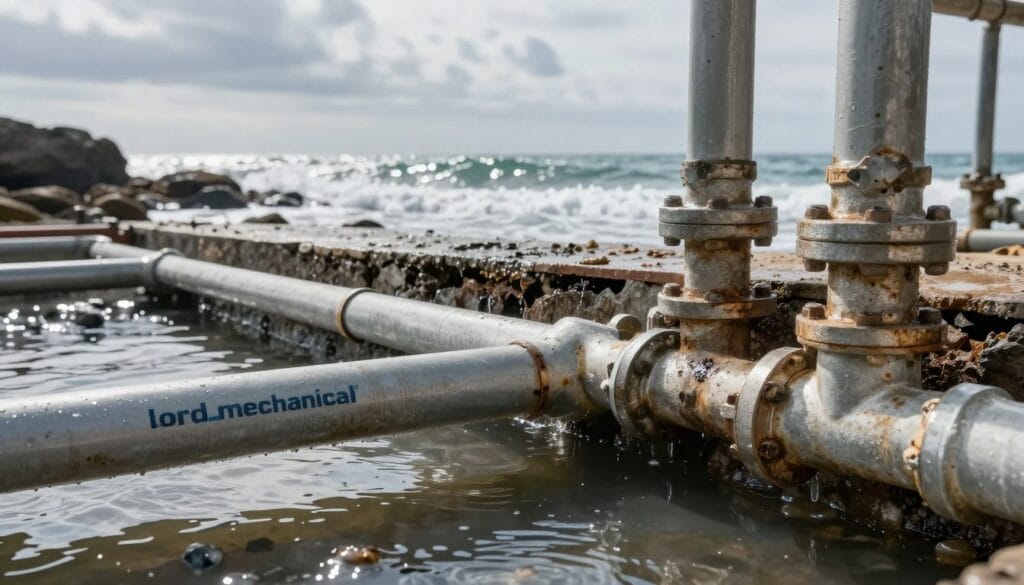
Salt-laden air and marine humidity accelerate wear on pipes and fixtures
Salt settles on metal parts and creates a thin electrolyte layer. This layer speeds rust and makes older fittings fail sooner.
High humidity raises condensation on cool pipe surfaces. Damp surfaces stay wet longer, which helps corrosion and mould to grow in enclosed spaces.
Frequent rainfall, storm surges, and flooding increase plumbing challenges
Repeated storms saturate soil and raise groundwater. Drainage routes face higher loads and backups become more likely.
“Storms can reveal hidden issues days after the weather clears.”
- Saturated soils and higher groundwater strain the plumbing system.
- Storm surges raise risks of backflow and sediment intrusion.
- These factors shorten service life unless you change materials and maintenance schedules.
We will next explain the specific corrosion types and moisture failures we see most often. Call Lord Mechanical LTD at 6046703737 for an inspection in North Vancouver or West Vancouver.
How moisture and salt cause coastal plumbing damage
We break down the physical steps that turn wet, salty air into real problems for home piping. Understanding this helps you spot risks before leaks start.
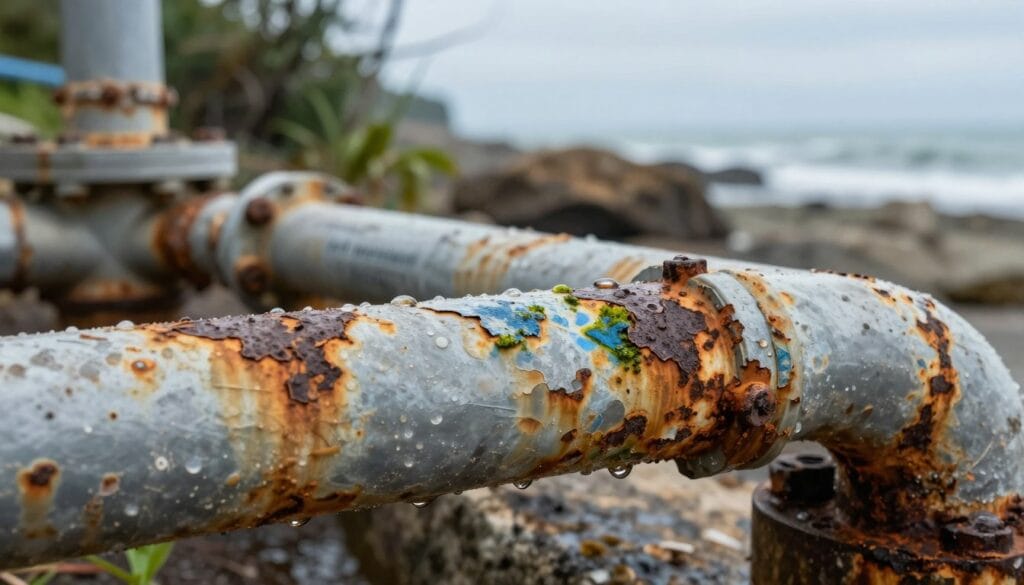
Saltwater corrosion on metal pipes, valves, and fittings
Salty moisture raises surface conductivity, so metal reacts faster with oxygen. That speeds visible corrosion on valves and joints.
Galvanic corrosion when dissimilar metals meet
When two different metals connect—say copper and galvanized steel—the more active metal will corrode first in damp, salty air. This often fails at joints and unions.
Pitting corrosion and hidden pinhole leaks
Pitting creates tiny, deep holes that bypass typical inspections. Those pits can turn into sudden leaks and are hard to detect until water shows up.
Condensation from humidity and temperature swings
Warm, moist air touching cool pipe surfaces leads to persistent wetness. That constant moisture encourages rust and mineral buildup inside fittings.
- Salt increases corrosion rates on metal pipes and fittings.
- Galvanic action targets joints where dissimilar metals meet.
- Pitting leads to pinhole failures that hide behind walls.
- Condensation keeps exteriors wet and accelerates wear.
Action lens: if you see visible corrosion, assume there are weak spots nearby and schedule an inspection. Call Lord Mechanical LTD at 6046703737 for service in North Vancouver and West Vancouver.
Which home plumbing systems are most at risk near the coast
Near-shore homes rely on several distinct water and waste systems that face unique risks from wet soils and salty air. We break these into clear categories so you know what to monitor and why.
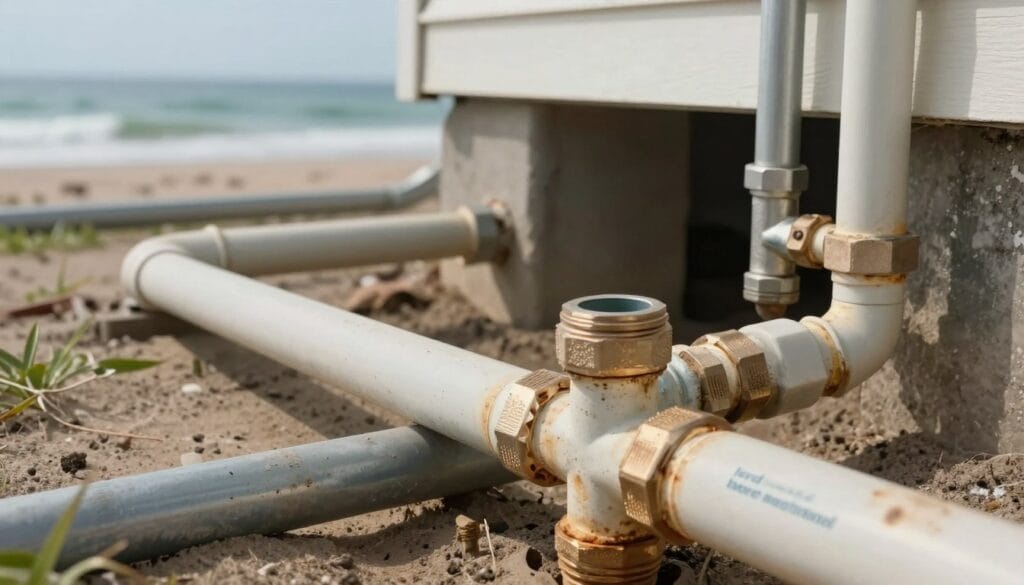
Potable water supply lines and pressure-related issues
Potable water lines can corrode and collect mineral buildup faster in moist, salty air. That reduces internal diameter and causes pressure drops at fixtures.
When restrictions or small leaks form, you may notice swings in pressure that stress valves, appliances, and seals across the system. We recommend watching for sluggish taps and variable flow during peak use.
Sewage and sanitary lines in shifting, moisture-rich soils
Sewage and sanitary lines are vulnerable where soils shift or stay saturated. Ground movement can misalign joints, create low spots, and invite root or sediment intrusion.
Those issues raise the risk of backups and persistent odours. Regular inspection of sewer runs and joints helps catch misalignment early.
Drainage and stormwater systems under heavy rain loads
Drainage and stormwater management systems face heavy loads during prolonged rain. Overwhelmed drains can pool, back up, or saturate basements and foundations.
Because these systems are linked, unmanaged stormwater often worsens sanitary and drainage performance by increasing infiltration and groundwater pressure.
- What we monitor: supply (potable), sanitary/sewage, drainage, and stormwater systems.
- Local note: wet seasons and hillside runoff around North Vancouver and West Vancouver increase stress on these systems.
Watch fixtures, odours, pressure changes, and post-storm performance—these are early clues a system needs attention. Call Lord Mechanical LTD at 6046703737 for inspections in North Vancouver and West Vancouver.
Early signs homeowners should watch for in coastal living
Not every leak announces itself—many begin as subtle changes you can spot quickly. We’ll highlight the top signs homeowners and homes near the shore should take seriously.
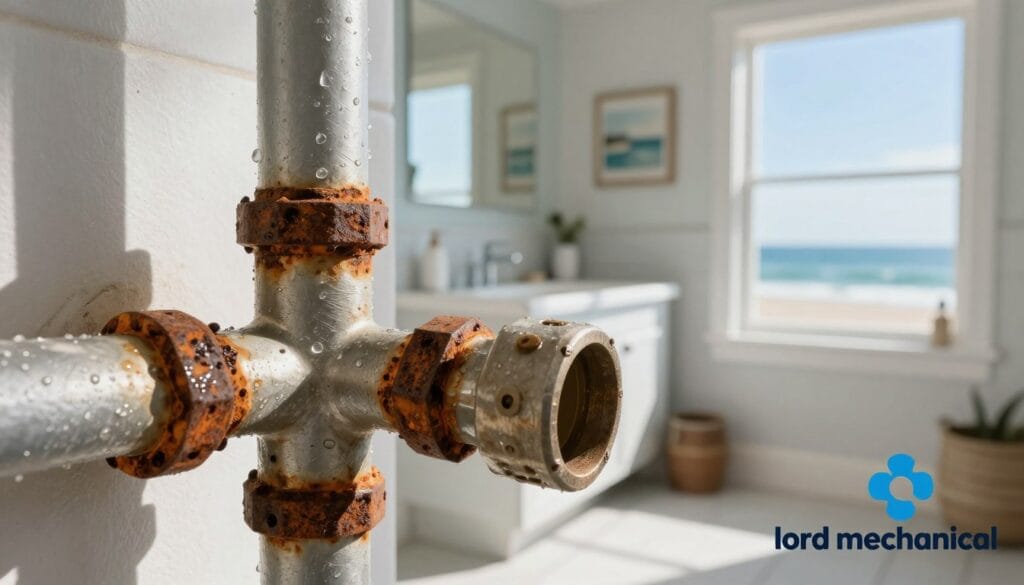
Rust, discolouration and mineral or salt buildup on fixtures
Rust or unusual discolouration on taps and hose bibbs can mean active corrosion inside pipes. Mineral or salt buildup often shows as white crusts that change spray patterns or cause valves to stick.
Musty odours, mould growth and recurring damp spots
Persistent musty odours and visible mould near pipe runs point to ongoing moisture. Recurring damp spots may come from condensation or slow leaks that worsen with humidity.
Low water pressure, unexplained water bills and hidden leaks
Low pressure and rising water bills often indicate hidden leaks, including pinhole failures that are hard to see. Track usage and note when issues follow temperature changes.
Slow drains and backups after storms
Slow drainage or backups after heavy rain usually mean sediment or debris has entered lines or drainage routes are overloaded. These issues often precede more serious system problems.
| Sign | Likely cause | Immediate action |
|---|---|---|
| Rust or discolouration | Corrosion on fixtures or pipe interiors | Photograph area; inspect under sinks; call for assessment |
| Musty odour / mould | Condensation or slow leaks | Document locations; dry area; schedule inspection |
| Low pressure / high bills | Hidden leaks or buildup | Check meter; record times; contact us |
| Slow drains after storms | Debris, sediment, or overwhelmed drains | Note storm timing; clear gutters; call if recurring |
Document photos, locations, and timing after storms before you call. These details help us diagnose faster. For service in North Vancouver and West Vancouver, call Lord Mechanical LTD at 6046703737.
How to inspect and maintain pipes to reduce corrosion and leaks
A short, routine inspection schedule keeps pipe issues from growing into emergencies. We recommend checking systems 2–3 times per year, plus spot checks after heavy storms or prolonged wet spells.
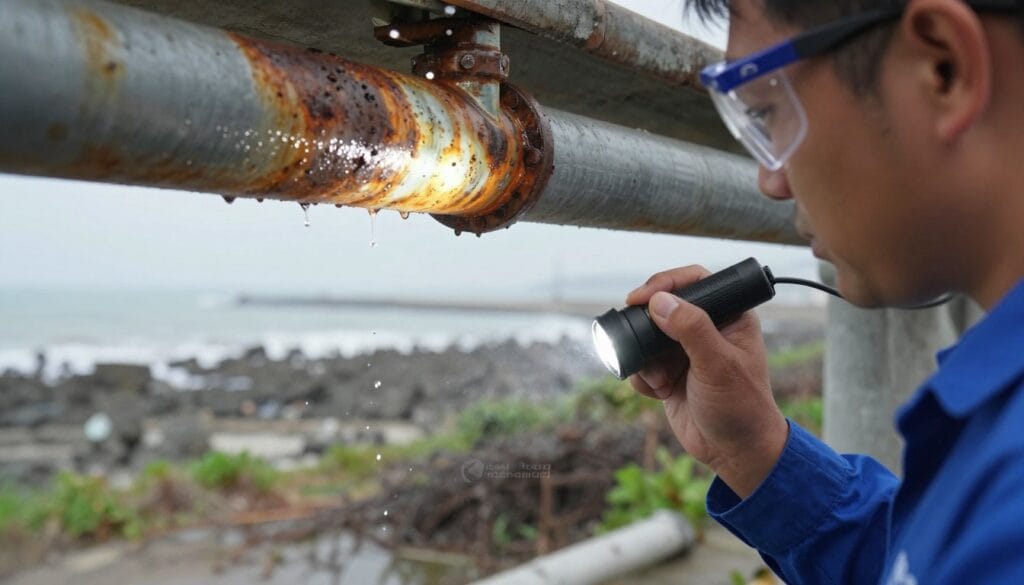
Where to focus your inspection
Look at exposed pipes, joints, shutoff valves, hose bibbs, and any outdoor fittings that get salt air. Check for early corrosion, white or green deposits, loose fittings, and valves that stiffen or leak.
Insulation and condensation control
Insulating cold pipes reduces surface condensation and slows rust formation. Wrap vulnerable sections with foam or rubber sleeves and keep crawlspaces ventilated to lower persistent dampness.
Anti-corrosion coatings and routine drain care
Use approved anti-corrosion coatings or inhibitors on metal parts that cannot be replaced right away. Choose products rated for wet, salty environments and follow manufacturer instructions.
Keep drains clear to prevent pooling and system strain. Regular maintenance includes cleaning gutters, clearing downspouts, and flushing drains during wet seasons.
When to call for professional repairs
If you discover recurring corrosion, unexplained pressure swings, or suspected hidden leaks, arrange professional inspection and repairs. We can assess risks and plan material upgrades that extend service time.
Call Lord Mechanical LTD at 6046703737 for inspections and repairs in North Vancouver and West Vancouver.
Choosing coastal-ready materials for plumbing repairs and upgrades
We pick materials to cut corrosion paths while keeping performance steady for your home systems. The right choice reduces repeat fixes and extends service life.
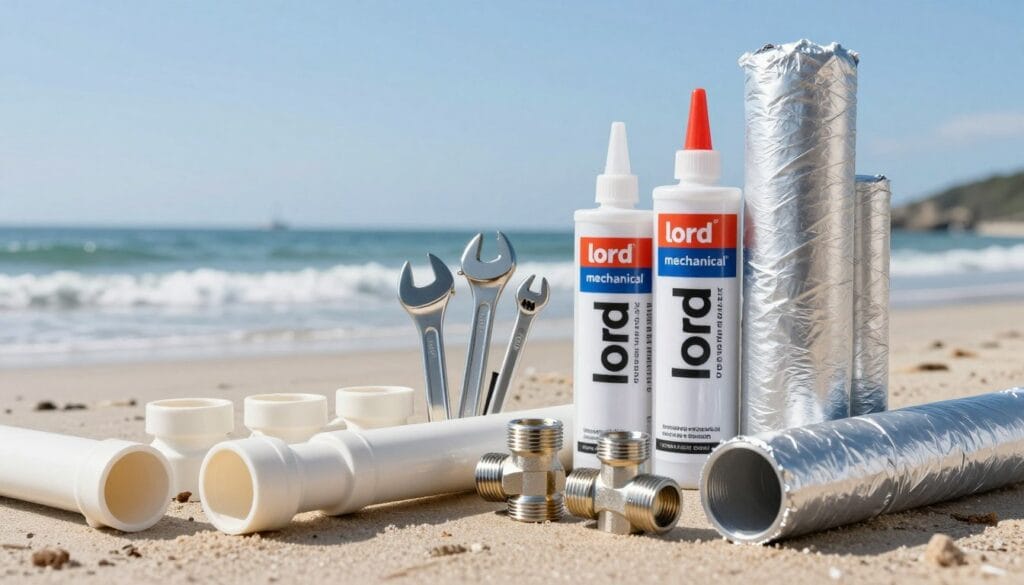
When PVC and CPVC make sense
PVC and CPVC resist salt exposure and wet air. Use them where code allows for drain, waste, and certain water lines.
They offer low cost and strong corrosion resistance, but check local codes for hot-water use and pressure limits.
Where PEX tubing helps
PEX is flexible and handles seasonal movement well. It is ideal for retrofits and runs that face vibration or temperature swings.
Its resistance to corrosion means fewer mid-wall failures and easier installations during staged repairs.
Upgrading to stainless steel or brass
Exposed fixtures and service valves benefit from stainless or quality brass alloys. These metals cut visible rust and last longer in salty air.
Considering epoxy-lined options
Epoxy lining creates a protective barrier inside existing pipes. It’s a strong option when full replacement is disruptive.
This lining reduces contact between corrosive water and metal, extending usable life of older systems.
| Option | Best use | Key advantage | Limitations |
|---|---|---|---|
| PVC / CPVC | Drain, some water lines | High corrosion resistance | Temperature/pressure limits |
| PEX | Retrofits, flexible runs | Durable, resists corrosion | UV sensitive; interior use |
| Stainless steel / Brass | Exposed fixtures, valves | Reduced rust; strong exterior life | Higher material cost |
| Epoxy-lined pipes | When replacement is disruptive | Protects interior surfaces | Not suitable for all failure types |
Balance choice with function: potable water needs, drainage slopes, and sewage durability must guide material selection—not just price. If one metal section fails, consider staged upgrades to avoid repeat repairs in the same zone.
Call Lord Mechanical LTD at 6046703737 for material recommendations and upgrades in North Vancouver and West Vancouver.
Storm and seasonal steps that prevent costly plumbing problems
Quick checks after heavy rain cut the time small problems have to grow into costly repairs. We recommend short, regular actions right after storms and before wet seasons to protect your home.
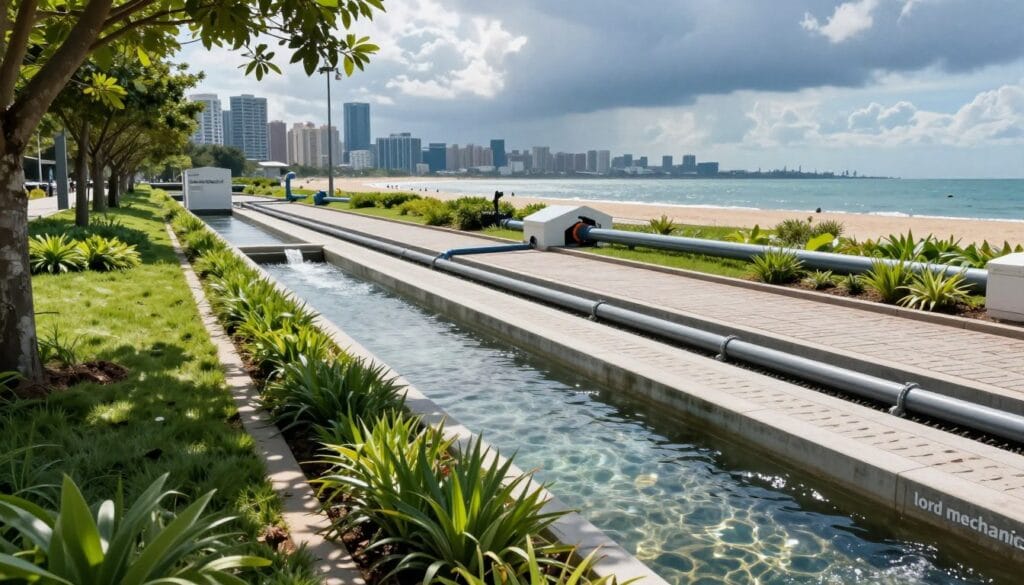
Post-storm checks for hidden debris, sediment and intrusion
Start by listening for unusual flow sounds and testing taps. Check cleanouts and floor drains for blockages or sediment that shows recent infiltration.
Inspect low spots where water pooled. Look for new silt or debris that can clog drainage and cause flooding later.
“A brief walk-around the yard after a storm often reveals the first signs of a failing system.”
Pre-season prep for high-humidity and wet months
Before the rainy season, clear downspouts and confirm drain flow. Test sump pump operation and verify shutoff valves move freely.
Insulation and ventilation matter: ensure pipe insulation is intact and mechanical rooms have fresh air to cut condensation and slow corrosion.
Managing stormwater to reduce flooding risk near foundations
Good grading and routed drains keep water away from foundations. Keep collection points clear so water moves to safe outlets instead of pooling.
- Grade soil to slope away from the house.
- Keep gutters and drains free of debris.
- Consider routed drain lines or French drains where runoff collects.
Well-designed stormwater work eases strain on drainage and lowers the chance of backups, flooding and related problems. Schedule these steps before forecasted storms or at the start of the wet season to save time and money.
Call Lord Mechanical LTD at 6046703737 for a post-storm or pre-season inspection in North Vancouver and West Vancouver.
Conclusion
When salty air meets repeated wet weather, small issues in pipes and fittings grow fast into bigger failures across your home’s water networks.
We view the house as linked systems: supply, drainage, sewage and stormwater all affect one another. Spotting early signs and increasing inspections to 2–3 times a year helps you avoid major interruptions.
Acting early matters. Insulate cold runs, plan material upgrades like PEX or epoxy lining, and keep routine checks on valves and exposed fittings. If you see recurring corrosion, pressure swings or backups after storms, move from monitoring to a professional plan.
Call Lord Mechanical LTD at 604 670 3737 to book an inspection, discuss repairs or plan upgrades in North Vancouver and West Vancouver.