

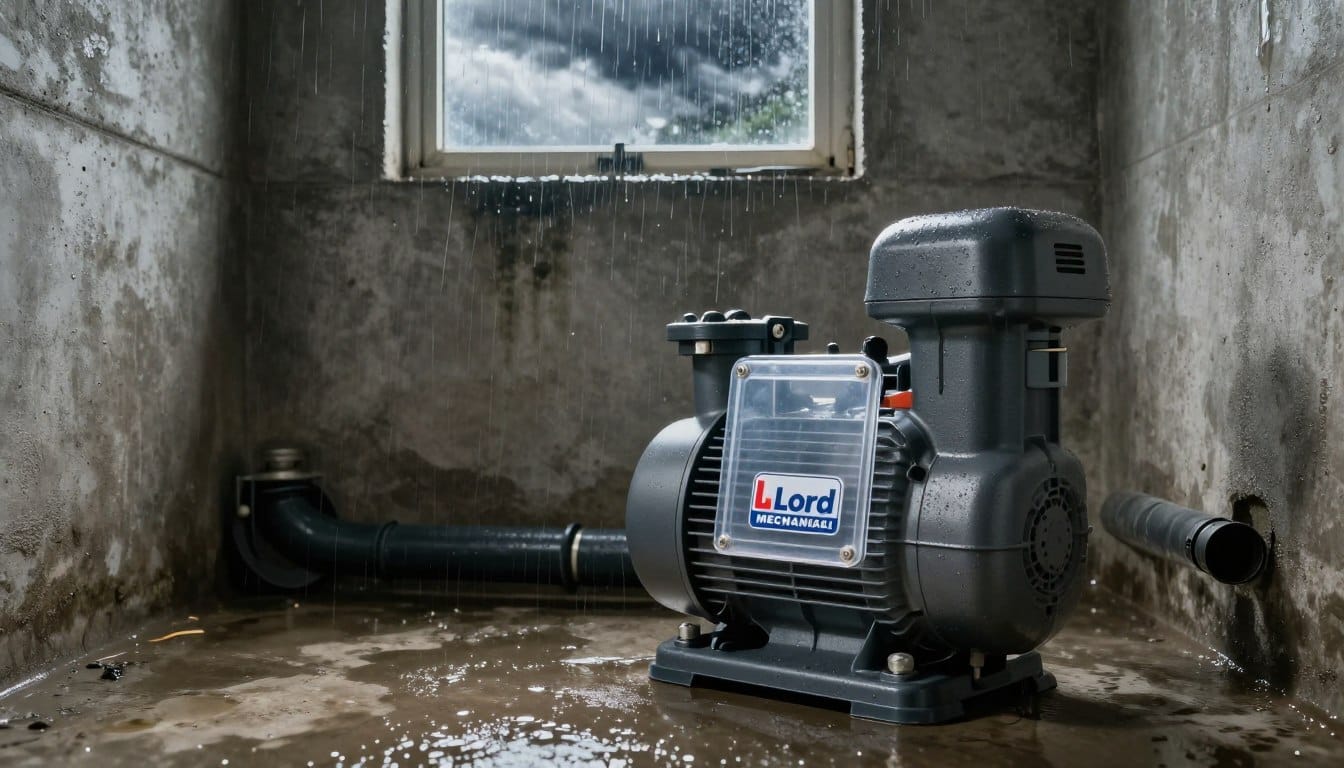
Nearly 7 in 10 flood events that damage basements in our region also involve a power outage, leaving primary defence equipment unable to work when water rises most.
We explain why backup sump pump systems are a storm-season essential for Vancouver homes and businesses. When storms drop heavy rain, your main unit faces its highest load at the exact moment power can fail.
We write as your local advisor in North and West Vancouver. We walk you through realistic options — battery, water-driven or generator-linked — and show how capacity, head height and runtime matter more than marketing claims.
Choosing the right system reduces cleanup, mould risk and costly downtime. If you want a site recommendation or pre-storm inspection, call Lord Mechanical LTD at 6046703737 for fast, professional work.
Key Takeaways
- Power outages often coincide with severe flooding; prepare now.
- Choose a solution based on building layout, flood history and outage patterns.
- Evaluate real metrics: capacity, head height, runtime and discharge design.
- Proper sizing and installation matter as much as the equipment choice.
- Contact Lord Mechanical LTD in North or West Vancouver for inspection and installation.
Storm season in Canada: why a sump pump backup matters more than ever
When weather turns severe, outages and intense runoff converge — and that combination is dangerous for basements. Climate Central shows weather-related power outages from 2014–2023 were nearly double those in 2000–2009. That trend makes planning essential for homeowners and businesses.
Weather-related power outages are increasing and storms hit when you need pumping most
Storms bring the heaviest rain and fastest runoff at the same time your equipment must move the most water. If the power goes during peak inflow, water levels in the pit rise quickly and flooding can begin in minutes.
What a backup system prevents: basement water damage, costly cleanup, and downtime
We see real consequences: soaked drywall and flooring, ruined inventory, electrical and equipment damage, mould growth and lost use of space for days.
- For businesses, interruptions mean staff rescheduling, tenant complaints and longer remediation timelines.
- For homes, timely protection reduces cleanup and long-term repair costs.
We advise matching the solution to outage duration, seepage versus sudden flooding, and safe discharge design for North and West Vancouver. Call Lord Mechanical LTD at 6046703737 for site-specific guidance.
How primary sump pumps fail during heavy rain and flooding
During heavy rain, the main reason basements flood is not always a mechanical problem — it is loss of power at the worst moment.
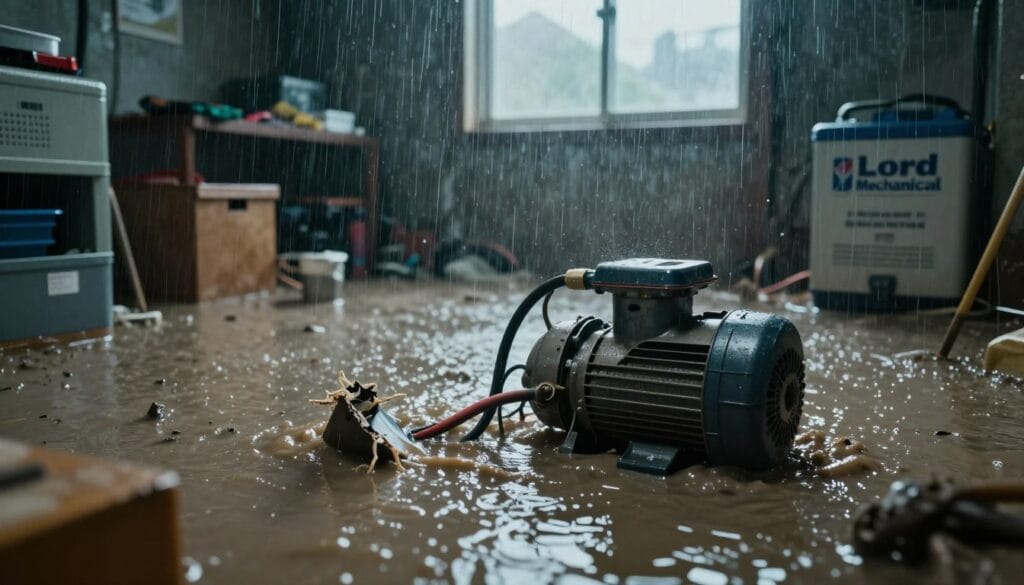
Power outage scenarios
Utility outages stop the main pump instantly. We also see tripped GFCI outlets after lightning and accidental unplugging during maintenance. In each case, a functioning unit becomes useless without power.
Mechanical and performance issues
Undersized sump pump units can’t match high inflow, so the pit never clears even when the device runs. Low-quality or worn motors lose capacity and overheat, reducing flow when you need it most.
Float switch problems
Tethered floats are a common silent failure. They can snag on the pump body, discharge pipe or cord and never signal the unit to run. That single snag creates a rapid rise in water levels.
“Reliability is the whole system: switch, check valve, discharge path and regular care.”
- Think beyond motor power — inspect switches and connections.
- If your primary pump is older or has had a replacement event, pair it with a secondary solution to cut single-point failure risk.
Need help? Call Lord Mechanical LTD in North and West Vancouver at 6046703737 for inspection and practical advice.
Backup options explained: battery, water-powered, and generator solutions
Not all emergency solutions work the same; each type protects against different failure modes and conditions.
Battery solutions: two common approaches
There are two main battery routes. One is a separate DC auxiliary unit that runs only when the main fails. The other is a battery backup system that powers your existing main during a power outage.
Practical trade-off: DC units are compact and automatic, but often deliver far less flow than a typical 1/3 HP main. That lower capacity matters during heavy inflow.
Water-driven options: how municipal pressure helps
Water-driven devices use city water pressure to move sump water out. They can run as long as municipal pressure holds.
- Typical requirement: ~40 psi and a 3/4″ feed line.
- They use roughly 1 gallon of tap water to remove 2 gallons of pit water.
- Backflow protection (AVB or RPZ) is mandatory to protect potable supply.
Generators: when they help and where they fall short
Generators keep the main working during long outages but need fuel and human oversight. They don’t fix a failed primary motor, and they are not automatic in every case.
Choosing wisely: Match the type of protection to your outage frequency, local water availability, and how critical keeping the basement dry is for your home or business in Vancouver.
Need advice? Call Lord Mechanical LTD in North and West Vancouver at 6046703737 for a site-specific recommendation.
Choosing backup sump pump systems for Vancouver homes and businesses
Start with your worst-case scenario: how fast the pit fills and how long power might be out. That drives the choice between a compact battery unit, a water-driven alternative or a generator-tied main replacement.
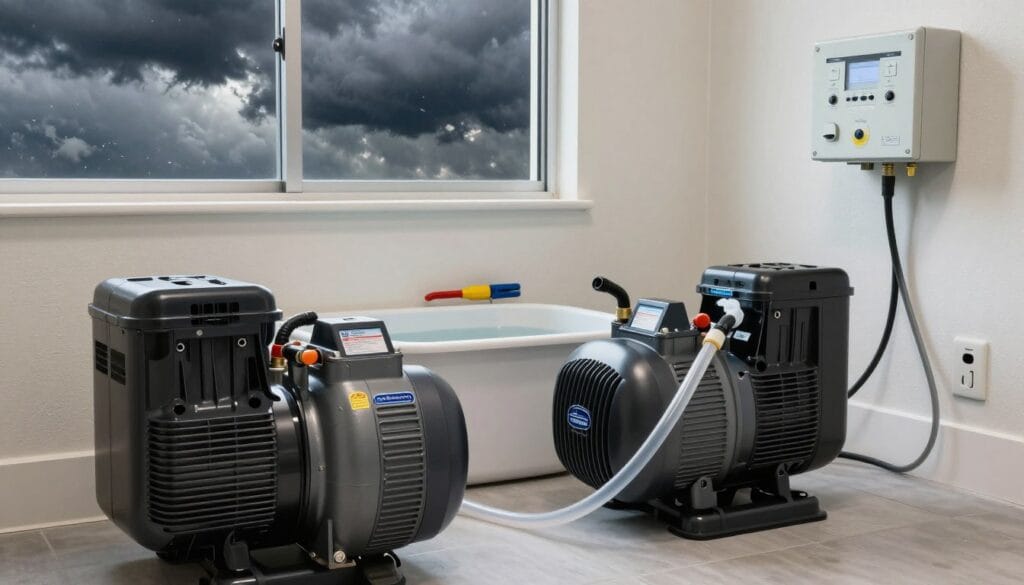
Match the option to your risk
For light seepage, a modest secondary unit with good GPH may suffice. For frequent flooding or long outages, choose higher capacity and larger batteries or dual arrangements.
Capacity first: GPH over horsepower
Compare GPH for every model. Horsepower hides real flow. Pick the unit that discharges the most litres per hour at your required head.
Battery runtime and realistic hours of protection
Battery life depends on cycle frequency. For example, a 40Ah battery might run up to about 53 hours at 2,300 GPH if cycles are light, but closer to 12 hours under once-per-minute emergency cycling.
When dual batteries make sense
Use dual-capacity setups for long outages, high inflow neighbourhoods, or valuable commercial spaces. Larger batteries and better chargers also extend life and reliability.
Build quality and where to shop in Canada
Look for sturdy floats, corrosion-resistant parts and smart chargers. Brands commonly available include Basement Watchdog, Liberty Pumps, Zoeller, Wayne and Basepump — compare monitoring, runtime and service options.
Need a site check? Call Lord Mechanical LTD at 6046703737 — we assess capacity, recommend the right emergency setup and work across North and West Vancouver.
Key specs that determine real-world performance during storms
Real-world performance comes down to a few measurable specs you can check today. Start by reading the label on your existing unit for GPH and test the vertical lift from the pit to the horizontal discharge — that number is the head height installers use to size capacity.
How to size your system using your current unit’s label and head height
Locate the rated GPH on the motor nameplate. Compare that to manufacturer curves at a realistic head (often ~10 ft). Ratings at “0 head” can be misleading and overstate real flow under lift.
Discharge and check valves: preventing backflow and improving efficiency
A properly installed discharge line with a check valve stops water from falling back into the pit. That reduces needless restarts, saves battery life and lowers wear on the motor.
Battery types and lifespan
For a reliable sump pump battery choice, deep-cycle wet-cell (marine) batteries are commonly preferred for repeated deep discharges. Gel batteries cost 3–5× more and rarely offer proportional benefit for most residential installs.
Plan on routine service and a replacement cycle; many owners see 4–6 years of useful life with regular checks. Treat batteries as consumables: inspect terminals, top up cells if wet-cell type, and schedule a swap before performance falls during storms.
Need help sizing or choosing a pump battery backup? Call Lord Mechanical LTD in North and West Vancouver at 6046703737 — we’ll measure head, compare GPH curves and recommend a durable option for your property.
Installation, monitoring, and maintenance that keep your backup ready
Good installation and steady care mean the difference between a dry basement and costly damage during a storm. We focus on layout, alarms and a simple maintenance plan so you know the unit will run when you need it.
Typical installation approach: shared discharge pipe vs dedicated discharge line
A shared discharge line is simpler and often cheaper. It lets a secondary device use the existing outlet when needed.
A dedicated discharge route reduces interaction between devices and can improve reliability, especially under heavy flows. Choose based on access, head height and local code.
Monitoring and alarms: knowing when the pump fails before you see damage
Install audible alarms for local alerts and consider remote notifications if you’re away. Modern controllers often include both features.
Maintenance schedule
- Test operation monthly and run a full test before storm season.
- Clean battery terminals twice a year and check battery water levels every few months.
- Confirm charger output and inspect the check valve and discharge line annually.
Code and safety for water-driven options
Water-fed devices require backflow protection. Above-pit installs may use an AVB; in-pit configurations often need an RPZ tested annually by a licensed plumber.
When to call a professional in Vancouver
Call us if you see frequent cycling, float-switch problems, discharge leaks, or if you want an upgrade for longer run times. Lord Mechanical LTD serves North and West Vancouver—call 6046703737 to book an inspection.
Conclusion
We recommend a correctly sized, well-serviced solution that matches real inflow and outage risk for lasting protection. Choose based on measured capacity and realistic head, not just horsepower claims.
Match the type of backup to your outage patterns and local water availability. Prioritise GPH and runtime, and schedule simple maintenance so the unit runs when you need it most.
More equipment isn’t always safer. What matters is a reliable, properly sized arrangement that keeps water moving out of your basement during a power loss and limits cleanup and repair costs.
Want a site review in North or West Vancouver? Call Lord Mechanical LTD at 6046703737 for a right-sized recommendation and inspection.