

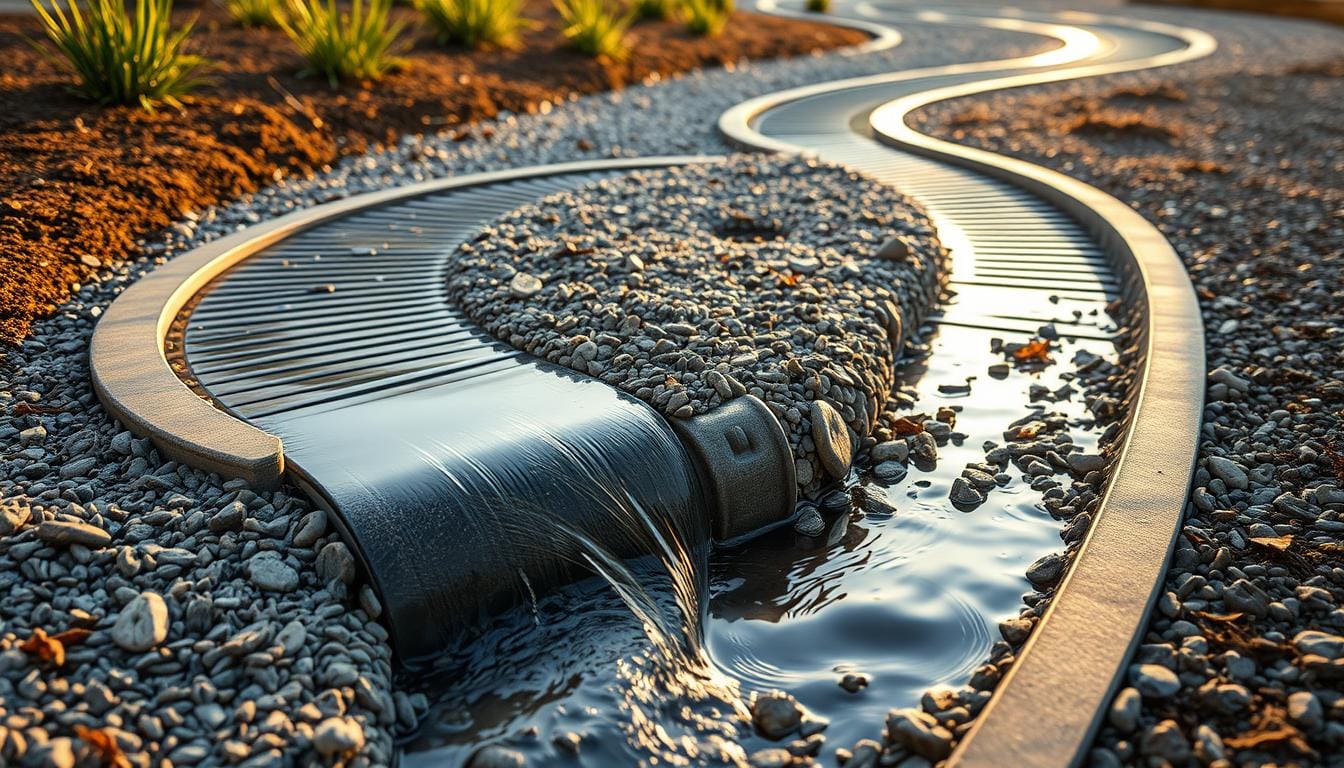
Could a simple sloped trench save your home from months of soggy grass and costly repairs?
We explain how a well-built french drain moves standing water away from your home and protects your property. A sloped trench with a perforated pipe and gravel channels runoff to a safe discharge point. This small intervention can protect foundations, lawns and landscape beds during Vancouver’s heavy rains.
We show the full process: planning the route and slope, picking the right pipe and gravel, and choosing fabric and discharge options. You will learn when a DIY approach is sensible and when a professional service is wiser—long runs, complex routing or municipal ties often require permits and pro tools.
Our guide keeps technical details clear so you can scope your area, estimate costs and decide if you call Lord Mechanical LTD. For expert help in North and West Vancouver, call us at 604-670-3737.
Key Takeaways
- A sloped trench with perforated pipe redirects water away from your home.
- Use washed 3/4-inch gravel, 4-inch perforated PVC and landscape fabric for durability.
- DIY works for short runs; long or municipal connections need professionals.
- Quarterly checks and flushing keep a system lasting 20+ years.
- Contact Lord Mechanical LTD in North and West Vancouver for inspections and permits.
Why French drain systems matter in Vancouver’s wet climate
Preventing water from settling near your home starts with a planned path that guides runoff to safe outlets.
We collect surface and groundwater before it soaks into lawns and foundations. A french drain lowers hydrostatic pressure against foundation walls and cuts seepage that leads to costly damage.
Protecting foundations, basements, and landscaping
Reduced pressure and moisture: By channeling water away, a properly sized pipe and gravel envelope limit moisture migration into basements and crawl spaces. This lowers mould risk and interior repairs.
How drains enhance usable yard space and curb appeal
Intercepting runoff keeps planting areas and turf from staying saturated. That turns muddy patches into usable yard zones for play or seating and improves curb appeal with cleaner landscape lines.
- Low-maintenance, passive operation once installed.
- Prevents storm water from pooling at fence lines, downspout outfalls, and slope bottoms.
- Proper drainage sizing avoids surface washouts during heavy rain.
If you already face water damage, we can assess problem areas and design corrective solutions. Call Lord Mechanical LTD in North and West Vancouver at 604-670-3737 for an inspection.
How a French drain works: components, flow, and lifespan
A well-designed trench directs water through rock and pipe so it leaves your property quietly and reliably.
Core components: Landscape fabric lines the trench, washed 3/4-inch gravel surrounds the perforated pipe, and the whole assembly allows water to filter down without clogging. The fabric keeps fines out of the gravel and protects the pipe from silt.
Why holes face down: Water collects at the bottom of the gravel layer, so downward-facing holes capture flow faster and reduce standing water in the trench.
Slope and geometry: We recommend a 1–2% slope (about 1 inch per 8 feet). A typical trench is at least 12 inches wide and 18–24 inches deep to fit the pipe and gravel envelope.
- Correct slope keeps self-cleansing velocity and prevents bellies that trap water.
- Washed gravel and proper fabric reduce silt intrusion and extend service life.
- Rigid PVC pipe with clean-outs outlasts flex options in many installations.
Lifespan drivers: Quality materials, an even fall to the outlet, and clear discharge points help a system reach 20+ years. We add inlet grates where surface runoff is heavy and design outlets to avoid backpressure.
Need help? We design and install reliable solutions for North and West Vancouver—call Lord Mechanical LTD at 604-670-3737.
When a French drain is and isn’t the right solution
Not every wet patch calls for pipe and gravel — choosing the right fix starts with a simple site check.
We install a french drain when water pools in low spots, lawns stay soggy, or foundation walls show damp patches. These are clear, local problems where an underground channel intercepts flow before it reaches the trouble area.
When not to install: avoid trenching if you lack adequate slope or a lawful discharge location. If the outlet would send water onto a neighbour’s lot, choose a rain garden, dry well, or municipal tie-in instead.
“Never route runoff off-site. Bylaws and common sense demand safe outlets and no harm to adjacent properties.”
- DIY scope: simple runs under ~50 feet with a clear outlet are manageable for homeowners.
- Hire a pro when length, pumps, municipal connections, or grading accuracy increase project complexity.
- Soil and structures matter: tight clay, roots, or nearby retaining walls can change the recommended solution.
If you’re unsure whether the slope and outlet point will work, we can inspect the site and recommend the right approach. Call Lord Mechanical LTD in North and West Vancouver at 604-670-3737.
Planning your project in Vancouver: permits, codes, and call-before-you-dig
Start with rules, safety checks and a clear map of how water moves across your lot.
Local permitting and runoff rules to consider
Before digging, confirm if your municipality requires a permit. Locations near wetlands or slopes often have stricter runoff controls.
Setbacks and outlets matter: councils may limit where you can discharge. Plan a legal outlet that won’t affect neighbours.
BC One Call utility locates before trenching
Always request BC One Call to mark buried services. We won’t start excavation until utilities are located and lines are safe.
Assessing water flow during heavy rain to map the best path
Walk the yard during a storm to note pooling areas and the main flow path. Use stakes, string, and a line level to mark grade.
- Set stakes and run string to confirm slope in inches over the run.
- Decide trench depth based on frost, foundation proximity, and surface restoration needs.
- Phase the project: locate utilities, secure permits, then schedule trenching and backfill.
For permit drawings, compliance advice, and code‑compliant planning in North and West Vancouver, call Lord Mechanical LTD at 604-670-3737.
Tools and materials checklist for French drains
A compact, well‑planned kit keeps your trench work efficient and safe.
We list the core tools and key materials so you can plan deliveries and avoid long open excavations. Order items to arrive the day you dig to limit lawn impact.
Core tools and PPE
- Stakes, string, line level and measuring tape for grade verification.
- Spade, trenching shovel, pick and a wheelbarrow for spoil and gravel movement.
- Gloves, eye protection and sturdy boots for safe handling.
Pipe options and gravel
4‑inch perforated pipe (rigid PVC) lasts longer and accepts a snake for cleaning. Flexible slotted pipe is cheaper and easier to curve, but it can be harder to clear.
Use washed #57 (3/4‑inch) gravel to surround the pipe and promote flow while limiting fine migration.
Fabric, fittings and staging
Line the trench with quality landscape fabric or a specialised filter fabric if fines are heavy. Choose durable fabric to reduce clogging.
- Add inlet grates, clean‑outs and 45° fittings where maintenance access is required.
- Estimate quantities by length: linear feet of pipe and fabric, plus cubic feet of gravel per metre of run.
- For long runs, consider trencher rental, spoil staging, and timely backfill.
Prefer a turnkey supply and install? Call Lord Mechanical LTD for North and West Vancouver at 604-670-3737.
Step-by-step: install French drain like a pro
Follow our clear, step‑by‑step method to trench and assemble a reliable runoff channel on your property.
Marking the route and setting pitch
We lay stakes and run a string to mark the route, then check pitch with a line level at regular intervals. Aim for a slope of about 1 inch per 8 feet (1–2%).
Digging the trench: width, depth, and avoiding “bellies”
Dig the trench at least 12 inches wide and 18–24 inches deep. Stop and measure every few feet to prevent low spots in the bottom trench that trap water.
Gravel base and lining with landscape fabric
Place a washed gravel base so the pipe sits on a uniform bed. Line the trench with quality landscape fabric, leaving enough to fold over the top later.
Pipe placement with holes facing down
Install the 4‑inch perforated pipe with its holes facing down. Keep joints tight and maintain continuous fall so water moves freely to the outlet.
Wrapping fabric, backfilling, and restoring the surface
Wrap the fabric over the gravel and pipe, then backfill with gravel to cover the top of the pipe. Finish with soil and sod, seed, or stone to restore the top surface.
- Use inlet grates at heavy collection points and optional clean‑outs near the top of the run.
- Test the installation by running a hose at the inlet and confirming flow at the outlet before final restoration.
“Measure twice, set your level often, and avoid bellies — they cause most failures.”
Want pro installation and a warranty-backed job? Call Lord Mechanical LTD for North and West Vancouver at 604-670-3737.
Foundation-focused installations around your home
A well‑planned perimeter installation balances depth, slope and backfill to keep water away from your structure.
Depth and placement: Position the collection pipe at or just below slab level, near footing depth but offset slightly from the wall to avoid undermining.
Keep a consistent slope away from the foundation so water flows to the end outlet. A shallow trench that undercuts footings risks structural damage.
Protecting the structure and tying in
When tying into a sump or daylight outlet, confirm pump capacity and outlet grade. Overloading pumps can cause failures during heavy rain.
- Use fabric over the gravel to limit silt and root intrusion.
- Add clean‑outs or inspection points at long runs and at service crossings.
- Seal membrane interfaces; membranes complement but do not replace proper collection.
“Correct placement and careful backfill protect both the foundation and the long‑term performance of the collection system.”
| Condition | Recommended depth | Offset from wall |
|---|---|---|
| Slab homes | At or just below slab/footing | 150–300 mm |
| Basement with footing | Footing level | 100–250 mm |
| High groundwater | Below footing with pump | Maintain grade away |
Restoration and redundancy: Replace hardscapes carefully and consider sump alarms and backup power in high‑water areas. For foundation‑specific designs in North and West Vancouver, call Lord Mechanical LTD at 604-670-3737.
Discharge options: daylight, dry wells, and municipal storm connections
Selecting the correct exit point for a collection pipe determines long‑term performance and neighbourly compliance.
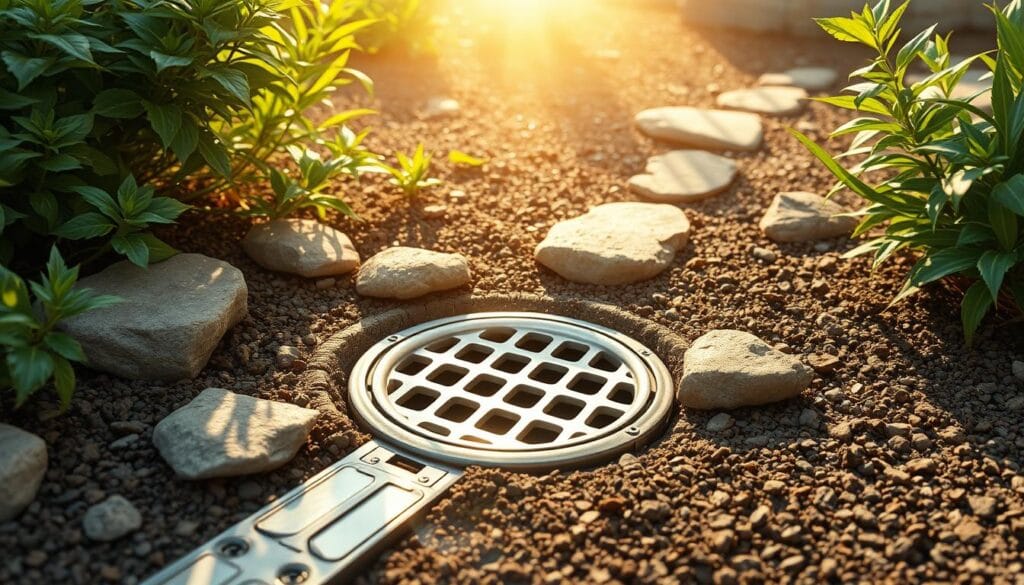
Choosing the right termination point for your property
Where the run ends depends on grade, soil and local rules. Daylight outlets work when the slope carries water safely off the lot.
Dry wells suit sites with good percolation and space to meet separation distances from the building.
When a municipal link is possible and why pros are required
Municipal storm connections are allowed only with permits. Core drilling, sealed couplers and pressure testing are often needed.
Hire a pro for municipal tie‑ins to ensure correct sealing and code compliance. We handle applications and specialised equipment.
- Compare outlets: daylight, dry wells or permitted municipal connections.
- Outlet protection: rodent guards, splash pads and erosion control at the end of the pipe.
- Capacity planning: size the pipe and outlet to handle peak water events and avoid backups.
- Site dry wells by percolation tests and required separations from foundations and property lines.
- Account for freeze and debris: seasonal checks preserve flow and prevent ice blockages.
“Proper outlet selection is critical for overall drainage performance and longevity.”
Need an evaluation or municipal approval in North or West Vancouver? Call Lord Mechanical LTD: 604‑670‑3737.
Alternatives and complementary drainage solutions
Not every pooling spot needs a buried channel — sometimes grading, inlets or a soak pit solve it faster.
Surface options such as channel drains and catch basins suit driveways, patios and other paved areas. They move water quickly to a safe point without lifting pavers.
Swales and berms use the natural slope to redirect overland flow through the yard. These features reduce erosion and soften landscape lines while protecting planting areas.
When to pair solutions: we often combine a french drain with surface inlets to handle subsurface seepage and storm surge at the same time. Dry wells work where no daylight outlet exists; size them by soil percolation and contributing roof or pavement area.
| Option | Best for | Maintenance |
|---|---|---|
| Channel drains | Driveways, patios | Seasonal clearing of leaves |
| Swales / berms | Lawns, slopes | Grass care, erosion checks |
| Dry well | Sites without outlet | Occasional inspection, sediment removal |
- We can model flows and recommend a mix that fits your property and Vancouver bylaws.
- For a tailored plan in North and West Vancouver, call Lord Mechanical LTD at 604-670-3737.
Maintenance, troubleshooting, and seasonal checks
A simple quarterly review keeps water moving and prevents surprises.
Quarterly inspections: Clear leaves and debris from the top inlet grate(s). Run a hose at the inlet and confirm steady discharge at the outlet to verify flow.
Unclogging tips: If flow is slow, open clean‑outs and flush sediments. Use a plumber’s snake for stubborn blockages. Rigid PVC is easier to clear than flexible pipe and accepts mechanical cleaning better.
Signs of trouble: Watch for wet patches along the run, gurgling at grates, or slow outlet flow. Check fabric edges and regrade minor sinkage at the bottom of restored strips.
Protecting the route: Avoid heavy vehicle loads above the trench. Mark the run with surface indicators or as‑built drawings so future work does not damage the pipe or perforated pipe outlets.
| Task | Frequency | Action |
|---|---|---|
| Clear inlet grates | Quarterly | Remove leaves and test with hose |
| Flush pipe | As needed | Open clean‑outs, snake or flush sediment |
| Inspect fabric & surface | Seasonal | Check edges, regrade sinkage |
| Root checks | Annually | Install selective root barriers if needed |
Need help? For professional cleaning or troubleshooting in North or West Vancouver, call Lord Mechanical LTD at 604-670-3737. Proactive care preserves drainage performance and extends service life.
Costs in Canada: DIY vs professional French drains
Budgeting early keeps surprises low and helps you pick a DIY route or a pro service with confidence.
What drives price: length, depth, soil, restoration
The biggest cost drivers are the length of run and the trench depth. Hard clay, rock or restricted access raises excavation time and labour.
Disposal of spoil, final surface restoration and added items like catch basins or sump pumps also change totals. Complex sites often require a permit and professional grading, which adds to the bill.
Budgeting for tools, materials, and potential equipment rental
DIY starts: Expect roughly $1,000–$1,500+ for short projects when you supply labour and rent a trencher or mini‑excavator.
Professional installs: Typical pro quotes range from a few thousand dollars to about $9,000–$10,000+ for long, deep or high‑complexity projects.
| Item | DIY range (approx) | Pro range (approx) | Notes |
|---|---|---|---|
| 4‑inch pipes & fittings | $150–$400 | $200–$600 | Per length and fittings |
| Washed 3/4″ gravel (cubic yards) | $80–$200 | $150–$600 | Depends on depth and backfill |
| Fabric, grates & small parts | $50–$200 | $100–$400 | Quality fabric reduces maintenance |
| Equipment rental / excavation | $200–$900 | $800–$4,000 | Long runs and rock increase cost |
- Plan for restoration: turf, paving or beds can add several hundred to a few thousand dollars.
- Adding inlets, dry wells or sump ties increases both materials and labour.
- Phase small projects: prioritise the worst section to spread cost over time.
“A modest investment now prevents costly water damage later and protects your property value.”
Want an accurate, property‑specific quote? We price jobs in North and West Vancouver and provide firm proposals. Call Lord Mechanical LTD at 604-670-3737.
French drain systems
A complete subsurface solution links surface collection, a perforated pipe bedded in gravel, and a safe discharge point.
We summarise the full architecture so you can see how inlet areas, the trench and outlet work together. A standard system uses landscape fabric, washed gravel and a 4‑inch perforated pipe with holes facing down.
Why material choices matter: quality fabric keeps fines out of the gravel, and washed gravel supports flow and reduces clogging. Proper pipe selection affects how often you must service the line.
Maintain a 1–2% slope across yard contours to keep a steady fall from the bottom trench to the outlet. Add clean‑outs so future flushing is simple and non‑invasive.
Protect outlets with splash pads, rodent guards and discreet screening. Always call utility locates before any trench work to avoid service interruptions.
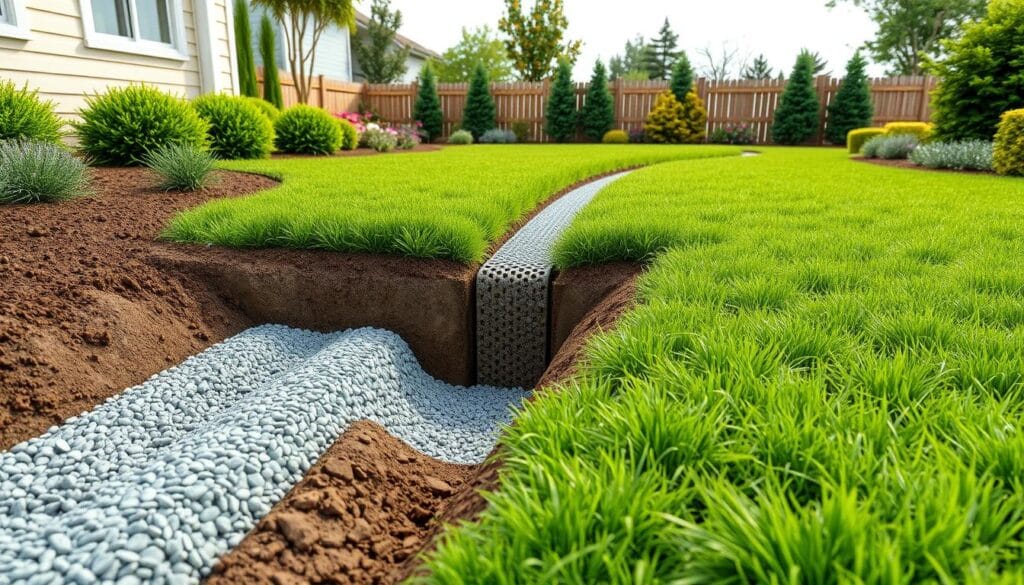
“Well‑designed systems can last over two decades with periodic maintenance.”
- Map collection areas to intercept flow before lawns or beds saturate.
- Choose pipe, gravel depth and fabric to balance maintenance frequency and longevity.
- Our crews design, install and service properties across North and West Vancouver — call 604‑670‑3737.
Conclusion
A clear plan and correct materials make the difference between a short‑lived trench and a long‑lasting runoff path. Follow proven steps: confirm a 1–2% slope, set the route, and choose a legal outlet before you break ground.
Checklist: install french drain components with 4‑inch perforated PVC (holes down), bed the pipe in washed 3/4‑inch gravel, wrap with quality fabric, and backfill to restore the landscape. Test flow at the end and note the route for future work.
DIY works for short runs, but complex projects, municipal tie‑ins or tricky foundations merit professional help. Call Lord Mechanical LTD at 604-670-3737 for design, permits and warranty‑backed installs in North Vancouver and West Vancouver. With the right plan, your home and yard stay drier through every rainy season.