

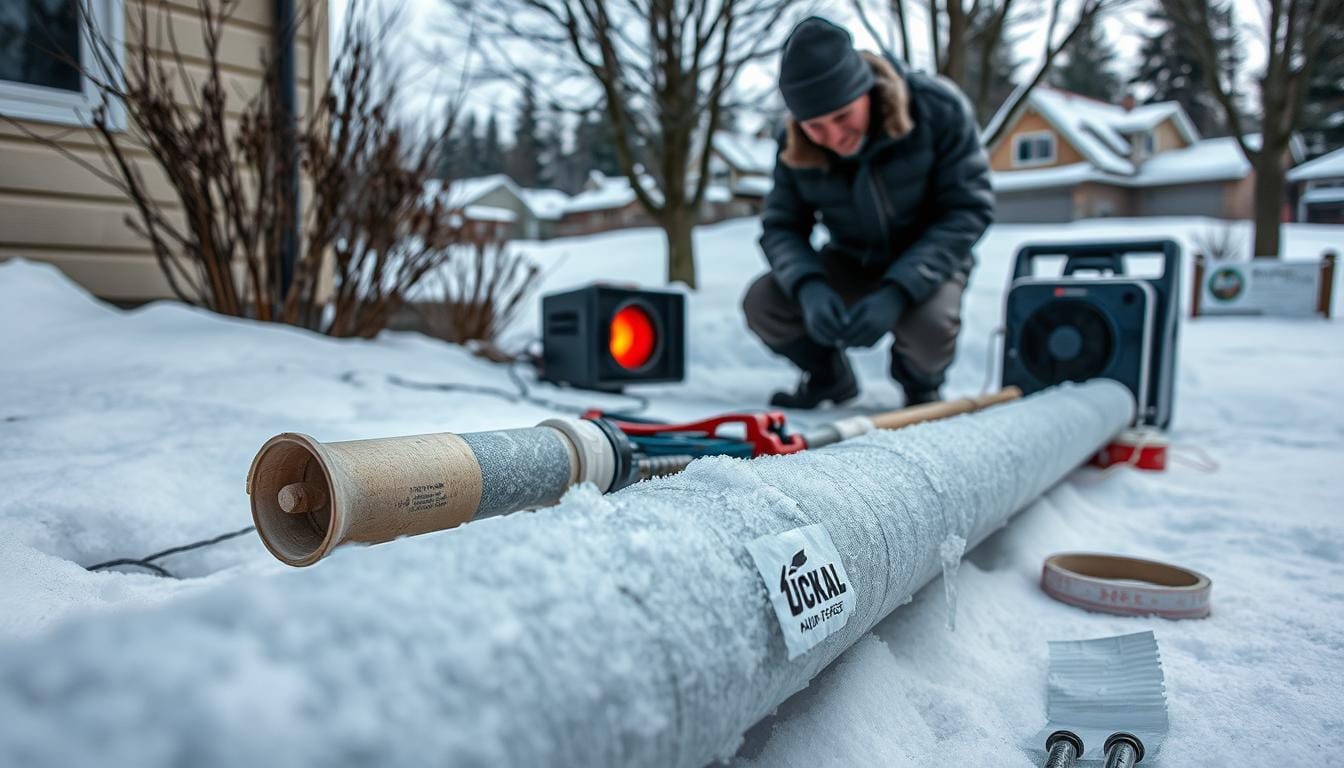
Have you ever wondered how a simple drip at a single faucet can stop a major burst during a cold snap?
We wrote this short guide to help you protect your North Vancouver home with clear, practical steps. You will learn how to keep water flowing, spot early signs at a faucet, and reduce pressure before warming a frozen section.
Start small: leave cabinet doors open to let warm air reach exposed pipes, keep a pencil‑thin trickle where recommended, and steady the thermostat day and night.
Use gentle, moving heat from the faucet back toward the source; never use open flame. If you see bulging or spraying, shut the main immediately and call us at 6046703737.
Key Takeaways
- Keep vulnerable areas warm; open cabinets near sinks.
- Maintain a steady trickle at one faucet during extreme cold.
- Apply gentle heat from the faucet back; avoid flames.
- Insulate exposed lines in attics, basements and garages.
- Shut the main and call Lord Mechanical LTD for urgent help in the area.
Why frozen pipes are a present risk in North Vancouver homes
North Vancouver homes face unique cold risks when coastal mildness shifts to sudden Arctic outflows. Wind chill and rapid drops in temperature let ice form inside pipes, and expanding water can increase pressure by about 9%.
Older houses with plumbing along exterior walls, in garages, or over crawl spaces show the highest exposure. Uninsulated runs may freeze within 6–8 hours near -6 °C with steady wind.
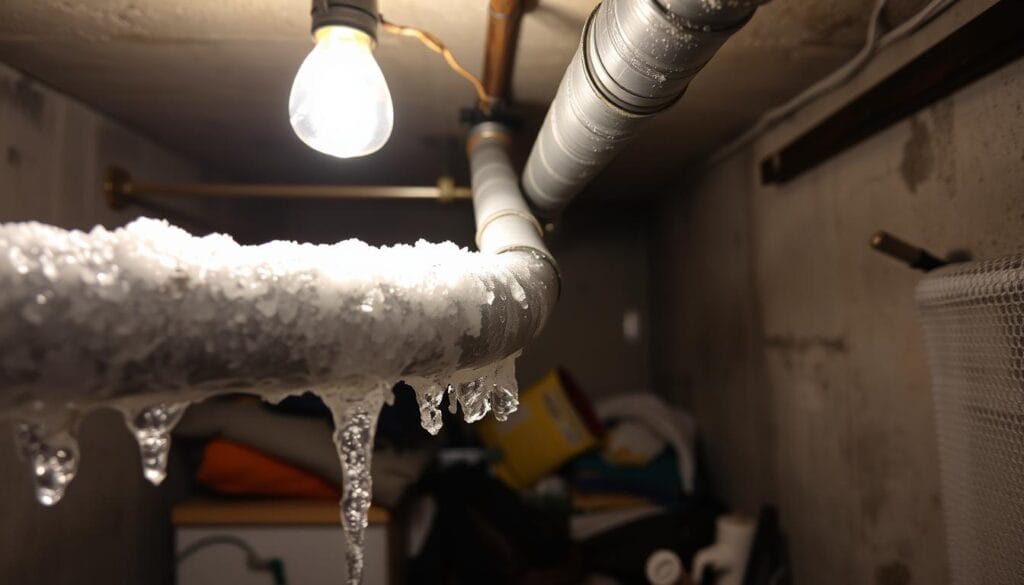
Small drafts through sill plates and gaps can chill a line fast; even brief exposure allows ice to form.
| Location | Exposure speed | Typical sign | Quick action |
|---|---|---|---|
| Exterior walls / kitchens | 6–8 hours | Cold cabinet, low flow | Open cabinet, run a thin stream |
| Garages | Overnight | Very cold pipes | Close doors, add temporary heat |
| Crawl spaces | Rapid with drafts | Chill near sheathing | Seal gaps, insulate runs |
We advise checking cabinets and long runs first. If you have concerns in this area, call Lord Mechanical LTD at 6046703737 for local help.
Emergency Frozen pipe prevention and thawing
When a tap suddenly slows, quick checks can stop a small freeze from becoming a major repair. First, test other fixtures: if one faucet is weak while others flow, you’ve likely found the affected section.
First moves
Open the affected faucet before you apply heat so trapped pressure can vent. Lay down towels and place a bucket beneath the area to catch drips.
Safe heat only
Use a hair dryer on low, keeping it moving 15–20 cm from the metal. Warm towel wraps work well too; swap them often to keep steady heat along the run.
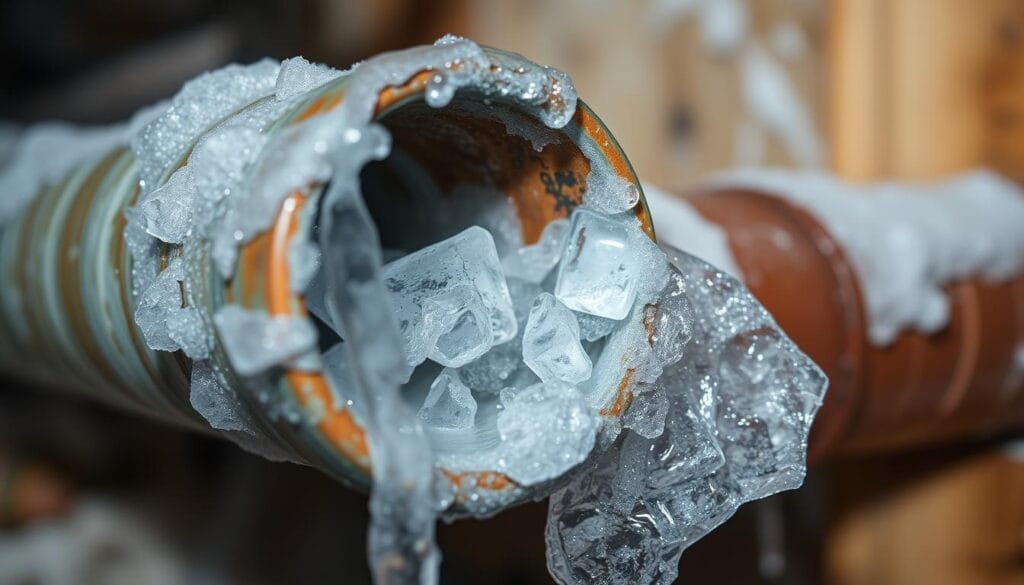
Where to look first
Check runs along exterior walls, under sinks, inside crawl spaces, garage ceilings, and chase areas beneath overhangs. These are the coldest zones in our region.
Thawing technique
Always start at the faucet and work back toward the colder area. This reduces sudden pressure spikes that can cause a burst.
What not to do
Never use an open flame or concentrate a space heater inside a wall void. Do not force a stiff valve or bang on rigid fittings.
Watch for leaks
If you see bulging, misting, or hear spraying, shut the main immediately and call Lord Mechanical LTD at 6046703737. After flow returns, run water for a few minutes and inspect fittings for weeps.
If you smell gas or hear sizzling behind a wall, evacuate and call utilities before returning.
| Action | Why it matters | Quick tip |
|---|---|---|
| Test multiple fixtures | Isolates the frozen section | Start where a faucet runs weak |
| Open faucet first | Relieves trapped water pressure | Use towels and a bucket |
| Apply gentle heat | Melt ice safely without stress | Hair dryer on low or warm towels |
| Stop if leaks appear | Prevents major water damage | Shut main and call 6046703737 |
Safeguard your North Vancouver home tonight during a cold snap
When temperatures fall, moving a little water and warm air near vulnerable runs helps avoid breaks and leaks. Tonight’s checklist focuses on simple, fast actions you can do in under 15 minutes.
Act now: keep the same thermostat setting through the night so wall cavities stay above freezing. Hold temperature steady rather than cutting back aggressively.
Keep a pencil-thin drip and open under-sink cabinet doors
Set a faucet on the farthest run to a pencil-thin trickle. That small flow keeps water moving and relieves pressure if a section begins to constrict.
Open under-sink doors on exterior-wall vanities to let warm room air circulate. Remove cleaners or chemicals for safety before you leave doors open.
Hold a steady thermostat and add safe, CSA-listed space heater warmth
Close garage doors if supply lines cross that space. Cold air in the garage can chill lines that run into the house.
If extra warmth is needed, use a CSA-listed space heater on low to raise room air temperature. Keep the heater clear of combustibles, observe required clearances, and never leave it unattended.
- Insulate exposed pipes with snap-on foam or wrapped fibreglass near crawl spaces and cold areas.
- Seal drafts at rim joists and pipe penetrations with foam or towels for a temporary fix.
- Expect condensation during warming; place towels and a bucket under the cabinet or in the crawl space.
- Can’t restore flow? Minimise water use and call us at 6046703737 for guidance or service.
| Action | Why it matters | Quick tip |
|---|---|---|
| Set a pencil-thin trickle | Keeps water moving and reduces pressure build-up | Use the farthest faucet from the main |
| Open cabinet doors | Allows warm air to reach exposed runs | Remove harmful cleaners first |
| Use CSA-listed space heater | Raises ambient air safely when needed | Run on low, keep clear, and never leave unattended |
Long-term prevention and when to call a pro
Plan now to keep vulnerable lines out of cold cavities and reduce repeat repairs.
Insulation matters: wrap exposed runs in attics, basements, garages and crawl spaces with foam sleeves. Add building insulation and seal gaps at sill plates, windows and doors to protect exterior walls and the line that runs nearby.
For chronic cold areas, install self-regulating heat trace on the line and power it from a GFCI outlet. Upgrade outside spigots to frost‑free hose bibs and remove garden hoses before winter.
Practical fixes during renovations
When you renovate, re-route supply lines out of exterior walls into conditioned space. If rerouting isn’t possible, add continuous insulation behind cabinets and fit isolation valves and drains so a single section can be winterised quickly.
“Labelled valves and clear access save time and prevent water damage.”
- Wrap pipes with foam and seal air leaks at penetrations.
- Use heat trace for problem lines and upgrade exterior fittings.
- Monitor pressure after a thaw; any weep or stain may mean repair is needed.
If you spot bulging, active leaks, an inaccessible frozen section, or concerns at the meter or water meter entry, call a North Vancouver plumber right away at 6046703737. We serve North and West Vancouver and handle re-routing, heat trace installs, valve replacement and permanent fixes to protect your home.
Conclusion
Simple actions tonight can stop small freezes from turning into major repairs tomorrow.
Keep a pencil‑thin trickle at an at‑risk faucet to keep water running and reduce the risk of a burst. Open cabinet doors on exterior vanities so warm air reaches exposed pipes near the wall.
Apply gentle heat with a hair dryer on low or warm towels, working from the faucet back toward the colder section. Never use an open flame and avoid pointing a space heater into a void.
If pipes frozen in a hidden section won’t respond, or you spot misting, bulging or a leak, shut the main and minimise water use. If the problem is near the meter or water meter entry, call a licensed pro.
We serve North Vancouver and West Vancouver. For same‑day support to protect your home and restore flow, call Lord Mechanical LTD at 6046703737.