

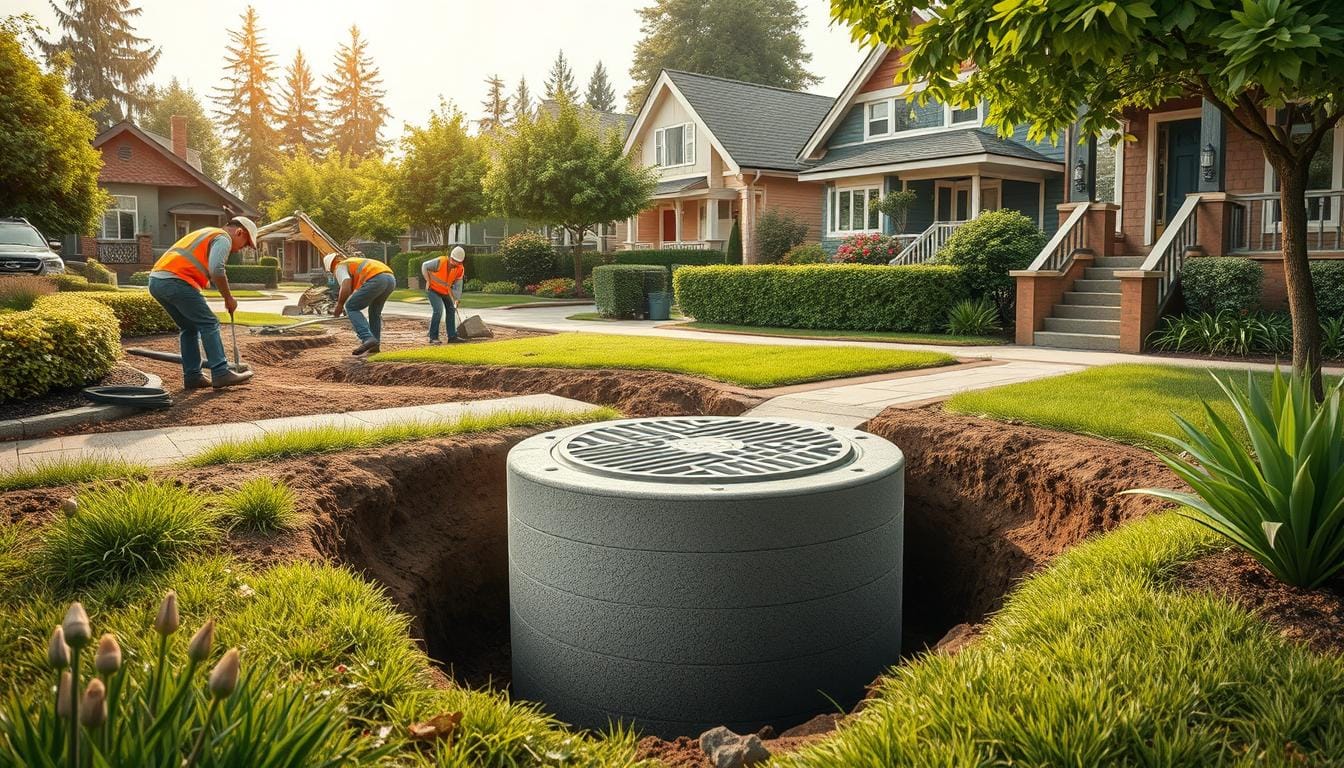
Could one simple drain stop months of soggy lawn and expensive foundation repairs? We open with that question because homeowners and businesses in Vancouver face steady rain and need reliable storm control.
We explain how a gravity-fed catch basin gathers excess water and sends it away through a connected pipe and gravel bed. This small system often sits about a foot deep; we recommend digging the hole to basin depth plus six inches of gravel before placing the unit.
Proper siting and backfill matter. Good gravel around the unit improves flow and reduces sediment build-up. For multiple runs or tricky yards, we tell you when to DIY and when to call pros with trenching tools that save time and protect underground utilities.
Our local team serves North Vancouver and West Vancouver. Call Lord Mechanical LTD at 604-670-3737 to discuss a plan that keeps water moving and your property dry.
Key Takeaways
- A small, well-sited catch basin protects your property by collecting and directing excess water.
- Typical residential units sit about a foot deep; add six inches of gravel under the unit for better drainage.
- Backfill with gravel to improve long-term performance and reduce maintenance.
- Use pros for multiple runs or when trenching equipment and utility checks are needed.
- Lord Mechanical LTD supports Vancouver properties—call 604-670-3737 to plan your system.
Why drainage matters in Vancouver’s climate
Vancouver’s steady rain makes proper drainage a year‑round priority for every property owner. Seasonal water raises hydrostatic pressure around footings and can lead to foundation settlement, basement seepage, and erosion.
Effective drainage prevents costly damage. In low‑lying spots, standing water invites flooding and ruins lawns, hardscapes, and entryways. A point collection device like a catch basin helps gather concentrated runoff and routes it to safe outlets or storm systems.
Systems often work best when paired. For example, a French drain may slow flow, but heavy rain can overwhelm it unless you add endpoints and proper outlets. Right‑sizing the basin and outlet capacity matters for peak storms.
We recommend planning before the wet season. Position components at location low spots, tie into downspouts, and route flows away from foundations. Our team handles high‑water scenarios across North Vancouver and West Vancouver—call 604-670-3737 for an on‑site assessment.
Plan first: site assessment, slope, and local codes in Canada
We begin by watching how rain moves across your property. Stand in the yard during or after a heavy storm and mark the exact location where water and debris collect. Install the unit at that lowest point so it captures concentrated flow.
Set clear slope and depth for conveyance runs so gravity moves water to the outlet. Map surface grades, design the trench to slope toward the discharge, and set the top of the basin flush or slightly below paved surfaces. The invert elevation must sit lower than contributing areas to keep steady flow.
Before you dig, call BC One Call and confirm utility locates. Check City of Vancouver and district bylaws for storm connections, setbacks and permitted discharge points. Coordinate gutter downspouts and nearby drains to avoid overloading the system.
- Observe rain to find the problem point.
- Plan trench slope, hole depth and level for grates.
- Verify codes and utility locates before work begins.
If you want help planning or need an on-site review in North or West Vancouver, call Lord Mechanical LTD at 604-670-3737.
Tools and materials you’ll need for a reliable system
A reliable system starts with clear choices about materials and protective gear. We list the essential parts and tools so you can plan accurately and avoid common mistakes.
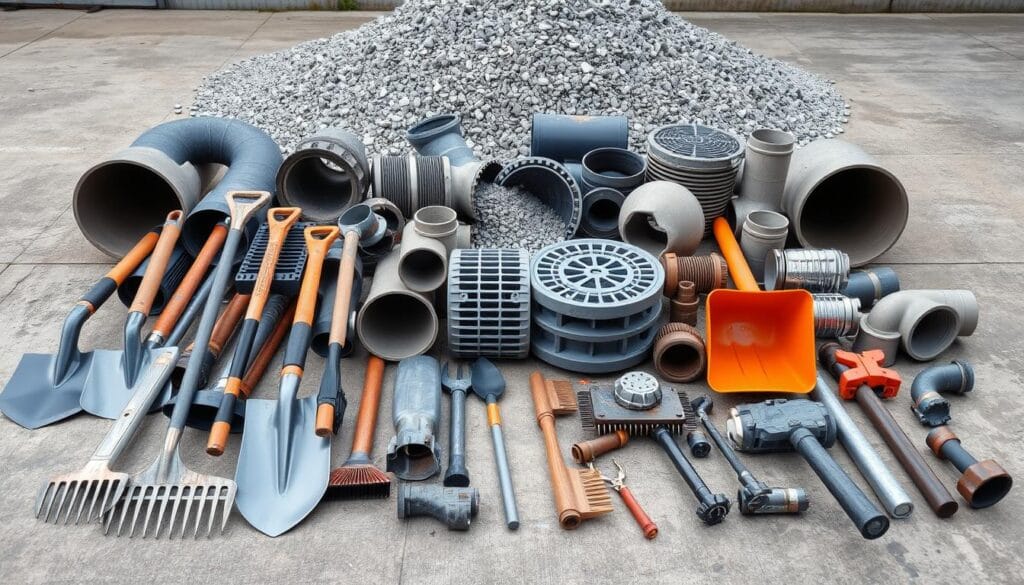
Key components: Choose the basin type and matching grate for the load—concrete or metal for driveways, polymer for lawns. Add a pop-up emitter at the outlet and include debris baskets where needed to catch solids.
- Pipes: 4-inch sewer/drain pipe is standard for yard runs; ensure the bell end faces up‑grade toward the basin.
- Sealants and fittings: connectors, adapters, and silicone caulk at sleeves reduce leaks.
- Gravel and bedding: place six inches of washed gravel under the unit and use geotextile if soils are fine.
- Tools and layout: trenching shovel, spade, hand tamper, stakes and string, and spray paint to keep slopes true.
- PPE: safety goggles, gloves and hearing protection; use dust suppression if cutting concrete.
Final tips for homeowners: compact backfill to prevent settling and support sidewalls so the sleeve does not carry pipe weight. For larger runs, use sturdy drainage pipes and consider a compactor to densify bedding and backfill.
If you want help selecting parts or planning the work in North or West Vancouver, call Lord Mechanical LTD at 604-670-3737.
Catch basin installation: a step-by-step How‑To
We guide you through each practical phase so water moves off your property reliably.
Excavate and protect the site. Mark alignment with stakes and string, then remove turf and dig the hole to the unit depth plus six inches for gravel. Place spoils on plastic sheeting and close the sheet nightly to protect the lawn.
Prepare bedding and the chamber
Place a minimum six‑inch gravel pad at the bottom. Drill several weep holes in the bottom basin to prevent small pools of water.
Pipe connections and slope
Dry‑fit the inlet and outlet, then connect 4‑inch pipe drainage runs. Make sure the bell end points up‑grade toward the basin. Extend the pipe 3–4 inches into the chamber and seal sleeve joints with silicone.
Backfill, compact and finish
Support the pipe with gravel so the sleeve carries no load. Install the pop‑up emitter on a gravel bed and keep the cap clear for easy cleaning. Backfill with gravel or sand in lifts, compacting to finish flush with the surrounding ground and ensure the top grate sits level.
If you prefer professional help in North or West Vancouver, call Lord Mechanical LTD at 604‑670‑3737.
Driveways, patios, and yards: choosing the right basin, grate, and surface treatment
Hard surfaces demand stronger grates and careful cutting to keep water flowing and traffic safe.
We match materials to the place and load. For driveways and patios, concrete chambers and steel or cast‑iron grates resist heavy use and salt. In lawn and planting areas, polymer units and decorative grates preserve lawn aesthetics and reduce compaction.
Cutting and restoring concrete: mark cutting lines, verify utilities, and use a wet diamond blade for cleaner, low‑dust cuts. Size trenches so pipes have clearance on both sides and curves remain smooth to limit head loss.
| Surface | Recommended Top | Grate Type | Key Benefit |
|---|---|---|---|
| Driveway | Flush or 6 mm below | Cast iron / Steel | Load rating for vehicles |
| Patio | Level with finish | Concrete / Decorative metal | Durable and attractive |
| Yard | Slightly below turf | Polymer / Lawn‑friendly | Minimal soil disturbance |
We place the unit at the lowest area so water naturally converges. After finishing, compact and saw‑cut edges for a neat look. For complex cuts or traffic‑rated assemblies, call Lord Mechanical LTD at 604-670-3737. We serve North and West Vancouver.
Common DIY mistakes that cause flooding and damage
A small mistake in pipe slope can turn a solid drainage plan into a recurring flood problem.
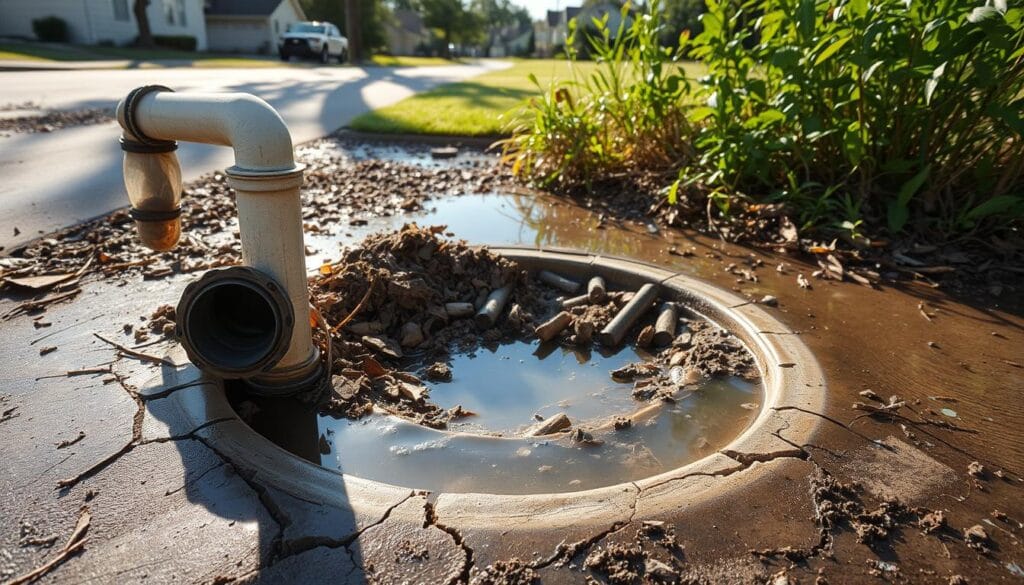
We see projects fail when the unit is placed away from the true low point. Water then pools nearby instead of flowing into the collection point. That error reduces capture efficiency and invites ongoing flooding.
Incorrect trench slope and shallow pipe depth slow flow. Slow runs let sediment and debris settle, which clogs drains and causes repeat maintenance. Always set a steady slope toward the outlet.
Connections, direction, and weep holes
Poor joints and wrong pipe direction are common. The bell end must face up‑grade toward the unit so fittings seat properly. Missing sealants or adapters lead to leaks and movement.
Forgetting weep holes lets small amounts of water sit in the chamber. Standing water creates odour, freeze issues and faster corrosion or damage.
Utilities, codes, and holistic design
Never dig without locates—hitting buried services is dangerous and costly. We always check local drainage rules to avoid fines or forced rework.
Design the whole system so flows don’t back up at a choke point. If you’re unsure about slope, depths, or code, we’ll audit your plan before you dig.
| Common Error | Why It Fails | Quick Fix |
|---|---|---|
| Placed away from low point | Water bypasses the unit, causing pooling | Relocate to true flow line |
| Inconsistent slope in trench | Slow flow, sediment build‑up and clogs | Regrade to required slope |
| Poor joints / wrong pipe direction | Leaks, disconnection, and backflow | Use adapters, sealant; bell end up‑grade |
| Missing weep holes | Standing water and odour | Drill weep holes; allow drainage to subsoil |
Need help getting it right? Call Lord Mechanical LTD at 604-670-3737. We serve North Vancouver and West Vancouver and will audit slope, depth and code before you dig.
Where should your system discharge? Outlets, waterways, and system tie‑ins
Deciding where your drainage ends affects both neighbours and local waterways. We assess legal options, site soils and how much water you must move during peak storms.
Daylighting, approved outlets, and on‑site infiltration each have pros and cons. A pop‑up emitter on a compacted gravel bed is simple: place at least six inches of gravel under the pipe end and keep the self‑closing cap clear for cleaning.
Pop‑up emitters, dry wells, and when to consider a French drain
A dry well stores runoff and returns it to the ground through gravel or porous walls. It works well where soils percolate. A French drain uses perforated pipe in gravel to collect sheet flow across a wide point.
In very rainy areas we pair a French drain with a catch endpoint so perforated runs don’t flood when storms exceed percolation rates.
Integrating downspouts and gutter drains without overloading
Balance flows by splitting downspouts across multiple runs. Size each outlet to handle peak flows so the system does not back up at the lowest point.
| Option | Best Use | Key Feature |
|---|---|---|
| Pop‑up emitter | Daylighting to lawn/ditch | Self‑closing cap; gravel bed |
| Dry well | On‑site infiltration | Porous walls or gravel storage |
| French drain | Broad sheet flow | Perforated pipe in gravel |
- We check bylaws and municipal permissions for tying into outlets or drains.
- We choose discharge points away from foundations, property lines and sensitive waterways.
- We add cleanouts and accessible fittings so you can flush pipes and maintain the system each season.
Need help choosing the right discharge strategy? We’ll assess your lot and design a compliant plan in North and West Vancouver. Call Lord Mechanical LTD at 604-670-3737.
Post‑installation maintenance for homeowners and businesses
Seasonal upkeep prevents clogs and keeps water moving off your property. Regular checks protect your landscape and building from avoidable damage. We recommend simple tasks you can do in a short amount of time.
Seasonal inspections: Inspect twice a year—spring and fall—or more often after heavy storms. Remove leaves and sediment from grates and clear debris that blocks flow. Shovel or vacuum accumulated material from the bottom basin so the unit drains fully.
Flushing lines, monitoring standing water, and winter care
Periodically flush the line with a hose to clear fines and confirm end‑to‑end flow. Watch for standing water after storms; persistent pooling signals obstructions, slope issues, or outlet problems.
In winter, keep the pop‑up emitter cap clear and use non‑corrosive de‑icers near the top grate to avoid ice blockages that harm components.
When to call a pro
If runs are long or sediment is deep, call a professional for vacuum cleaning, structural repairs, or upgrades. Timely pro service saves you time and prevents costly damage over the long term.
| Check | When | Action |
|---|---|---|
| Grates & debris | Spring / Fall | Clear leaves, top up gravel if needed |
| Bottom sediment | Yearly or after heavy storms | Shovel or vacuum; inspect holes and seals |
| Flow test | After cleaning | Flush with water; confirm outlet clears |
| Winter care | Pre‑freeze | Keep emitter cap clear; use safe de‑icers |
Need help in North or West Vancouver? We’ll schedule a service visit to inspect seals, joints and long runs. Call Lord Mechanical LTD at 604‑670‑3737 for fast, local support that protects your home or business.
Conclusion
A smartly routed drainage plan keeps excess water moving off the place and out of harm’s way.
At the low point, a catch basin collects runoff and ties into pipes that carry water to a safe outlet. Position the unit where sheet flow concentrates so a single point captures heavy events.
Thoughtful design protects your foundation, hardscapes and yard from erosion and flooding. Proper grade and slope kept during installation make the difference over time.
Use the right mix of systems — a basin with a French drain or dry well — and keep gutters working with surface grades to avoid overloading any one element.
Check grates, clear debris and test flow regularly. Proactive care cuts the chance of standing water returning and extends service life. For local help in North and West Vancouver, call Lord Mechanical LTD at 604-670-3737.