

Curious whether a properly designed drainage system can stop seasonal seepage and protect your foundation for years? We explain what a drain tile system is and why it matters in Vancouver’s rainy climate.
We show how an engineered approach integrates gutters, grading and perimeter waterproofing to keep water away from your home and basement. You’ll learn the core components — perforated tile, pipe runs, sump connections and discharge — so you know what lies under your yard or slab.
As a local team, we focus on Vancouver’s ground conditions and rainfall patterns to tailor solutions for North and West Vancouver homes. We also outline when interior methods suit better than exterior French solutions and why professional design and installation ensure code compliance, durability and minimal landscape disruption.
Key Takeaways
- Well‑designed systems keep water away from your home and foundation.
- Perforated tile, pipe runs and sump connections are core components.
- Interior versus exterior approaches depend on site access and risk.
- Professional work reduces moisture risk and protects property value.
- Lord Mechanical LTD serves North and West Vancouver — call 6046703737 for an assessment.
Understanding a drain tile system and why it matters in Vancouver
Capturing groundwater before it reaches your walls protects the foundation and keeps basements dry.
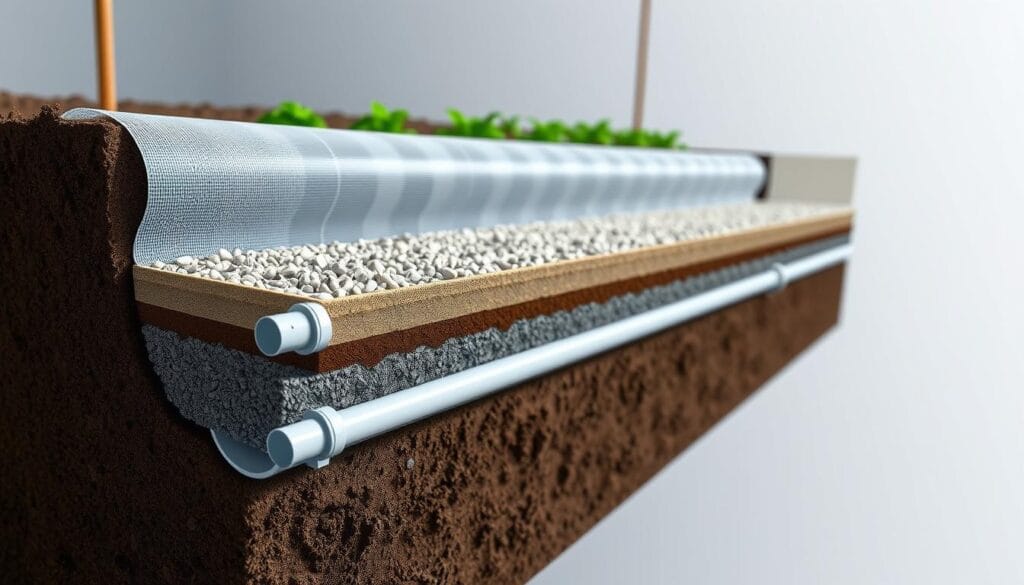
We define a drain tile as a tile system of perforated pipes placed along the foundation perimeter or under the slab. Modern systems use PVC piping that collects water through a gravel and fabric filter. The collected flow then heads to a sump or a safe discharge point.
How it works
The core idea is simple: intercept water in the soil at the wall‑footing junction and move it away before it builds pressure on the wall or slab.
Interior vs exterior solutions
Exterior perimeter runs drain to daylight when grading allows. Interior options route to a sump and a pump when outside access is limited.
Key components
- Sloped trench and washed gravel or fabric sock around the perforated pipe.
- Sump pit and pump where gravity discharge isn’t possible.
- Connections that keep water away from the foundation and footing.
| Feature | Exterior | Interior |
|---|---|---|
| Access | Yard trenching | Concrete cutting |
| Discharge | Daylight | Sump and pump |
| Landscape impact | Higher | Lower |
Next step: check gutters, downspouts and grading. If you need advice for North or West Vancouver, call Lord Mechanical LTD at 6046703737.
Four signs you need interior drain tile or perimeter drains
Recognizing persistent moisture signs helps you decide whether an interior drain or exterior perimeter solution is needed. We inspect how water moves around your foundation and recommend the best approach for your house.

- Ongoing dampness in the basement — If you still notice moisture or a musty odour after fixing gutters and grading, groundwater is likely entering near the footing. Consider a drain tile system that moves flow to a sump or discharge.
- Wet walls and visible staining — Efflorescence, peeling paint, or damp spots on walls show water wicking through and rising pressure against the foundation.
- Seepage through the floor — Water at cove joints or hairline cracks suggests under‑slab migration that interior drain solutions capture before it reaches living areas.
- Plans to finish or store valuables — If you will finish the basement, add an interior drain tile now to protect finishes and avoid later demolition from flooding.
| Indicator | Likely source | Recommended action |
|---|---|---|
| Persistent damp or odour | Groundwater near foundation | Interior drain and sump evaluation |
| Wet walls / staining | Water wicking through foundation | Perimeter drainage or interior system |
| Seepage at floor joints | Under‑slab migration | Interior drain and sump pump |
| Recurring puddles after storms | Poor surface runoff or soil saturation | Perimeter drains and grading review |
We assess foundation, wall finishes, and slab conditions to determine whether interior drain or perimeter drains best solve the issues. For a local inspection in North or West Vancouver, call Lord Mechanical LTD at 6046703737.
Planning your project: tools, materials, and code considerations
Before work begins, we map access, discharge points and safety zones so the project runs cleanly and on schedule. This planning step reduces surprises and keeps your home comfortable during the work.
Essential tools
For interior work we bring safety glasses, dust masks, hammer drills and a shop vacuum to manage concrete breakout and dust.
Other hand tools include a spade, trowel, wrecking bar, utility knife and a wheelbarrow for debris and material handling.
Materials checklist
Key materials are perforated drain tile, washed gravel or crushed stone, 6‑mil poly vapour barrier, concrete for patching, a sump basket and a matched pump.
We make sure the pipe sizes, filter fabric and sump capacity match expected flows for your basement and ground conditions.
Slope, discharge and code
We set a consistent slope toward the chosen discharge location and verify elevations with a level so drainage performance is reliable.
Where gravity allows, perimeter routes day‑light; otherwise interior systems route to a sealed sump and pump sized for the area.
Note: soil type, trench depth and waterproofing tie‑ins at the wall‑slab joint determine long‑term performance.
- We plan trench routes, disposal logistics and dust control before breaking concrete.
- We coordinate waterproofing at penetrations so water cannot bypass the new system.
- Before construction, we double‑check gutters, grading and downspouts to confirm simpler fixes are in place.
If you need a local assessment in North or West Vancouver, call Lord Mechanical LTD at 6046703737 for expert guidance.
Drain tile installation step by step
This step‑by‑step guide shows how exterior and interior methods move subsurface water safely away from your home.
Exterior approach
Plan the perimeter route and locate utilities, then trench along the foundation. A walk‑behind trencher (rent ≈ $50) can cut a consistent trench while you lift sod in 3–4′ sections.
Set a 1–3″ pea gravel bed, lay perforated pipe with slope toward discharge, surround with washed gravel and wrap with geotextile before backfilling.
Snap lines, cut and remove the concrete slab, then excavate to the planned sump location. Add crushed stone, place the piping and route to a sump basket.
Install 6‑mil poly, fit a pump and re‑concrete the floor flush for a clean finish.
Discharge and finish
- Daylight lines where grade allows; otherwise connect to a sealed sump and a sized pump with check valve.
- Waterproofing touchpoints: seal the cove joint, penetrations and footing transitions so water cannot bypass the system.
- Cleanup: control dust, haul spoil, replace dirt and sod, then seed and water for restoration.
We tailor each project for Vancouver soil and saturation. Call Lord Mechanical LTD for a local assessment at 6046703737.
Drain tile installation costs in Canada and DIY vs. pro
Understanding costs helps you budget and choose the right approach for your house.
Exterior perimeter systems commonly range from about $20–$60 per linear foot. Interior solutions are higher because of concrete breakout, restoration and sump work, typically about $60–$100 per foot.
| Component | Exterior (per foot) | Interior (per foot) |
|---|---|---|
| Pipe, gravel, fabric | $10–$25 | $15–$40 |
| Labour (excavation / concrete) | $8–$25 | $30–$50 |
| Disposal & restoration | $2–$10 | $10–$20 |
| Total typical range | $20–$60 | $60–$100 |
What drives cost
Labour for digging trenches or breaking slab dominates budgets. Disposal, access difficulties and finishing work add to time and expense. Materials are a smaller share.
When DIY makes sense
Skilled homeowners can save by installing drain and tile system components on small projects. You must plan hauling, permits and safe concrete cutting.
When to call a pro
Hire a pro to make sure slope, filtration, sump connections and code compliance are correct. A professional system helps protect home value and reduces long‑term risk.
Note: refer to IRC Chapter 33 for guidance on storm drain systems and local code requirements when planning work.
Need a quote? For fixed‑scope pricing in North or West Vancouver, call Lord Mechanical LTD at 6046703737. We’ll help you weigh DIY savings against the benefit of a tested, lasting system.
Conclusion
Predictable water control protects your foundation and keeps the basement dry. A right‑sized drain tile strategy channels flow away from footings and reduces hydrostatic pressure on your home.
We design a system that pairs grading and waterproofing with correctly sized pipes and a reliable sump when needed. Quality trench prep, concrete patching and neat dirt restoration prevent callbacks and protect finished floors.
For clear pricing and a tidy job from start to finish, call Lord Mechanical LTD at 6046703737. We serve North Vancouver and West Vancouver and will compare interior and exterior approaches to find the best path for your property.