

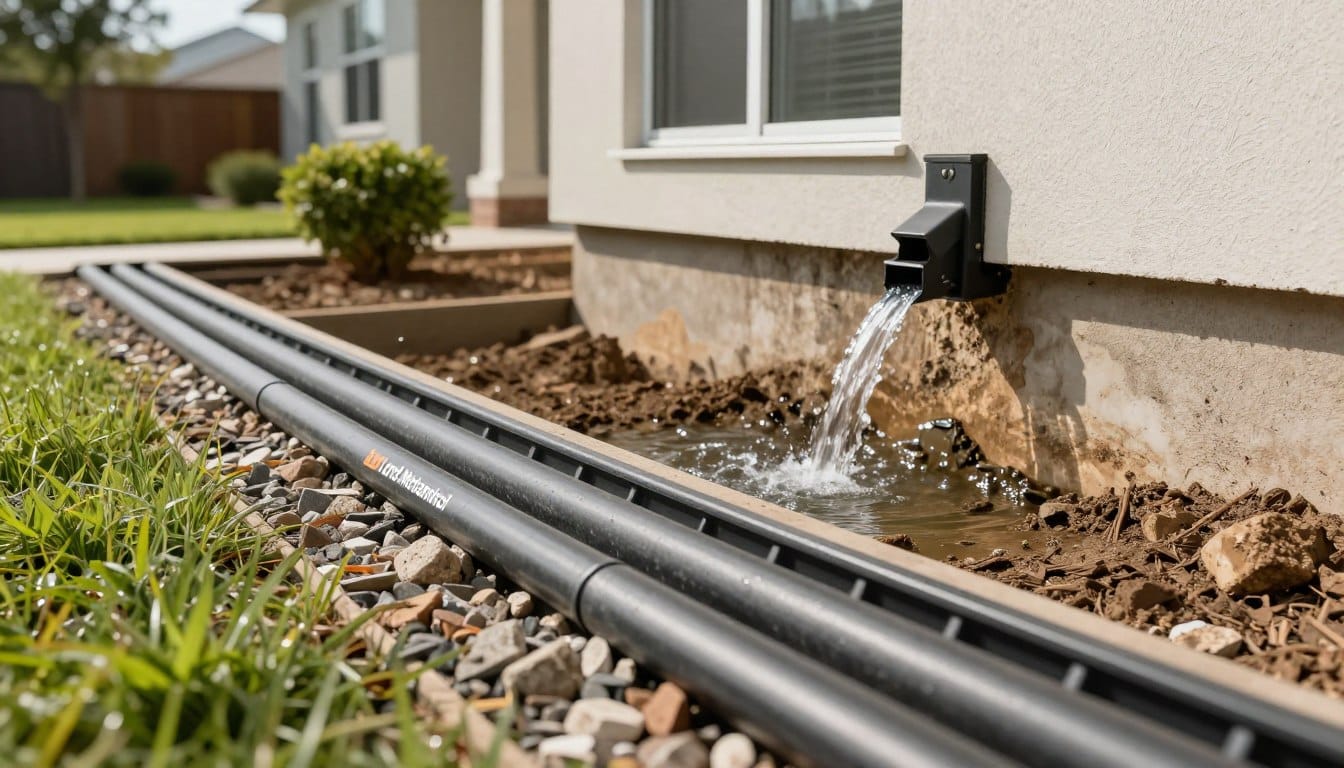
Surprising fact: in parts of Metro Vancouver, up to one in five basements shows signs of seepage after heavy rain or rapid snowmelt.
We explain in plain terms what foundation perimeter drains do and why they protect your house or building in wet local conditions.
A perimeter system moves excess water away from the base of a home to stop seepage and costly repairs. Without it, rain and melting snow can pool near the foundation and find its way into below‑grade space.
In this guide, we set clear expectations: what you can check visually, common planning mistakes, and when you should call a pro for excavation, piping or sump work.
Good drainage is not just putting a pipe in the ground. It is a coordinated system that routes water to a safe discharge point alongside grading, downspout extensions and smart landscaping.
Key Takeaways
- Perimeter systems keep water away to reduce moisture risk in below‑grade space.
- Simple visual checks can flag issues early before repairs become costly.
- Drainage works with grading and downspouts as part of a full water‑management plan.
- We recommend professional assessment for excavation, piping or sump installations.
- Call Lord Mechanical LTD at 604‑670‑3737 for local advice in North and West Vancouver.
What a Perimeter Drain System Is and What It Protects
Subsurface piping gathers rain and meltwater and carries it to a safe discharge point away from the house.
We define this system as an underground path that intercepts both surface runoff and groundwater before the water reaches your basement walls. In practice, you see a trench and pipe that work together to keep wet soil from pressing on lower wall assemblies.
What the system protects
- Footings and wall assemblies: reduced hydrostatic pressure keeps structural elements drier.
- Interior finishes and stored items: less seepage means fewer ruined possessions and repairs.
- Indoor air quality: chronic dampness and mould risk drop when water is moved away from the base.
Names you’ll hear in Canada
Perimeter drain, weeping tile and French drain are often used interchangeably by contractors and inspectors. Clay tiles are rare now, but the terms still help you communicate clearly when arranging assessments or repairs.
What can happen without proper drainage
If runoff and groundwater aren’t routed away, moisture marks and seepage can appear on basement walls. Rising hydrostatic pressure may lead to cracks, damp finishes and costly damage over time.
For North and West Vancouver advice, call Lord Mechanical LTD at 6046703737. We can assess whether the issue is a buried system problem or a simple surface runoff fix near the house.
How foundation perimeter drains Work Around Footings and Basement Walls
The anatomy of a proper drainage run starts with perforated pipe set beside the footing to catch migrating water.
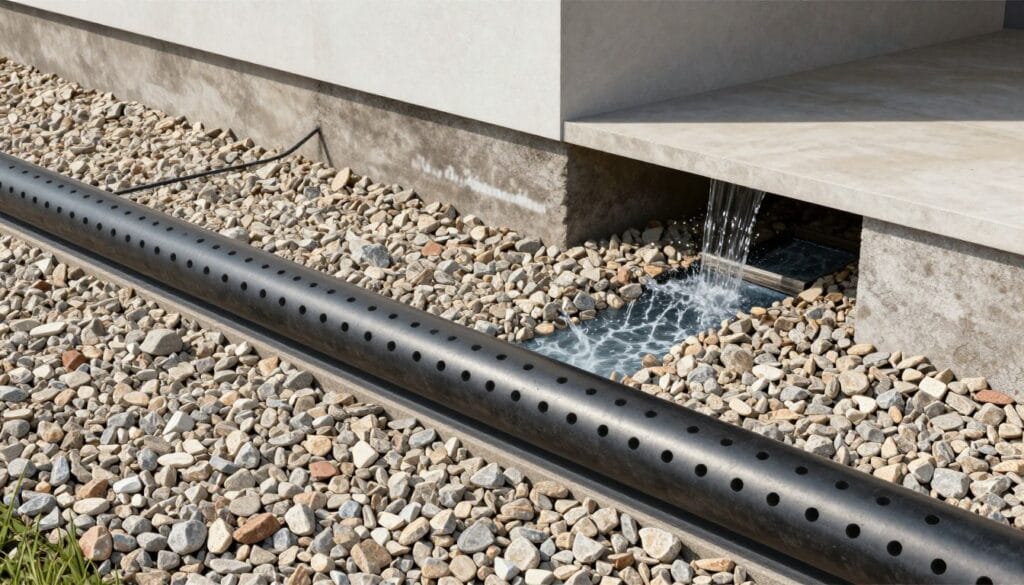
Perforated pipe design
Modern installations use plastic or PVC pipe with many small holes or slits to admit water. Different types resist clogging in northern soils, so material choice matters when you compare performance and cost.
Why a mesh sock and filter fabric matter
A mesh sock wrapped around the pipe keeps fine soil out. Filter fabric over the gravel adds a second defence so the pipe stays clear and water flow continues.
Gravel and stone layers
Graduated gravel and larger stone form a drainage field that guides water toward the pipe. Proper layering reduces mud migration and keeps the drainage system working longer.
Slope to a discharge point
A run laid perfectly level can fail. The pipe must slope to a real outlet or sump so water moves away during heavy rain or rapid snowmelt. Otherwise the foundation drain fill and the system will be overwhelmed.
We recommend a professional assessment for pipe installed near the footing and along the foundation wall. Call Lord Mechanical LTD at 6046703737 for North and West Vancouver advice.
How to Spot Perimeter Drainage Issues Before Water Damage Spreads
Small stains and damp spots can be the first hint that water is finding its way toward your basement. Check basement walls for streaks or salt deposits after rain. These marks usually signal intermittent seepage that can worsen during heavy rainfall or rapid snowmelt.
Musty odours or persistent dampness are not just “normal basement smell.” They often mean ongoing moisture that will harm finishes and stored items if left unchecked.
Outside, watch for puddles near the foundation. Standing water on the surface often points to poor yard slope or downspouts dumping runoff too close to the home.
- Early warning checklist: stains on basement walls, musty smell, damp floors, and puddles near the house.
- Document: take dated photos, note weather when you see the issue, and record how long spots persist.
- Act early: catching problems now usually saves far more than retrofits after water causes visible damage.
If you spot these signs, call Lord Mechanical LTD at 6046703737 for a local assessment in North and West Vancouver.
How to Plan Proper Grading and Drainage to Keep Water Away From the House
A well-graded yard keeps runoff moving away from your home before it reaches the low parts around the walls.
Most experts recommend a practical target: a 6–15 cm drop over the first 3 m from the house. This gentle slope guides surface water away and reduces how much the subsurface system must handle.
Loose backfill beside the foundation becomes a fast lane for groundwater. If soil is uncompacted, water travels quickly toward basement walls. Proper compaction and using coarser fill near the footing helps slow that flow.
Landscaping changes—new patios, raised beds or added turf—can alter the flow of stormwater over time. A change that looks minor can redirect runoff toward a neighbour and create liability if damage follows.
Plan for long-term performance: pick topsoil that drains, route downspouts to a safe outlet, and consider surface swales where needed. Small choices now keep water away and lower issues later.
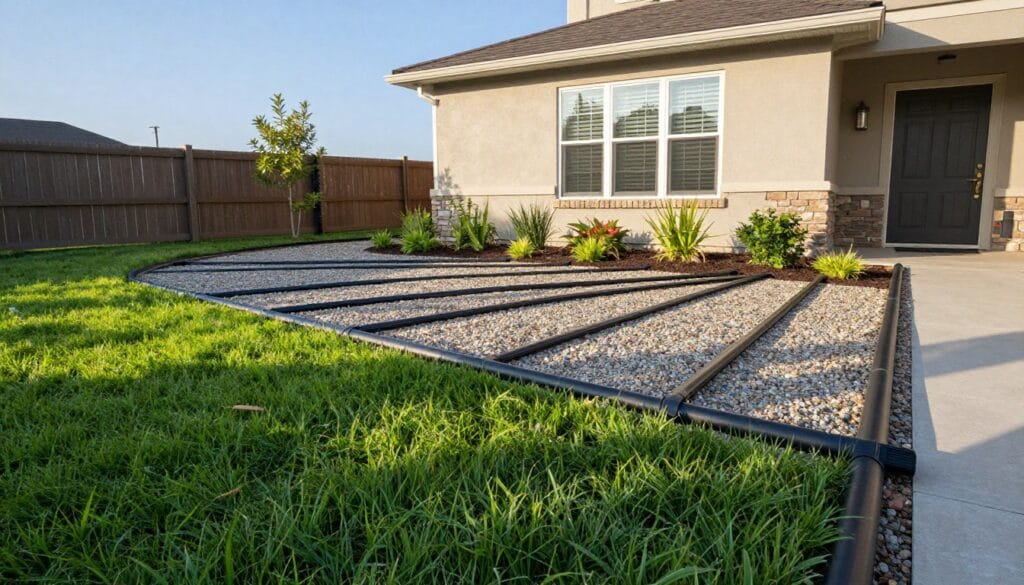
Quick comparison of common yard fixes
| Fix | Best use | Key benefit | Maintenance |
|---|---|---|---|
| Regrade 3 m strip | Low-slope yards | Directs surface water away | Low |
| Compact backfill | New builds, repairs | Reduces fast groundwater flow | One-off |
| Downspout extension | Roof runoff | Stops pooling near home | Periodic check |
Need help planning? We assess soil, slope and long‑term options for homes in North and West Vancouver. Call Lord Mechanical LTD at 6046703737.
How to Install an Exterior Perimeter Drain and Footing Drain System
Begin by excavating to the footing bottom — that single step determines whether the exterior install will perform over time. We dig the trench to the bottom of the footing so water is intercepted at its lowest route.
Digging and preparing the walls
Unroll a 6‑ft filter fabric and lap it up the foundation wall to separate soil from the drainage field. This reduces long‑term clogging and keeps the drainage system open.
Stone, pipe and connections
Place about 3 in of crushed stone as a stable base and bed for the pipe. Install a 4 in rigid PVC pipe around the footing; rigid pipe resists crushing better than flexible coil and reduces clog risk.
Window wells and finishing
Tie window wells to the run with solid 4 in PVC so debris does not enter the perforated section. Add stone to ~8 in above the top of the footing, wrap fabric over the stone, add ~6 in coarse sand, then backfill with well‑draining granular material.
| Type | Crush resistance | Clog potential | When to use |
|---|---|---|---|
| Rigid PVC | High | Low | Permanent exterior runs |
| Flexible coil | Medium | Higher | Tight bends or temporary fixes |
| Solid PVC (window wells) | High | Minimal | Direct outlet connections |
We recommend a continuous system around the perimeter so the footing drain carries water reliably to the outlet. For North and West Vancouver installs, call Lord Mechanical LTD at 6046703737 for an on‑site review.
How to Handle Low-Slope Lots: Run to Daylight or Add a Sump Pump
When your yard barely falls away, the practical question becomes whether gravity can win or a pump must do the work.
Run to daylight is best when the grade allows a solid pipe to carry water down and out. We aim for a minimum pitch of 1/4 inch per foot; steeper slopes perform better in heavy rain. For runs longer than 200 ft, add a second outlet or increase the outlet size from 4 in to 6 in to avoid bottlenecks.
If the lot lacks pitch at the footing level, we tie exterior drainage into a sump pit. Exterior lines feed the pit through a 6-inch opening in the footing so the sump pump can move collected water away.
Power outages happen during storms. A battery backup for your sump pump can be the difference between a dry basement and costly damage. A sealed, airtight sump cover also helps reduce air leaks and limits radon pathways into the home.
| Scenario | Preferred solution | Key rule |
|---|---|---|
| Clear downhill outlet | Solid pipe to daylight | Min pitch 1/4″ per ft |
| Long run >200 ft | Second outlet or 6″ outlet | Reduce bottleneck risk |
| Low-slope / flat yard | Sump pit + pump | 6″ feed through footing |
We tailor the choice to your lot, then size and test the system for reliable performance. Call Lord Mechanical LTD at 6046703737 for North and West Vancouver advice.
How to Maintain, Clean, or Replace Foundation Drains Over the Years
When clogging returns again and again, the real problem may be a collapsed clay tile or brittle concrete run.
What changes with age: clay and concrete tile installed decades ago can crack, crumble or sink. Over the years these types fail and cause repeated blockages that simple flushing won’t fix.
Common blockage causes
- Soil fines and silt that migrate through lost sock or filter fabric.
- Root intrusion from nearby trees and shrubs.
- Older ridged pipe that traps debris and resists effective flushing.
When to flush and when to replace
We try low‑risk cleaning first: camera inspection and hydroflushing. If the pipe type or collapse prevents reliable flow, replacement is the practical choice.
Serviceability and sewer connections
Adding a surface clean‑out port makes future work simple and less disruptive.
Important: homes that tie footing lines into the sewer system can overload municipal sewers and risk backups. In many cases disconnecting the runoff is the safer long‑term fix.
“Plan repairs to solve the real issue long term — not just the immediate clog.”
For North and West Vancouver assessments, call Lord Mechanical LTD at 6046703737.
Conclusion
Good water control starts with thinking of your property as a single, connected system.
We combine surface grading, gutters and a properly sloped, well‑filtered system to move water away and protect the foundation and lower living space.
Key performance points are simple: use fabric/sock and stone for filtration, provide a real discharge route, and watch changes around the perimeter over time.
Stains, puddles or persistent dampness are your cue to act before visual damage spreads into finished space.
If you suspect an issue, gather notes and photos, then get professional input. For help with perimeter drain work, repairs, sump planning or general drainage troubleshooting in North or West Vancouver, call Lord Mechanical LTD at 604‑670‑3737.