

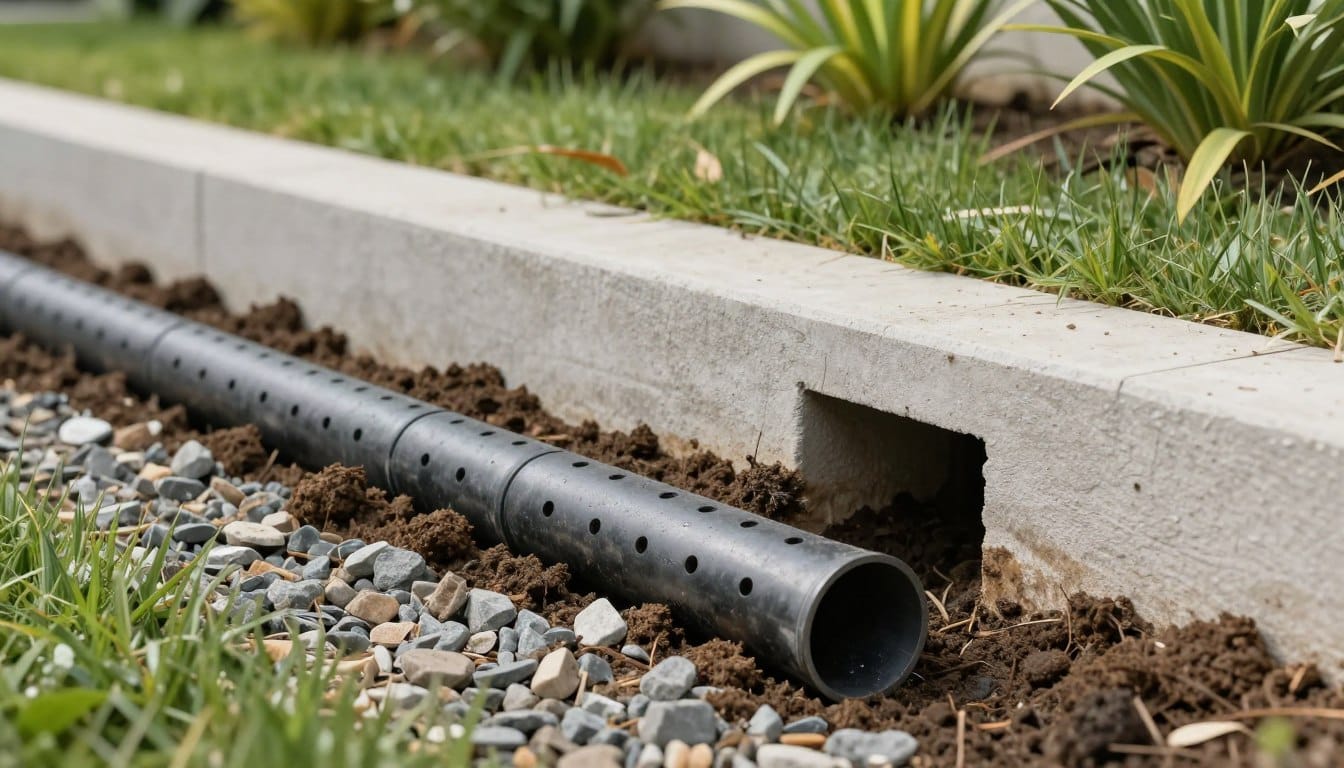
Surprising fact: in many Vancouver-area homes, persistent groundwater causes more costly repairs than wind or theft combined — and most problems start below grade.
We’ll explain, in plain terms, how a drain tile system captures groundwater around your foundation and keeps it from entering the basement. Understanding this early helps you avoid mould, ruined storage and structural damage.
Vancouver’s frequent rain, winter melt and hillside lots push water toward the lowest point of your property. The right drainage and waterproofing approach moves that water away from your home before it becomes a repair bill.
We clarify what a weeping tile network is (and what it is not), and preview interior versus exterior approaches for North Vancouver and West Vancouver homes. Our goal is practical: give you checks to try now, then help you decide if you need a professional assessment from Lord Mechanical LTD.
Call us at 604-670-3737 when you’re ready to protect your foundation and basement areas with proven solutions.
Key Takeaways
- Groundwater is a common cause of basement and foundation damage in Vancouver-area homes.
- A proper drainage and waterproofing plan prevents mould and preserves structure.
- We explain what a weeping tile network does and when interior or exterior work suits your property.
- Start with simple checks; call Lord Mechanical LTD for a professional assessment if needed.
- Acting early saves time and money over major repairs later.
Why water around your home leads to basement and foundation issues in Canada
When heavy rain or fast snowmelt soaks the ground, water often pushes against foundation walls and finds weak spots. Saturated soil raises hydrostatic pressure and forces moisture through joints and tiny cracks in concrete.
Common local causes include intense rainfall, rapid thaw after winter, and sloped lots that funnel excess water toward the house. These forces combine to keep moisture against the base of your home.
How moisture shows up first
Early warnings are easy to spot: a damp basement smell, visible stains or efflorescence, and mould risk on walls. Hairline foundation cracks often appear where the floor meets the wall.
Simple fixes to try first
- Clean and repair gutters so runoff clears quickly.
- Extend downspouts several metres to move water away from the foundation.
- Correct grading so surface water flows away from the home.
If these steps are in place and moisture persists, the cause is likely groundwater. At that point we recommend considering a dedicated weeping tile solution as a next-line defence, and a professional assessment from Lord Mechanical LTD at 604-670-3737.
What drain tile systems are and how they differ from basement floor drains
Many homeowners confuse a basement grate with the piping that actually collects groundwater. We call that piping by several names: weeping tile, perimeter piping, or French drain.
Common terms made simple
Weeping tile refers to perforated pipe laid around the foundation to intercept water before it pools against the wall.
A basement floor outlet is a single point in the slab. It cannot replace a perimeter network designed to gather water all around the foundation.
Where the network sits
Placement matters. An exterior installation sits outside the footing and prevents water from reaching the wall. An interior option runs along the inside edge of the slab and collects water after it moves under the floor.
Why this matters in Vancouver: tight yards or steep sites often make interior work the practical choice even though exterior interception stops water earlier.
- Terminology guides pricing: know whether quotes cover perimeter piping or only a basement floor outlet.
- Same goal: controlled collection and routing of groundwater to a safe discharge point.
Next, we explain how that piping moves water away and protects walls and floors.
How drain tile systems work to move water away from foundation walls
A perimeter collection trench gives groundwater an easier route than your foundation, so water moves away before it soaks walls or the floor.
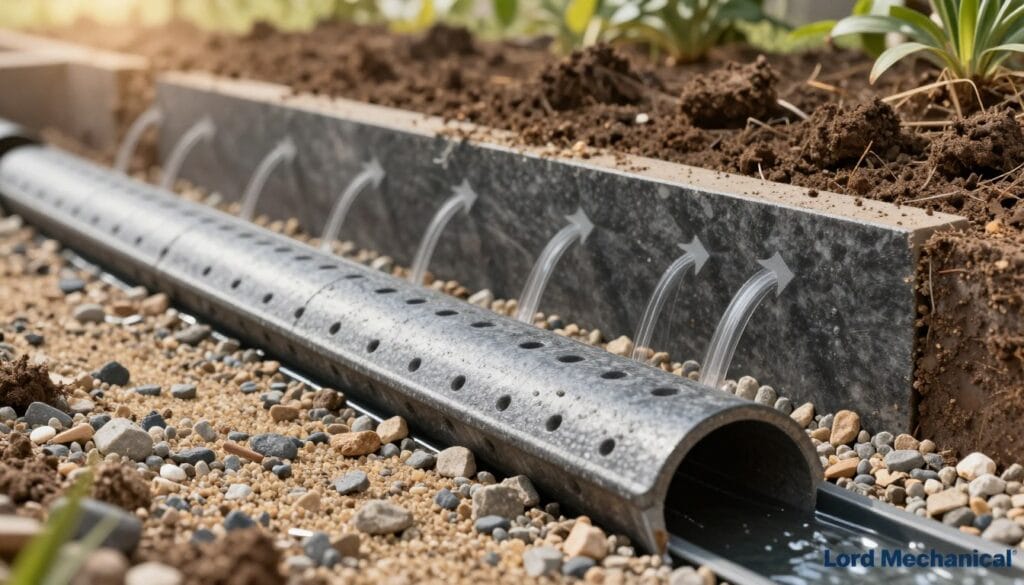
Capturing groundwater before it reaches the basement
We create a low-elevation path around the footing so groundwater travels into the trench instead of through small cracks. Perforated pipe sits in that trench and collects flow along the entire perimeter.
Filtration and flow: gravel and fabric layers
Gravel around the pipe forms a porous layer that speeds flow and keeps fine soil out of the pipe. Installers may add geotextile fabric as a filter layer, though some prefer designs relying on coarse aggregate alone.
Why this matters: good filtration reduces the chance of blockage and keeps the collection pipe working for years.
Discharge options: daylight versus a sump pit
Collected water either flows out by gravity to daylight or routes to a sump pit where a sump pump moves it away. Exterior projects often drain to daylight when lot grade allows it.
Interior setups usually feed a sump pit. A pump then ejects water to an approved outlet. Connecting to a septic system is generally not appropriate and must meet local code.
| Feature | How it works | Typical outlet |
|---|---|---|
| Perimeter capture | Trench + perforated pipe collects groundwater | Daylight or sump pit |
| Filtration layer | Gravel (± fabric) prevents soil intrusion | Protects pipe flow |
| Discharge control | Gravity or pump-based removal | Street, dry well, or pumped outlet |
Note: a perfect collection layout still fails if the outlet clogs, freezes, or violates local rules. Reliable discharge is as important as collection.
Benefit to you: controlled routing of water away reduces moisture, odours, and long-term deterioration of the basement and foundation.
For a site review in North or West Vancouver, call Lord Mechanical LTD at 6046703737. We can assess whether an exterior daylight outlet is viable or if a sump pump is the safer choice.
Key components of a reliable tile system
Long-term protection begins with a well-graded trench, robust piping and a dependable sump arrangement for below-grade basements.
Trench layout and slope along the perimeter
A continuous trench around the footing gives water an easy route to the outlet. Proper slope toward the discharge point prevents pooling and keeps the system working under pressure.
Perforated pipe materials and durability considerations
Modern perforated pipe is usually PVC for strength and flexibility. We look for crush resistance and long-life ratings so pipes hold up in shifting soils.
Covering methods: soil backfill outside vs concrete restoration inside
Exterior work uses compacted soil and coarse gravel to protect the collection layer. Interior installations require clean concrete restoration so your basement is usable again.
Sump pump basics and why many basements rely on it
When gravity discharge isn’t possible, a sump pit and sump pump move collected water to a safe outlet. Check valves, correct pump sizing and accessible pits are key to reliable performance.
What to expect: a complete system combines trench + pipe + filtration + discharge. No single weak part should undermine the whole design.
Questions about materials or what a quote covers? Call Lord Mechanical LTD in North and West Vancouver at 6046703737.
Signs you may need weeping tile systems or interior weeping tile
If you find recurring damp spots in the lower level, the cause may come from groundwater rather than roof runoff. We give a short checklist so you can spot when a surface fix won’t be enough.
Common warning signs
- Wet basement walls even when eavestroughs and downspouts work — this often means water is pushing through from below.
- Water seeping up through the basement floor — look for damp patches at the cove joint or flooring that warps.
- Planning a finished basement or storage area that must stay dry — finishing increases the stakes for reliable waterproofing.
- Persistent dampness or musty odours that recur seasonally despite dehumidifiers.
When to call for a professional check
Risk signals: visible mould, cracks that grow, or repeat flooding after storms. These symptoms point to a groundwater issue and justify an assessment.
“A short inspection can save long-term repairs. Addressing the source beats masking symptoms.”
| Symptom | Likely cause | Suggested next step |
|---|---|---|
| Wet walls but dry gutters | Subsurface water pressure | Inspect for perimeter collection or interior weeping |
| Water at cove joint | Moisture under slab | Consider interior weeping tile and sump pit |
| Musty smell, seasonal | Groundwater or poor ventilation | Professional moisture assessment and waterproofing |
What we recommend: start with the checklist above. If signs point to groundwater, the next step is choosing between exterior or an interior weeping approach based on access, finish plans and budget.
Call Lord Mechanical LTD at 6046703737 for a site review in North and West Vancouver.
Choosing between exterior and interior drainage systems
Deciding between an exterior or interior approach comes down to site access, finish goals, and how early we can stop water before it reaches the foundation.
Exterior weeping tile system: intercepting water before it reaches the foundation
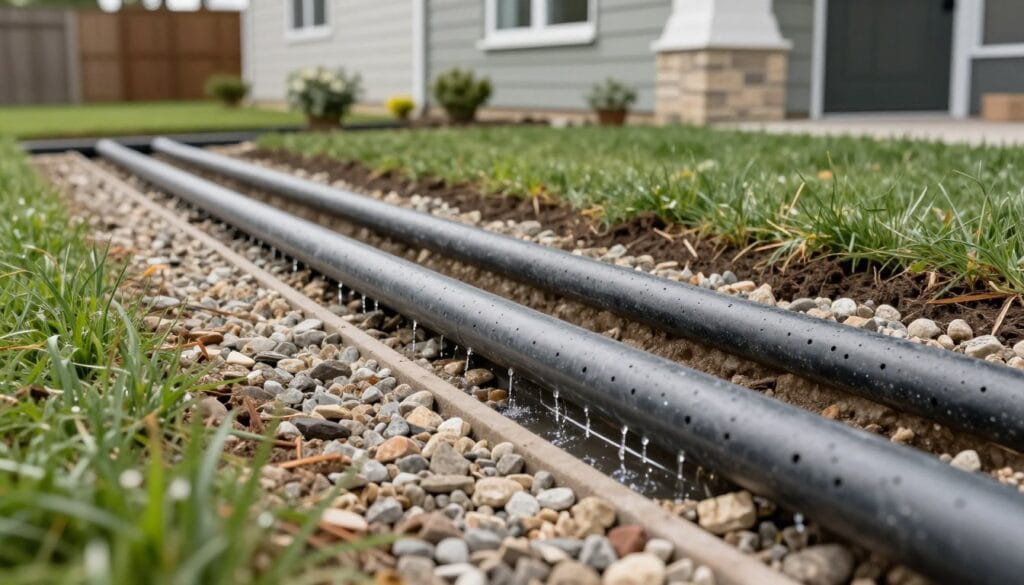
Exterior installs sit outside the footing to capture groundwater before it contacts the wall. This is the most proactive option where yard access and grade allow it.
It reduces hydrostatic pressure on the foundation and lowers long‑term moisture risk.
Interior weeping tile: collecting water under the slab and routing it to a sump pump
Interior solutions collect water along the slab edge and channel it to a sump. A reliable sump pump then ejects water to a permitted outlet.
This approach protects finished basements when exterior excavation would damage landscaping or is restricted by close property lines.
Disruption and serviceability
Exterior work can be invasive and harder to access for repairs. Interior layouts are easier to inspect and maintain.
Design features that matter
Key details we look for: clog resistance, generous outlets to the sump, clear wall‑to‑channel capture, and a wall flange rather than an open gap that invites debris.
| Factor | Exterior | Interior |
|---|---|---|
| Primary benefit | Intercepts water before it reaches foundation | Collects under slab; controlled by sump pump |
| Best for | Accessible yards, daylight outlets, high exterior groundwater | Tight lots, finished basements, protected landscaping |
| Serviceability | Harder to access if blocked; may need excavation | Easier inspection and pump maintenance indoors |
Choosing right for North and West Vancouver depends on rainfall, slopes and renovation plans. If you face repeated seepage or a finished space at risk, call Lord Mechanical LTD for a warranty‑backed waterproofing plan: 6046703737.
Drain tile installation overview: what to expect on the job
Crews start by locating utilities and confirming the approved outlet route before any excavation or concrete work begins.
For an exterior installation, we excavate a continuous trench around the foundation, place perforated pipe in a bed of gravel, then backfill to protect the channel and restore grade.
Interior process
Interior work begins with saw-cutting and removing concrete along the perimeter. We trench next to the footing, set the collection pipe, and restore the basement floor with new concrete so your space is usable again.
Do’s and don’ts to prevent clogs
Do keep the system out of the mud zone so sediment won’t be drawn into pipes. Do use a wall flange to capture leaks cleanly.
Don’t leave an open gap that becomes a debris channel. Don’t shortcut filtration or bedding gravel.
Connecting and testing
The collection line ties to a sump pit or a permitted daylight discharge. Competent crews test water flow, cycle the pump, and confirm the outlet is clear.
Before sign-off, ask for photos, as-built notes, and cleanout locations. For a reliable installation and warranty-backed work in North or West Vancouver, call Lord Mechanical LTD at 6046703737.
Cost, maintenance, and when to call a professional in North and West Vancouver
Before you budget, know typical per‑foot pricing and the maintenance that keeps an installation working long term.
Typical cost ranges
Exterior retrofit: about $20–$60 per linear foot.
Interior retrofit: about $60–$100 per linear foot because of concrete cutting and restoration.
What drives price
Major cost drivers are labour, trench depth, the amount of concrete removed and disposal, and how far water must be routed for a legal outlet.
Pump and pit needs, access constraints, and steep or confined yards in North and West Vancouver also raise installation cost.
Maintenance essentials
Inspect the collection line and outlet periodically, keep discharge clear, and test the sump pump every season.
Address slow flows or clogs early to avoid backups and expensive repair work.
DIY vs hiring a specialist
The concept is straightforward, but work is disruptive and technical. DIY may save money today but risks improper slope, poor filtration, or code breaches.
“Hiring a certified contractor often protects your home with correct details and a transferable warranty.”
For reliable waterproofing and warranty-backed installation in North or West Vancouver, call Lord Mechanical LTD at 6046703737.
| Item | Typical range | Verify in quote |
|---|---|---|
| Exterior linear foot | $20–$60 | Outlet route, trench depth |
| Interior linear foot | $60–$100 | Concrete removal, restoration |
| Discharge planning | Varies | Distance to outlet; septic connection approval |
Conclusion
If gutters, downspouts and grading no longer stop basement moisture, the issue often lies below grade and needs a targeted remediation plan.
A proper drain tile systems approach captures groundwater at the perimeter and routes it to a dependable outlet or sump. That prevents pressure on the foundation and keeps the basement dry.
Decisions focus on interior versus exterior installs, whether a sump pump is required, expected disruption, and ease of future service. Insist on a clog‑resistant layout, placement out of the mud zone, and a clean wall‑to‑drain capture with a flange.
Act early to avoid mould, ruined finishes, and structural repair costs. For a local assessment tailored to North and West Vancouver, call Lord Mechanical LTD at 604‑670‑3737. Before we visit, note where water appears, timing after rain, sump presence, and outlet location to speed diagnosis.
Result: a drier basement, better indoor air, and long‑term protection for your home’s foundation.