

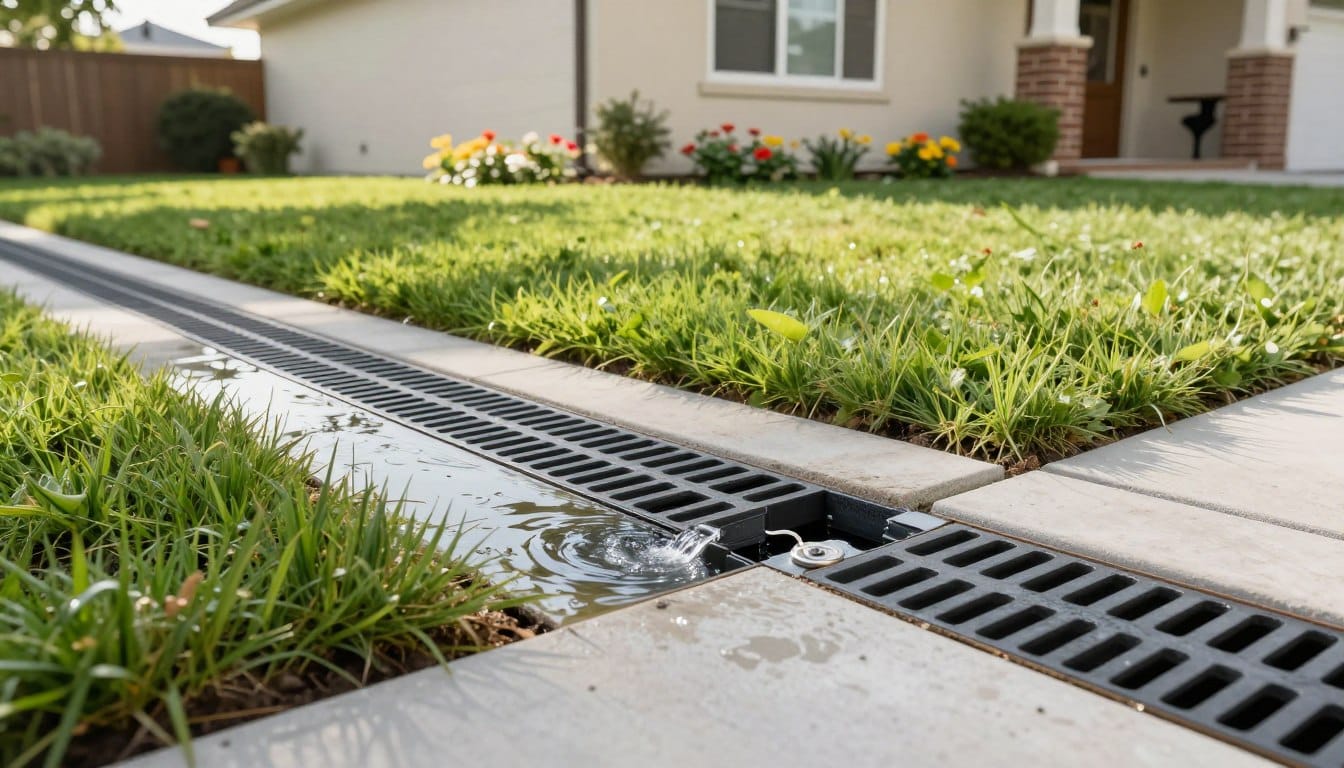
Surprising fact: Vancouver’s rainfall has risen enough that a small site fix can prevent tens of thousands in repair costs over a decade.
We often call drainage an invisible upgrade because it works behind the scenes to stop water from reaching the home’s structure. A professionally designed drainage system directs runoff away from foundations, patios, and landscaping; this protects against water damage while supporting resale worth.
In this guide we’ll define what proper drainage means for Vancouver-area homes and commercial sites. We’ll show how performance ties to what buyers and inspectors notice first — dry basements, stable hardscapes, healthy outdoor areas.
Think of proper drainage as an investment that lowers repair risk and shields the most costly parts of your home. Later sections preview roof management, grading, and engineered drains. When you’re ready for a local assessment, call Lord Mechanical LTD at 6046703737; we serve North Vancouver and West Vancouver.
Key Takeaways
- Effective runoff control reduces water damage risk to the home.
- Visible signs buyers notice include dry basements and intact hardscapes.
- Proper planning meets local runoff rules and eases sale negotiations.
- Fixes range from DIY checks to engineered system installs by pros.
- Lord Mechanical LTD offers local inspections in North and West Vancouver — call 6046703737.
Why drainage and property value are directly connected in Canadian real estate
A home’s unseen water-management system often determines how competitive an asking price will be. Savvy buyers and agents in Metro Vancouver treat wet spots as a financial risk. Visible issues push offers down and add inspection conditions.
What buyers and inspectors look for
Inspectors scan for clear signs: pooling water near the foundation, damp basements with musty odours, and clogged or collapsed drains. These clues often point to hidden mold, cracks, or long-term moisture intrusion.
Why invisible systems beat cosmetic fixes
Surface upgrades—new paint or landscaping—look good, but they don’t stop structural decline. A functioning exterior system prevents hydrostatic pressure, protects the foundation, and lowers the chance of recurring repairs.
- What buyers hear: “future costs.”
- What inspectors note: low grading, downspout discharge, blocked outlets.
- Quick checklist to document: note pooling areas, record any musty smells, photograph suspect drains.
We recommend documenting fixes and calling Lord Mechanical LTD at 6046703737 for an assessment in North Vancouver or West Vancouver before listing.
How poor drainage causes water damage that lowers property value over time
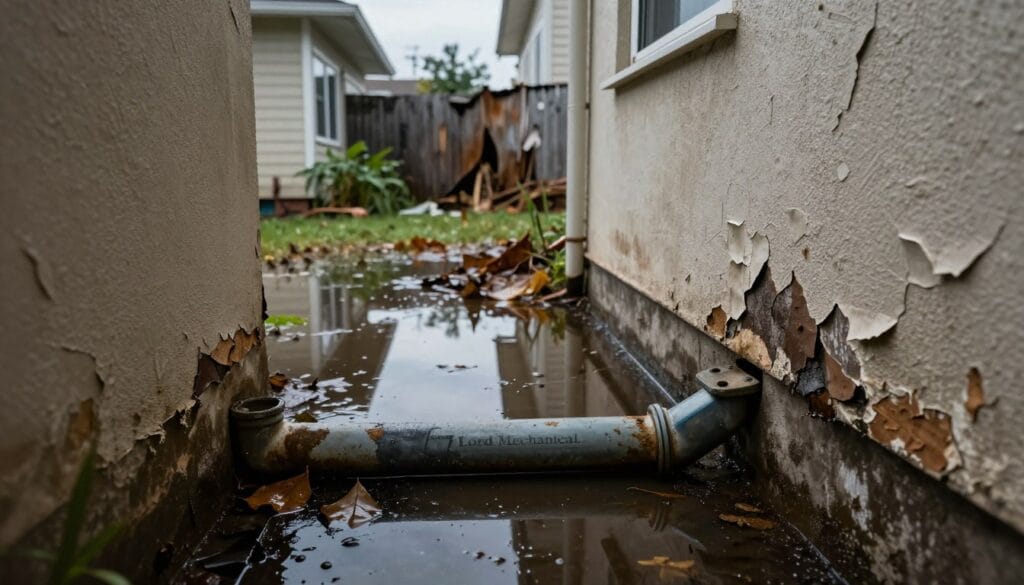
Even minor water pooling near the house often begins a chain of hidden structural problems. Over seasons, uncontrolled water raises pressure against the foundation, so small issues become costly. We will show how four areas fail when water is not managed.
Foundation risk in wet conditions
Hydrostatic pressure pushes water into walls and floors. That pressure leads to cracks, leaks and damp basements. Dampness invites mold, which raises repair costs and inspection concerns.
Driveway and patio breakdown
Water soaks joints and the base beneath pavers. The base softens, then freeze‑thaw cycles cause cracking, sinking and potholes. Surface repairs look cosmetic but often mask deeper loss of support.
Siding and wall moisture
Splash-back keeps lower siding wet. You can get staining, rot and hidden intrusion into framing and insulation even when the outer surface looks fine.
Landscaping losses
Pooling drowns plants and washes away topsoil. Lawns go soggy and curb appeal drops quickly when beds erode or plants fail.
“Early action prevents small water problems turning into major repairs.”
- Small signs—puddles, stains, soft spots—signal bigger risks.
- Addressing issues early reduces repairs, disruption and long‑term cost.
For a local assessment in North and West Vancouver, call Lord Mechanical LTD at 6046703737.
How to assess your property’s drainage system and water flow
Begin with a quick walk‑around to trace how rainwater moves across your site. We’ll show practical checks so you can map where water starts, where it travels, and where it should end up.
Roof drainage basics
Check gutters for blockages and ensure downspouts discharge water away from the home. Good downspouts send water away and into safe outlets, not toward the foundation.
Surface grading and soil
Look for slope direction, low spots and softened soil where runoff collects. A positive slope of even a few degrees keeps water flowing away from critical areas.
Engineered solutions
Channel drains, catch basins, and underground systems handle concentrated flow. Catch basins trap leaves and silt in a sump before water enters pipes, reducing blockages and backups.
Quick warning signs homeowners should never ignore
- Standing water after storms or thawing.
- New cracks near the foundation or in hardscapes.
- Recurring flooding, persistent dampness, or musty odours.
If you find repeat issues, call Lord Mechanical LTD at 6046703737. We serve North Vancouver and West Vancouver and can assess underground lines and recommend fixes that stop problems fast.
How to maintain proper drainage to protect your investment and reduce repairs
Seasonal checks are the simplest way to protect your investment against water damage. We test key points each year so small issues never grow into big repairs.
Catch basin cleaning
Catch basins contain a sump that traps leaves, sand, silt, and debris. When that sump fills, the basin won’t accept runoff and becomes a source of localized flooding.

Spring maintenance
After thaw, clear gutters, inspect downspouts, and empty catch basins. Check for winter sand and salt in the sump; these materials speed wear and can block pipes over time.
Fall maintenance
Clean out basins once leaf drop finishes. Removing organic matter before freeze reduces winter blockages and prevents spring melt backups.
When repeated clogs mean bigger issues
Frequent blockages may signal heavy sediment loads, collapsed pipes, or an undersized system. If clogs recur despite cleaning, call a pro for an inspection.
- Quick signs: slow draining, repeat pooling, fine silt in basins.
- Document photos, service dates, and invoices. Buyers and inspectors respect a clear maintenance record.
“Regular upkeep reduces long-term repairs and safeguards your investment.”
We recommend scheduled maintenance with Lord Mechanical LTD in North Vancouver and West Vancouver. Call 6046703737 for an assessment.
How compliance, drainage easements, and local runoff rules can affect property value
Local runoff rules and recorded easements influence both design choices and future costs. These legal tools define access, limit building near channels, and protect public infrastructure.
What is an easement? It is a legal agreement allowing third‑party access to maintain storm lines or open channels. Easements can restrict structures, landscaping, and fill in the reserved area.
Who maintains what
Usually, owners handle routine clearing of ditches and small outlets. Municipalities or utilities normally repair buried pipes and major gullies.
Planning around rules and natural flow
Many regions enforce a “natural flow” principle. You cannot block runoff so neighbours or public systems accept the same flow path.
Why well‑managed easements help
Proper management reduces flooding risk and prevents soil erosion that leads to structural damage. A maintained easement can be a selling point in real estate due diligence.
- Check title and survey for recorded easements.
- Confirm municipal rules for runoff and permits.
- Design control measures so runoff does not harm neighbouring areas.
Questions about an easement on your lot? Call Lord Mechanical LTD at 6046703737 for advice in North Vancouver and West Vancouver.
Conclusion
A dry foundation starts with timely checks and simple fixes that stop small issues from growing. We recommend managing roof runoff first, correcting slope, and keeping catch basins and channels clear to cut mold risk and prevent water damage.
Proper drainage system care protects your home and keeps long-term value steady. Seasonal inspections save time and reduce emergency callouts during heavy rain or spring melt.
The benefits include fewer surprise repairs, stronger curb appeal, healthier landscaping, and less erosion around key areas.
For a professional assessment or a maintenance plan in North Vancouver or West Vancouver, call Lord Mechanical LTD at 6046703737.