

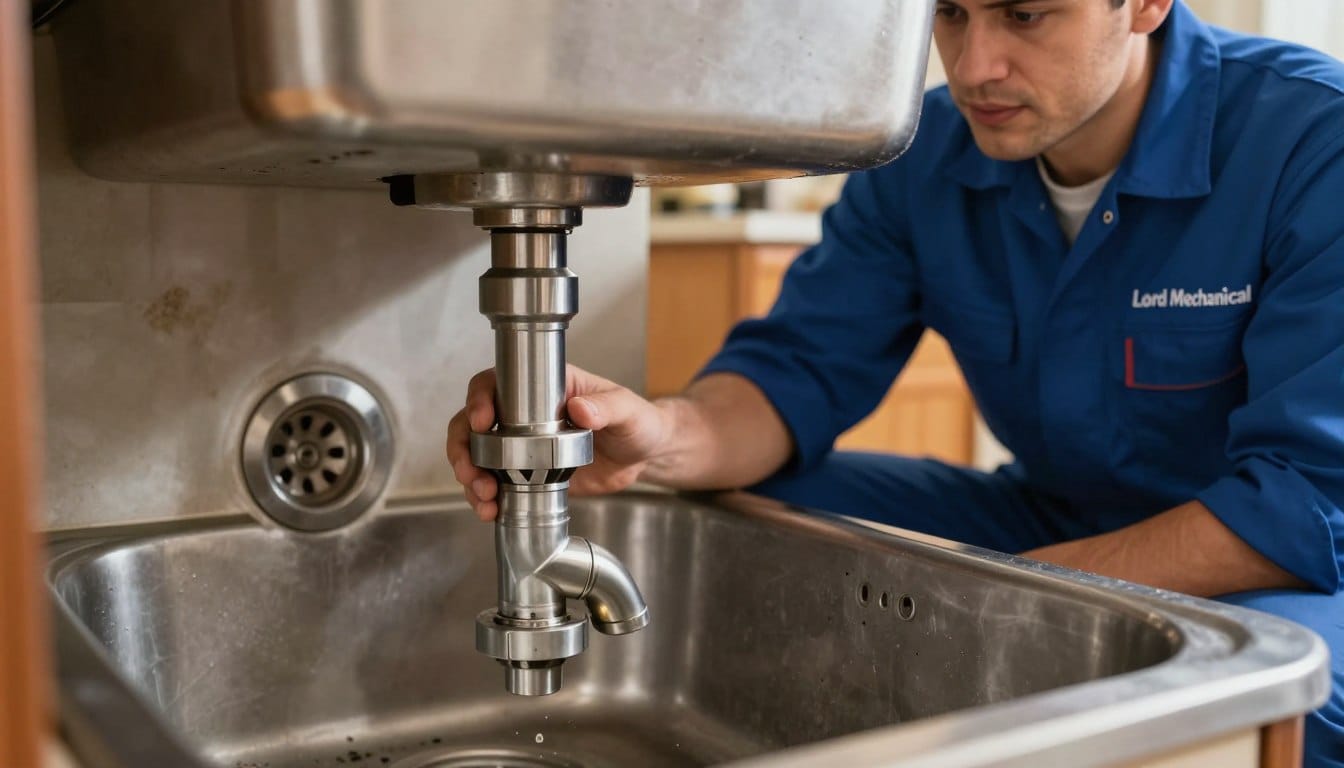
One in four Vancouver homes will face a slow or blocked sink this year — a surprisingly common issue that can shut down a kitchen or bathroom fast.
Most household stoppages come from grease and food in kitchen lines or hair and soap scum in bathroom lines. We help you spot the difference between a slow drain and a full backup so you know when to act.
We outline safe, step-by-step clogged sink solutions you can try first, and when to stop to avoid pipe damage. Our approach balances practical DIY with professional plumbing care for your home.
Expect clear checkpoints: identify the source, prep safely, try non-damaging fixes, then escalate to plunging or call us before a minor clog becomes standing water. For local advice in North Vancouver and West Vancouver, call Lord Mechanical LTD at 604-670-3737 for fast, expert help and practical tips.
Key Takeaways
- Grease and food block kitchen lines; hair and soap scum affect bathroom drains.
- Recognise a slow drain early to prevent worse backups.
- Try gentle DIY methods first; avoid harsh chemicals that harm pipes.
- Know when to stop and call a professional to limit damage.
- Lord Mechanical LTD serves North Vancouver and West Vancouver for prompt help.
What’s Really Causing Your Clogged Drain in Kitchen, Bathroom, or Shower
From cooled cooking fat to strands of hair, everyday waste gradually narrows a drain until flow slows or stops.
Kitchen pipe culprits
Grease and small bits of food stick to pipe walls as they cool. Over weeks that film thickens and traps more debris, reducing flow and creating recurring clogs.
Bathroom and shower blockages
Hair and soap scum form a sticky net that catches skin flakes and product residue. Showers and bathroom drains often show slow draining first, then full backups if ignored.
When the garburator looks like a clog
A jammed garburator can mimic a blocked drain. Turn power off, use a flashlight, and remove trapped items with tongs. Never stick your hand inside.
Signs of deeper plumbing trouble
- Multiple slow drains or recurring backups
- Gurgling sounds or sewage odours
- Tree roots or damaged pipes causing main-line issues
“Match symptoms to cause — kitchen grease, bathroom hair, garburator jam, or a main-line fault — so you choose the right fix.”
Need help in North or West Vancouver? Call Lord Mechanical LTD at 604-670-3737 for a fast inspection and expert plumbing service.
Before You Start: Safe Prep for Standing Water and Drain Access
We begin by creating a safe workspace. Clear the cabinet, roll down towels, and place a bucket underneath the trap to catch spills.
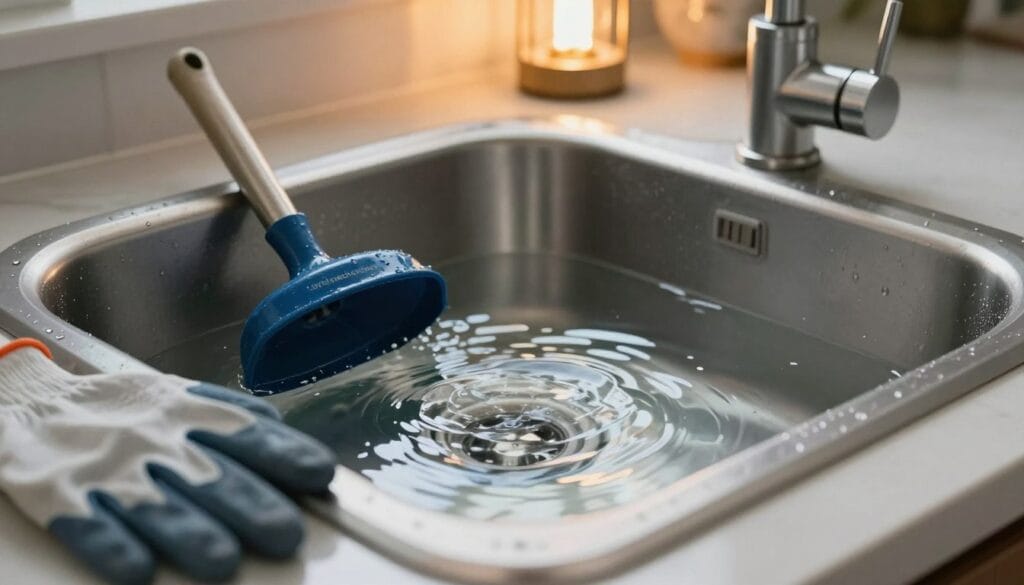
If there is standing water, scoop it out with a cup into the bucket underneath. Work slowly to avoid splashes and scalds. Dispose of the water carefully so you don’t create a second blockage.
Removing stoppers and strainers
Next, remove the stopper or strainer following manufacturer guidance. Use gloves and check the drain opening for sludge rings, hair, grease lumps, or foreign objects. Pull visible material out and place it in the bucket.
Hot water safety for Canadian homes
Hot water can help dissolve grease, but make sure you make sure the plumbing is metal before pouring boiling water. Avoid boiling water on PVC or plastic seals; high heat can warp pipe joints. When in doubt, pour hot water slowly and stop if you see movement or leakage.
- Keep towels and gloves ready.
- Ventilate the area and wear eye protection.
- Stop and call us if you suspect a damaged pipe or active leak.
These prep tips reduce mess and risk. For local help in North Vancouver and West Vancouver, call Lord Mechanical LTD at 6046703737.
Clogged Sink Solutions You Can Try at Home First
Start with gentle, proven home methods before trying tools or calling a pro. We’ll show step-by-step routines that target grease and loose debris without harsh chemicals.
Run hot water in controlled bursts to soften grease and move minor buildup. Run hot water for 30–60 seconds, pause, then run again. Repeat twice if flow improves.
Salt and hot water to scour
Pour about ½ cup salt into the drain, then follow with a steady stream of hot water. The abrasive action lifts greasy debris from pipe walls.
Baking soda vinegar fizz method
Remove standing water first. Add 1 cup baking soda, then pour 1 cup soda vinegar. Let the fizzing agitate the buildup.
Cover the drain and wait ~15 minutes. Finish with a hot water flush to carry loosened material away.
Baking soda and salt mixture for longer dwell time
Mix 1 cup baking soda with ½ cup salt. Pour into the drain and leave for several hours or overnight. Flush with hot water for a deeper clean.
Repeat the process safely: limit to two or three careful cycles. Avoid pouring boiling water into plastic fittings; use very hot tap water instead. Stop if water rises or the problem worsens — that indicates a deeper blockage.
| Method | Ingredients / Ratio | Wait Time |
|---|---|---|
| Hot water bursts | None — run hot water | 30–60 sec per burst |
| Salt + hot water | ½ cup salt, then hot water | Immediate flush |
| Baking soda + vinegar | 1 cup baking soda, 1 cup soda vinegar | ~15 minutes before flushing |
| Baking soda + salt dwell | 1 cup baking soda, ½ cup salt | Several hours to overnight |
“If two to three careful attempts don’t restore normal flow, move to plunging or call us for mechanical clearing.”
Need local help in North or West Vancouver? Call Lord Mechanical LTD at 6046703737 for fast, expert service.
Plunger Techniques That Actually Work on a Slow or Clogged Sink
A properly used plunger can clear many blockages that gentle flushes cannot reach. We use pressure and suction to dislodge material in the trap arm or just past the drain opening.
Choose the right plunger and seal tightly
Use a flat-bottom sink plunger, not a toilet-style bell. Position it squarely over the drain and press down to form a tight seal so the force moves through the drain, not around the rim.
Double basin setup
For double basins, block the opposite drain with a wet cloth or stopper. This prevents air escape and makes the plunging force far more effective.
Water level, technique and finish
Make sure there is enough water to cover the plunger bell — typically 3–4 inches. Start with gentle pumps, then increase rhythm and force in controlled cycles.
When you hear a sudden movement or feel the water flow, follow with a hot water flush to wash debris away. If standing water rises or the basin stays slow after a few attempts, stop and consider mechanical clearing or call us.
“Proper technique—right plunger, tight seal, correct water level—often turns a stubborn problem into a quick repair.”
Need help in North or West Vancouver? Call Lord Mechanical LTD at 6046703737 for fast expert service.
Clearing the Trap and Drain Line When DIY Flushes Aren’t Enough
When a basic flush and plunger don’t restore normal flow, the problem often sits in the P‑trap or further along the drain line. The P‑trap is the curved pipe under your basin that blocks sewer gases and catches debris or small lost items.
Cleaning the P‑trap
Shut off the faucet, place towels, and put a bucket underneath the trap before you unfasten the slip nuts. Loosen nuts carefully and remove the trap.
Clear out gunk, hair and debris by hand or with a small brush. Re-seat the trap, hand‑tighten the nuts (don’t over‑torque), then run water to test for leaks.
Using a snake without damaging pipes
If the trap is clear but water still backs up, a plumber’s snake can reach deeper blockages. Feed the snake slowly and stop when you feel resistance. Work the obstruction gently and avoid scraping the pipe interior; if you hear metal-on-metal scraping, withdraw slightly and readjust.
Coat hanger method for shallow obstructions
For hair near the top of a bathroom or shower drain, a straightened wire coat hanger with a small hook can snag material. This is a short‑reach method and is best for shallow blockages only.
Signs the clog is deeper than home tools
- Repeated re‑clogs within days
- Multiple fixtures backing up
- Water appearing in another drain when you run one fixture
- Persistent slow flow after trap cleaning and snaking
“Stop and call a professional if you see repeated backups or if tools meet firm resistance — further attempts can cause pipe damage.”
| Task | When to use | Key caution |
|---|---|---|
| Clean P‑trap | Visible debris, slow flow after plunge | Place bucket underneath; hand‑tighten nuts |
| Plumber’s snake | Trap clear but drain still backs up | Feed gently; avoid scraping pipe walls |
| Coat hanger hook | Shallow hair clogs in bathroom or shower | Limited reach; not a replacement for a snake |
Need help in North or West Vancouver? Call Lord Mechanical LTD at 6046703737 for fast, expert plumbing service and tips for your home or kitchen.
How Plumbers Fix Stubborn Clogs in Vancouver Homes and Businesses
Recurring flow problems often hide a pattern — we look for timing, fixtures affected, and recent appliance use.
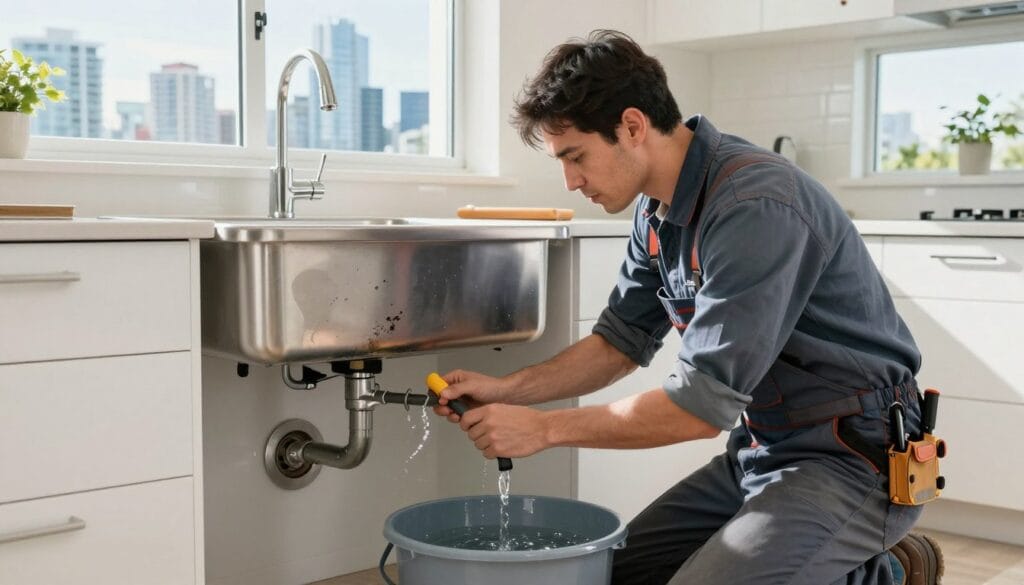
Diagnosis and inspection
We confirm which fixtures are slow and whether multiple outlets show the same issue. This helps us decide if the problem is local or in a shared drain line.
Our plumbing techs trace patterns: after meal prep, garburator use, or peak shower times. That narrows the search quickly.
Professional cleaning methods
For kitchen lines smeared with grease or bathroom runs packed with hair, we match the method to the blockage. Sometimes a targeted mechanical clean removes buildup without harming pipes.
Advanced equipment for deep blockages
When DIY snaking fails, we use professional-grade drain machines and high-pressure water jetting to scour the full pipe diameter. This removes long-term deposits rather than just punching a hole through them.
Chemical cleaners: risks and safer alternatives
Chemical drain cleaners can heat or corrode older pipe materials. We favour mechanical clearing, targeted cleaning, and inspection before recommending any chemical product.
When to call Lord Mechanical LTD
Call us for persistent slow drains, repeat clogs, suspected deeper drain clog, or any sign of pipe damage. Telling us which fixture, the water level, and what DIY steps you tried speeds up service.
“A fast, correct diagnosis saves time and prevents unnecessary pipe damage.”
| Service step | When we use it | Benefit |
|---|---|---|
| Video inspection | Recurring drain clog or unknown cause | Pinpoints location and shows pipe condition |
| Mechanical snaking | Local blockages in trap or short runs | Removes obstructions without chemicals |
| High-pressure jetting | Long grease or scale buildup | Cleans full pipe wall and restores flow |
| Targeted repairs | Damaged or collapsed pipe sections | Fixes root cause and prevents repeat issues |
Need help in Vancouver, North Vancouver, or West Vancouver? Call Lord Mechanical LTD at 6046703737 for rapid plumbing diagnosis and professional drain cleaning so we fix it right the first time.
Conclusion
A simple, steady approach saves time: identify the likely cause, remove any standing water, clear the opening, then try safe flush methods like baking soda and vinegar followed by a controlled hot water rinse.
Prevent repeat problems by keeping food and oils out of kitchen drains, using strainers for hair and debris, and avoiding overloading garburators. A quick periodic maintenance routine—baking soda + vinegar and a hot-water flush—keeps pipes clearer between visits.
If a snake, repeated snaking, or multi‑fixture slow flow persists, stop DIY and call a professional to protect your pipes. For fast, local help in North Vancouver and West Vancouver, call Lord Mechanical LTD at 604-670-3737 for expert service when the drain or sink won’t clear.