

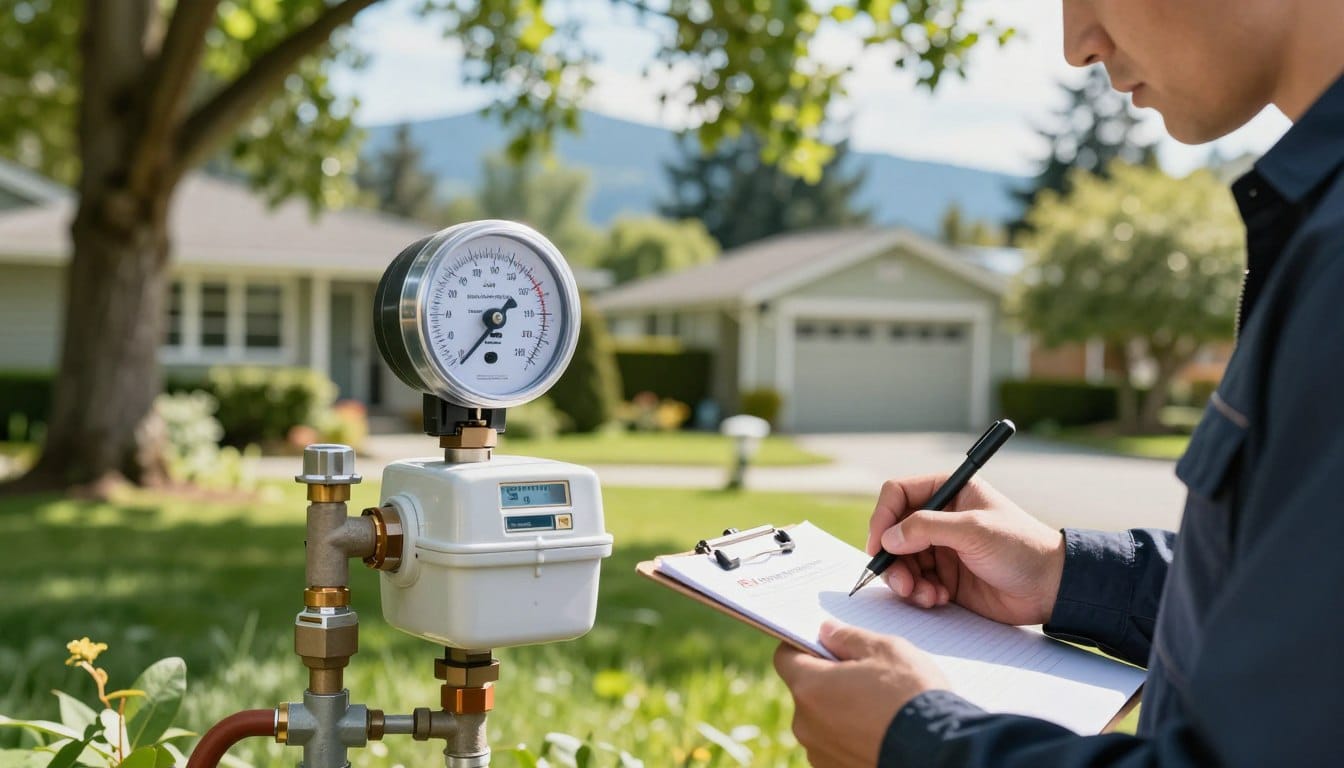
Surprising fact: Nearly one in four homes in our area report lower than expected flow at taps, and that loss can raise bills and damage fixtures if left unchecked.
We help homeowners in North and West Vancouver by walking through simple checks that pinpoint whether the issue is inside your house, at the service line, or with the municipal supply.
Common causes include clogged fixtures, corroded pipework in older homes, hidden leaks, faulty regulators, or interruptions to the local supply. Addressing symptoms early can prevent appliance wear and rising costs.
Our approach is clear and practical: we show quick, safe checks you can try and tell you when to call a licensed plumber. If you prefer we can book an inspection — call us at 604 670 3737.
Key Takeaways
- We define what reduced flow looks like and why it affects showers, laundry and dishwashing.
- We’ll help you narrow the issue to in-house, service line, or municipal causes before spending money.
- Top categories to diagnose: fixture restrictions, valves, hidden leaks, aging pipes and regulator faults.
- Early action can protect appliances and prevent higher bills or property damage.
- Lord Mechanical LTD offers local expertise for North and West Vancouver homes — call 604 670 3737 for service.
How to confirm you really have low water pressure
We begin with targeted checks to see where the issue appears. This helps us decide if it is a single fixture or a whole-home concern.
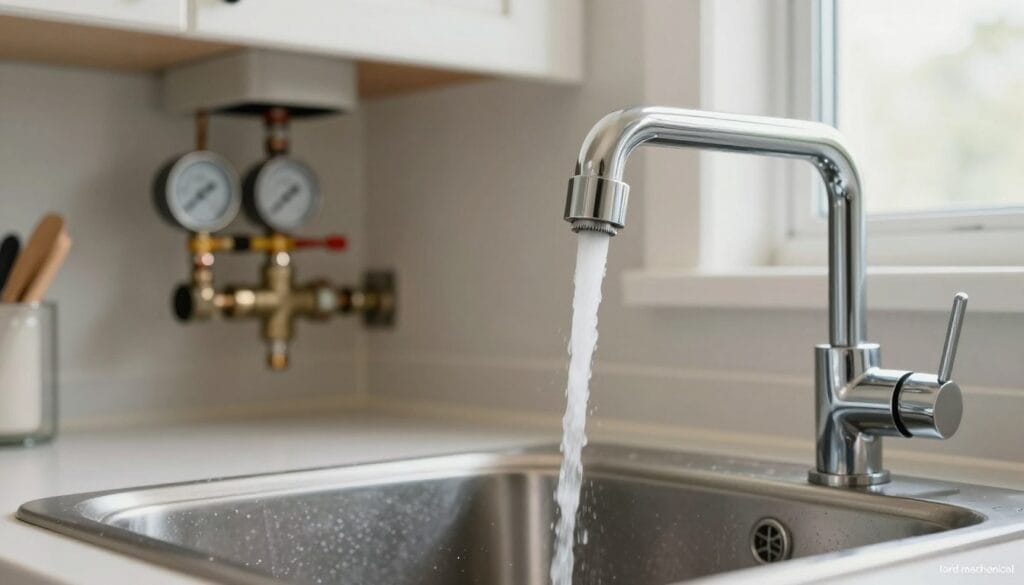
Common “low pressure” moments
- Weak shower spray: often points to a blocked showerhead or heater restriction.
- Slow tub fill: indicates reduced flow across multiple outlets.
- Poor sink rinse while washing dishes: usually a clogged aerator at that faucet.
- Long appliance fills: washing machines or dishwashers taking longer suggest wider supply or valve issues.
Pressure vs flow — plain language
Pressure is the force in your pipes; flow is the amount delivered. A blocked aerator cuts flow at one tap while overall pressure can still be normal.
Quick safety checks before you start
- Confirm if the symptom affects hot, cold, or both.
- Check that main and local shutoff valves are fully open — do not force stuck valves.
- Protect appliances from running with insufficient supply to avoid damage.
“Document time of day, fixtures affected, and whether hot or cold is involved — it speeds diagnosis.”
If you see active leaks, staining, or rushing sounds, stop DIY checks and call for expert help: 604 670 3737.
low water pressure north vancouver: fast troubleshooting to narrow the cause
We start with a quick split-test to see if the problem is isolated to one outlet or affects the entire home. This step tells us how urgent the fix must be.
Fixture-first checks: Remove faucet aerators and showerheads. Inspect for mineral buildup. Soak parts in vinegar for 30–60 minutes, scrub with a soft brush, rinse and reinstall. Replace worn fittings if cleaning fails.
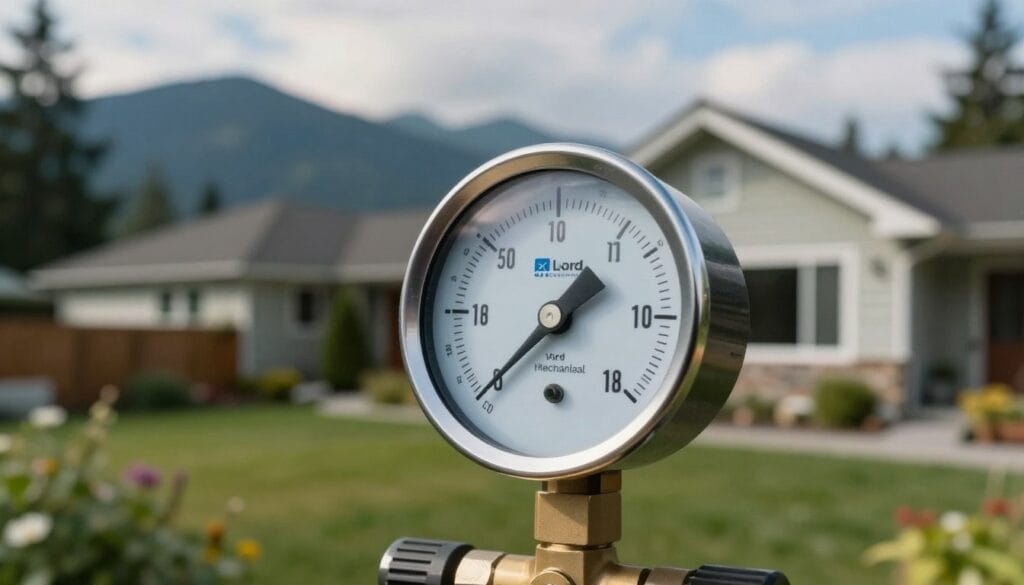
Valve and meter steps: Confirm under-sink shutoffs and the main valve are fully open. Then perform a meter leak test: turn all taps off, read the meter, wait a few hours, re-check. Any meter movement indicates hidden leaks and possible supply loss.
“Document which fixtures are affected, the time of day, and whether hot or cold is involved — it speeds diagnosis.”
| Check | How to test | Decision point |
|---|---|---|
| Single fixture | Clean aerator/showerhead | Repair or replace that fitting |
| Multiple outlets | Inspect valves and main shutoff | Check regulator/service line next |
| Hidden leak | Water meter test over time | Stop & call a plumber if meter moves rapidly |
| Neighbour check | Ask nearby homes about supply | Contact the City if several homes affected |
If you find active leaks, rapid meter change, or multiple affected homes, stop DIY work and call us at 6046703737.
Plumbing causes inside your property: pipes, leaks, and corrosion
Inside many older properties, pipe ageing and hidden leaks often reduce flow and harm fixture performance. Galvanized pipe can develop internal corrosion and mineral buildup, narrowing the bore even when the public supply is fine.
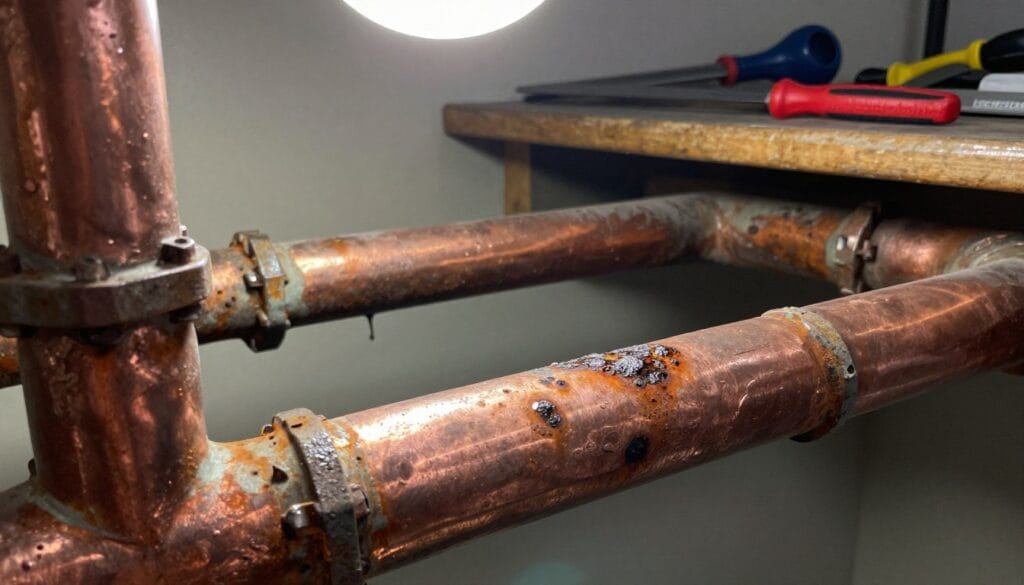
Signs of corrosion and buildup
Look for rusty or inconsistent flow at multiple taps. When several outlets worsen over months, corrosion is likely. These patterns help separate gradual wear from sudden service events.
How leaks affect your home
Even small leaks divert flow away from fixtures and cause increased water usage and rising bills. Leaks also raise the risk of mould and damp patches under floors or ceilings.
Repair vs replacement: choosing the right solution
- Local repair is sensible for a single failing pipe or joint.
- Partial repipe targets problem runs with the best cost-benefit ratio.
- Full repipe provides long-term reliability when corrosion or repeated leaks are widespread.
“Replacing aged pipe can stabilise supply and reduce future repairs.”
We evaluate age, visible corrosion, and service history to recommend the right solution. Call us at 6046703737 for an inspection and clear next steps.
System-level issues: pressure regulator problems and supply limitations
A home’s main regulator sets the limit for the entire supply entering your property. When it fails or is set incorrectly, the whole plumbing system shows the effect.
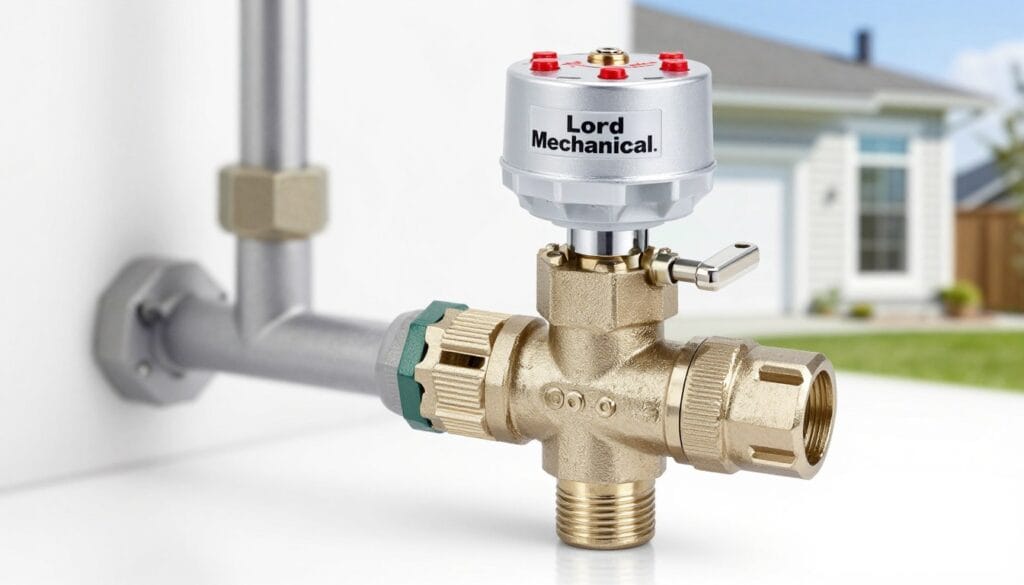
How a faulty regulator valve affects the whole house
The regulator controls incoming pressure and protects pipes and appliances. If it sticks or is mis-set, you can see consistent reduced flow across all taps and appliances.
Typical signs include steady low flow at every outlet, sudden swings after repairs, or pressure home readings that change unpredictably.
What sudden pressure changes can signal
Rapid drops often point to regulator failure, a newly opened leak, a partly closed main valve, or upstream supply limits. These differ from gradual corrosion, which shows slow decline over months.
Diagnosing this requires proper tools — pressure gauges and isolation testing — and care. DIY adjustment of a regulator can harm appliances and piping.
“If cleaning fixtures and checking valves don’t fix things, we recommend a professional diagnostic to avoid repeated work.”
Next step: If the entire home is affected, call Lord Mechanical LTD at 6046703737 for safe testing and repair.
When to call a plumber or the City in North Vancouver
Deciding who to call starts with simple observation and quick neighbour checks. If several homes on your street experience a sudden drop or no flow, the issue likely stems from municipal water. If only your house shows symptoms, it points to a private plumbing problem and you should contact a licensed plumber.

City vs plumber: clear criteria
- Municipal supply signs: multiple homes affected, system outages, or visible works on the road.
- Private problems: single-house drops, visible leaks, damp patches, or noisy pipes inside the building.
Who is responsible
The City provides the main supply up to the property line; owners handle repairs and maintenance beyond that point. For non-emergency City crews, only a property owner can request service and someone must be on site to approve charges.
City call fees and timing (Canada)
| Service | Fee (tax incl.) | Hours |
|---|---|---|
| Regular service call | $124/hour | Mon–Fri, 7:00–15:30 |
| Emergency call | $247 | After 15:30, weekends, stat holidays (includes follow-ups within 2 hrs) |
When to book professional leak detection
Call a plumber immediately after basic checks if you find ongoing leaks, mould, damp spots, rushing sounds, or repeated swings that risk damage. We use acoustic listening and ground radar to pinpoint hidden faults and avoid needless digging.
Repair and installation options
For visible breaks we offer targeted excavation and sealing. For larger or repeated failures we recommend full replacement. Where site conditions allow, trenchless installation reduces disruption to landscaping and pavement.
“Timely action limits damage and cost—call for a safe diagnosis.”
For fast, local expertise and durable solutions, call Lord Mechanical LTD at 604 670 3737.
Conclusion
,To finish, follow a few targeted steps to identify whether fittings, pipes, the regulator or the public supply are at fault.
We help you confirm the symptom, isolate one fixture versus the whole home, check for mineral buildup and valve positions, run a meter test, and compare with neighbours. This decision path points to the right fix.
The key takeaway: most cases are solvable once you locate the restriction — at a fitting, in piping, at the regulator, or on the supply side. Acting quickly limits damage and cost, especially in older homes.
If you can’t restore stable pressure, a professional diagnosis prevents repeat calls and protects your property. For North Vancouver and West Vancouver service from Lord Mechanical LTD, call 604 670 3737.