

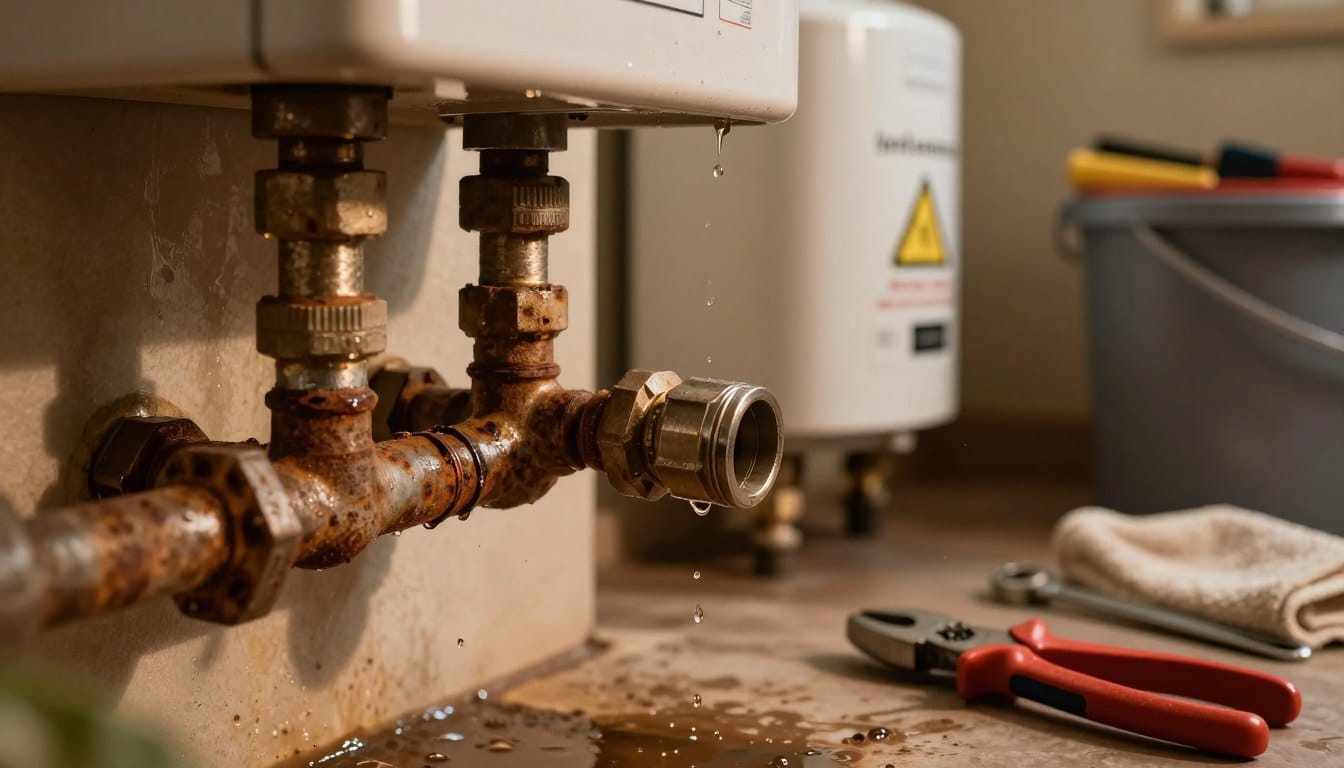
Surprising fact: nearly one in five Vancouver homeowners report a sudden loss of hot water each winter, often traced to the no hot water plumbing setup or a failing water heater.
We know what this looks like at home: cold showers, sinks that only run lukewarm, or heat that drains fast. In many cases the root cause sits in the water heater or in the distribution lines.
We’ll show quick checks you can do in minutes and point out issues that need a licensed diagnosis. That helps you avoid wasted time and extra costs.
Our guide groups the most common reasons by fuel type, tank condition, seasonal demand and crossover faults. If you spot gas smells or electrical issues, stop and call a pro.
If you’re in North Vancouver or West Vancouver and need urgent help, call 604 670 3737. Lord Mechanical LTD is the local choice for fast, expert service.
Key Takeaways
- Cold fixtures often point to the water heater or distribution issues, not just a single tap.
- Simple safety checks can save time; stop DIY if you detect gas or electrical risks.
- Seasonal cold can reduce tank performance and extend recovery time.
- We group likely reasons so you move from easy checks to technical fixes logically.
- For urgent or unclear cases in North or West Vancouver, call Lord Mechanical LTD at 604 670 3737.
Immediate safety checks before you troubleshoot
Before you check the heater, make safety the first priority in any suspected gas event. If you smell a “rotten egg” odor, hear hissing, or see a yellow burner flame, treat this as an emergency.
Signs of a gas leak and what to do right away
Common signs include the sulphur-like smell, audible hissing, or unusual flame color on the burner. Do not flip electrical switches, light matches, or smoke.
- Evacuate everyone to fresh air immediately.
- Close the household gas inlet or gas valve only if it is safe to do so.
- From a safe distance, call your gas utility and emergency services.
“If you suspect carbon monoxide or unsafe combustion, stop and call for help.”
When to stop DIY and call licensed experts
Adjusting a gas inlet valve, gas inlet fittings, or combustion controls requires licensed work in Canada. If you see burner issues, detect gas, or cannot confirm safe venting, stop troubleshooting.
If safety is uncertain, call 604 670 3737 for certified service from Lord Mechanical LTD in North and West Vancouver. Once the scene is safe, we can help isolate whether the supply, fixture, or heater is the real problem.
Confirm the problem is actually hot-water related (not a supply or faucet issue)
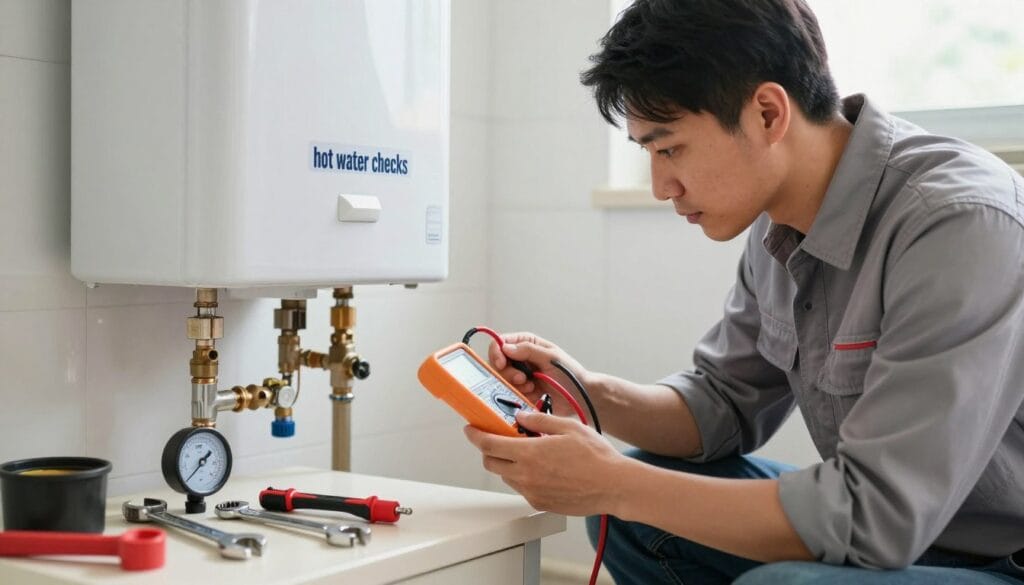
Begin with a quick cross-check of several taps and showers to isolate the issue. We recommend testing fixtures in the kitchen, main bathroom sink, tub and both showers. Record whether each outlet gets warm, stays cold, or starts hot then fades.
Track the time it takes for temperature change at each point. Long delays point to crossover or length of the pipes. If cold water runs at normal pressure but hot is weak, the fault often sits at a cartridge, local shutoff or a mixing valve.
How to tell localized vs system-wide
- Localized: one faucet stays cold while others are fine — check the cartridge or shutoff under that sink.
- System-wide: every tap goes cold, or hot fades quickly — this suggests the water heater or the main water supply.
- Mixed results: temperature swings or long waits may indicate crossover between hot and cold lines.
| Symptom | Likely cause | Next step |
|---|---|---|
| Only one faucet cold | Faucet cartridge or local shutoff | Inspect faucet, replace cartridge |
| All fixtures cold | Heater or supply issue | Check heater settings, call service |
| Temperature fades fast | Short tank capacity or crossover | Timing test, check mixing valve |
If your checks point to a whole-home issue or you’re unsure, call 604 670 3737 for fast service from Lord Mechanical LTD in North and West Vancouver. We’ll help confirm whether the heater, supply or a single faucet needs repair.
no hot water plumbing: start with your water heater type and basic settings
Start by confirming the type of heating equipment you own—this single step shapes every following check.
Identify your heater: gas, electric, tankless or boiler
We help you identify whether you have a gas water heater, electric tank, tankless unit, or a boiler-based system.
Check the rating plate on the unit for model and fuel type. That label tells you safe checks and which controls to use.
Check thermostat and temperature settings
Set efficient, safe temperatures: aim about 120–125°F (50–52°C) for everyday use.
Higher settings raise scald risk and energy use; lower settings may feel like the heater is failing when it’s only set too low.
Understand recovery time and why hot water can run out quickly
Recovery depends on type: gas tanks reheat roughly twice as fast as electric for the same size.
A 40-gallon electric unit can need around four hours to recover; gas may need about two hours. Tankless units supply on demand but depend on flow and incoming water temperature.
| Heater type | Typical recovery time | Common capacity issue |
|---|---|---|
| Gas water heater | ~2 hours (40 gal) | Fast recovery, still limited by tank size |
| Electric water heater | ~4 hours (40 gal) | Slower recovery; long showers drain tank |
| Tankless unit | On-demand | Flow limits can cap temperature at high demand |
| Boiler-based system | Varies (controls/diverter valves) | Diverter valves affect delivery and timing |
If you can’t identify your heater type or adjust settings safely, call 604 670 3737. We serve North and West Vancouver and can confirm whether the heater tank, water tank or controls need service.
Gas water heater causes: pilot light, gas inlet valve, and gas valve failure
Gas-side faults often start with something simple: the supply isn’t open or the pilot light has gone out.
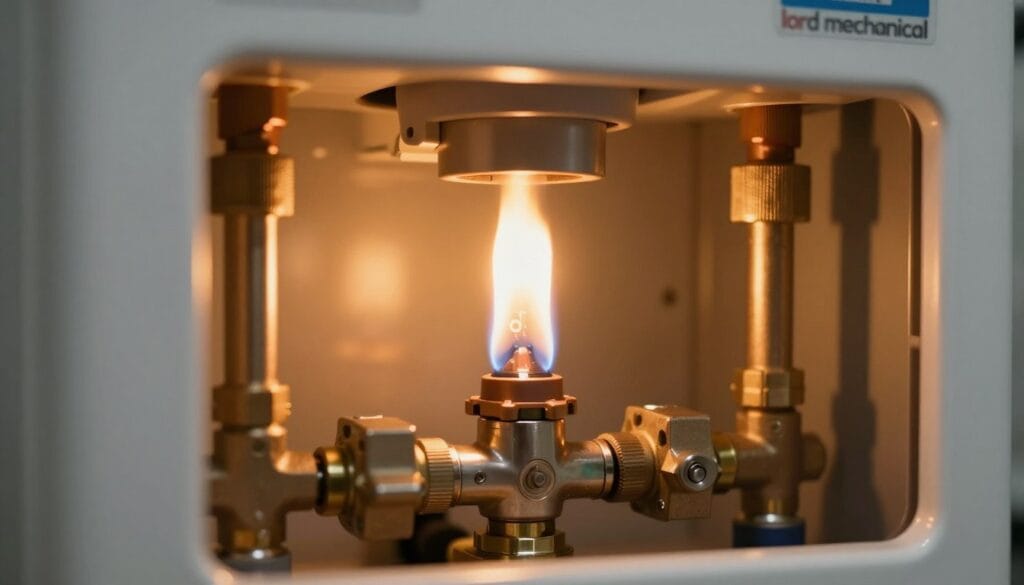
Confirm the gas supply is on and the gas inlet valve handle is aligned in the open position before further checks. A closed inlet valve or an off supply is an easy fix and avoids unnecessary parts replacement.
Relight the pilot safely
Turn the control to OFF and wait at least five minutes for any residual gas to dissipate. Then set the control to PILOT, follow the manufacturer’s steps, and hold the ignition knob for about 60 seconds once the pilot lights.
If the pilot light will not stay lit, or the ignitor click is weak, stop and call for professional help.
When the gas valve fails
The gas valve regulates fuel to the burner. A failed gas valve can leave cold water working while the heater never fires. This shows as repeated pilot outages, weak ignition or intermittent heating.
“If you smell gas or ignition seems unsafe, stop immediately and call a licensed technician.”
| Symptom | Likely cause | Action |
|---|---|---|
| Pilot out, gas supply on | Pilot assembly or ignitor | Relight per instructions; call for service if it won’t stay |
| Pilot lights then goes out | Restricted gas inlet or failing gas valve | Do not keep trying; arrange a repair |
| Cold taps fine, no heating | Gas valve failure | Professional diagnosis and repair required |
If you smell gas or cannot safely relight the pilot, stop and call Lord Mechanical LTD at 604 670 3737 for licensed service in North and West Vancouver.
Electric water heater causes: tripped breaker, reset button, and heating elements
When an electric tank stops producing heat, the panel and reset are the fastest checks.
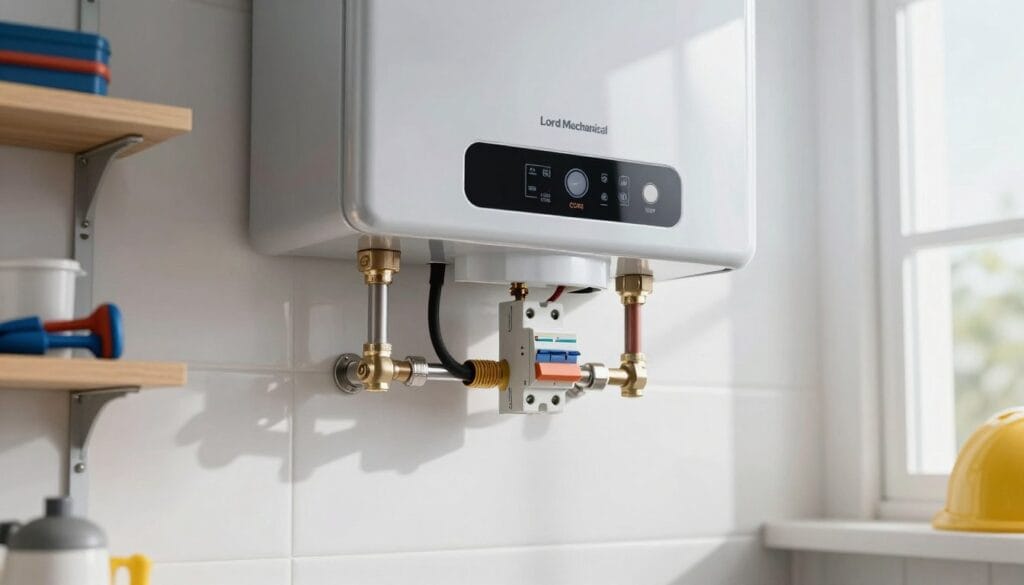
Check the breaker first. Open your electrical panel and look for a tripped circuit feeding the water heater. Reset it only if you are comfortable and follow safety steps. After power is restored, allow the tank time to recover — expect about an hour or more depending on tank size and demand.
Reset button and sudden stops
The high-temperature cutoff (the reset button) trips when the unit overheats or senses a fault. Pressing it can restore service if no wiring damage exists. If the button trips again, do not keep resetting.
Wiring, supply faults and mimic failures
Loose connections or a failing power supply can look like a dead heater. If breakers repeatedly trip or you see scorch marks, stop and call a licensed electrician or our team.
When heating elements fail
If one of the heating elements fails, you may get limited or inconsistent hot water. Repair is often sensible on newer units. For units older than about ten years, replacement can be the smarter long-term choice.
- Fast check: breaker, then reset button.
- If repeats occur: call for professional diagnosis.
- Repair vs replace: repair newer units; consider replacement for older tanks.
“If breakers keep tripping or wiring looks damaged, stop and arrange licensed service.”
Need help in North or West Vancouver? For diagnosis, repair or replacement planning call Lord Mechanical LTD at 604 670 3737. We’ll help get your hot water working safely and reliably.
Tank and system issues: leaks, sediment buildup, and performance loss
Visible pooling or rumbling from the heater are clear signs the tank needs attention.
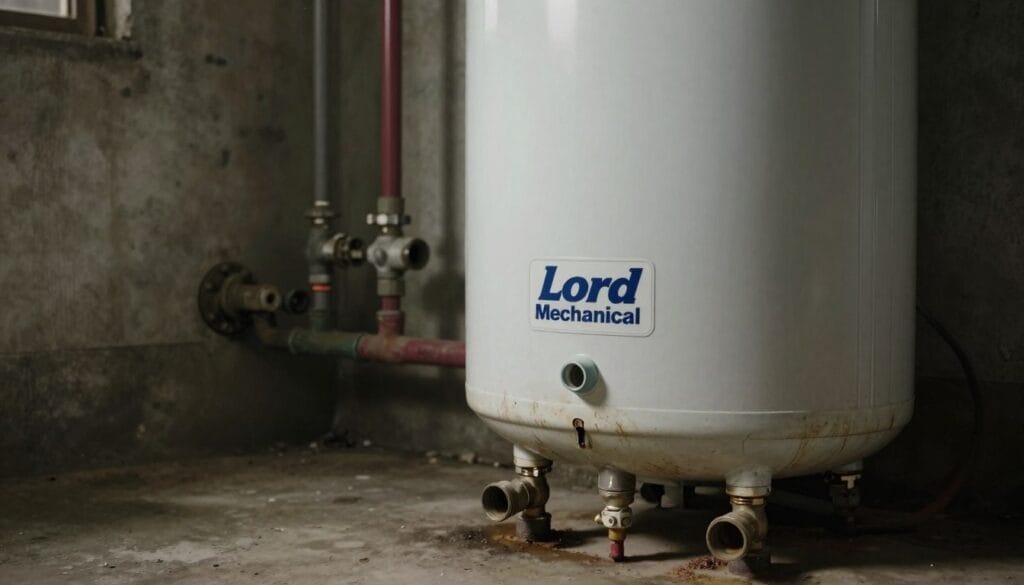
First, check whether the leak is the tank itself or a fitting. Inspect the base, supply connections and nearby valves. If water pools at the tank base or you see corrosion, the water heater tank is likely compromised.
When a leak means replacement
A leaking hot water tank usually cannot be safely patched. The metal shell fails from corrosion and requires a new water heater.
Sediment, flushing and effects on performance
Mineral sediment settles in the heater tank and creates a barrier to heat. That causes lower volume, rumbling noises, longer heat-up time, and rising energy bills.
| Symptom | Likely cause | Action |
|---|---|---|
| Pooling at tank base | Tank shell failure | Replace with a new water heater |
| Rumbling or reduced output | Sediment buildup | Annual flush via drain valve |
| Temperature swings | Internal wear or failing element | Service or consider new water heater |
For Vancouver homes, hard local supply and cold seasons speed sediment and wear. If you see leaks, pooling, or corrosion, call us at 604 670 3737 for inspection and replacement options. We can advise whether you truly need new water equipment sized for your home or business.
“A leaking tank is a safety and waste concern; replacement prevents further damage.”
Household and seasonal factors: tank size, cold weather, and demand spikes
Household routines and seasonal cold often explain why a tank runs out during peak use. We see this when a growing family adds an extra shower or when laundry overlaps morning routines.
Sizing is often the real problem: a small tank can meet past needs but fail as demand rises. Peak windows — showers plus dishwasher or laundry — drain capacity faster than the unit can recover.
Why recovery time and incoming temperature matter
Different heater types recover at different rates. For example, a 40‑gallon electric unit may need around four hours to recover, while a gas unit often needs about two hours. That difference affects the time between uses and whether you feel you have enough hot water.
- Cold incoming supply in winter increases recovery time.
- Insulating the tank and exposed pipes reduces standby losses.
- Consider a larger tank or higher recovery unit if you regularly run out.
Energy use rises when heaters run longer. Small measures—pipe insulation, timed loads, or a tank blanket where safe—cut cycles and bills.
If you need sizing or upgrade advice in North Vancouver or West Vancouver, call us at 604 670 3737. We’ll help match capacity and recovery to your household needs.
Plumbing crossover and valve issues: when cold water sneaks into hot lines
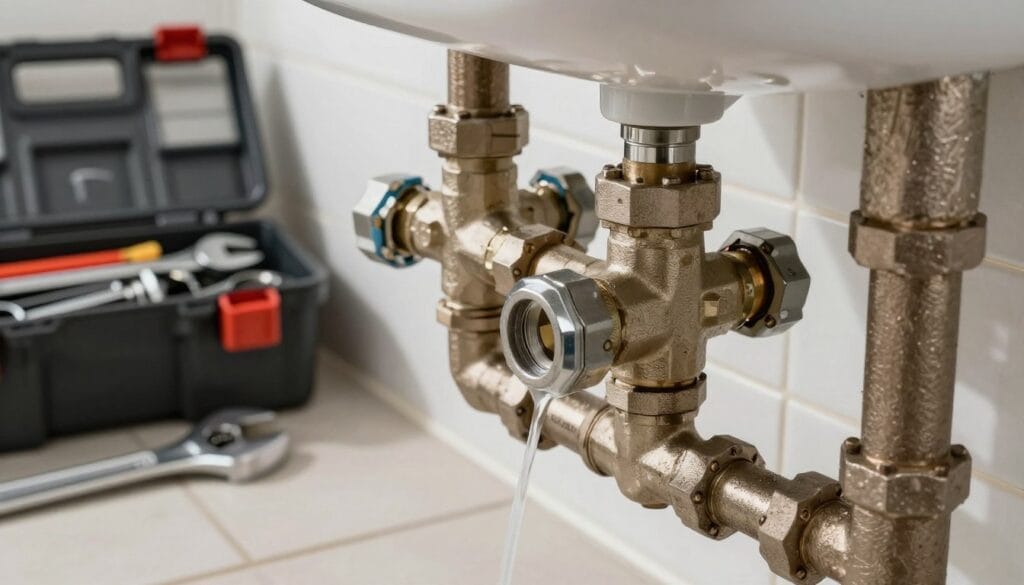
A hidden crossover can make every tap feel like the heater has quit, while the unit itself works. In plain terms, cold crosses into the hot line (or vice versa) so fixtures act like they have no supply even when the heater is fine.
Common causes and where to look
The usual suspects are single-handle faucet cartridges, thermostatic or mixing valves, and failed check valves on recirculation or appliance lines. Washing machine solenoids and older mixing valves also cause crossflow.
Quick homeowner test
Shut off the hot feed at the heater, then open one hot tap and wait several minutes. If flow continues, you likely have a crossover rather than a heater fault.
What crossover feels like and why it matters
Expect long waits for steady temperature, sudden swings or a “cold sandwich” during showers. This wastes energy because the heater keeps reheating mixed water and raises operating costs.
Typical fixes and next steps
Common repairs include cartridge replacement, mixing valve service, or check valve repair. Test one fixture at a time to locate the source. If testing is unclear or valves are inaccessible, call 604 670 3737 for professional diagnosis and service from Lord Mechanical LTD in North and West Vancouver.
“A precise isolation test saves time and prevents unnecessary heater repairs.”
| Symptom | Likely cause | Typical fix |
|---|---|---|
| Hot tap flows after heater off | Crossover at valve or faucet | Replace cartridge or repair check valve |
| Temperature swings at multiple fixtures | Mixing valve or appliance crossflow | Service mixing valve or appliance line |
| Warm cold taps | Hot into cold crossover | Isolate fixture; repair valve |
Conclusion
A stepwise approach cuts confusion and finds the main reasons fast.
We recommend starting with safety, then checking whether a single fixture or the whole home is affected. Identify your water heater type next and follow the proper gas or electric checks.
Common culprits include a failed pilot light or ignitor on gas water units, tripped breakers or a stuck reset on electric units, and leaks or sediment in the tank. Crossovers and valve faults can mimic heater failure, so systematic testing matters.
For reliable results, expert diagnosis saves time and prevents damage. For service in North Vancouver and West Vancouver, call Lord Mechanical LTD at 604 670 3737 to get your hot water working and your water working again.