

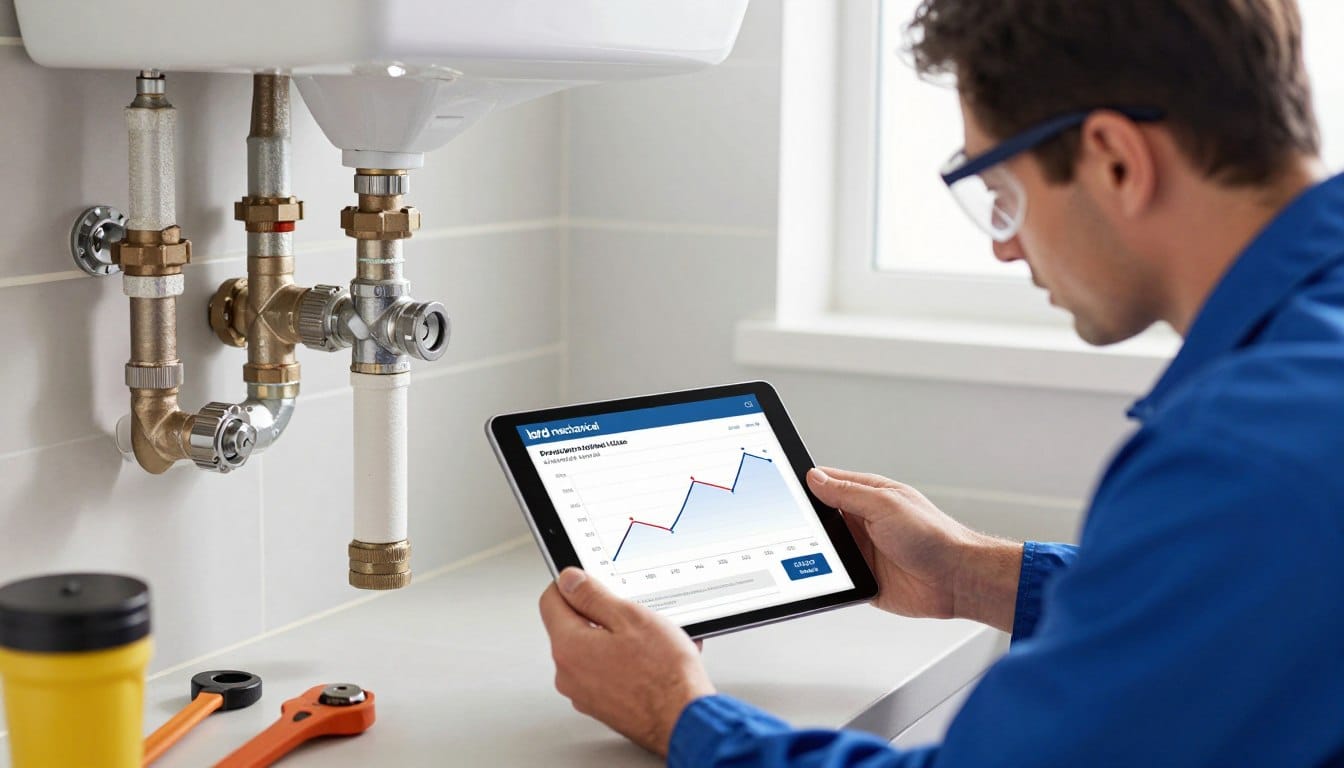
Surprising fact: Canadian hourly rates range from $75 to $250 per hour, with an average near $175 — that single number can change your decision in minutes.
We know quick answers matter when water is moving where it should not. We set expectations upfront: yes, urgent plumbing often costs more, and we explain why so you can decide with confidence.
Labour typically makes up about 70% of a bill and materials about 30%. Location, timing and problem severity push rates higher in cities like Vancouver.
In this guide we define what “emergency plumber cost” usually includes — labour, parts and fees — and preview Canada-wide benchmarks per hour so you can read an estimate without guessing.
If you need fast guidance or immediate service in Vancouver, North Vancouver or West Vancouver, call Lord Mechanical LTD at 604 670 3737 and tell us what you’re seeing so we can triage properly.
Key Takeaways
- Canada averages about $175 per hour; ranges run $75–$250 per hour.
- Labour usually forms ~70% of the total and materials ~30%.
- Timing and location affect rates; city work is often pricier.
- We explain what emergency plumbing invoices include so you can read them clearly.
- For fast service in North and West Vancouver, call Lord Mechanical LTD at 604 670 3737.
Why emergency plumbing usually costs more than standard service
Immediate response shifts how we price work because time and risk matter more than the fix itself. When a situation threatens safety, uncontrolled water, sewage backup or gas concerns, we treat it as urgent. That changes staffing, logistics and pricing.
How we decide if a call is an emergency. We look for active damage, risk to occupants or systems that will worsen quickly. If the issue can safely wait, a next-day booking may save you money and hassle.
After-hours response explained. Rapid dispatch needs crews on-call, overtime pay, and trucks stocked for many scenarios. Those operational factors—and travel, immediate diagnosis and staging to protect your home—add to the bill even when repairs are simple.
- Faster response can reduce water damage and limit restoration work.
- Providing clear details before we arrive helps us bring the right parts and cut time on site.
We’re here for Vancouver-area homes and businesses. Call Lord Mechanical LTD at 6046703737 for prompt guidance in North and West Vancouver.
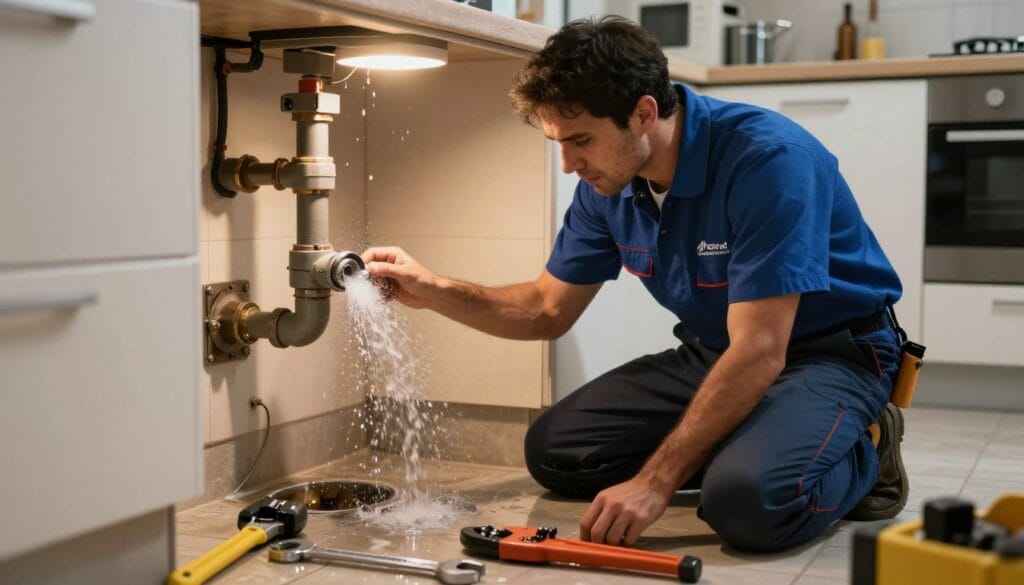
Emergency plumber cost in Canada: typical hourly rates and price ranges
Hourly billing varies widely across Canada; understanding the range helps you plan a realistic repair budget.
We provide a clear national benchmark: most plumbing rates run from $75–$250 per hour, with many homeowners seeing an average near $175 per hour. That average reflects typical daytime service in urban areas.
Canada-wide hourly pricing benchmarks
Location, urgency and complexity move prices. After-hours calls or difficult access push the hourly rate toward the top of the range.
Ontario reference ranges
Use Ontario as a practical example: standard daytime labour often lands at $110–$145/hr. After-hours or weekend work commonly jumps to $200–$350/hr.
Call-out, diagnostic, and inspection fees
Invoice items you may see:
- Call-out / service call — one-time fee or included in first hour.
- Diagnostic/inspection fee — typically $90–$150 and often waived if you approve the repairs.
- Labour billed per hour with usual one-hour minimums.
- Parts and materials charged separately, often with a small markup.
| Item | Typical range | Notes |
|---|---|---|
| Canada hourly rate | $75 – $250 / hour | Average ≈ $175/hr for standard daytime service |
| Ontario daytime labour | $110 – $145 / hour | Commonly cited regional benchmark |
| Ontario after-hours | $200 – $350 / hour | Applies evenings, nights and weekends |
| Diagnostic / inspection fee | $90 – $150 | Often credited if repair approved |
Practical checklist: Ask whether quotes include travel, minimum hour charges, after-hours premiums and parts markup. That helps you compare pricing fairly.
If you’re in North Vancouver or West Vancouver and want a quick quote based on symptoms, call Lord Mechanical LTD at 6046703737 and we’ll walk you through likely ranges for your project.
Emergency plumber cost by region: how location impacts your final price
Where you live often drives the final invoice more than the repair itself. Regional differences — from bridge traffic to condo access rules — change how long a job takes and what we must plan for.
Major cities vs smaller communities
Major cities trend higher
Urban areas carry higher overhead, permit needs and demand. Typical benchmarks show Vancouver around $90–$140/hr, Toronto about $100–$150/hr, and Calgary near $80–$120/hr. Rural areas often list lower base rates ($70–$100/hr) but add travel time or mileage.
What regional tables don’t tell you
Hidden factors that change the bill
Tables miss condo access, elevator bookings, shutting off building water and finished basements that slow work. In North and West Vancouver, bridge delays, tight driveways and older pipes add minutes and parts.
How to use regional data
- Treat benchmarks as a baseline, not a guarantee.
- Adjust for nights, weekends and parts availability.
- Tell dispatch your exact location, building type and any parking or access limits.
“Provide details on entry, parking and whether water can be shut off — it helps us estimate arrival time and likely fees.”
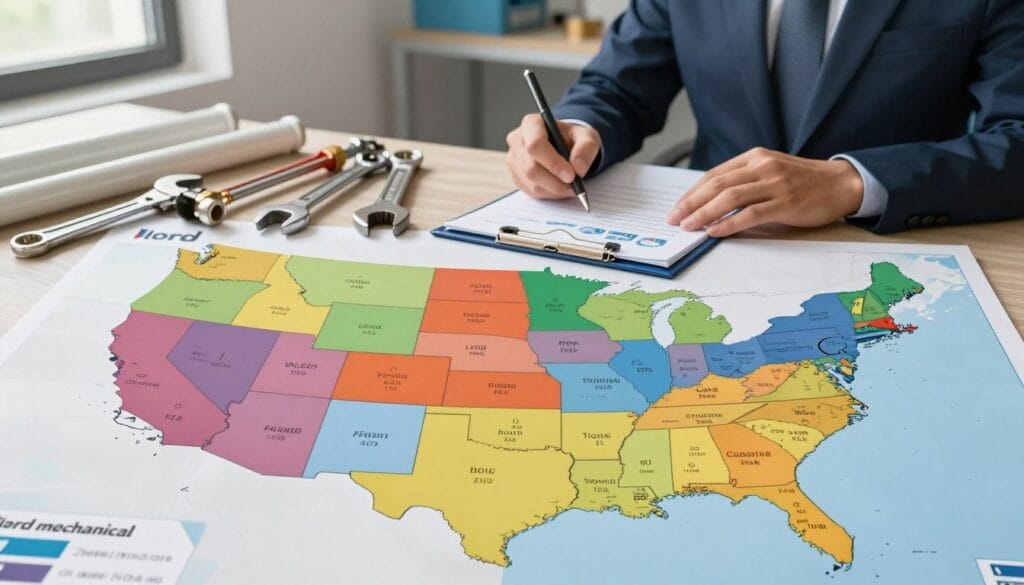
Need a local estimate? If you’re in North or West Vancouver, call Lord Mechanical LTD at 6046703737 and tell us your address and building type so we can advise on expected rates and arrival time.
What drives up emergency plumbing costs
Several clear drivers push a late-night repair bill higher than a routine visit. Understanding those factors helps you plan and avoid surprises.
Complexity and time on site
Complex jobs take longer. A loose fitting is quick; a hidden rupture behind drywall can take hours. Time on site directly raises labour charges and the final invoice.
Accessibility
Finished basements, tight crawl spaces and behind-wall leaks add labour. Removing tile or drywall adds steps and extends the repair window.
Materials and parts
Pipes, valves, fittings and fixture parts vary in price. Higher-grade materials and hard-to-source parts increase parts and materials line items.
Labour vs materials
Expect roughly a 70/30 split — labour often makes up about 70% and materials about 30% of the bill. That shows why skilled, efficient work matters.
Travel, licensing and service areas
Dispatch zones, mileage and after-hours timing add fees. Licensed, Red Seal–trained technicians follow code for water, gas and drainage, protecting your property and preventing repeat work.
- How to lower bills: clear access, shut off water and send photos before we arrive.
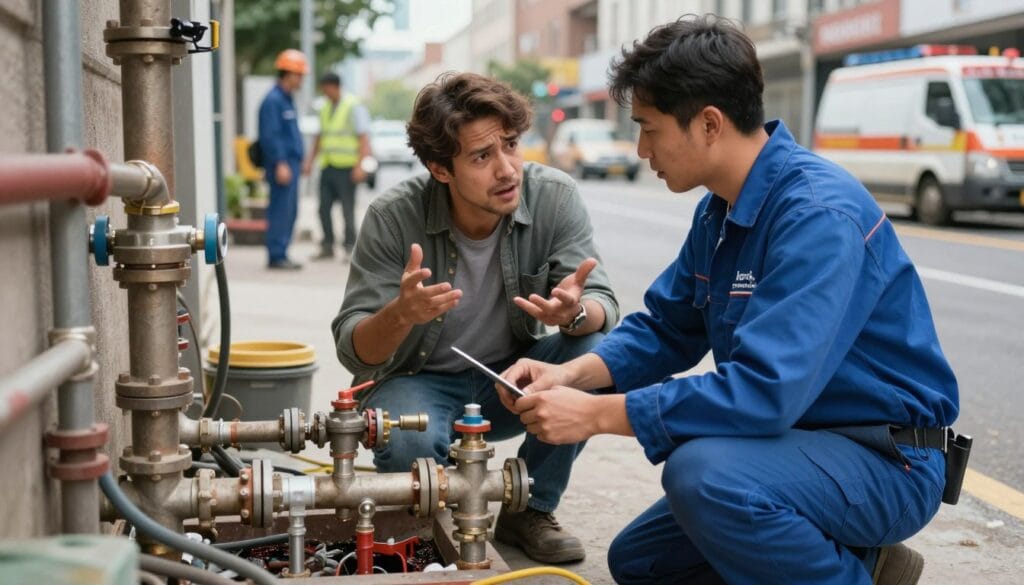
Questions about your situation? Call Lord Mechanical LTD in North and West Vancouver at 6046703737 for practical guidance and a fair quote.
Common emergency plumbing scenarios and what they can cost
Knowing likely ranges for typical failures makes choosing the right response faster and less stressful. Below we outline the common scenarios we see across Canada and the realistic pricing bands you can expect.
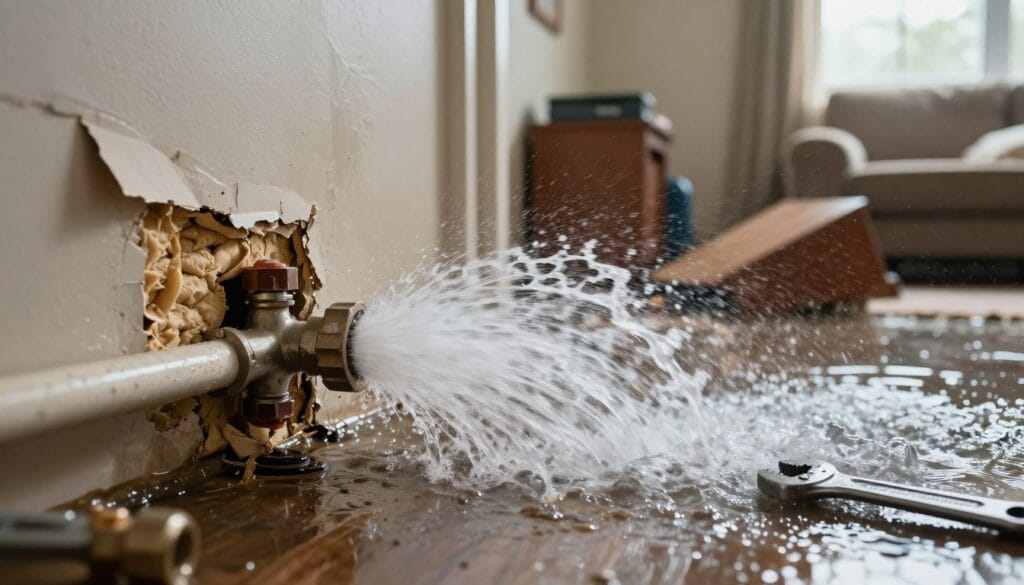
Burst pipe and active leaks
Published ranges: crews often bill between $200–$500 per hour. When water is behind drywall or under floors, total invoices commonly reach $500–$1,500+.
Why totals climb: isolating the leak, cutting access, replacing pipe sections, pressure testing and drying add labour and materials.
Overflowing toilet or failed shutoff valve
Simple unclogs or replacing a seized valve are lower-ticket fixes. Labour rises when shutoffs are corroded or flange repairs are needed.
Parts such as a new valve or flange increase the bill; quick shutoff and photos before arrival reduce time on site.
Blocked drain and main line issues
Clearing a local drain commonly ranges $150–$350. Main-line blockages, repeated backups, camera inspections or hydro-jetting push pricing higher.
No hot water
Minor water heater repairs—elements, thermostats, flushing or valves—often sit between $100–$600.
Full replacement or complex failures can reach $2,000–$3,000, depending on unit type and installation difficulty.
Gas-related concerns
Gas work adds risk and regulatory steps. Safety protocols and urgency affect pricing and the time required for safe repairs or shutoffs.
“Act quickly: stopping the source and containing water usually lowers the hours we need on site.”
- Shut off water at the main if safe to do so.
- Contain flowing water with buckets and towels; move valuables away.
- Take photos and describe access when you call to speed triage.
| Scenario | Typical range | When price rises |
|---|---|---|
| Burst pipe / active leaks | $200–$500 per hour; totals $500–$1,500+ | Behind walls, floors, complex access, freeze damage |
| Blocked drain / main line | $150–$350; higher with camera or hydro-jet | Deep blockages, repeat clogs, tree root removal |
| Water heater repairs / replacement | $100–$600 (minor); $2,000–$3,000 (complex) | Tank vs tankless, venting, code upgrades, replacement labour |
| Toilet overflow / valve failure | $150–$450 depending on parts and access | Seized shutoffs, flange or flange replacement, subfloor damage |
Next step: if you have an active leak, sewer smell, or no hot water in winter, call Lord Mechanical LTD at 6046703737 for rapid triage and local dispatch in North and West Vancouver.
Hourly rate vs flat-rate emergency plumbing pricing: what’s better for homeowners?
How you pay — by the hour or a flat fee — affects predictability and risk for homeowners. We explain the two common billing models you’ll meet and help you choose based on the job type and unknowns involved.
When paying per hour is the safer choice
Per hour billing suits diagnosis-first situations. If pipe condition is hidden, or the job could expand once we open a wall, hourly rates avoid heavy risk padding. We can stop, assess and quote next steps as the work unfolds.
When flat-rate pricing can protect your budget
Flat fees work well for standard services like fixture swaps or routine drain clearing. For predictable labour and parts, a flat price gives homeowners cost certainty and fewer surprises.
How to compare quotes apples-to-apples
- Confirm what’s included: call-out fees, after-hours premiums, minimum hour billing and parts markup.
- Ask for a written scope and what triggers extra fees (opening walls, main-line access, valve replacement).
- Check whether travel time or the first hour changes the hourly rate.
“Aim for safe, code-compliant work that prevents repeat problems — the cheapest option today may cost more later.”

Need local advice? For North and West Vancouver homeowners, call Lord Mechanical LTD at 6046703737 for a quick walkthrough and a fair quote.
How to get a fair emergency plumbing quote quickly (and avoid surprise fees)
A short, precise description over the phone speeds diagnosis and helps avoid surprise fees. We rely on clear details to bring the right tools, parts and crew so you pay for work you actually need.
What to tell dispatch to reduce billable time
Two-minute call script: tell us where the leak is, whether water is shut off, which fixtures are affected, if you’re in a condo or house, and any visible damage.
Questions that prevent surprise fees
- What is the minimum charge and first-hour rate?
- Is there an after-hours premium or call-out fee?
- Do you charge a diagnostic fee ($90–$150 range) and is it waived if we approve repairs?
- Are parts billed at cost or with a markup?
Proof of licensing and insurance
Before work begins, ask to see licenses and insurance. This is vital for water, gas and drainage work and protects your property.
Why estimates change once we access the line
Hidden corrosion, a cracked fitting, failed valve or blocked main can expand the scope. Ask the technician to pause and update you before larger repairs or replacements.

“Give dispatch parking, entry and shutoff details — small logistics save time and reduce fees.”
For the fastest, realistic quote in North and West Vancouver, call 604 670 3737 and we’ll triage your project and give an accurate range before dispatch.
How to lower your emergency plumbing bill without cutting corners
A quick, calm response at home can shrink labour time and protect valuables from water. We focus on safe containment first, then on steps that reduce overall repair and replacement needs.
Immediate steps to limit water damage before we arrive
Shut off the main water if you can do so safely. If a fixture has its own shutoff valve, isolate that supply.
Stop using affected drains or toilets and move electronics and stored items away from the wet area.
Take photos and point out the main shutoff when we arrive to cut time on site.

Preventative maintenance that reduces calls
- Routine drain care: clear hair and debris, use strainers, and schedule periodic snaking for slow drains.
- Valve checks: exercise isolation valves yearly so they operate when needed.
- Water heater maintenance: flush sediment annually to extend heater life and avoid sudden failures in winter.
When repair makes sense vs replacement
Repeat leaks, widespread corrosion, or an old water heater often justify replacement to lower yearly bills. A one-time repair can be cheaper short-term but raise long‑term costs.
Smart upgrades—like replacing a weak valve or adding isolation points while the wall is open—save time and reduce future service calls.
“Containment and clear access cut labour time; that’s where homeowners save most.”
Need local advice? For North and West Vancouver, call Lord Mechanical LTD at 6046703737 for safety-first guidance and fair, code-compliant plumbing services.
Conclusion
Bottom line — prompt containment and clear details often cut time on site and reduce the final bill. Urgency, after‑hours response and hidden damage drive higher plumbing rates; that explains why emergency cost can exceed routine service.
Typical ranges vary by location, the job, time of day and parts needed. You control key factors: shut off water if safe, clear access and give accurate details when you call to limit billable time.
If you see active leaks, sewer backup, gas concerns or no hot water in winter, get help right away. For North Vancouver and West Vancouver triage, transparent pricing and fast dispatch, call Lord Mechanical LTD at 604 670 3737.
FAQ
Does emergency plumbing cost more?
Why do urgent plumbing jobs usually cost more than routine service?
What makes a plumbing issue an “emergency” versus a routine repair?
How do after-hours response, overtime and rapid dispatch affect pricing?
What are typical hourly rates and price ranges in Canada?
How do Ontario rates compare to other provinces?
What are call-out, diagnostic and inspection fees?
How does location affect final price?
What can regional pricing tables not tell you about your home’s price?
What drives up urgent plumbing bills?
How do accessibility issues affect pricing?
Why do materials and parts add up quickly?
How much do licensing and experience matter for price?
What are common urgent scenarios and ballpark prices?
FAQ
Does emergency plumbing cost more?
Yes — after-hours and urgent call-outs typically carry higher rates than scheduled visits. Rapid response, overtime pay and immediate parts sourcing increase labour and service fees. In North and West Vancouver we recommend calling Lord Mechanical LTD at 604-670-3737 so we can assess whether a same‑day visit is necessary and give a transparent estimate.
Why do urgent plumbing jobs usually cost more than routine service?
Urgent work demands immediate dispatch, staff on-call, and often overtime. Technicians may need to carry more parts and special tools to handle unknown conditions on arrival. That combination of readiness and risk drives higher hourly rates and call-out or diagnostic fees.
What makes a plumbing issue an “emergency” versus a routine repair?
An urgent issue threatens property or safety — active flooding, burst pipes, major leaks behind walls, sewage backups, or gas-related hazards. Routine repairs include slow drips, non-urgent fixture swaps or planned maintenance. If water is flowing uncontrolled or gas is involved, treat it as urgent and call for immediate assistance.
How do after-hours response, overtime and rapid dispatch affect pricing?
After-hours service typically includes an overtime premium and a call-out fee. Rapid dispatch increases the chance a technician travels outside normal routing, adding mileage and time-based charges. These line items are standard on invoices for late-night and weekend visits.
What are typical hourly rates and price ranges in Canada?
Canada-wide hourly benchmarks run roughly from to 0 per hour, with national averages near 5/hr. Rates vary by region, urgency and technician experience. For a prompt, accurate quote in Vancouver call Lord Mechanical LTD at 604-670-3737.
How do Ontario rates compare to other provinces?
In Ontario you can see standard rates around 0–5/hr and after-hours ranges from about 0–0/hr. Provincial labour markets, licensing requirements and urban density all influence local pricing.
What are call-out, diagnostic and inspection fees?
Call-out fees cover travel and initial assessment; diagnostic charges pay for time and testing. Some companies roll these into the first hour of labour, others list them separately. Expect a visible line item for inspection when an on-site assessment is required.
How does location affect final price?
Urban areas generally show higher rates due to labour costs, permits and faster service expectations. Remote or low-density communities may add travel time and mileage. In North and West Vancouver, municipal bylaws and traffic can also influence scheduling and fees.
What can regional pricing tables not tell you about your home’s price?
Tables give averages but not job specifics: access difficulty, age of pipes, hidden damage or required permits. A final price depends on real conditions discovered once work begins.
What drives up urgent plumbing bills?
Key drivers include job complexity, time on site, confined access (crawl spaces, finished basements, behind-wall leaks), the cost of parts—like valves, fittings and pipe materials—plus travel, certifications and the technician’s experience level.
How do accessibility issues affect pricing?
Tight spaces and finished areas slow work and increase labour time. Opening walls or lifting flooring adds restoration risk and may require additional trades or permits, increasing the total bill.
Why do materials and parts add up quickly?
Modern systems use a range of materials—copper, PEX, PVC, brass valves and specialty connectors. Higher-grade parts and expedited parts sourcing raise material charges. Labour and parts are often split on invoices so you can see each component.
How much do licensing and experience matter for price?
Certified, insured technicians typically charge more but reduce risk of mistakes and code violations. That expertise can save money by preventing repeat work and ensuring proper permits and gas handling when required.
What are common urgent scenarios and ballpark prices?
Burst pipes and active leaks often start around 0–0/hr and totals can reach 0–
FAQ
Does emergency plumbing cost more?
Yes — after-hours and urgent call-outs typically carry higher rates than scheduled visits. Rapid response, overtime pay and immediate parts sourcing increase labour and service fees. In North and West Vancouver we recommend calling Lord Mechanical LTD at 604-670-3737 so we can assess whether a same‑day visit is necessary and give a transparent estimate.
Why do urgent plumbing jobs usually cost more than routine service?
Urgent work demands immediate dispatch, staff on-call, and often overtime. Technicians may need to carry more parts and special tools to handle unknown conditions on arrival. That combination of readiness and risk drives higher hourly rates and call-out or diagnostic fees.
What makes a plumbing issue an “emergency” versus a routine repair?
An urgent issue threatens property or safety — active flooding, burst pipes, major leaks behind walls, sewage backups, or gas-related hazards. Routine repairs include slow drips, non-urgent fixture swaps or planned maintenance. If water is flowing uncontrolled or gas is involved, treat it as urgent and call for immediate assistance.
How do after-hours response, overtime and rapid dispatch affect pricing?
After-hours service typically includes an overtime premium and a call-out fee. Rapid dispatch increases the chance a technician travels outside normal routing, adding mileage and time-based charges. These line items are standard on invoices for late-night and weekend visits.
What are typical hourly rates and price ranges in Canada?
Canada-wide hourly benchmarks run roughly from $75 to $250 per hour, with national averages near $175/hr. Rates vary by region, urgency and technician experience. For a prompt, accurate quote in Vancouver call Lord Mechanical LTD at 604-670-3737.
How do Ontario rates compare to other provinces?
In Ontario you can see standard rates around $110–$145/hr and after-hours ranges from about $200–$350/hr. Provincial labour markets, licensing requirements and urban density all influence local pricing.
What are call-out, diagnostic and inspection fees?
Call-out fees cover travel and initial assessment; diagnostic charges pay for time and testing. Some companies roll these into the first hour of labour, others list them separately. Expect a visible line item for inspection when an on-site assessment is required.
How does location affect final price?
Urban areas generally show higher rates due to labour costs, permits and faster service expectations. Remote or low-density communities may add travel time and mileage. In North and West Vancouver, municipal bylaws and traffic can also influence scheduling and fees.
What can regional pricing tables not tell you about your home’s price?
Tables give averages but not job specifics: access difficulty, age of pipes, hidden damage or required permits. A final price depends on real conditions discovered once work begins.
What drives up urgent plumbing bills?
Key drivers include job complexity, time on site, confined access (crawl spaces, finished basements, behind-wall leaks), the cost of parts—like valves, fittings and pipe materials—plus travel, certifications and the technician’s experience level.
How do accessibility issues affect pricing?
Tight spaces and finished areas slow work and increase labour time. Opening walls or lifting flooring adds restoration risk and may require additional trades or permits, increasing the total bill.
Why do materials and parts add up quickly?
Modern systems use a range of materials—copper, PEX, PVC, brass valves and specialty connectors. Higher-grade parts and expedited parts sourcing raise material charges. Labour and parts are often split on invoices so you can see each component.
How much do licensing and experience matter for price?
Certified, insured technicians typically charge more but reduce risk of mistakes and code violations. That expertise can save money by preventing repeat work and ensuring proper permits and gas handling when required.
What are common urgent scenarios and ballpark prices?
Burst pipes and active leaks often start around $200–$500/hr and totals can reach $500–$1,500+ depending on repair scope. Main-line blockages and drain work vary widely. No hot water repairs range from roughly $100–$600 for simple fixes to $2,000–$3,000 for full replacement of tanks or complex tankless systems.
What affects the price of a burst pipe or active leak?
Severity, location, required shutoffs, pipe material and any water damage remediation all matter. If the job involves opening walls or replacing sections of piping, labour and restoration costs increase.
How much does an overflowing toilet or failed shutoff valve cost?
Simple repairs may be a single hour plus parts; complex cases with corroded fittings or hidden damage take longer. Parts like valves and seals are inexpensive, but restricted access or replacement of adjacent fixtures raises the total.
What are typical ranges for blocked drain and main-line repairs?
Minor blockages often cost a few hundred dollars; sewer main work can climb into the thousands if excavation, camera inspection or pipe replacement is needed. Pricing depends on location of blockage, access and whether root removal or pipe relining is required.
How much will a water heater repair or replacement cost?
Basic repairs may be $100–$600. Tank replacements and upgrades, plus labour and permit fees, reach $2,000–$3,000 for some installations, especially for high-efficiency or tankless systems. Gas-related work adds safety protocols and credential checks.
Why do gas-related issues affect price?
Gas work carries higher liability and requires certified technicians, testing and sometimes permits. That expertise, along with emergency shutdown procedures, increases labour and inspection costs.
Should I pay by the hour or take a flat-rate quote?
Hourly billing helps when the scope is unknown or exploratory. Flat-rate quotes protect your budget for defined jobs like full replacements. Compare inclusions: parts, guarantees, call-out fees and after-hours premiums to make an apples-to-apples decision.
When is paying per hour safer for homeowners?
Choose hourly when the issue may reveal further damage once accessed, such as behind-wall leaks or corroded piping. You pay for actual time and materials instead of an uncertain lump sum.
When does flat-rate pricing protect your budget?
For standard replacements or clearly scoped projects—new water heater installations, fixture swaps—flat rates prevent surprises and let you plan financially.
How can I get a fair quote quickly and avoid surprise fees?
Provide clear details to the dispatcher: location of leak, visible damage, whether gas is involved, accessible shutoffs and when the issue began. Ask about minimum charges, after-hours premiums, parts markup and whether the initial visit includes diagnostics.
What should I ask about licensing and insurance before work begins?
Request proof of trade certification, insurance and any municipal licences. Confirm warranty terms for labour and parts and whether the technician will pull permits if required.
How can the final invoice differ from the estimate?
Hidden damage, restricted access, unexpected corrosion or the need for additional permits can change the scope. Good contractors provide immediate updates and revised estimates before proceeding with extra work.
How can I lower my bill without cutting corners?
Shut the main water valve if safe, move valuables from affected areas and contain water with buckets or towels. Regular maintenance—drain cleaning, checking valves, flushing water heaters—reduces urgent calls over time. When a unit is near end of life, proactive replacement often costs less than repeated repairs.
What immediate steps limit water damage before help arrives?
Turn off the main water supply, isolate affected fixtures using local shutoffs, and shut off the electrical supply if water contacts outlets or appliances. Remove personal items from the area and document damage for insurance purposes.
When does repair make sense versus full replacement?
Repair suits isolated failures on newer systems. Replacement is usually wiser for recurring failures, widespread corrosion, failed heat exchangers in water heaters, or when long-term efficiency gains justify the investment. We can evaluate your system and recommend the best path forward.
Who should Vancouver homeowners call for quick, qualified service?
For prompt service in North Vancouver and West Vancouver, contact Lord Mechanical LTD at 604-670-3737. We provide licensed technicians, transparent estimates and guidance to limit damage and cost.
,500+ depending on repair scope. Main-line blockages and drain work vary widely. No hot water repairs range from roughly 0–0 for simple fixes to ,000–,000 for full replacement of tanks or complex tankless systems.
What affects the price of a burst pipe or active leak?
Severity, location, required shutoffs, pipe material and any water damage remediation all matter. If the job involves opening walls or replacing sections of piping, labour and restoration costs increase.
How much does an overflowing toilet or failed shutoff valve cost?
Simple repairs may be a single hour plus parts; complex cases with corroded fittings or hidden damage take longer. Parts like valves and seals are inexpensive, but restricted access or replacement of adjacent fixtures raises the total.
What are typical ranges for blocked drain and main-line repairs?
Minor blockages often cost a few hundred dollars; sewer main work can climb into the thousands if excavation, camera inspection or pipe replacement is needed. Pricing depends on location of blockage, access and whether root removal or pipe relining is required.
How much will a water heater repair or replacement cost?
Basic repairs may be 0–0. Tank replacements and upgrades, plus labour and permit fees, reach ,000–,000 for some installations, especially for high-efficiency or tankless systems. Gas-related work adds safety protocols and credential checks.
Why do gas-related issues affect price?
Gas work carries higher liability and requires certified technicians, testing and sometimes permits. That expertise, along with emergency shutdown procedures, increases labour and inspection costs.
Should I pay by the hour or take a flat-rate quote?
Hourly billing helps when the scope is unknown or exploratory. Flat-rate quotes protect your budget for defined jobs like full replacements. Compare inclusions: parts, guarantees, call-out fees and after-hours premiums to make an apples-to-apples decision.
When is paying per hour safer for homeowners?
Choose hourly when the issue may reveal further damage once accessed, such as behind-wall leaks or corroded piping. You pay for actual time and materials instead of an uncertain lump sum.
When does flat-rate pricing protect your budget?
For standard replacements or clearly scoped projects—new water heater installations, fixture swaps—flat rates prevent surprises and let you plan financially.
How can I get a fair quote quickly and avoid surprise fees?
Provide clear details to the dispatcher: location of leak, visible damage, whether gas is involved, accessible shutoffs and when the issue began. Ask about minimum charges, after-hours premiums, parts markup and whether the initial visit includes diagnostics.
What should I ask about licensing and insurance before work begins?
Request proof of trade certification, insurance and any municipal licences. Confirm warranty terms for labour and parts and whether the technician will pull permits if required.
How can the final invoice differ from the estimate?
Hidden damage, restricted access, unexpected corrosion or the need for additional permits can change the scope. Good contractors provide immediate updates and revised estimates before proceeding with extra work.
How can I lower my bill without cutting corners?
Shut the main water valve if safe, move valuables from affected areas and contain water with buckets or towels. Regular maintenance—drain cleaning, checking valves, flushing water heaters—reduces urgent calls over time. When a unit is near end of life, proactive replacement often costs less than repeated repairs.
What immediate steps limit water damage before help arrives?
Turn off the main water supply, isolate affected fixtures using local shutoffs, and shut off the electrical supply if water contacts outlets or appliances. Remove personal items from the area and document damage for insurance purposes.
When does repair make sense versus full replacement?
Repair suits isolated failures on newer systems. Replacement is usually wiser for recurring failures, widespread corrosion, failed heat exchangers in water heaters, or when long-term efficiency gains justify the investment. We can evaluate your system and recommend the best path forward.
Who should Vancouver homeowners call for quick, qualified service?
For prompt service in North Vancouver and West Vancouver, contact Lord Mechanical LTD at 604-670-3737. We provide licensed technicians, transparent estimates and guidance to limit damage and cost.