

Did you know that a single drip near a ceiling light can cause thousands of dollars in repairs if ignored? That surprising scale shows how quickly a small water issue becomes a safety and cost problem.
We explain why an occasional drip or light staining in your home is rarely just surface-level. Water often follows framing and wiring paths, so the visible spot near a light fixture may not reveal the true source.
Our priorities are clear: power off first at the breaker, stop the water, limit damage, then call licensed help. If you see water by a ceiling light, call Lord Mechanical LTD at 604 670 3737 for urgent help in North Vancouver and West Vancouver.
In the sections that follow, we’ll cover safe first steps, how to assess without making things worse, common causes, temporary fixes until professionals arrive, and what proper repairs look like when done right.
Key Takeaways
- Turn off power at the breaker before approaching water near a light.
- Visible dripping often hides larger paths of water inside ceilings.
- Act fast to limit damage and call licensed help for proper repairs.
- Lord Mechanical LTD serves North and West Vancouver for urgent needs.
- For immediate assistance, call 604 670 3737.
Why a Small Leak Becomes a Big Problem Fast
A single damp spot on your ceiling can hide a much larger path of moisture inside the structure. We want you to see why quick action matters.
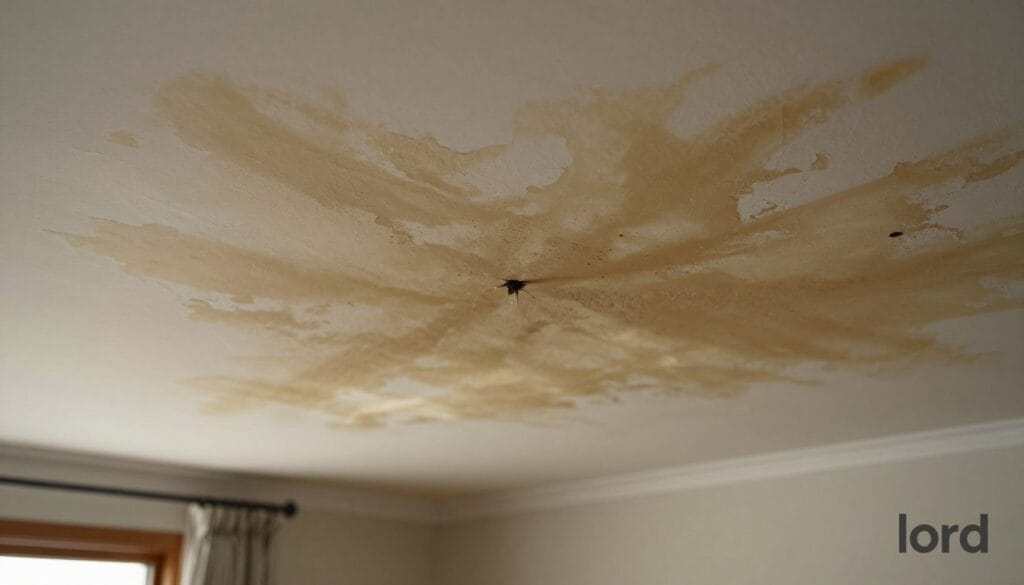
Water damage often spreads laterally behind drywall and insulation. The stain or drip is usually the exit point, not the full wet area.
Gravity pulls the moisture down, but framing and cavities can redirect wet areas across a wide section of ceiling. That is why a small visible spot may mean a larger saturated space behind it.
Electrical and structural risks
When water reaches a junction box or wiring near a light, it increases the chance of short circuits and fire. Water conducts electricity and raises immediate safety concerns.
Persistent moisture weakens drywall and fasteners. Sagging or soft panels and expanding stains are early warning signs that the structural risk is rising.
Mould and fast timelines
Mould can begin in 24–48 hours in damp Vancouver conditions. Poor ventilation makes it worse. Look for odours, dark spots, soft drywall, or recurring drips as signals to act.
- Treat any water near a light as urgent.
- Document damage and call licensed help: Lord Mechanical LTD at 6046703737.
Immediate Safety Steps When Water Is Leaking from a Ceiling Light
Seeing water at a ceiling light demands quick, clear action to avoid bigger problems.
Shut off power at the circuit breaker first. Do not touch switches or the wet light. If you’re unsure which breaker, turn off the main breaker to cut power safely.
Shut off the home’s main water supply if the leak is active
If water is flowing or dripping, close the main water supply to reduce ongoing damage. Turning the water off buys time while help is on the way.
Keep people and pets away from the affected area
Keep the area clear. No children, pets, or one standing under the light. Staying away reduces risk of electric shock or injury from a sagging ceiling.
Contain the water with buckets and towels to limit damage
Place buckets under the drip and use towels to protect floors. Keep water away from cords, outlets and electronics to prevent further harm.
- Red flags: active stream, sparking, burning smell, or ceiling sag — call professionals immediately.
- We recommend calling Lord Mechanical LTD for urgent service in North or West Vancouver: 604 670 3737.
How to Assess the Leak Without Making It Worse
A careful visual check can reveal key clues about a wet ceiling without risking electrical harm. Start from a safe distance and keep power off at the breaker before you approach the area.
Colour and flow matter. Clear, steady drips usually point to a supply line while brown or yellow stains suggest older saturation and possible contaminants. Fast flow rates often mean a live water source; slow weeping can be drainage or condensation.
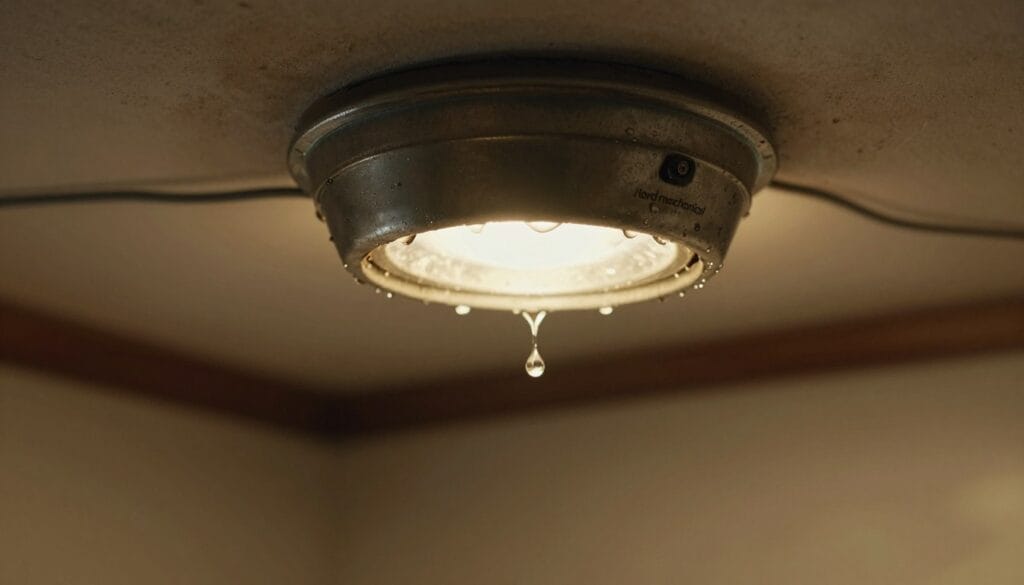
Look above the spot
Map what is above the ceiling: an upstairs bathroom, laundry room, kitchen, or attic space. Run fixtures briefly (if safe) to see if the problem worsens. This helps identify likely causes water leaking into the ceiling.
Recognise pooling and collapse risk
Bulging drywall, sag, or active dripping around the light are signs of pooling. These indicate trapped moisture and a structural hazard. Do not press or poke the wet area.
- What to note: when it started, whether it worsens with plumbing use, and weather conditions.
- Do not touch wet drywall or electrical components—document with photos and call Lord Mechanical LTD at 604 670 3737 for fast, local help in North and West Vancouver.
Common Causes of fixture leaks Around Lights and Ceilings
A stain or drip above a ceiling can come from plumbing, the roof, or HVAC — and each has different signs. Below we outline the most common causes and what you might notice.
Plumbing supply line problems
Plumbing supply line leaks, loose fittings, and failing joints
Hidden plumbing and ageing pipes in ceiling cavities often fail at joints or supply connections. You may see sudden wetting after running water upstairs or a slow, discoloured stain that grows over days.
Drain and overflow issues from tubs, showers, toilets, and sinks
Clogged drains or failed seals let waste water escape slowly. Overflow or a bad trap can saturate the ceiling below before you spot the source.
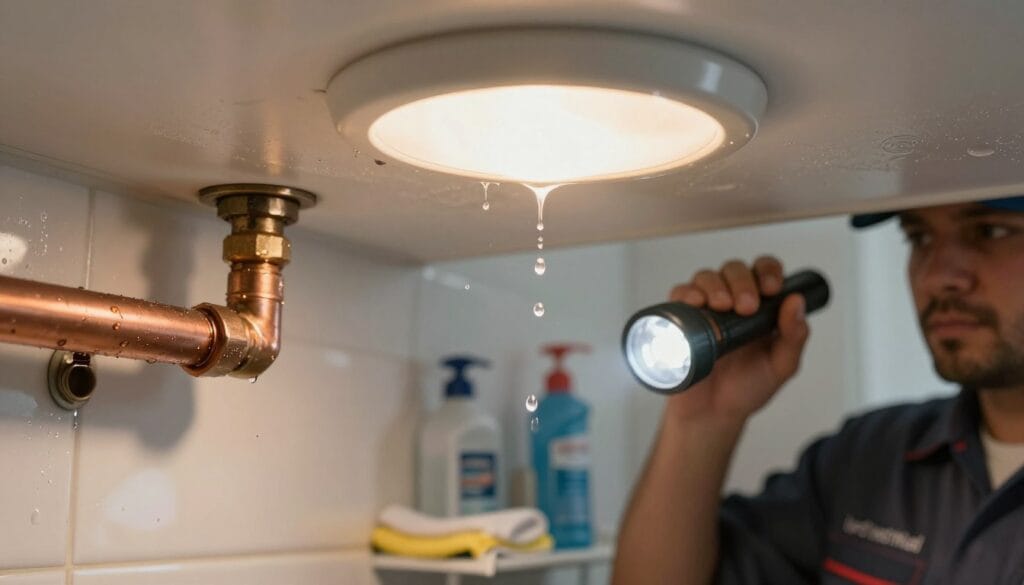
HVAC condensate line clogs and overflow pans
A blocked condensate line or a cracked pan sends condensation into ceiling cavities. This often happens during heavy use of cooling or humidifiers and shows as gradual damp patches.
Roof problems, shingles, flashing gaps and storm-driven rain
Damaged roof shingles, failed flashing, or heavy rain let water travel along framing and drop at lights. In winter, ice dams can push water under shingles and into the roof deck.
| Cause | What you might notice | Speed |
|---|---|---|
| Plumbing supply | Sudden wet spot after use | Fast |
| Drain overflow | Slow staining, odour | Slow |
| Roof / shingles | After storms or thaw | Variable |
Match signs to causes and call us for help. For fast, local service in North and West Vancouver, contact Lord Mechanical LTD at 604 670 3737.
Step-by-Step: What to Do Until the Pros Arrive
Immediate, measured action can stop secondary damage and preserve evidence for a claim. Follow safe, simple steps while you wait for help.
Document everything for insurance: photos, video, and timelines
Take clear photos and short video of the wet ceiling, ceiling staining, the light location, and any affected flooring or furniture. Note the time the problem started and every change. Keep receipts for any emergency purchases.
Move valuables and protect floors from further water damage
Remove electronics and heirlooms from the area. Place towels or waterproof barriers on floors and under furniture to limit secondary damage. Small containment reduces overall repair scope.
Ventilate and start drying safely after power is off
Only begin drying once the circuit is confirmed off. Open windows, increase airflow, and use fans or a dehumidifier to lower moisture. Avoid poking the ceiling or removing the light—wait for licensed help.
Keep records. Save timelines, photos, and receipts to support your insurance claim and to guide repairs. For fast local services in North and West Vancouver, call Lord Mechanical LTD at 6046703737.

Who to Call and When to Call: Plumber, Electrician, or Both
Deciding who to call first can save hours of work and reduce repair costs. In most cases, call a licensed plumber first so the source of the water is stopped. This prevents more saturation and reduces structural damage.
Have an electrician inspect before restoring power
After the plumber secures the supply, have a certified electrician check the light fixture, wiring and the breaker/circuit before you turn the power back on. Moisture can hide corrosion or shorted conductors that raise the risk of shock or fire.
When to treat it as urgent
- Active streaming water, visible ceiling sag, crackling or sparking.
- Burning smell or smoke near the light—these are immediate fire and safety risks.
- If you see any of these, call both trades and emergency services as needed.
Quick script for your call
“We have water above a ceiling light. It is continuous / intermittent. The area above is a bathroom/kitchen. Power is off at the breaker. Can you dispatch a plumber and an electrician to North Vancouver (or West Vancouver)?”

Call Lord Mechanical LTD at 604 670 3737 for fast coordination of plumber and electrician services in North Vancouver and West Vancouver. We’ll prioritise safety and minimize further damage.
Professional Repair and Restoration: What “Done Right” Looks Like
Proper repair starts with precise detection and a clear work scope, not a quick patch. We diagnose thoroughly so you can judge whether proposed repairs are complete.
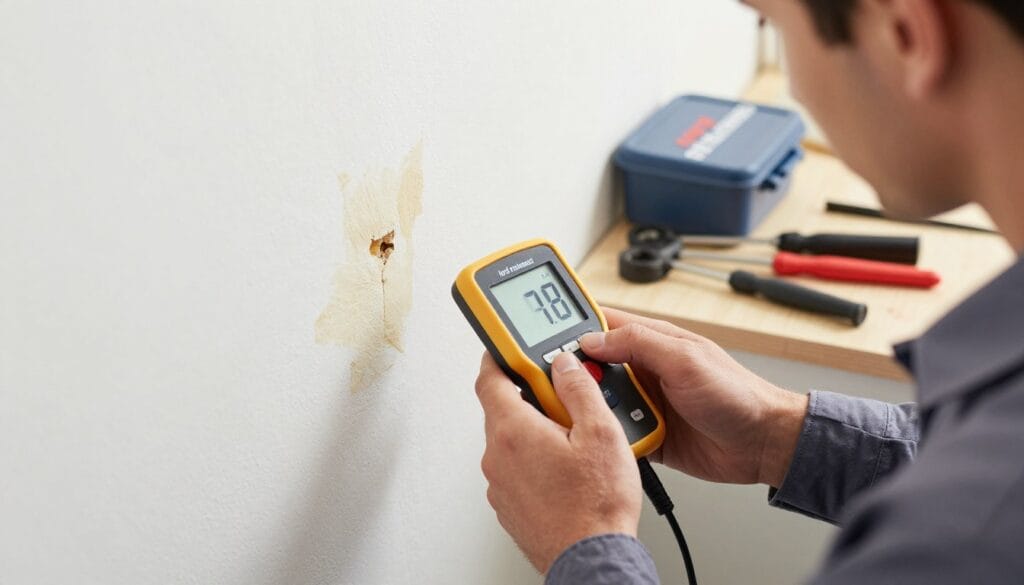
How we find the source
We use moisture meters, thermal imaging and inspection cameras to map damp areas. This reduces needless demolition and targets the true leak path.
Repair approaches by cause
Plumbing work may replace pipes, valves or fittings. HVAC issues call for condensate line clearing or pan replacement. Roof problems need flashing and shingle repairs.
Safe electrical remediation
If a light fixture or wiring shows corrosion, electricians replace exposed parts and test the circuit. That lowers risk of shock or fire before power is restored.
Drying, remediation and final checks
We use controlled airflow, dehumidifiers and remove wet insulation or drywall where needed. Final steps include moisture testing and verifying circuits at the panel and at the light before we turn power back on.
| Issue | Typical repair | Typical timeline |
|---|---|---|
| Plumbing supply | Pipe/joint replacement | Same day to 2 days |
| HVAC condensate | Line clear / pan replace | Same day |
| Roof entry | Flashing / shingle repair | 1–3 days |
| Electrical | Replace fixture/wiring, circuit test | Same day |
Need verified repairs and services in North or West Vancouver? Call Lord Mechanical LTD at 6046703737 for fast, local support.
Conclusion
A wet spot around a ceiling light should trigger immediate safety action for your home. Shut off power at the breaker first, then stop active water and contain the area. Document the scene with photos and notes.
Remember that water leaking from a light is rarely just cosmetic. It can harm your structure, corrode wiring and raise the risk of fire. Common sources include upstairs plumbing, roof entry points, or HVAC condensate.
Do not touch a leaking light or restore power until a licensed electrician confirms it is safe. Start drying only once power is off to cut mould risk within 24–48 hours.
For fast, local help in North Vancouver and West Vancouver, call Lord Mechanical LTD at 604 670 3737.